Agenda-setting intelligence, analysis and advice for the global fashion community.
Agenda-setting intelligence, analysis and advice for the global fashion community.

BoF's chief sustainability correspondent examines how to build a cleaner, fairer fashion system.
Subscribe to The Frayed Edge, a fortnightly newsletter on how to build a cleaner, fairer fashion system.
Hello and happy Friday.
This is Shayeza Walid, BoF’s sustainability reporter, bringing you this week’s edition of The Frayed Edge.
For years, especially in the aftermath of Rana Plaza, fashion’s labour agenda has been driven largely by voluntary commitments, supplier codes of conduct and corporate promises. Increasingly, however, it would be remiss to ignore the role legislation has to play in pushing companies to take greater accountability in fashion’s sprawling supply chain.
ADVERTISEMENT
Last week marked another step in that transition. On July 24, the US’ new tariffs targeting goods made with forced labour took effect, adding to a growing patchwork of laws across Canada, Mexico and the EU, designed to make supply chain abuses more costly for brands.
I unpack the contours of what this forced labour ban means for fashion and more below.
In this edition:
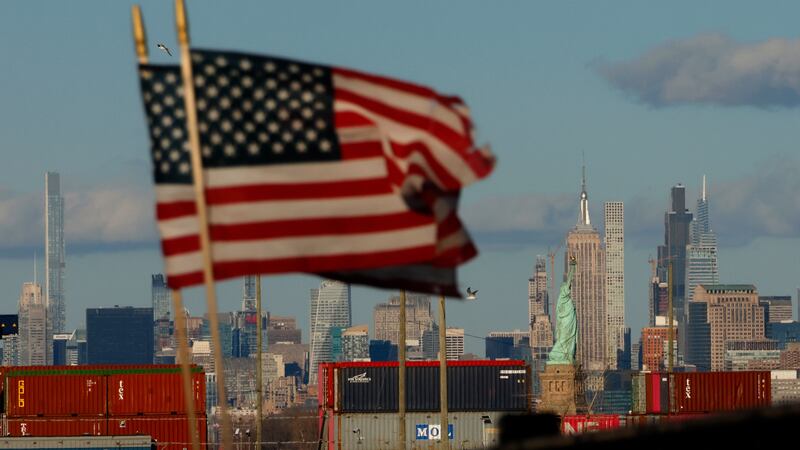
TL;DR: The US’ new Section 301 tariffs targeting countries deemed not adequately preventing goods made with forced labour from entering global markets officially took effect last Friday. The move, which imposes a 10 percent or 12.5 percent levy on 60 trading partners, including major fashion suppliers like China, Bangladesh and Vietnam, marks one of the biggest escalations yet in the global effort to tackle forced labour in supply chains, at least on its surface. But whether it will ultimately improve conditions for workers is up for debate.
The Debate: Unlike existing US forced labour import bans, such as the Uyghur Forced Labor Prevention Act, which target individual shipments suspected of being made with forced labour, the Section 301 tariffs apply to all imports from designated countries.
This means companies sourcing responsibly from affected countries must still pay the additional duty. This broad application is what has prompted the criticism over whether the tariffs meaningfully encourage better labour practices or simply increase costs for all importers.
Steve Lamar, chief executive of the American Apparel & Footwear Association, said companies that have invested heavily in due diligence on forced labour will pay the same additional duties as everyone else, while bad actors determined to evade customs enforcement are unlikely to change their behaviour.
“Policy should clearly incentivise good behaviour and discourage bad behaviour,” he told me. “That’s not what’s happening.”
ADVERTISEMENT
At the same time, the tariffs have already prompted other governments to adopt import restrictions of their own. Following consultations with Washington, Cambodia, Guatemala, Honduras, India, Sri Lanka and Trinidad and Tobago all introduced new forced labour import prohibitions during the Section 301 investigation, while Jordan committed to implementing restrictions through its reciprocal trade agreement with the US. Argentina, Bangladesh, Malaysia and El Salvador also pledged to adopt or strengthen import bans as part of trade negotiations.
Transparentem executive director Tara Winter said even if the tariffs are more about trade objectives than protecting workers, they still add to mounting commercial and regulatory pressure on brands to prove there is no forced labour in their supply chains overall.
“We can debate about intent a great deal, but the reality is eliminating forced labour from your supply chain is no longer a voluntary decision,” she said.
The Bigger Picture: But passing a law is only the first step. As Winter told me, the bigger question is whether countries now have a credible roadmap for enforcing those bans – and ultimately reducing their tariffs. That requires sustained investment in customs authorities, labour inspectorates, trade unions and civil society organisations capable of identifying forced labour in the first place.
Sweeping cuts to international development funding, including the dismantling of large parts of USAID’s labour rights and supply chain governance programmes, have weakened support for many of the organisations responsible for worker protection, independent investigations and labour rights enforcement across key manufacturing hubs. This makes the tariff’s efficacy in reducing forced labour particularly difficult.
“Nobody knows exactly how this will play out,” Winter said. “But it’s a historic moment for forced labour. We can’t let this opportunity pass.”
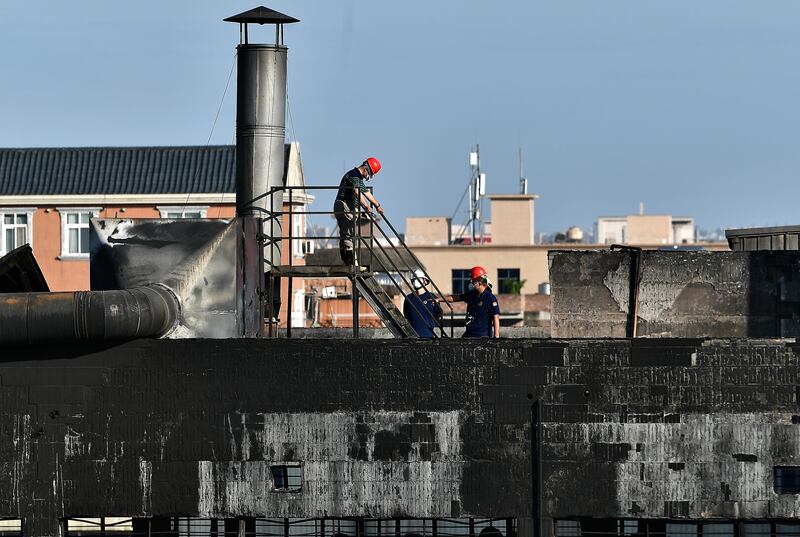
The News: Earlier this month, a fire at Huiteng Shoes, a factory in Jinjiang, Fujian province often called China’s “shoe capital” killed 28 people. The blaze also claimed the lives of two social auditors who were on site conducting a labour assessment, reigniting questions about factory safety and the limits of social auditing as a tool for identifying serious workplace risks. The incident, first reported by The New York Times and subsequently examined by worker rights organisation Partners for Dignity & Rights, occurred despite the factory having undergone multiple social audits before the fatal fire.
My Take: Since Rana Plaza, much of fashion’s factory safety agenda has centred on sprawling garment hubs such as Bangladesh and India, where fragmented supply chains and subcontracted production have long been viewed as the industry’s greatest occupational safety challenge. China, by contrast, is often perceived as a more mature manufacturing market, dominated by larger, vertically integrated factories where robust protocols and infrastructure make catastrophic workplace failures less likely.
ADVERTISEMENT
But this fire is a stark reminder that this assumption can be misleading. According to the Wall Street Journal, Chendai, the town in Jinjiang where the factory is located, is home to more than 7,000 footwear companies and manufactures around one billion pairs of shoes annually for export to over 50 countries, making it one of the world’s largest footwear manufacturing hubs. While many factories in the city are large scale facilities with enforced health and safety procedures in place – meeting international standards – there are plenty that don’t, like Huiteng Shoes.
Moreover, the incident is a big blow for the city and Chinese manufacturing at large. President Xi himself noted the country had experienced multiple major workplace accidents this year and called on authorities to learn from them, strengthen coordination and remain vigilant on worker safety, according to state news agency Xinhua.
So while fashion has made undeniable strides on worker safety, such as with agreements like the International Accord in Bangladesh and Pakistan, the work is far from finished, including in places like China.

The News: Last year, a number of global fashion brands, including Patagonia and Nike, became implicated in forced labour risks at textile suppliers in Taiwan after a Transparentem investigation found migrant workers had paid thousands of dollars in recruitment fees, leaving many trapped in debt bondage.
A year on, the picture looks markedly different, according to a new update report from Transparentum. Suppliers are on track to reimburse nearly $6 million in recruitment fees, with more than $4.4 million already returned to over 1,300 workers. Meanwhile, Taiwan’s textile federation has formally recommended that factories pay all recruitment costs, and the Taiwanese government has committed to banning worker-paid recruitment fees and related costs within the next three years.
Why This Matters: The update offers a rare example of meaningful remediation following a forced labour investigation, though it also raises a fresh accountability question for brands.
Transparentem says buyers largely came together to coordinate efforts across shared suppliers, with 12 companies leading supplier remediation groups. Yet when it came to helping reimburse workers who had paid illegal recruitment fees, the response was far less consistent.
Brands including Patagonia, REI and Cotopaxi confirmed they contributed financially to worker repayments, while others, including Adidas, Lululemon and Nike, declined to say publicly whether they had done the same.
As forced labour due diligence shifts from voluntary commitments to legal obligation, remediation is the next test for fashion companies. With identifying abuses becoming easier, the pressure and responsibility for brands to help pay to fix them is only getting sharper.
Reformation’s IPO: The private equity-backed cult sustainable brand was valued at $886.1 million after its shares opened flat in their New York Stock Exchange debut on Thursday. Vice president of IPO research firm IPOX, Kat Liu noted, “Sustainability can certainly strengthen a brand and help build customer loyalty, but it can no longer compensate for weak fundamentals.” [Reuters]
Shein’s US FTC Probe: According to documents the ultra-fast-fashion company filed in connection with its planned Hong Kong IPO, it is under investigation by the US Federal Trade Commission and could face significant fines. [The Business of Fashion]
Textile Recycler Epoch Biodesign Reaches Industrial Scale Nylon Production: With its acquisition of a 52,00 tonne-per-year nylon production plant in Spain, the UK-based biotech firm will now have capacity to handle 10 percent of nylon production capacity across Europe, the Middle East and Africa. [EcoTextile News]
A Flood of Fakes on Vinted: Users of the peer-to-peer resale platform have reported counterfeits proliferating of mid-market items from popular brands such as Sézane, Coach, Carhartt and COS, among others. [Financial Times]
Boohoo’s Sweatshop Scandal Legal Claims Rise: Six years after news broke that employees at the fast-fashion retailer’s suppliers in Leicester, UK, were working in unsafe conditions and grossly underpaid, the company is now fielding £10 million ($13.4 million) in additional claims from investors. [Sourcing Journal]
Loading recommended reads…
The Australian hair care brand has named Elisa Fischer its new global chief executive as it looks to push deeper into international markets.
The company, which also owns brands Nude by Nature and Poni, also announced its new global headquarters and chief marketing officer.
As extreme weather and nature loss threaten fashion’s access to key raw materials, the industry is looking for ways to shore up supply chains. Early results show it’s possible to build resilience, but also how difficult it is to scale effective action.
The Italian luxury sneaker brand, on pace to reach €150 million in sales this year, is tapping former Golden Goose chief consumer officer Danilo Piarulli as it ramps up direct-to-consumer growth across the US and Asia.