Agenda-setting intelligence, analysis and advice for the global fashion community.
Agenda-setting intelligence, analysis and advice for the global fashion community.

Subscribe to Full Coverage by Priya Rao: unpacking how shifting ideals, new players and cultural movements are transforming the global beauty and wellness industries.
Welcome back to Full Coverage.
Following The Business of Beauty Global Forum last week, this newsletter’s typical steward Priya Rao is taking a well-earned vacation. Sleep tight, Priya! Today you’ll be hearing from me (Brennan Kilbane) and Rachael Griffiths over in the London office.
But first: Can we hear it one more time for the Global Forum 2026? Thank you to all who attended and tuned in last week — and if you didn’t, the livestream is still available for BoF Professional members. My unexpected favourite talk was with Oura’s chief executive Tom Hale, who spoke to Imran Amed about leading the wearable biotracker revolution and the brand’s impending IPO. Any parts you liked? Any you hated? Don’t tell her I sent you, but let Priya know: Priya.Rao@businessoffashion.com.
ADVERTISEMENT
It’s been about 14 seconds since we last talked about niche perfume, and the category continues to grow against fragrance’s larger moderation. First up, I have more context on personnel news from the industry giant DSM-Firmenich. Then, Rachael had a word with Patrice Béliard, the CEO of Artessence Group — which owns Parfums de Marly and Initio Parfums Privés — about the brands’ successes and rumours it’s up for sale.
Read on for:

DSM-Firmenich, the French flavours and fragrance giant that supplies most of the world’s perfume brands, told us exclusively that two new Master Perfumers will be added to its roster: Frank Voelkl and Marie Salamagne.
Both have been at DSM-Firmenich for decades, but as of today they ascend to the company’s highest order of fragrance talent, a move that highlights the importance of these unique professionals in the industry but also hints at where the firm is strategically headed.
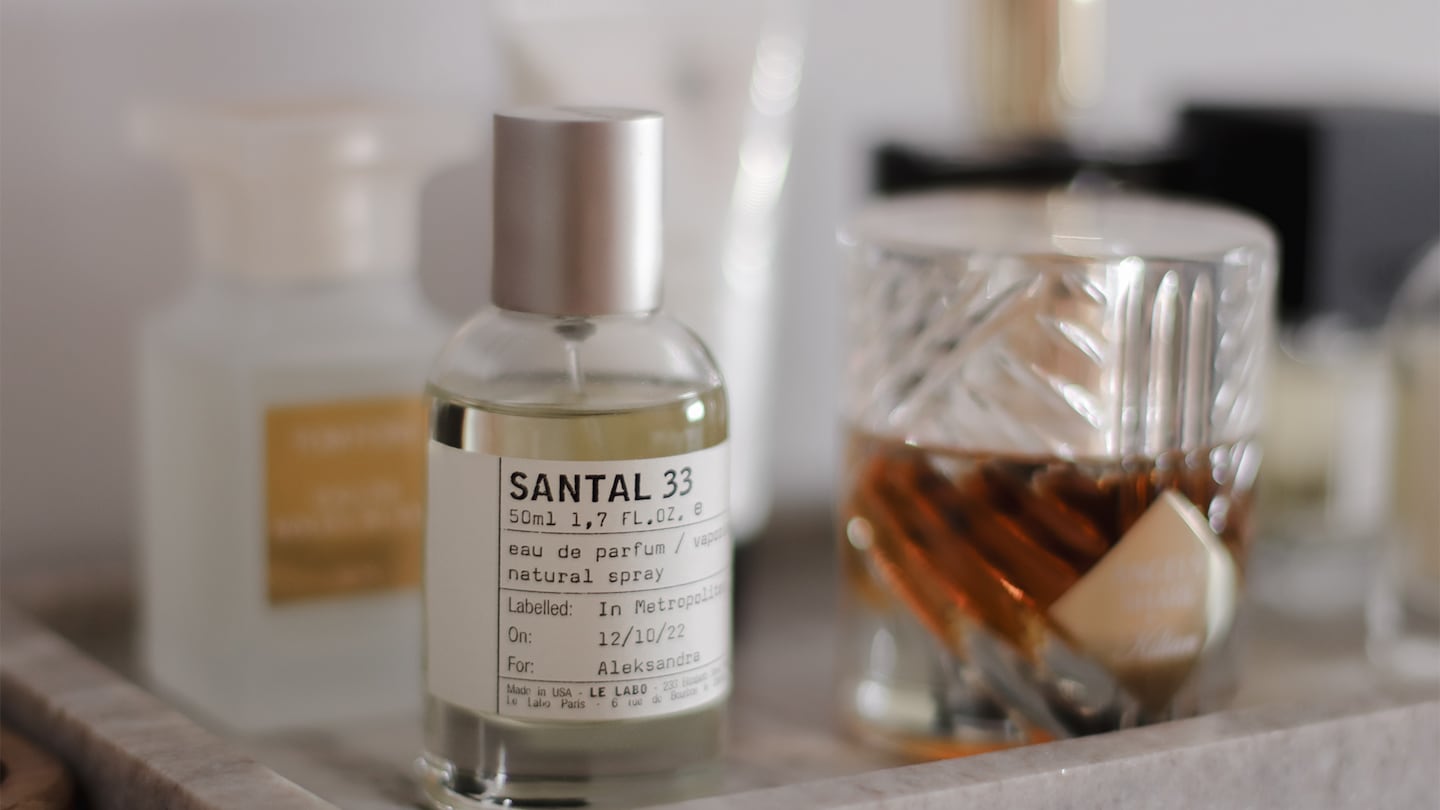
There are fewer than 600 professional perfumers on the Earth at any given moment, making the profession about twice as rare as deep sea pearl diving, and about half of them are employed by one of several multinational fragrance suppliers. With 2025 sales of €9.01 billion ($10.2 billion) and a global workforce of over 30,000, DSM-Firmenich is the world’s largest — with Swiss firm Givaudan, which recorded sales of over $9 billion last year, at a close second. It is responsible for the best-selling perfumes in modern commerce. Voelkl’s greatest hits include Le Labo scents like Santal 33 and Glossier You, while Salamagne nosed Margiela’s By the Fireplace, YSL’s Black Opium and Prada’s hit Paradigme, which has become L’Oréal’s best-selling men’s fragrance according to DSM-Firmenich perfumery and beauty president Emmanuel Butstraen.
Like makeup artists and hairstylists before them, perfumers are becoming the new stars of the beauty industry. Niche noses like Quentin Bisch, Givaudan’s boy wonder, now have name recognition among young perfumeheads who are more loyal to their creations than the brands that bottle them.
By elevating Voelkl and Salamagne to the master level, DSM-Firmenich hopes to reaffirm its reputation at the industry’s premier place for perfumers. “We will amplify our ambition to continue to be on the top, and also, we will continue to invest,” Butstraen said.
The designation is not an officially recognised title, like a master craftsman in Japan or a German meister. Instead, it signals not only a badge of excellence for DSM-Firmenich perfumers but the direction of the world’s most influential fragrance firm. “It’s an honorific title, of course; it’s the achievement of a career, but it’s also a huge responsibility,” said Jonathan Simon, DSM-Firmenich’s president of fine fragrance experience. “It’s when you’re ready to make the boundaries of our maison move in another direction.”
ADVERTISEMENT
It’s also a hint of what’s coming next. “Fine fragrance is working through cycles, and we are arriving at the end of an era. We saturated an olfactive direction revolving essentially around the gourmand — the gourmet leather, the gourmet oud. It doesn’t mean that it’s over, but that the expansion is now complete,” Simon said. The next era, he adds, is “florals with a twist.” —Brennan Kilbane
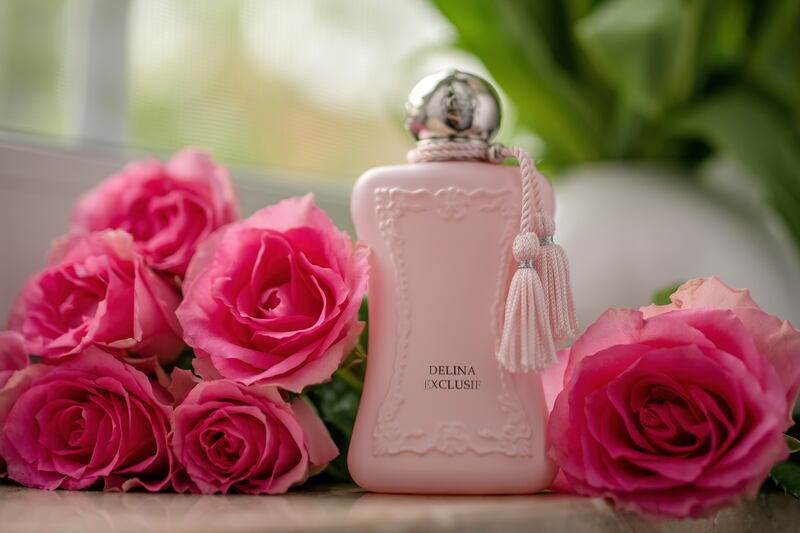
Very few indie brands have been able to lead the niche perfumery conversation as effectively as Parfums de Marly. Along with its sister brand Initio Parfums Privés, the lines have turned scents like Delina into status symbols, and together have scaled past $1 billion in retail sales. Following their acquisition by private equity firm Advent International in 2023, rumours have swirled about an impending sale.
I hopped on the phone with Patrice Béliard, CEO of parent company Artessence Group, to talk about the brands’ growth and their future. This conversation has been edited for length and clarity. —Rachael Griffiths
Can you help us understand the current scale of the business?
We passed the $1 billion retail sales mark for our fiscal year that closed in March. The split is roughly two-thirds for Parfums de Marly and one-third for Initio. Having been in this industry for an embarrassing number of years, I rarely see a business where every geography is growing at high double digits. We’re seeing consistent growth across both brands.
What differences are you seeing in performance from region to region?
The US continues to grow solidly. Initio is growing at a higher percentage there than Marly because its baseline was smaller, and our growth there is in the high 20s on a like-for-like basis. In Latin America, we are number one in Brazil, and we’re about to open our first boutique in São Paulo.
The Middle East was impacted by the war, but we are still performing well. We saw high double-digit growth from local consumption in Kuwait and Saudi Arabia due to travel restrictions and holiday gifting. The UAE is recovering as tourism returns, with mall traffic nearing pre-war levels.
ADVERTISEMENT
China represents a gigantic growth runway for us: We are investing heavily right now, and our search index on RED is going way up. Delina is the number one selling fragrance there because it resonates with the Chinese consumer’s appreciation for rose ingredients and beautiful packaging.
Insiders have suggested the company is exploring a potential sale, with reports estimating a company valuation of around $2 billion. What do you think investors are seeing in the business today that they weren’t seeing five years ago?
The niche category as a whole has evolved tremendously and unexpectedly over the last five years. Niche fragrance penetration over the entire market has jumped significantly — in the US, it went from roughly 5 percent to close to 20 percent of the market. Investors naturally realised that this category is a major growth engine and a money-maker. Many legacy players realised they had skincare, makeup and hair, but lacked niche fragrances. This triggered a wave of M&A activity over the last decade.
Niche fragrances have essentially become a luxury commodity.
Can you comment on that $2 billion valuation?
I cannot comment on the valuation numbers. We are not currently for sale. We belong to a private equity firm, Advent, and private equity owns investment vehicles for a certain period of time. It is at their liberty to decide when the time comes to exit.
Because the business is growing so fast, we took on two advisors — Jefferies and Goldman Sachs — to ensure we are evaluating all our options and making the right decisions. But right now, it’s about managing our high level of growth, not targeting an immediate acquisition.
What do the next big phases of growth look like for both Parfums de Marly and Initio?
The pockets of growth will come from opening new markets and working with retailers who are realising that this category offers a much higher profitability per square meter than others. The future is also in the hands of our distributors and retail operators who enable us to express our true potential. We have independent department store points of sale in the US that generate $2 million on their own. Imagine what we could do with more space. This is why a multiplicity of distribution channels is vital, allowing us to control both our luxury image and our growth.
Niche fragrance brands’ desirability may rely on rarity, but their retail strategies are increasingly overlapping. [The Business of Beauty]
It looks like our idea of “longevity” is built on some flawed age calculating. [The New Yorker]
Can Gregg Renfrew get young shoppers excited about clean beauty? [The Business of Beauty]
Increasingly wellness-oriented consumers are opting for “functional indulgence” — AKA dessert-flavoured protein bars. [Forbes]
The obsession with botched beauty procedures is nothing new. [Dazed Beauty]
Sign up to The Business of Beauty newsletter, your complimentary, must-read source for the day’s most important beauty and wellness news and analysis.

Brennan Kilbane is News and Features Editor at The Business of Beauty. He is based in London, and supports BoF’s coverage of the multifaceted cosmetics industry, from fine fragrance to wellness trends.

Rachael Griffiths is a Senior Editorial Associate at The Business of Beauty. She is based between St Helens and London, and covers beauty, wellness and industry news.
Loading recommended reads…
This week, Europe’s leading luxury groups LVMH, Kering, Hermès and Prada will show who’s pulling ahead in the stubbornly choppy environment.
Sales of gems, precious metals and artwork at Japan’s department stores climbed 19 percent in the first half of 2026 from a year earlier to $2 billion.
Though Adidas dressed both teams in the World Cup finals, the global football tournament still presented some bright spots for Nike, writes Bloomberg’s Andrea Felsted.
From our archive, the creator and host of award-winning podcast “Articles of Interest” joins BoF founder, CEO and editor-in-chief Imran Amed to explore what clothing can reveal about identity, culture, labour and the world around us.