Agenda-setting intelligence, analysis and advice for the global fashion community.
Agenda-setting intelligence, analysis and advice for the global fashion community.

Subscribe to Full Coverage by Priya Rao: unpacking how shifting ideals, new players and cultural movements are transforming the global beauty and wellness industries.
Hi everyone!
Welcome back to Full Coverage. Brennan Kilbane is on deck today, guest-hosting the newsletter. In addition to being our News & Features Editor, Brennan is also my favourite writer on the topic of Marc Jacobs Beauty, thanks to his prescient coverage at Airmail. Read his thoughts on the future of the brand below; he also scored an interview with Ngozi Esther Edeme, who has been dealing with a very public makeup spat with Patrick Ta. Now over to Brennan.
This week, beauty’s biggest influencer is a century old: On the eve of her 100th birthday on June 1, Marilyn Monroe is the inspiration for the newly launched Icon Skincare, a line brought to us by Bryan Johns and Alec Call, founders of Is Clinical. (But Monroeheads may be more familiar with the “Icon Collection,” the trademarked name of the duo’s private stock of Marilyn ephemera.) The formulas, which are priced from $32 to $68, are inspired by the recipes of Old Hollywood facialist Madam Renna, who worked on Monroe and Elizabeth Taylor. Ok! Lisa Eldridge also announced a line of Marilyn-inspired makeup, inspired by the late actress’ “signature look” — red lips and highlighter. The deluxe set is $295.
ADVERTISEMENT
Meanwhile in New York, at an exhibit sponsored by the Comité Colbert: A bottle of Chanel No. 5 is displayed alongside the iconic Life magazine quote Monroe gave about how it’s the only thing she wore to bed. She was not, by the way, a spokesperson for the house. Can you remember the last time a movie star gave a beauty recommendation that wasn’t bought and paid for? Me neither.
Moving on — scroll down to read:
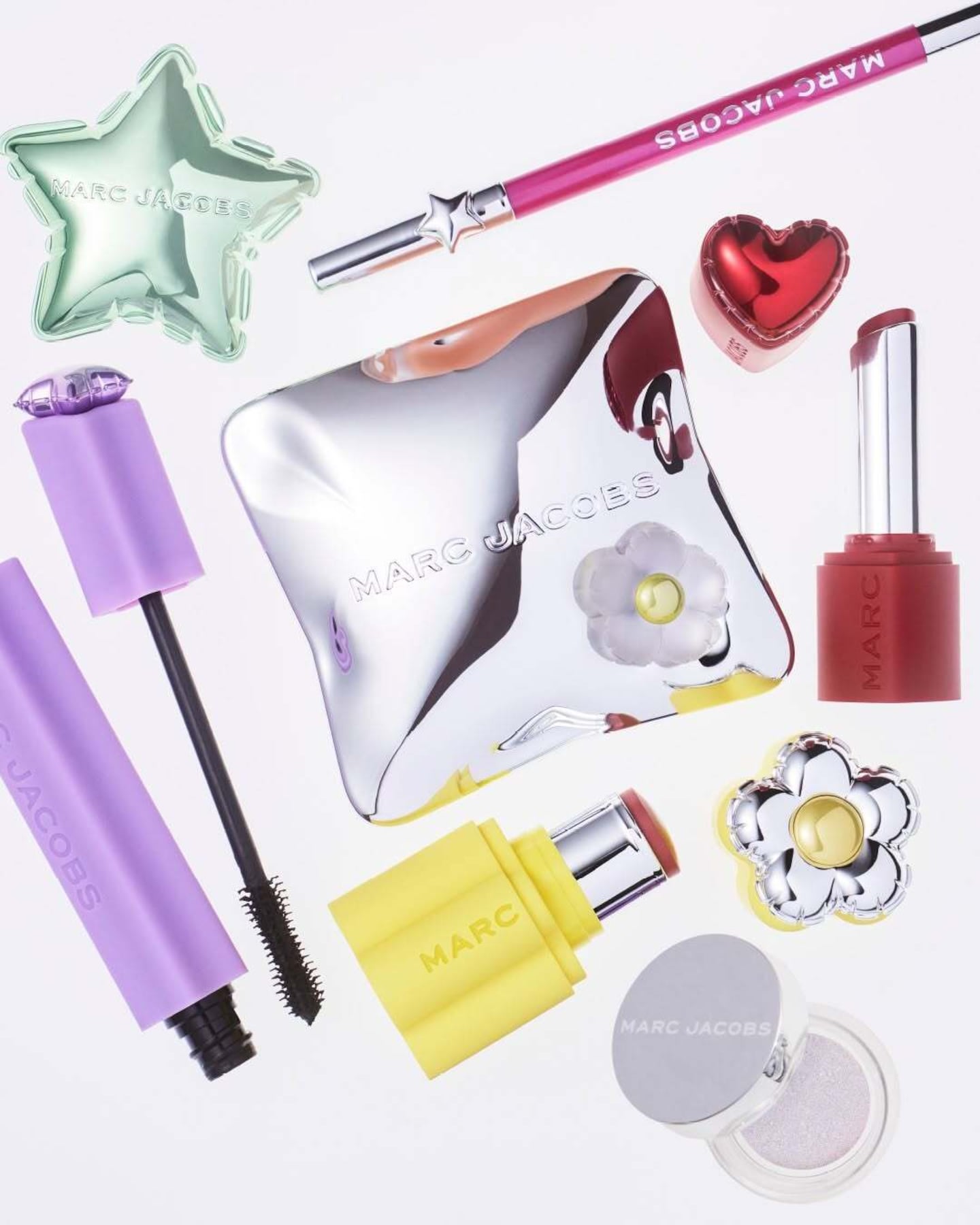
Let me start by saying that I believe Marc Jacobs Beauty (2013–2021) was one of the best makeup collections of all time. This week, it’s back: It dropped on Marc Jacobs’ website today and hits Sephora’s app on May 31. But it feels a bit like a dear friend was brought back from the dead and a party has been thrown in her honour. Even though it’s clear that she’s not the same — that, perhaps, some piece of her soul was lost in the transaction — everybody is celebrating anyway.
You probably know by now that the original MJB was produced by Kendo, Sephora’s incubator that later spun out on its own. Kendo had created Kat Von D and Sephora’s own makeup collection, but MJB was a genuine revelation: A fashionable line of premium, high quality makeup products that — what’s this? — were actually innovative. The Highliner gel pencils applied like oil paints; the O!Mega powder bronzer was so finely milled as to feel like liquid.
But MJB languished at Kendo — insiders told me, after Kendo diverted resources to Rihanna’s Fenty, which launched in 2017. After its licence expired with Kendo, The Business of Beauty broke the news that it was picked up by Coty, which also handles Jacobs’ fragrances. The key to nailing the transfer of ownership is to capture the original line’s technical elegance while transposing it into an altogether different cosmetic moment — one where the clean girl and maximalista are locked in a struggle for dominance.
Unfortunately, the updated line does neither.
Its Born Star single pot eyeshadows, Drawn This Way eyeliner and Money Shot highlighter gel feel like derivatives of other products, either trying to approximate the beloved Kendo-era formulas or leaning into MAC territory. (I can’t spend more than a sentence on the shade names, which seem to compress a decade’s worth of slang terms — from Clapback to Delulu — in one unfortunate assortment.)
Jacobs is one of the few fashion designers who not only understands beauty but seems to love it. In its previous era, the makeup line offered Jacobs one more frontier of expression. He shared with the press memories about his mother shaving velvet to press into her eyelashes — a near-desperate act of glamour that inspired the very good Velvet Noir mascara — and even talked about “draping” contrasting shades of blush across the cheek. (more on this later) But it’s hard to see the designer in the new collection. The Mylar-esque packaging seems to echo the Coty-owned fragrance line, particularly its most recent scent Perfect. The two Sephora gondolas dedicated to the brand will not lack for colour or shine.
ADVERTISEMENT
But who will shop them? Even if Marc Jacobs Beauty is able to recapture fans of its previous iteration, the new line seems more intent on appealing to the young, mass shoppers who are buying up the designer’s bags. The products were first teased on the faces of the models at the Jacobs’ Spring 2026 show to great effect, but they don’t seem designed for backstage makeup artists as much as for a Gen Z influencer’s TikTok shelfie. (The prices, from $26 for an eyeliner to $42 for a pressed bronzer, may require parental support.) If anything, the new Marc Jacobs Beauty might be a perfect example of what a commercial makeup line launch looks like in 2026. Past fans may not like it; we also may not have to.
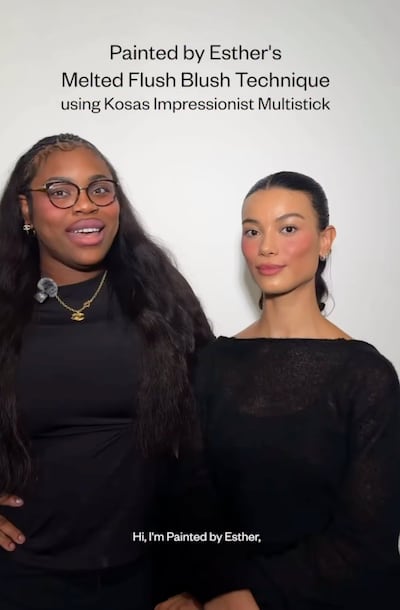
Makeup artist Ngozi Esther Edeme, known to her followers as @paintedbyesther, was holed up in a dark bedroom battling a spring cold when her phone began to ping over the weekend with the news that Patrick Ta Beauty had launched a “Transition Blush Collection.” Friends and fans quickly called out its resemblance to the work of Edeme, who has made a name for herself in part by doing a form of transitional blush on mononymous celebrities like Tyla and Olandria.
The brand’s two-product, three-step blush routine was designed to impart prismatic cheek colour using a liquid and two complementary powder shades; the brand trademarked the term “transition blush” ahead of the launch. Ta as an artist is known for his complexion skill, and his brand’s top-seller is its cream-powder Major Headlines Blush Duos, launched in 2023. But on Sunday, the day before Ta’s new blushes were set to arrive at Sephora, Esther responded to the outcry. Her voice rattled with emotion as she explained her disappointment over Ta’s lack of credit, and her incredulity that any makeup artist can claim to “create” a look.
“My goal is to constantly reference Kevyn Aucoin, Danessa [Myricks], Pat [McGrath], how they move with grace and intentionality,” Esther told her TikTok audience. Seemingly in response, Ta posted a tutorial video to TikTok with a caption that somewhat addressed the brouhaha: “I also have been doing this blush look since 2021. Not the same as Esther but my own version.”
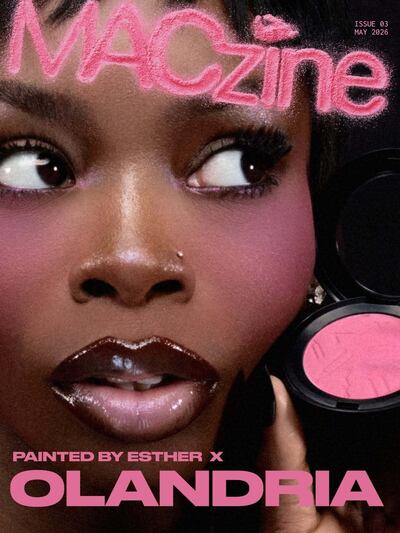
The conversation captured the beauty industry’s attention, and threatened to eclipse the launch. The user @fempopstix said, in a comment with over 56,000 likes: “Patrick Ta you will never receive my money [emoji prayer hands].” The brand Kevyn Aucoin posted in support of Edeme, and on Wednesday, with acute timing, MAC Cosmetics released a campaign with Olandria wearing blush “painted by Esther.”
Ta told Glossy that the launch “was never about claiming ownership over a makeup technique that artists have interpreted over time.” (In an email, Ta echoed the same sentiments to The Business of Beauty, adding, “I have a great deal of respect for Esther and the creativity she brings to the beauty space.”) But “owning” a look has now become central to the PR and commercial strategies for makeup artists in the founder’s seat. Most of the makeup artistry pushed today by new artists has some analogue in a past technique. As Allure pointed out, “transition blush” was probably invented in the 1970s by the US makeup artist Way Bandy inspired by trends in Japan and Korea. (Bandy passed away in 1986 from AIDS-related pneumonia.) The ownership phenomenon goes beyond the cheek: Nina Park’s signature blurred lip was Violette Serrat’s specialty 10 years ago; Mary Phillips’ “underpainting” hack was heralded by Wendy Rowe in 2016 but invented and refined by 20th century drag queens.
I got Edeme’s take, including what the episode signals for artists now.
This conversation has been edited for clarity.
ADVERTISEMENT
Tell me about developing your transition blush technique.
I grew up in foster care, [and then was] a Black girl [with] two white parents. Then I’d gone to an all-Black university. [There] I had this spectrum of beautiful Black women around me. With dark-skinned women, all you have to do is look at them in natural light: [they] would have all the beautiful highlights on [their] face already, and then they have a peek of some colour.
My first ever blush I really used was Kevyn Aucoin, the actual Transition Blush, and Limecrime had a Danessa Myricks [blush] dupe. I tried it on my friend and posted to Instagram, and in the caption I wrote, ‘I’m posting this because I want Black, brown, and dark-skinned girls to see how blush compliments us.’
My intention has always been to teach. Kosas had me teach a masterclass, catering to their cream blushes. There was so much pressure to teach influencers who already knew makeup, but it landed. One influencer showed her audience, and they’re like, ‘This is the best your blush has ever looked.’ …. ‘Thank you @paintedbyesther so much for sharing it.’ That’s all I want.
For years, I would post my looks, I would be berated: ‘You look like a clown. This is too much blush.’ And then something just clicked. People liked it. I’m finally going viral for something that I’ve been beaten up about consistently. And then [Patrick Ta] swoops in. Initially, [he] doesn’t talk about me, doesn’t credit me, nothing. The community was like, ‘Well, this looks familiar.’
(Ta told The Business of Fashion that he reached out to Edeme ahead of the launch “because I genuinely wanted to explore a paid collaboration with her … while Esther’s team declined the partnership, all of our interactions with her team remained warm and positive.”)
It felt like the makeup community came out in support of you.
That was unreal. Erin Parsons DM’ed and encouraged me. I cried to her. She consoled me, and she told me her story. We have similar backgrounds. Laurel Charleston was the first to post something publicly defending me. I put my phone down today, because it was getting overwhelming, and Makeup by Shayla posted about my blush technique. And Kevyn Aucoin — the brand reached out to say Kevyn would have loved me.
This is also why the community got angry, because you are disrespecting Kevyn Aucoin!
As you address in your video, it’s hard to claim ownership of any “look” in makeup. Is it possible for a makeup artist to really “own” a technique?
No. It’s even disingenuous to say that it belongs to one person. We pull from everyone and everywhere, and a lot of us pulled from that book [Aucoin’s “Making Faces”]. I speak to my friend Naezrah [Desir] about this — she has inspired brands, they’ve followed her, they’ve plucked from her and then left with their millions. People have berated her, because she’s too ahead of her time. She might be the best makeup artist in the world. You go through all these obstacles, you fight through so much hate. That’s the real anger here.
Sheena Butler-Young’s story on how GLP-1s are forcing fashion to rethink sizing is a must-read. [The Business of Fashion]
Lower blephs have become the tweakment de jour. [Magasin by Laura Reilly]
An unexpected health consequence of climate change: how warming temperatures are unleashing infectious microbes. [The New Yorker]
Is Bryan Johnson going to cure endometriosis? [Instagram]
Has the endless scroll erased New York’s teen subcultures? [Air Mail]
Thanks y’all,
Priya
Loading recommended reads…
The German conglomerate and Schwarzkopf parent lifted its annual sales forecast, though growth for its adhesives unit outpaced its consumer brands.
The resale marketplace beat sales and profit expectations but said its purchase price for Depop was $200 million more than initially announced.
As Meta’s AI-powered advertising system demands a growing supply of creative content to feed to users, fashion brands face a new challenge: how to keep up without sacrificing brand identity.
With sales at its core line in decline, the company is tweaking everything from price, geographic distribution and categories to rebuild momentum.