Agenda-setting intelligence, analysis and advice for the global fashion community.
Agenda-setting intelligence, analysis and advice for the global fashion community.
On Wednesday, E.l.f. reported first-quarter net sales of $479.4 million, up 36 percent year-over-year. It also increased its full-year revenue forecast to a range of between $1.94 billion and $1.97 billion, representing a higher annual growth rate of 18 to 20 percent. But its flagship line of cosmetics, which comprises some 70 percent of overall sales, declined high single digits, in line with its prior forecast. In the previous quarter, growth was flat.
“We’re leaning into our disruptive marketing engine to fuel E.l.f’s brand awareness and deepen the connection we have with our community,” chief executive and chairman Tarang Amin said on Wednesday on a call with analysts and investors.
Since its 2025 acquisition of Hailey Bieber’s brand Rhode, E.l.f’s earnings have continually outperformed the market, posting growth rates over 20 percent. But as the company gets closer to annualising its acquisition in August, attention has returned to its core line of affordable cosmetics.
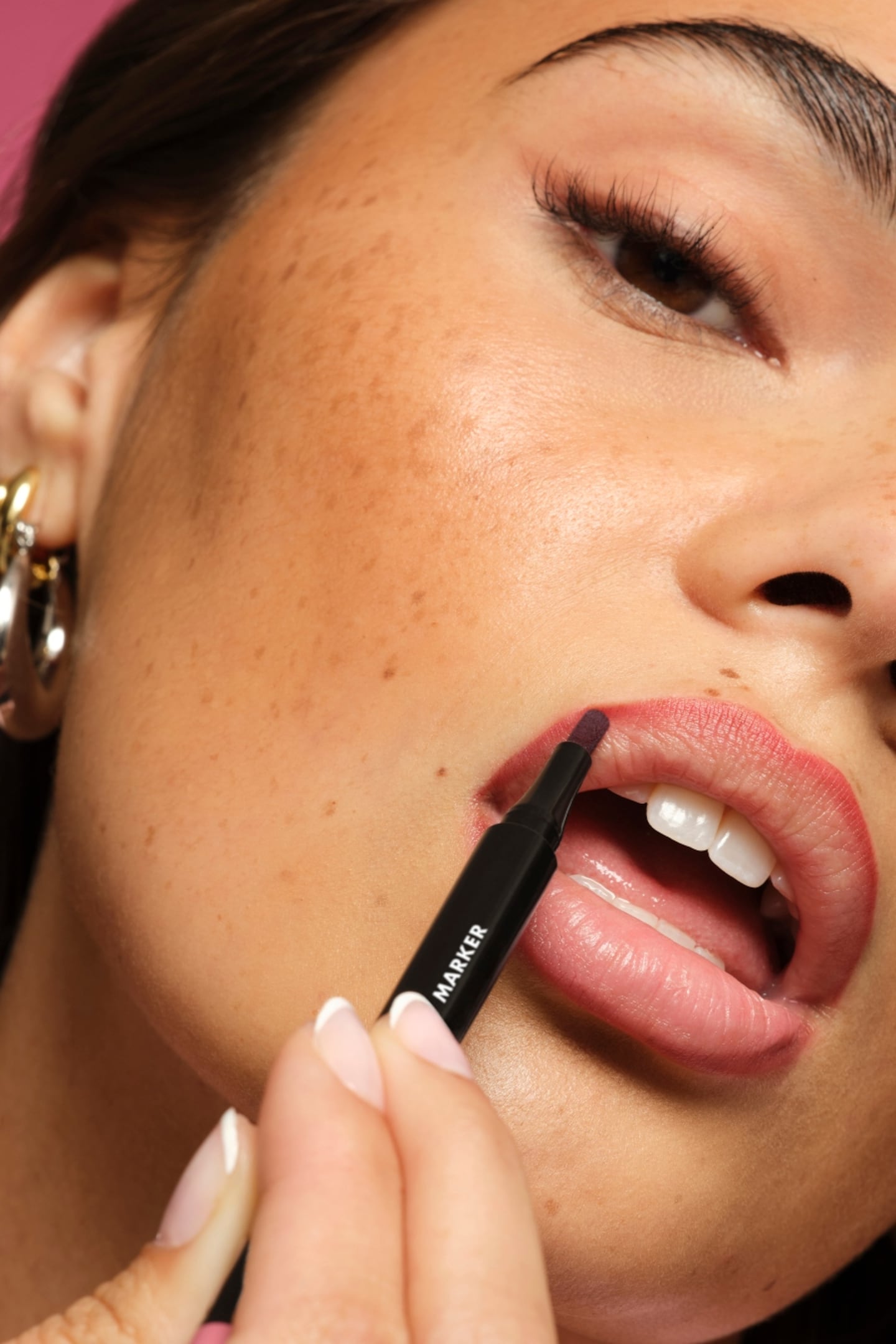
To be sure, E.l.f has become a juggernaut in the beauty space, found in retailers as diverse as Target and Dollar General in the US and Sephora in the Middle East. Its splashy ad campaigns at events like the Super Bowl grab attention, and it has no shortage of innovation — its Main Stain Lip Marker and Sheer For It Liquid blush were highlighted as standouts on the call.
ADVERTISEMENT
But even as buzzy as it is, when it increased pricing on the core line by $1 in August 2025, owing to tariffs, it noted a drop-off in purchases as customers and retailers struggled to digest the uptick. (The brand says its average price is $7 versus a traditional legacy mass brand’s $10.) In May, The Business of Beauty reported that a $4 price cut to the Halo Glow Liquid Filter had led to a 36 percent sales lift: Amin told The Business of Beauty that surge is now at 80 percent.
It has re-adjusted some prices after extending that trial adjustment to more products earlier in the year. Amin said that 90 percent of its products will remain at their new higher prices, with the 10 percent kept at a discounted rate; that price drop led to a sharp increase in unit sales for select items, such as for the Cream Glide Lip Liner, though unit volumes at its core line were down approximately 3 percent overall.
“Our twists at great prices are really resonating with consumers, particularly at a time of concern on value amid inflationary pressures,” said Amin.
Rhode fared better; U.S. net sales grew 29 percent and international net sales grew 61 percent. Following launches in Sephora in the US, France and the UK and Mecca in Australia and New Zealand, Rhode will enter 19 additional European markets through Sephora in September.
Amin said that Rhode had remained Sephora’s top-selling brand despite occupying relatively limited shelf space, and said he believed the brand will become the fastest ever to hit $1 billion in net sales.
“The day we launched the summer collection [online] we generated $27 million in sales in one day,” he said.
Beyond Rhode, E.l.f. Cosmetics will focus on reinforcing its value proposition, boosting marketing and innovation to regain momentum. It has $344 million in cash on hand, including $53 million in tariff refunds, which will continue to be invested in both the price correction and marketing across the entire portfolio, as well as a Rhode earn-out. It also wants to increase its global penetration: currently only 21 percent of core sales happen outside of the US, but it will increase that share with further expansions, focussing on the UK, Canada and Germany, as well launching into Sephora Brazil.
The company is also pushing into new categories with E.l.f. Hair, a Target exclusive sub-brand launched in mid-June, featuring products like the Gloss Mode Treatment Oil and Never Thirsty Moisturizing Conditioner, each for $9 or less.
ADVERTISEMENT
“A few years ago we expanded into skincare: E.l.f. Skin is now a plus-$200 million retail brand,” said Amin, adding that he expects hair care to see the same robust growth.
E.l.f. Beauty’s raised outlook brings the company within “striking distance” of $2 billion, said Amin. As well as pricing actions and marketing, the company will continue to focus on timely innovation, with leadership saying it has “fast-tracked” products its customers have requested to be in stores before the holiday season.
As customers hunt for value, E.l.f’s price point and marketing muscle makes it a top candidate, and if the company has identified what shoppers will happily pay, it’s halfway to its goal. The challenge will be staying top of mind, and increasing basket size over time.
Sign up to The Business of Beauty newsletter, your complimentary, must-read source for the day’s most important beauty and wellness news and analysis.

Rachael Griffiths is a Senior Editorial Associate at The Business of Beauty. She is based between St Helens and London, and covers beauty, wellness and industry news.

Daniela Morosini is Senior Beauty Correspondent and Special Projects Editor at The Business of Beauty at BoF. She covers the global beauty industry, with an interest in how companies go to market and overcome hurdles.
Loading recommended reads…
Bangladesh’s garment miracle was built on its reserves of cheap gas. Keeping the magic going will require finding a way to live without it, writes Bloomberg’s David Fickling.
The beleaguered sportswear giant is hoping its Alphafly 4 model will bring some added shine to one of the few bright spots in its portfolio: its running category.
Planet-warming emissions associated with the raw materials used to make fashion, footwear and home textiles have risen 30 percent since 2019, according to a new report.
Goodai is the latest indie breakout to toy with trading in the public markets.