Agenda-setting intelligence, analysis and advice for the global fashion community.
Agenda-setting intelligence, analysis and advice for the global fashion community.

Welcome back to Full Coverage.
We are just a little under one week away from The Business of Beauty Global Forum and Global Awards — or, as I like to call it, the Davos of beauty. I’m in go mode, finishing keynote addresses and refining panels with our speakers, rearranging agendas and readying our jury (Scott, Vennette, Priya, Mona and more) to meet the exciting entrepreneurs joining us from June 23–26 at Stanly Ranch in Napa Valley. If you’re not attending in person (to my disappointment!), please be sure to sign up for our global livestream here.
Before we get started, can I say the vibe in New York is incredible? Everyone is positively joyful: My smoothie guys at Blendi gave me a freebie, drivers aren’t screaming at me for blocking the cross walk, people are smiling with teeth. It’s all thanks to the Knicks, and particularly to Jalen Brunson in game five. Right now, as this newsletter arrives in your inbox, the NBA Championship parade will be roaring up Broadway to City Hall. Let’s keep the energy going for the rest of 2026.
Now back to my main beat.
ADVERTISEMENT
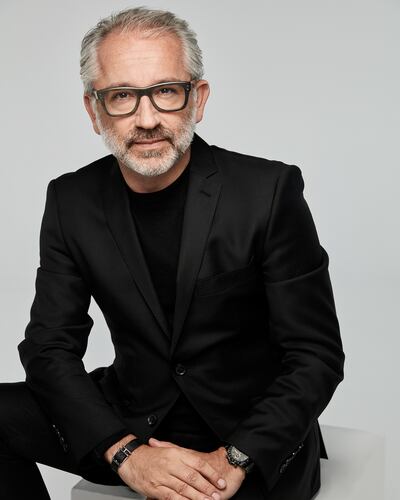
This week, I had a far-reaching interview with Cyril Chapuy, president of L’Oréal Luxe — his first of the year, to be exact. I’ve written about him and his playbook a lot and I’ve been chasing him down for a conversation more or less quarterly since he took the top job in 2019. This is our first on-the-record conversation.
The timing is fortuitous. Luxury’s normalisation is well documented, beauty’s competition is beyond cutthroat and other conglomerates are attempting consolidation. Lest we forget, L’Oréal also just picked up a slew of designer labels from Kering that legitimise its authority not only as the world’s biggest industry conglomerate but as the business to beat, especially in luxury.
While Chapuy has an affinity towards designer labels (I can’t wait to see him get his hands on Gucci), he is also interested in the new guard of luxury, picking up the science-focused skincare brand Medik8 and investing in fragrance lines Borntostandout and Amouage.
Read on for more, including his take on Armani.
This conversation has been edited for clarity.
Designer luxury goods have gone through a normalisation, but luxury beauty has been much more resilient. Why?
It is true that beauty has remained resilient, though it has slowed down a bit compared to historical figures. Historically, the “CAGR” of luxury beauty grew around plus five or six percent, whereas now it is closer to plus two or three percent. It hasn’t seen drastic double-digit drops like fashion. That’s because beauty is an accessible luxury. It has also remained highly innovative. In times of economic difficulty, we constantly ask ourselves: “Is this lipstick worth $60, is this super premium cream worth $300?” Beauty has also evolved. It is no longer just a story of daily pleasure. It has become holistic, centring on wellness and confidence.
Where in your portfolio do innovation and value really come together?
ADVERTISEMENT
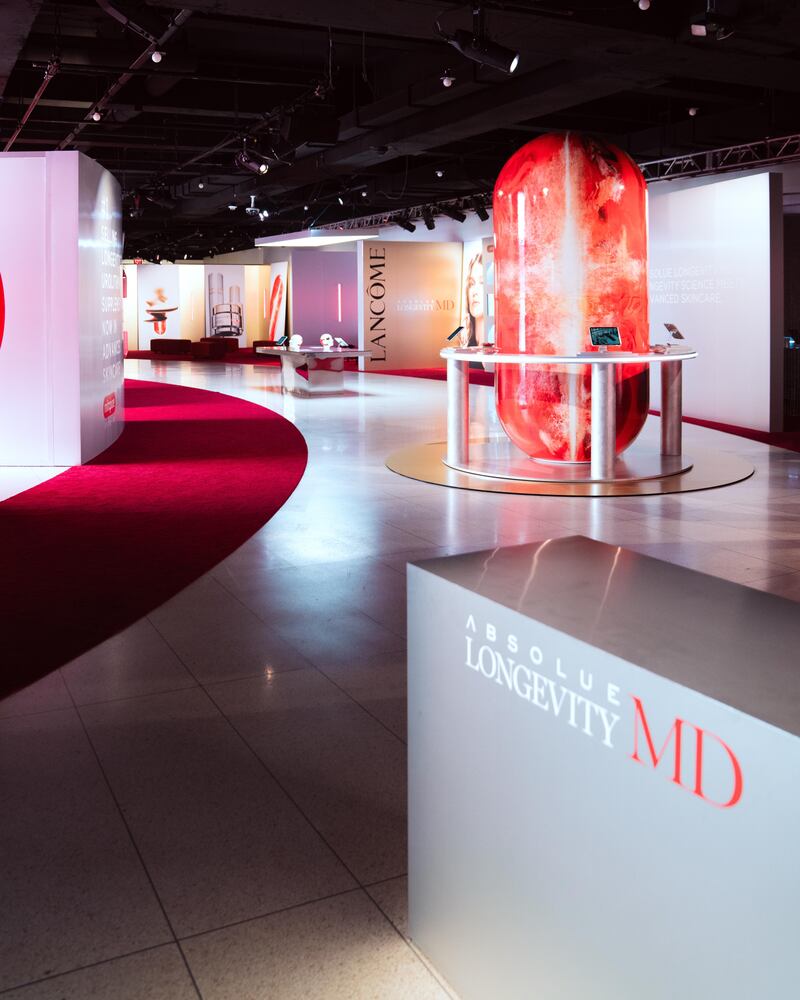
Lancôme brings the very best of L’Oréal research and innovation. The Lancôme Longevity MD Collection starts around $155, yet it offers a level of clinical efficacy that will take competitors years to replicate. In fragrances, perceived value is linked to the quality of the olfaction, ingredients and sourcing. A $120-plus Yves Saint Laurent fragrance brings an incredible level of creativity because we work with the best noses on Earth, and back those noses with superior science.
You’ve recently received a big chunk of designer makeup brands from Kering. What do you look for in designer brands to ensure they can successfully translate to beauty?
Designers provide vital inspiration and magic. It is fantastic to sit down with Madame [Miuccia] Prada, or previously with Mr. [Giorgio] Armani, or now with the designers from the Kering houses. They know their DNA and their vision of femininity, but they don’t know how to translate that into a superior beauty product. We do. We take inspiration from the history of these fashion houses, their product names, shapes and iconic garment colours. Our mutual capacity to listen to one another is the secret recipe.
On Armani, is there any update you can share on future ownership?
We are a long-term partner of Mr. Armani and his maison. If his heirs decide they want to keep partnering with us as shareholders, we will be ready, but the ball is in their court. Regardless, our licence with Armani runs until 2050.
Post-Kering deal, how are you prioritising brands like Creed, and eventually Gucci?
Creed is a real luxury brand rooted in true craftsmanship. It currently sits around the €300 million [$348 million] mark, but has immense potential because it’s still mainly a US- and UK-focused brand. When we took over Prada it was a €100 million brand, and it’s over €700 million today. We expect huge success with Creed. Gucci is the number four fashion house in the world in terms of awareness. When the current licence expires, it will be a massive playground. The territory that Demna [Gvasalia] is steering it back [towards], beautiful sexiness, is very easy for consumers to decode. We already have a few ideas.
Those brands are highly fragrance-centric right now. Are you worried about the fragrance slowdown? Does it change your strategy?
ADVERTISEMENT
You have to manage your portfolio to appeal to different demographics and geographies. That’s why we took minority stakes in brands like Amouage [in Oman], Borntostandout [in Korea] and To Summer and Documents [in China]. Fragrance isn’t just about what appeals to Gen Z in the US and Europe. You need highly exclusive juices that are distributed very selectively, alongside brands that appeal to a younger generation at a slightly more affordable price. Even if the market growth slows, I am confident we can grow at twice or three times the market rate given our geographic and price coverage.
You mentioned investments in independent brands like Amouage. Do you see a permanent place in your portfolio for luxury brands that are independent of a designer fashion house?
Of course. In skincare, luxury isn’t necessarily about designer couture. My two latest acquisitions are rooted in the luxury medical world: Takami, a fantastic clinic in Tokyo, and Medik8, the number one medical clinical skincare brand in the UK. Aesop is another perfect example. It is one of the most beautiful luxury brands in the world, with zero connection to a fashion designer. Its 450 global boutiques are incredible creative statements, designed by local architects to create a distinct experience. That is true luxury.
The market seems hesitant about makeup brands right now. What are you seeing?
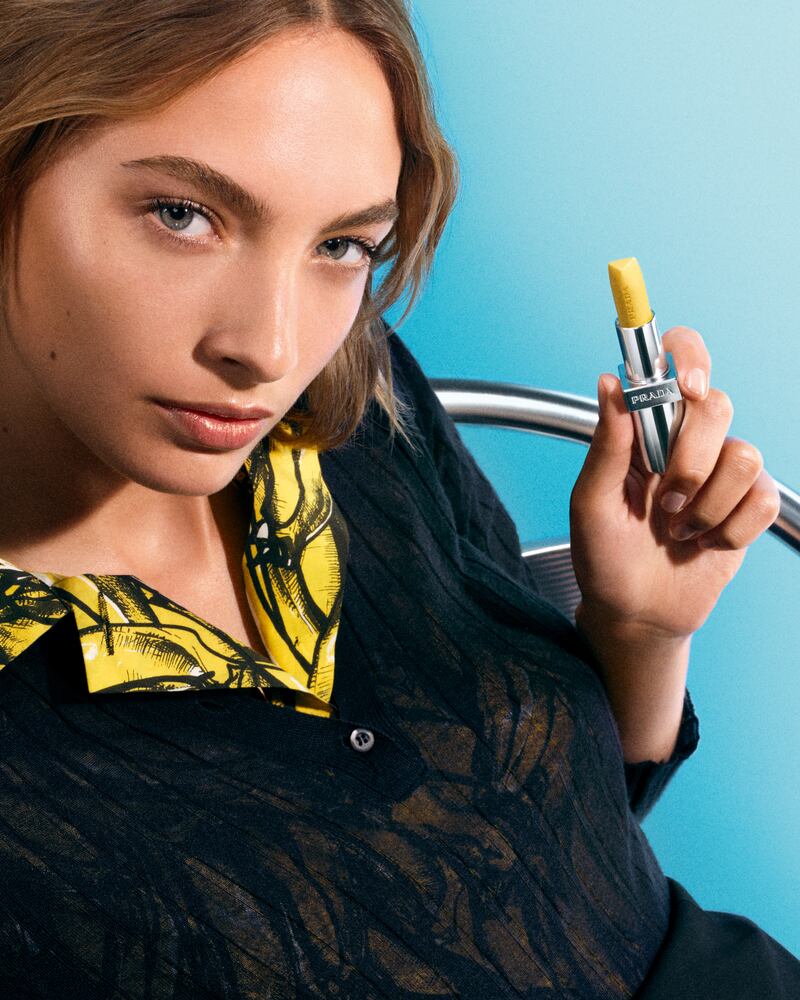
The recent struggles of luxury makeup were largely a self-inflicted wound. [The category] had trouble justifying its premium price tag against highly dynamic and affordable indie brands. To succeed, you have to get back to the fundamentals. Armani’s Luminous Silk is a great example of an exceptional foundation that is incredibly difficult to replicate. Prada makeup has been highly successful because it was deeply surprising. If you don’t offer that level of disruption and simply price your product four times higher than a cool indie brand at Sephora, the consumer is too smart to buy it. A logo on a package isn’t enough anymore.
The first official portrait of Barack and Michelle Obama is beautiful. [President Obama on X]
YSL is fast becoming the designer beauty brand to beat for Gen Z. [The Business of Beauty]
Under financial pressure, Gen Zers are going DIY with their beauty appointments — or skipping them altogether. [Bustle]
The bad: Your algorithm has a taste problem. The good: Your newsletter choices are great! [The Times]
Africa powers the global shea butter trade, but sees only a sliver of the profits. [The Business of Beauty]
Runners are flocking to fitness-focused dating apps. I hope they bring Gatorade. [The New York Times]
Muay Thai has gone from ancient martial art to in-the-know boutique workout to the manosphere’s exercise of choice. [Air Mail]
Thanks y’all,
Priya
Loading recommended reads…
Sales of gems, precious metals and artwork at Japan’s department stores climbed 19 percent in the first half of 2026 from a year earlier to $2 billion.
Though Adidas dressed both teams in the World Cup finals, the global football tournament still presented some bright spots for Nike, writes Bloomberg’s Andrea Felsted.
From our archive, the creator and host of award-winning podcast “Articles of Interest” joins BoF founder, CEO and editor-in-chief Imran Amed to explore what clothing can reveal about identity, culture, labour and the world around us.
Saunders, the brand’s first creative director in five years and a skilled colourist, promises to give Kate Spade the clarity it has long lacked. Now, Tapestry must apply the same long-term brand-building discipline that fueled Coach’s success.