Agenda-setting intelligence, analysis and advice for the global fashion community.
Agenda-setting intelligence, analysis and advice for the global fashion community.

Good morning!
Daniela Morosini here, pitching in for Priya who is in London this week. Hopefully, she’s bringing some Earl Grey tea and Marmite back to New York for me.
This week kicked off earnings season, with Unilever, LVMH and L’Oréal all reporting. LVMH’s perfumes and cosmetics growth was flat in the first half — as it has been for the last three quarters — as success at flagship brands like Guerlain and Dior failed to offset softer performance performance in its travel retail business. Sephora continued to lead growth in its selective retailing unit, which ticked up 5 percent. Unilever and L’Oréal, however, had more celebratory quarters, mainly thanks to the hair category. I’ll dive into L’Oréal’s below.
Also this week, my wonderful colleagues Dan Hastings, Eoghan O’Donnell and Annabel Bolton published an incredible ranking of the most desirable beauty companies to work for, and a case study on how AI is reshaping the landscape for fashion and beauty talent. They’re invaluable reading if you’re looking to make a career move or you have a job listing you just can’t seem to fill.
ADVERTISEMENT
Read on for:
At The Business of Beauty, we spend a lot of time talking about M&A, exits, and investments. I consistently hear from founders, investors and would-be acquirers about how their jobs have gotten harder as saturation and interest rates have increased. As investment firms get more selective, founders are struggling to raise capital at a valuation they’d like — or to do so at all. The M&A heads at top conglomerates have raised the bar when it comes to proving the long-term growth profile of a brand. That’s especially the case in categories like makeup, which is more closely linked to trend cycles, meaning lines fall out of favour faster. A lot of brands that have explored a sale, like Makeup by Mario and Kosas, would have been snapped up in a pre-pandemic environment.
I called up Carisa Janes, founder of Hourglass, which sold to Unilever in 2017 and Alexis Thurston, co-founder of Pulp Riot, the hair colour brand that sold to L’Oréal in 2018, to see what they think will break the logjam.
Janes said there’s still room for excellence in bread-and-butter categories. “The right foundation, or the concealer or mascara are products you depend on and are loyal to forever,” she said. “I’ve never been loyal to an eyeshadow.”
While Janes is still actively involved in running Hourglass, she launched a new cosmetics line, Outside In, in November 2025. She also has a proven track record as an investor: she invested in skincare maker Youth to the People, which was acquired by L’Oréal in 2021, and premium body care line Salt & Stone, which went to private equity firm Advent International earlier this year. The brands she’s interested in now are those that have created a complete world around their products. With Salt & Stone and Youth to the People, for instance, she said the names felt “genius” to her, and the packaging made their proposition clear before even opening the products. Other factors she considers are if brands could foreseeably operate standalone stores or if they have global appeal.
Thurston said founders need to embrace creative thinking, and build strong brand communities. For example, she said onlookers and stakeholders would often ask what the return on investment was for the big education events the brand hosted for stylists.
“The ROI would be zero. We would lose money doing it, but the ROI is the people,” she said, adding that a genuine desire to build, create and execute is needed. Thurston would know — she and her co-founder and husband David originally turned down L’Oréal before selling to it in 2018. (She declined to say how much exactly L’Oréal paid, but said Pulp Riot was generating around $11 million in annual revenue, and that the purchase price was “just under” $100 million.) The two Thurstons now run Danger Jones, another professional hair colour brand.
ADVERTISEMENT
Of course, as any good investor or acquirer will tell you, great businesses always come back to the founder. The best beauty founders have a clear vision, a creative point of view, and are obsessive about quality, brand and product.
That singular focus is rarely satiated with a single exit: both Thurston and Janes have launched subsequent businesses; Marcia Kilgore (Bliss, Beauty Pie) and Bobbi Brown (namesake line, Jones Road) are also several start-ups deep. It’s a difficult equation to solve: acquiring a business that is at scale, still has room for growth, and can be absorbed into its new owner in a way that keeps the founder’s vision alive. The role of the founder is often where the tension comes in, as strategics and private equity firms want what the founder built, but need to feel sure the business can survive and thrive without them.
Ultimately, investors and acquirers are not just investing in what a brand has already created. They’re investing in its ability to keep creating, said Janes.
“There’s always room for great product,” she said. “Can it evolve? Can it outlast trends? Can it become bigger than any one product or even the founder?” she said.
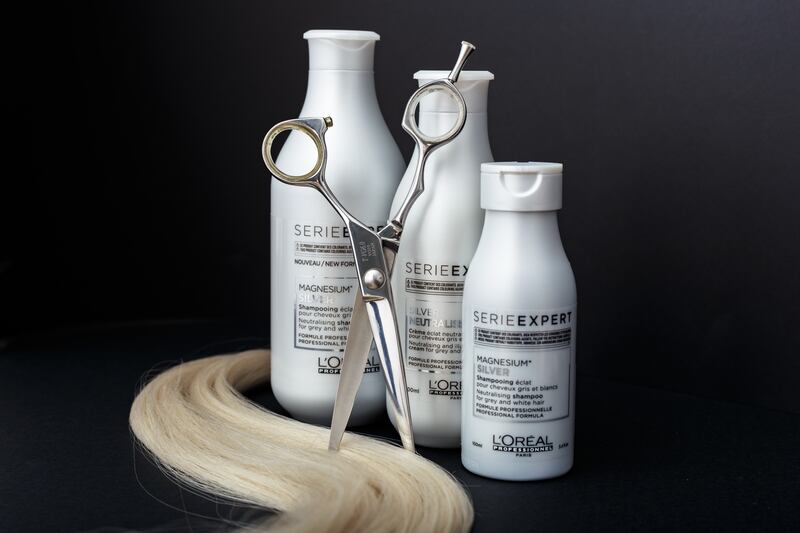
When L’Oréal reported 6.5 percent sales growth in its second quarter on Wednesday, one unit stood out as the company’s clear winner: its professional products division. The segment, which houses the likes of Redken, Kérastase, Color Wow and more, grew 11.6 percent, following on from strong growth in previous quarters. Another stand-out was its dermatological beauty division, which includes megabrands like Cerave, Skinceuticals and La Roche Posay, and grew 10.6 percent. L’Oréal has four brands of the five best-selling skincare brands in the world, per Euromonitor, though not all are housed in this unit (just Cerave and La Roche Posay).
L’Oréal’s innovation is hard to beat, and despite its size, leadership is agile and responsive to changes in customers’ beauty needs. (I toured one of their research and development facilities in Aulnay, outside Paris, a few years ago, and it was mind-boggling. In one room I saw, they had machines to bioprint human skin to test products on.)
For example, shoppers are adapting to longer, more humid (and thus frizz-inducing) summers, while haircare creators have helped popularise multi-step routines as well as brought more attention to concerns like issues like hair loss and thinning. L’Oréal offers products that speak to all of these concerns, and sells many of them through salons, where stylists can sell them to trusting customers. In particular, the company called out Kérastase Gloss Absolu Crème and Redken Acidic Grow Full as top performers.
Then there’s skincare: L’Oréal said Skinceuticals, its pricey science-backed brand, grew double digits, partly boosted by the success of its A.G.E. Interrupter Ultra Serum, which has skin-tightening claims and was formulated to support the needs of patients on GLP-1s. As I wrote in May, only the beauty companies that reliably deliver on innovation are seeing meaningful growth.
ADVERTISEMENT
In contrast, Estée Lauder, (share price down almost 30 percent in the last six months) just announced it’s releasing a gourmand perfume: a huge trend, sure, but one originally popularised by the likes of Kayali and Sol de Janeiro some three years ago.
Bye for now,
Daniela
Is Deciem becoming Estée Lauder’s most valuable asset? [The Business of Beauty]
Gen-Z are falling in love with department store beauty counters, thanks to sales staff’s rizz. [Olivia Eva Reyes on TikTok]
Zendaya is the new face of Prada Beauty. After her ethereal look for “The Odyssey” premiere, I knew it! [Prada Beauty via Instagram]
TSG Consumer Partners is acquiring Saltair, Iskra Lawrence’s body care brand (another successful exit from Ben Bennett at The Center). [WWD]
Beauty brands are ditching the retailer exclusive, and learning how to navigate an open relationship. [The Business of Beauty]
The “Industry” of Beauty: Girls’ Zosia Mamet will join season five of the HBO show as a “fitness influencer turned wellness tech founder and CEO.” [HBO via Instagram]
Speaking of wellness tech, Whoop just recruited Glossier’s ex-CEO. [The Business of Beauty]
Loading recommended reads…
This week, Daniela Morosini chats with post-exit founders about the unwritten rules strategics play by, and dives into the start of earnings season.
The outerwear brand beat expectations for first-quarter revenue, but new US tariffs on Canadian could affect future earnings.
The retailer raised its full-year revenue forecast again as its integration of luxury brand Kurt Geiger last year provided a tailwind.
The prestige skin and spa brand, which is close to finding a buyer, aims to more than double its sales in the next five years, according to documents viewed by The Business of Beauty.