Agenda-setting intelligence, analysis and advice for the global fashion community.
Agenda-setting intelligence, analysis and advice for the global fashion community.


The Business of Beauty's executive editor unpacks how shifting ideals, new players and cultural movements are transforming the global beauty and wellness industries.
Subscribe to Full Coverage by Priya Rao: unpacking how shifting ideals, new players and cultural movements are transforming the global beauty and wellness industries.
Hi all, Priya here.
We’re in the dog days of August and I, too, am ready for a break. Considering that my column is about Target this week, it’s fitting that I’m headed to Minneapolis tomorrow (where my husband is from). I’ll be spending some time in the city followed by a few days up North to live that lake life. Target also reported earnings yesterday, so let’s just say I’m in a Midwestern state of mind.
As many of you are aware, the retail supergiant is about to reveal its long-awaited “Beauty Studio” after its failed partnership with Ulta Beauty. I’ve got some details; let’s get into it.
ADVERTISEMENT
Target had a good day yesterday.
The retailer announced that net sales grew by 5.3 percent over the last year for the second quarter to $26.5 billion, and traffic increased by 3.6 percent; inevitably the company boosted its sales outlook for 2026.
After questions about product mix and DEI plagued Target for more than a year, chief executive Michael Fiddelke’s turnaround plan appears to be working. Big gains were made in beauty and food. (Beauty, which is what we all care about here, flip-flops for Target’s fourth and fifth biggest category after food and beverage, household essentials, fashion and hardlines.)
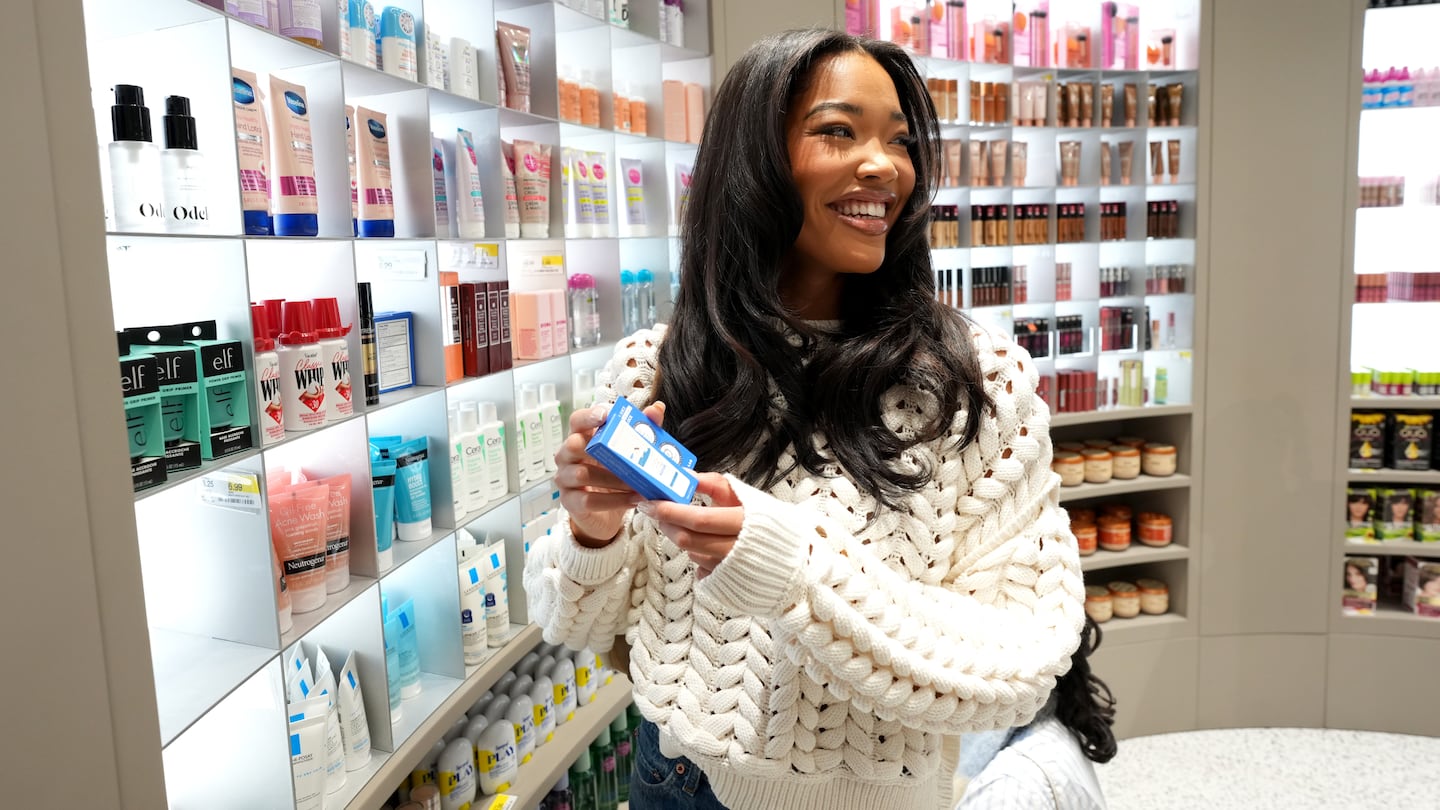
Since the start of the summer, I’ve been piecing together details about Target’s new “Beauty Studio,” which debuts in the coming weeks. Back in March, the retailer announced that it would launch the new space in 600 stores. Reportedly, 90 brands, 60 of which are new to Target, are launching in doors, spanning 1,600 new products. (Its Ulta collab netted out at 610 stores, after an original goal of 800; for the last month, Target has been winding down those outposts.)
From what insiders have told me, the mix is decidedly upscale, as Target has doggedly been trying to push its beauty price point higher. The thinking is obvious enough: Why not convert a shopper who is buying her back-to-school essentials or diapers at Target to trade up to premium makeup or hair care too? Demand for prestige beauty remains strong, despite larger anxieties about the war in Iran, tariffs, housing, you name it; according to Circana, sales increased by 7 percent to $17.1 billion during the first six months of the year, even if mass is still much bigger.
Many of the prestige brands that Target was carrying through Ulta, like Fenty, won’t be part of the new assortment. Neither will its existing buzzy brands like Morphe or Fine’ry, which are staying put in their aisles. I get it: Those spaces are far more productive. I’m told originally that Target was going to use its best-in-class brands to do takeovers in the Beauty Studio as well as lure new labels in via collabs. That eventually didn’t pan out.
Target has made smart bets on new beauty brands before, including Byoma or the just-acquired Saltair, so I still think its overall strategy is strong. With its Beauty Studios, the holdup for me is not whether it can do beauty, but whether it can do prestige well. I understand wanting to increase customers’ basket size, but couldn’t that be done with cool, can’t-get-anywhere-else masstige brands? The price value equation is more important than ever right now.
I’ve heard the Beauty Studio mix is fairly international; expect brands from Australia, Mexico, Italy, France and, of course, Korea. I’m assuming that play is about giving non-US brands their first big distribution opportunity in America, which might be easier than converting labels from its competitors to come onboard. (Some new lines have managed to work through the Ulta paperwork and sell in both retailers.) While the early renderings I’ve seen look very similar to the Ulta spaces, fixtures have been a focus for the Target team to enable better storytelling, trial and flexibility in partnership with brands. It reportedly is also eager to make its staff work harder at offering recommendations and guiding customers through the experience. Target declined to comment.
ADVERTISEMENT
This new outpost should work in theory, but so many mass retailers have tried to elevate their experiences before, including Walmart (via their own efforts and a partnership with Space NK), Duane Reade (through its Look Boutique) and CVS (using its BeautyIRL experience and Glamsquad). Somehow the execution is always lacklustre.
Target has retooled its beauty experience over the years. It has staffed up “concierges” since 2012, and in 2017 introduced an elevated open-floor layout with spotlights on natural beauty and spa categories that eventually rolled out to its wider fleet. I remember when it launched Bliss! Nailing prestige has always been part of its ambitions.
But expecting convenience to rank higher than the right set of brands in customers’ minds is wasted effort. It took years before Amazon started taking any meaningful share of prestige from Sephora or Ulta.
We all know Sephora has a lock on new brands in the US, given its “Next Big Thing” placement, its active engagement in a label’s product development and its strict exclusive agreements. If lines don’t go there, then they’re off to Ulta, which now will have direct competition with Target since both will sell prestige and mass. But Sephora and Ulta have their own share of growing pains to tackle this year: Sephora has to meet or top Rhode launch sales, which I believe Olive Young and Mikayla Nogueira’s POV is hoping to solve for, and Ulta is still working on its perception as a destination for brand building, not scaling.
In any case, Target will need to find its place in beauty retail’s pecking order as its experiment plays out.
Neko Health, purveyor of the $400 body scan, is finally coming to New York. [Neko Health]
Beauty’s new favourite customers are nine-year-old boys. [The Business of Beauty]
The untimely death of actress Hayden Panettiere has ignited backlash against Neutrogena, which the actress said dropped her as a spokesperson after she shared publicly about her mental health struggles and postpartum depression. [Ad Age]
ADVERTISEMENT
Hair and body care’s unexpected challenger is a toymaker from New Zealand. [The Business of Beauty]
Fill up your cup: The push-up bra is back. [The Cut]
Rihanna really never fails. [@badgalriri via Instagram]
Sign up to The Business of Beauty newsletter, your complimentary, must-read source for the day’s most important beauty and wellness news and analysis.
Loading recommended reads…
As Milano Beauty Week closes its biggest edition yet, Cosmetica Italia and its partners are betting that the country’s entire beauty ecosystem can become a brand in its own right.
The ultra-fast fashion company said sales had been bolstered by marketing partnerships with music festivals, a pop-up shop on London’s Oxford Street and local Christmas gift events.
Frasers Group is expanding its holdings in luxury and retail brands, but what it wants from those investments is not always clear.
Tim Blanks joins Imran Amed on The BoF Podcast to discuss why the season’s strongest statements — from Erdem and Simone Rocha in London to Rick Owens, Miuccia Prada and Matthieu Blazy at Chanel — came from designers acting on conviction rather than consensus.