Agenda-setting intelligence, analysis and advice for the global fashion community.
Agenda-setting intelligence, analysis and advice for the global fashion community.

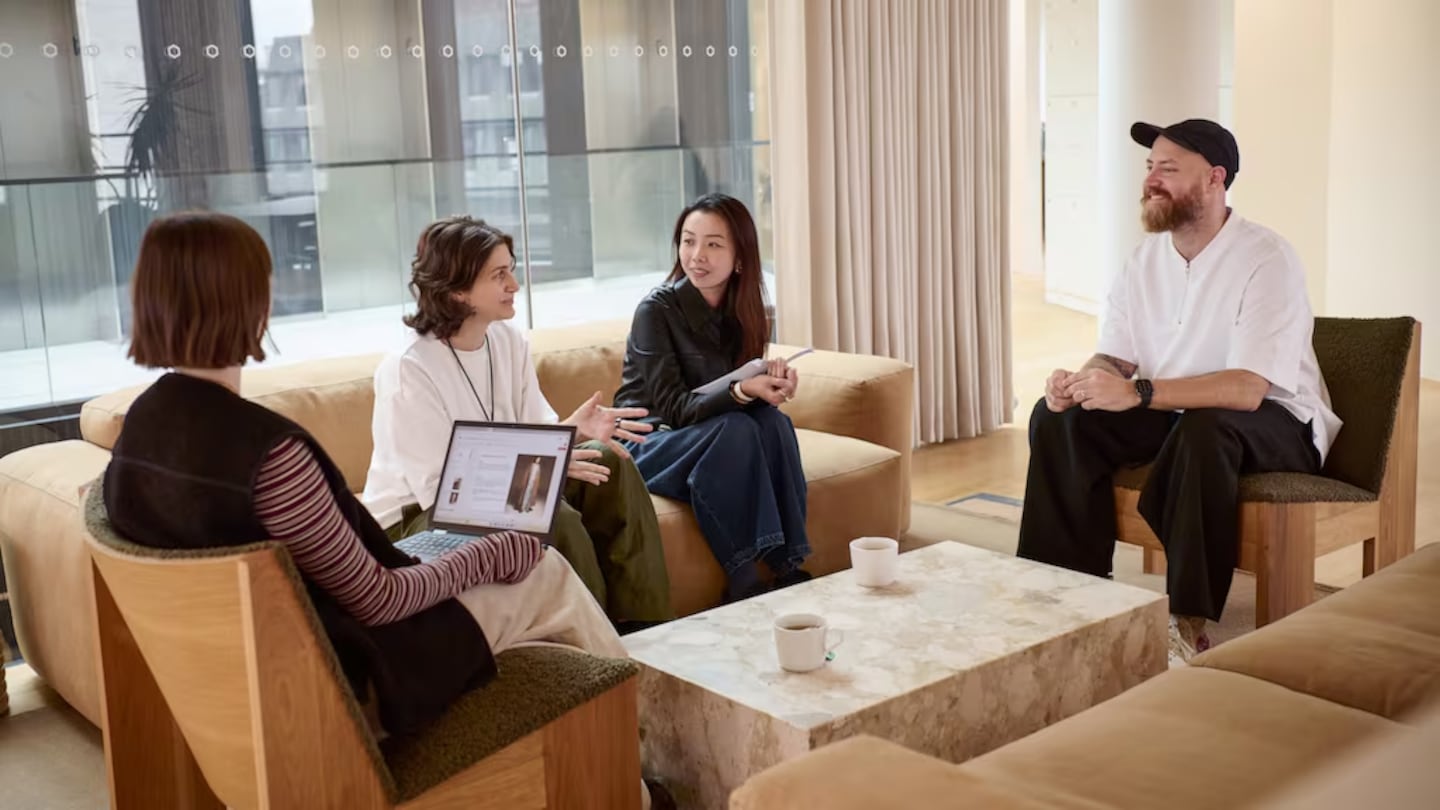

Over its near 20-year history, London fashion brand COS has sought to create a professional environment conducive to career development.
Since its founding in 2007, the company has invested in the career growth of its team — often those early in their professional journeys — to become the next generation of COS leaders.
While an international brand, operating in 50 physical markets and 38 digital, COS’ global headquarters have remained in London. Here, the talent team consciously fosters internal progression — encouraging employees to build knowledge and gain experiences outside of their everyday roles to cultivate the skills required to become a thoughtful, decisive leader.
“What we have focused on at COS is building and shaping principled, high-impact colleagues who then become leaders,” Sasha Brady, COS’ head of talent and leadership development told BoF.
“We want our leaders to be relevant and we want them to be values-led,” says Brady. “When someone starts showing these qualities early on, we think about how we can unlock these traits further and help them develop. Equally, we are always thinking about how we support our strong existing leaders.”
Through internal training programmes, employees are versed on managing people, performance, commercial leadership and cross-functional collaboration — as well as leading through a global lens.
Ye Yuan started at COS in 2017 as a sales market merchandiser in Hong Kong. Today, she is the country manager of Greater China.
“I was given autonomy and trust from an early stage,” Yuan told BoF. “Through this journey, COS has taught me how to be comfortable with the uncomfortable.”
Aaron Smith, who started on COS’ shop floor in London in 2008 — shortly after its founding — now works as the brand’s global head of visual. He told BoF that “COS is a great place to be pushed and encouraged — to develop a range of skill sets.”
Now, BoF’s Eoghan O’Donnell sits down with Sasha Brady, Ye Yuan and Aaron Smith to explore how COS develops its leaders from within — and how this internal strategy has played out in their respective careers.

What defines COS’ global strategy for talent, leadership and learning?
At its core, the strategy at COS is about unlocking potential and looking beyond the here and now. It’s important for us to see what our internal talent is motivated by and how their current experience and skillset can be evolved to lead the brand into the future.
We’ve focused on building and shaping principled, high-impact colleagues from early in their careers — people who can then go on to become leaders. We equip them with the skills to be able to excel.
Which initiatives most impact employee growth?
While talent has access to structured learning programmes, we find the biggest development actually happens day to day — through peer-to-peer and leader-to-peer learning. We see that offering talent opportunities to work in different settings is where the most important skills are built.
Fostering communication and experiences across teams makes the biggest difference: people gain a greater understanding of the business processes — often stretching their capabilities.
How do you cultivate leaders at COS?
As a business, we are clear about what great leadership looks like. We want our leaders to be relevant, we want them to honour our values and we want them to lead with them.
A leader is someone who delivers what’s needed for the business — whether that’s a long-term connection to the customer or driving progress towards commercial goals. Not only are they shaping the business, but they are also shaping teams.
Our “Leadership Essentials” programme focuses on how our core principles show up in day-to-day leadership. It encourages leaders to reflect on their leadership approach, how they live these values and how to continue developing them over time.

How would you describe the culture at COS?
The culture is grounded in feedback — all managers are encouraged to give and receive it. This trickles down across our teams, which creates an open, direct and very straightforward culture.
It’s also entrepreneurial: we are all encouraged to think outside the box and consider what we can do better to deliver the best experience and products to our customers.
This is a positive result of the cross-functional work throughout the company. It’s always about sharing and listening to the best ideas in the room — no matter where they come from.
How has COS facilitated your progression to leadership?
I’ve grown a lot based on the open and honest feedback embedded in the culture. One of the most important experiences throughout my time has been the leaders and colleagues I’ve worked with who saw something in me that I didn’t actually see in myself.
COS’ leaders have always encouraged me to step outside of my comfort zone. There’s this openness to facilitate development and for employees to gain new experiences — something which has brought me across different markets and different functions.
This exposure accelerated my understanding of the business and how we serve our customers in the most meaningful way. How I have grown at COS ties back directly to the company’s feedback culture.
In turn, how have you supported junior talent at COS?
The first and foremost thing to do is set clear goals, then help my team understand what it is they are trying to achieve. It’s about explaining their purpose — and guiding them through decision-making that leads them towards the end result.
By helping junior talent understand the bigger picture, they can take ownership of their work and become more decisive decision makers. Giving them the space to make mistakes and learn from them is how people grow and test out new ideas. It’s a way to continuously develop confidence and expose junior talent to understand the business on a deeper level.
Finally, it’s about consistently following up on their progress — this is a key part of development.
What is one belief about leadership that guides your approach?
For me, the presence of a leader should empower a team — and when that leader is not there, the team shouldn’t feel limited, but trusted to work autonomously. A leader should build team capability and the confidence to work with clarity. A leader must trust the team.
Once that trust is established, your team will work more independently — while following the principles you have laid out.

How would you describe the culture at COS?
It’s a very people-first culture with a warm and tactile environment. People are passionate about their roles and very excited to share what they develop.
Everyone is eager to come together and align on a collective vision — and to share the work they do to collaborate on each upcoming collection.
How does COS foster connections between its retail team and head office?
The collective vision at COS doesn’t mean anything if it doesn’t reach the customer.
We have teams in the head office that bridge the gap between HQ and retail to ensure that what is conceived of for the brand effectively reaches the shop floor. My role is about making sure the direction we set is clear, aspirational and inspirational enough for the retail teams, but with enough space to ensure they don’t feel they’re working to an instruction manual.
What does it mean to be a leader at COS?
COS is a big company, but across all levels, you get regular exposure to leaders.
I’ve been lucky to have many good managers and leaders myself, whom I could ask questions and learn from. COS is a collaborative effort — which means you’re never leading in isolation. Leaders actively learn from each other and are encouraged to share approaches to guiding a team that they think work best.
COS gives us space to hang out as leaders to better understand the needs of the business and its employees — and to share learnings. The opportunity to travel and meet fellow leaders — whether that’s in the US, Europe or Asia — and understand that leadership is often different on a cultural level, meaning people expect different things, is beneficial to the business.
What advice would you give to talent stepping into a leadership role?
Firstly, to relax because I don’t think anyone is a perfect leader from day one. There are going to be good days and there are going to be bad days. It takes time to grow into the best leader you can be — giving yourself the space to grow and learn is what’s important.
People who excel at their jobs often migrate to leadership roles and take over a team. It’s worth understanding that being a specialist in a role is different to being a specialist in leading a team.
People often think you ought to be infallible or perform in a particular way. I think it’s more about allowing yourself the opportunity to transition into the leader you feel comfortable being. Creating an environment in which you can be honest about your limitations and your expertise enables your team to fill those gaps and for them to feel comfortable doing so.
This is a sponsored feature paid for by COS as part of a BoF partnership.
Loading recommended reads…
So-called “clean” skincare has lost its appeal as shoppers favour more clinically proven products. But in cosmetics and fragrance, the appetite is only growing.
The Swiss firm agreed to purchase the medical-grade skincare company from private equity firm Blackstone and the founding Obagi family to expand its US portfolio.
Nike is reducing the number of Jordans it puts on the market as it tries to restore the brand’s exclusivity and pull it out of a slump. Experts say it will take more than reducing supply to fix the problem.
Kelly Clarkson’s viral feud with an independent Brooklyn toy store has ignited debate over poor customer service, which experts say can be remedied with investment in training and employee motivation.