Agenda-setting intelligence, analysis and advice for the global fashion community.
Agenda-setting intelligence, analysis and advice for the global fashion community.
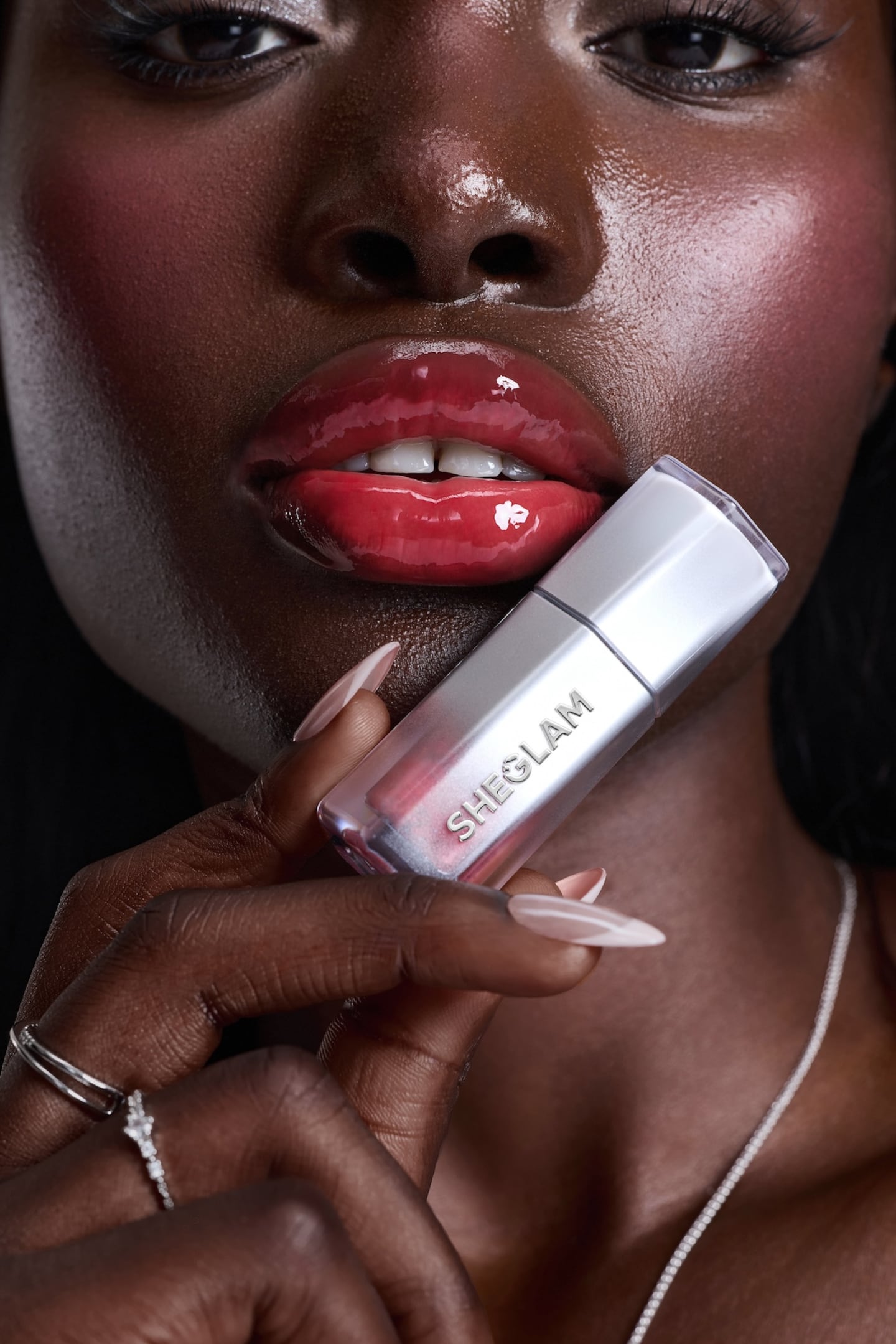
It’s 11 PM in Nanjing, China and Sylvia Fu is giving a Zoom tour of her living room.
There is an orderly line of Pop Mart Mega Molly dolls against a gleaming white marble wall, a fully lit Christmas tree (it is September 17), a plush gray rug the color of anime hero Totoro, and a brown couch with a pink Hello Kitty pillow.
Fu has led the effort to turn Sheglam, the beauty brand she founded in 2019 as chief executive under the fast fashion giant The Shein Group, into a formidable challenger to buzzy global beauty brands like E.l.f. Cosmetics or Mco Beauty. It hit $400 million in revenue last year and has lured over 17 million fans — double the population of Nanjing itself — across Instagram and TikTok.
“I have been dying to talk to you about all this,” said Fu through an interpreter, referencing dupes. “Actually, there are a lot of assumptions and things people don’t quite know about Sheglam yet.”
ADVERTISEMENT

It’s an important time for Fu to spread the word. After years of stock market speculation, Sheglam’s parent company The Shein Group debuted on the Hong Kong Stock Exchange on September 1… and was promptly humbled. In its first day as a publicly traded company, Shein hit a valuation of $26.5 billion — roughly 25 percent of the $100 billion valuation it was initially assigned in 2022 — and then lost another 9 percent before the closing bell.
Industry watchdogs blamed tariff pressure and losing the US de minimis exception. Fashion and beauty insiders had another idea: Just as AI slop was becoming a punchline for cool kids, style slop was becoming anathema to Gen-Z and Gen-Alpha shoppers.
But with its My Little Pony-smooth packaging, under-$20 range and its legions of online fans gushing about the brand’s quality, sources that work with Shein said that Sheglam is becoming a kind of yardstick for the company’s evolving best practices, and perhaps, an emergency parachute for its future earnings.
The business has a long way to grow first, but also has genuine staying power, said Carrie Zhao, the founder of Creative Acts in Business and a luxury strategist who has worked for L’Oréal and Alibaba Group, who points to its high creator retention rate. 82 percent of the brand’s earned media value, which estimates the financial value of the brand’s exposure, comes from creators — an unusually high figure for a mass brand.
“Cheap brands normally churn creators badly,” Zhao said. “If affiliate economics actually work at those price points, that’s a durable engine rather than a series of viral accidents.”
Fu is a fascination in beauty industry circles; everyone knows about her, but few actually know her.
She is the LinkedIn equivalent of Aphrodite, having sprung fully formed from her dual Master’s Degrees (one from the London School of Economics, one from China’s ultra-competitive Renmin University in Beijing) and into her only listed job as Sheglam’s top boss.
In Fu’s past life, she was a venture capitalist at firms like Sequoia Capital and Hillhouse Investment, though none of these are part of her “public” story on social media biographies. Then she assisted Shein’s notoriously private billionaire creator, Chris Xu. She was brought on to build the megabrand’s beauty silo with a team of five in 2019. Because of its operational leg-up, Fu never denies that SheGlam is the ultimate corporate nepo baby. (Zhao calls it “structural privilege.”)
ADVERTISEMENT
“In the early days, the Shein Group provided us with the initial funding support and gave us access to a critically important sales channel,” she said.
Shein’s internal logistics and fulfilment systems still power the beauty brand’s online sales and customer outreach, and Shein.com serves as a majority sales channel for the cosmetics brand. But the two are “not able” to use each other’s infrastructure or business models, Fu said, because Shein can take far less time to develop a shirt, make far fewer units in a factory and still consider it a “success.”
According to Fu, Shein’s clothes can go from a design sketch to a sorority girl’s Alabama mansion in under a month, even with minimum order quantities around 100 units. But all of Sheglam’s makeup takes four to six months, owing to formulation, testing and Leaping Bunny certification. The brand produces its colour cosmetics on its own automated or semi-automated factory lines with a minimum order quantity of 10,000 units, which leaves little room for guesstimates about consumer demand.
Fu said the inability to use Shein’s manufacturing playbook has actually worked in Sheglam’s favour.
“We selected a small number of contract manufacturers that also manufacture products for leading international beauty brands,” she said, hinting that unlike Shein’s not-so-cashmere sweaters, her formulas can be nearly identical, in both general quality and specific ingredients, to expensive bestsellers at Sephora.
Because of these mirrored formulas, Sheglam has an online reputation for making astounding dupes, including affordable swap-outs for Dior Candy Glow lipstick (the Mirror Kiss lipstick, $7) or Rare Beauty’s eyebrow gel (Set Me Up brow gel, also $7). Perhaps unsurprisingly, Sheglam matches up to 95 percent of some formulas from the runaway C-beauty makeup brand Flower Knows, including several of its eye shadow palettes and a face highlighter; Sheglam’s palettes cost less than a third of the price of Flower Knows’, and often contain more shades.
But there are also wacky, original items like a brain-shaped blush ($10) in collaboration with the adult cartoon programme “Rick and Morty,” which Fu gleefully pulls off her living room table and holds up to her laptop camera, showing the pigment load on the pink balm inside.
But the brand claims to be a more innovative brand than one that merely sells dupes.
ADVERTISEMENT
“I’ve been waiting all day to tell you this,” she said. “We were not a dupe brand on day one, and we will not be a dupe brand in the future.”
The Sheglam team asks itself a series of questions before they greenlight a product: “Is it new? Is it better? Is it different?” She cites the brand’s bestselling Crystal Jelly Eyeshadow Stick ($8) as an example of an original item developed in-house by her team, then points out that other brands (for instance, Tower28) later made items that seemed eerily similar.
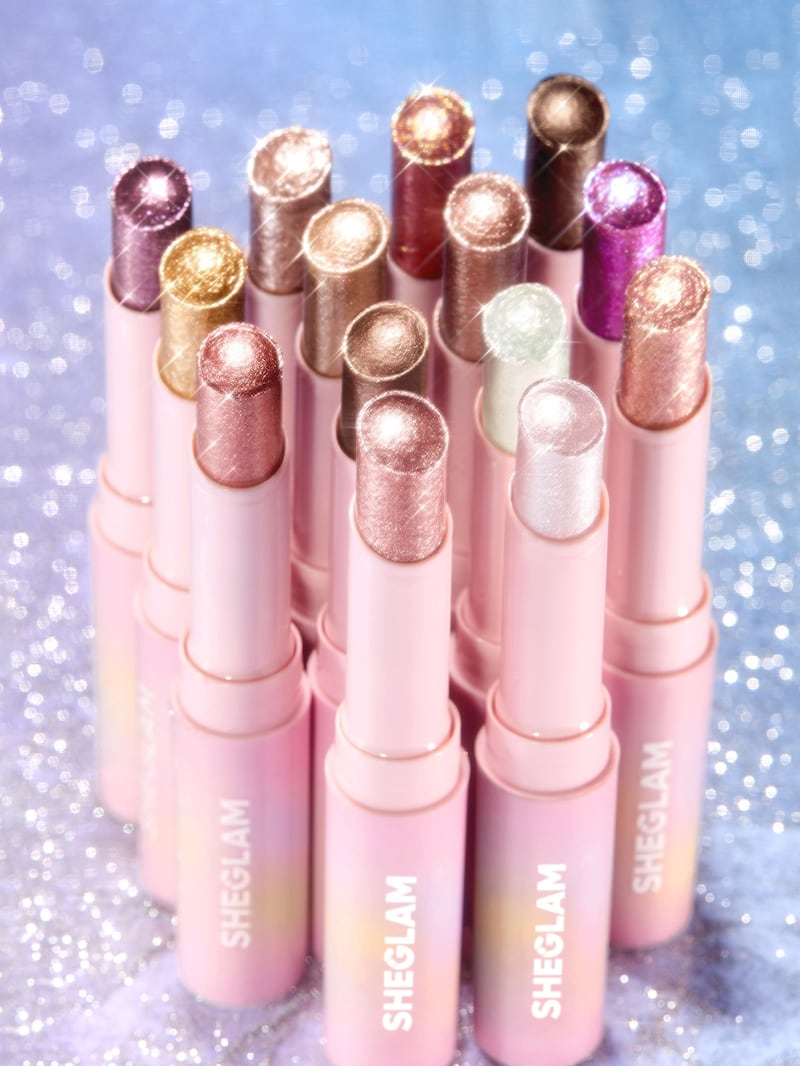
“They are more expensive than ours, but ours was first!” said Fu with a smile. “We were the first brand to apply multichrome pigments to an eyeliner gel… We may be affordable, but our goal is for our product innovation and creativity to lead colour cosmetics across every price tier around the world.”
But Sheglam doesn’t deny it takes inspiration from other brands too. The strategy is not unlike Australian company’s Mco approach with its latest launch, the All Dayer spray.
“Even when we develop a dupe,” she said, “we study all of the negative e-commerce reviews and social media feedback about the original product in detail. So if we make a dupe, it still has to be a better dupe.”
Fu’s beauty brainchild has an international footprint that would make any competitor jealous. Sheglam has brick-and-mortar retail presence in 15 countries, including the Gulf region’s Centrepoint, Japan’s Don Quijote and India’s Reliance Retail-owned Tira Beauty store, and boasts online availability in over 150 nations, with hubs in Africa, South America and Australia. The brand has been approached by “many” major retailers, Fu said, but hasn’t yet committed to entering a chain like Sephora or Ulta Beauty in the US.
But with diverse distribution comes a plurality of beauty wants, especially as microtrends in places like Seoul, Dubai and Los Angeles spark like prairie fires across TikTok. “All of this is a major challenge for us,” said Fu. “If we stay online only, we could be agile. But as we expand to more offline channels, we really want to go deeper in terms of localisation.”
As Sheglam’s online storefronts stretch from Shein’s homepage to Amazon and TikTok Shop, Fu is hawkish in how her products look and perform across an iPhone screen or tablet. She is personally involved with casting Sheglam’s influencer models, saying their eye shape alone can make or break an online sale. “Consumers often follow creators whose skin tone, skin type, lash characteristics, face shape, or eye shape are similar to their own,” Fu said. The right kind of makeup needs to be matched with the right kind of shopper at exactly the moment they’re looking for a particular trend, like multichrome-pigment eyeliner gels.
But the brand isn’t hellbent on only makeup; in 2024 Sheglam launched a line of hair care that spans shampoos, stylers and hot tools. Still, there are no immediate plans for other categories any time soon, because Fu wants Sheglam to become the number-one colour cosmetics brand in the world sooner rather than later. “We’re developing makeup,” she said. “That’s the key.”
As of this reporting, The Shein Group, which includes SheGlam, is hovering around $5.1 per share — a dip from the $8.1 price of its Hong Kong Stock Exchange debut.
Does Fu have any ideas for turning it around?
“Our interactions with Shein are relatively limited,” she said. “We operate in different industries.”
But Fu concedes she has slipped some advice to her parent brand during on-site interactions with Shein Group executives.
“One key takeaway I have shared is that the brand marketing strategy needs to change fundamentally for this new generation,” she said.
In the mega-brand’s model, Fu said, consumer insight, product development and marketing are disconnected. The product team makes a product, then relies on a high marketing budget to persuade consumers into buying it.
At Sheglam, she said, the model is somewhat reversed. “We should invest more time, resources, and cost in creating a great product,” she added. “[You] need a product that can easily prove it’s great.”
Though beauty might not yet be bolstering its parent group’s bottom line, Sheglam should be more of a proof point in its success, Zhao argued.
“Sheglam is more valuable to Shein as an IPO narrative — evidence the company can build brands rather than only move volume,” she said.
Sign up to The Business of Beauty newsletter, your complimentary, must-read source for the day’s most important beauty and wellness news and analysis.
The ultra-fast fashion retailer closed its first day of trading flat as investors weigh slowing growth and mounting challenges to its business model.
Mcobeauty’s newest launch, crafted with precisely the same formula as its pricier forebear, Urban Decay, showcases an evolving strategy for ‘dupe’ brands.
Faran Krentcil is a contributing writer at The Business of Fashion. She is a New York based writer, editor and lecturer with a focus on fashion and beauty.
Loading recommended reads…
Bangladesh’s garment miracle was built on its reserves of cheap gas. Keeping the magic going will require finding a way to live without it, writes Bloomberg’s David Fickling.
The beleaguered sportswear giant is hoping its Alphafly 4 model will bring some added shine to one of the few bright spots in its portfolio: its running category.
Planet-warming emissions associated with the raw materials used to make fashion, footwear and home textiles have risen 30 percent since 2019, according to a new report.
Goodai is the latest indie breakout to toy with trading in the public markets.