Agenda-setting intelligence, analysis and advice for the global fashion community.
Agenda-setting intelligence, analysis and advice for the global fashion community.


If there’s one topic fashion executives want to learn everything about right now, it’s AI.
Companies can’t stop talking about the technology, but despite its ubiquity, to many it remains a mystifying tool they aren’t yet sure how to put it to its best use. This lack of clarity applies not only to how to implement AI, but also which tasks it’s best suited for in the first place.
To help, we’ve assembled stories from The Business of Fashion archives identifying where businesses say AI is helping them work faster and smarter. They range from data-centric jobs like setting markdowns to unexpected applications like using AI to simulate consumer research, and include different types of AI from machine-learning algorithms to the large language models that have captured much of the attention over the past few years. (If you don’t know what distinguishes one from the other, we also have this guide for our executive members on everything they need to know about AI.)
The technology on its own is not a silver bullet. AI is a tool, not a business model, and brands still need to make sure they’re nailing the fundamentals. Its utility depends on the quality of data being fed into it, meaning brands often need a strong data backbone before they can derive real gains. Implementing AI effectively can require organisational and cultural changes, too, as long-established processes get revamped and employees learn new ways of working.
ADVERTISEMENT
But experts say businesses able to harness AI to their advantage can see substantial gains with the technology. Here are 10 areas in fashion where it’s making a difference.

AI is being used across all the stages of the marketing funnel today. Brands are leveraging it to improve audience segmentation and ad targeting, conceive campaign ideas, generate imagery, write copy and personalise communications such as emails. It’s frequently used to streamline time-consuming tasks, such as producing different sizes and localised variations of creative assets, as well as for more creative jobs, like creating digital twins of human models.
Businesses do need to be cautious. AI should be used to augment human creativity, not replace it. Public attitudes towards the technology have also grown more negative, meaning brands need to think carefully about how they’re using it in customer-facing contexts.
Recommended Reading:
Case Study | The Fashion Marketer’s Guide to AI. Marketers have moved from experimenting with AI to harnessing it as a structural part of daily operations that can boost productivity and human creativity when used correctly. This case study breaks down the best practices to streamline workflows without sacrificing brand integrity or the human element of marketing.
Unpacking Fashion’s New AI Marketing Toolkit. From Mango to Zalando, fashion brands are using AI tools to produce faster, cheaper and more personalised campaigns — but keeping content on-brand still requires human creativity and strategic control.
H&M Knows Its AI Models Will Be Controversial. The company expects public opinion to be divided on its plan to use “digital twins” of real models in AI-generated imagery. But the best way to protect models’ jobs and rights in the age of AI, it says, is to bring them into the process.

The latest wave of AI’s ability to generate realistic imagery made design one of the first areas it was applied to in fashion. With the tools widely available online today, designers can quickly visualise concepts with written prompts, helping them decide what works or sparking new ideas. More sophisticated users are training AI models on archives of their past work, allowing them to generate new designs in their own style. A number of startups have also emerged with platforms tailored specifically for fashion design capable of turning hand-drawn sketches into realistic renders or generating the technical drawings needed for manufacturing.
ADVERTISEMENT
There are tradeoffs. Getting the AI to generate exactly what you want just through text prompts can be difficult. Those prompts often need to be highly detailed, or the result can be generic imagery. Some critics argue that no design generated by AI can be truly original, either, since models have to be trained on existing imagery, much of which was used without the consent of its creators.
Recommended Reading:
After Months of Designing With AI, Norma Kamali Isn’t Looking Back. Concerns are growing that the technology’s transformative power has been oversold. Kamali, on the other hand, is as convinced as ever that, for her at least, it marks the start of a new creative era.
Why Collina Strada’s Hillary Taymour Thinks Generative AI Is a ‘Game Changer.’ The buzzy brand, which used the technology to help design the collection it showed at New York Fashion Week, appears to be the first to use it to create physical runway looks, or at least the first to acknowledge it.
The Race to Build the Best Generative-AI Platform for Fashion Design. A new wave of start-ups is building tools that take the capabilities of the market’s top generative-AI models and tailor them to fashion’s specific needs. Among them is Raspberry, which just raised $4.5 million in funding from a number of big-name backers.
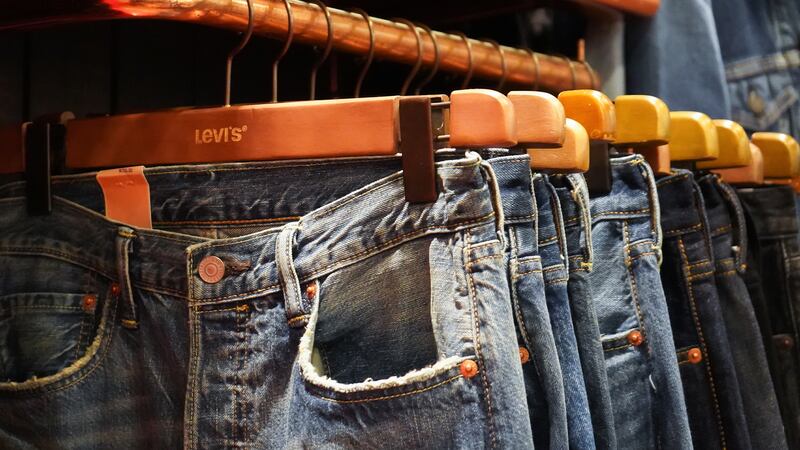
Compared to traditional pricing models, AI lets retailers incorporate a much larger volume and variety of data — everything from weather and economic forecasts to consumer sentiment and social-media trends. Proponents say the result is more accurate predictions that allow brands to optimise pricing and manage markdowns.
It’s worth noting, however, that good results require good data, which can be laborious to gather and clean for analysis. AI’s predictions also become less accurate the further into the future they look, making the technology more useful for near-term guidance, such as when to discount an item and by how much at the end of a season.
Recommended Reading:
ADVERTISEMENT
Fashion’s New Approach to Setting Prices. Artificial intelligence is replacing intuition when it comes to determining what shoppers will pay.
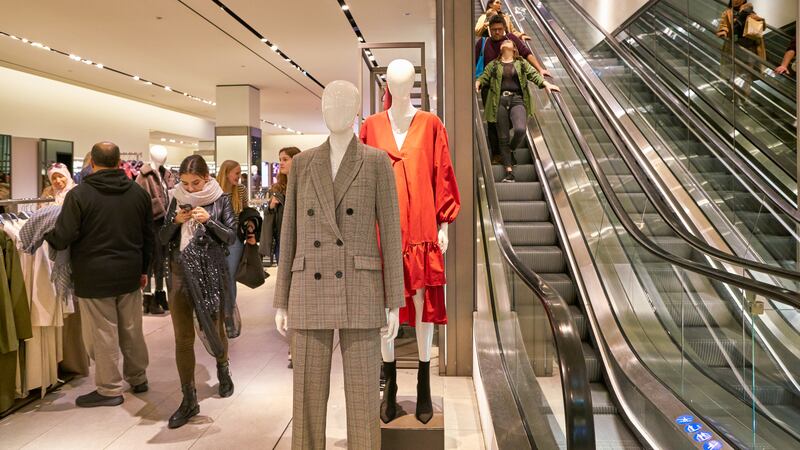
AI is helping retailers with their inventory buys in a couple ways: One, it’s allowing them to quickly reorder items that are performing well by spotting signals in sales data before traditional methods could. Two, it’s letting them crunch large amounts of data to make smarter predictions about what their initial buys should be, which is vital to avoid tying up capital in products that don’t move and need to be discounted.
Critics of AI forecasting caution the technology can offer a false sense of predictive accuracy. It often takes eight to 10 months — or more — for clothes to be designed, produced and land on store shelves. AI forecasts become less reliable that far out. Proponents say traditional forecasting methods struggle with the same issues, however, and that AI can offer some improvement because of how much data it can incorporate.
Recommended Reading:
Can AI Predict What Shoppers Will Buy?One of the technology’s great promises is to let retailers make far more accurate forecasts about how much to produce, down to the level of size and colour. But knowing what consumers will want months in advance isn’t so simple.
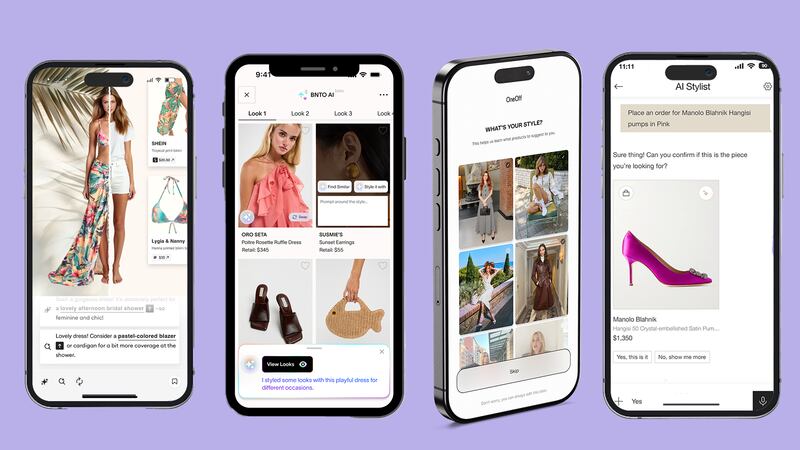
Retailers have been using AI for years to recommend products to shoppers that are tailored to their preferences. Those abilities have improved as AI techniques have advanced, but LLMs have also introduced a new form of shopping where customers can converse with chatbots to get even more personalised suggestions.
Algorithmic personalisation in fashion still falls short of what users experience with a service like Spotify, but that’s because retailers face a more difficult challenge. There are limits on the inventory available, and they also need to factor in characteristics such as sizes and colours to find the right match.
Recommended Reading:
Why Fashion’s Curation Problem Is so Hard to Solve. Online retailers are looking to algorithmic personalisation as a way to carry a vast inventory but still show shoppers products that match their individual tastes. It’s the same idea that powers Spotify and TikTok, but pulling it off in fashion isn’t easy.
What It Will Take for Consumers to Let AI Shop for Them. A new class of AI-powered shopping platforms are launching agents that can shop on consumers’ behalf. But they’ll have to compete with big tech players in the race to get the average consumer to use the technology.

To better understand their customers, companies are using AI to conduct what are essentially virtual focus groups. They’re able to create different consumer personas that they can survey to get their opinions on products or campaigns. They can even talk to individual personas just like they would an AI chatbot. Compared to traditional consumer research, where people need to be assembled and polled, this type of synthetic research can be much faster and cheaper.
The method does have some shortcomings. Because consumer attitudes change so quickly, companies need to make sure they’re frequently refreshing the data behind their personas, or they can get outdated results. It’s also difficult to capture the unpredictability of real humans, whose responses are influenced by emotions.
Recommended Reading:
Want to Know What Consumers Think? Ask an AI-Generated Focus Group. Synthetic consumer research, where AI is used to simulate shoppers, is emerging as a cutting-edge way for brands and retailers to better understand their customers and test everything from products to marketing campaigns before they launch.

At a number of companies, AI agents capable of performing actions autonomously are starting to handle normally labour-intensive tasks, such as making changes in the HR system or compiling reader-friendly recaps of lengthy sales reports for merchandisers.
These agents are still in early days. They can struggle with issues like navigating a complex web interface, but their abilities continue to advance, suggesting they’ll become capable of performing a greater range of more complicated activities over time.
Recommended Reading:
Fashion’s Other AI Revolution. Even as AI marketing grabs headlines, agents powered by the technology are transforming fashion’s back-office jobs at a moment when corporations are laying off staff to be leaner and more efficient.
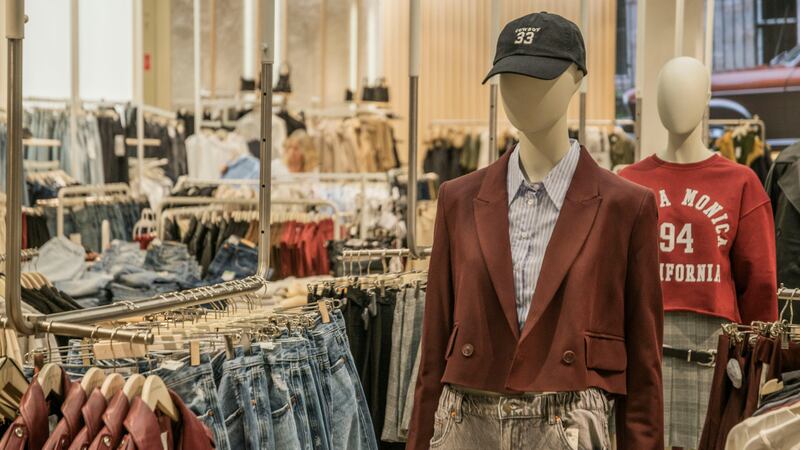
With most sales still happening in physical stores, it was inevitable that retailers would turn AI to the sales floor. Using cameras, sensors and RFID tags on products, they’re able to gather data that they can then analyse with AI to make improvements in their merchandising, store design and the efficiency of in-store staff. High-end retailers are also working to arm store associates with tablets that use LLMs to provide quick insights about a customer’s preferences and which products might be of interest based on their shopping history and any details on file like birthdays.
As is frequently the case with AI, the biggest limit tends to be the data available. Retailers need to be able to collect good data on their physical spaces or on specific customers in order to best apply these methods.
Recommended Reading:
The Next Step for Retail AI Is Bringing It Into the Store. At NRF’s big show this year, brands and start-ups were looking at ways to translate AI’s powerful analytical capabilities to brick-and-mortar retail.
RFID’s ‘Quiet Revolution’ in Retail. Zara, Uniqlo and American Eagle are among those leaning on the technology for abilities like self-checkout and better inventory tracking, while more companies join the ‘cult of RFID’ each year.

The dizzying number of variables in a supply chain, from weighing manufacturing costs in a region against shipping times to dealing with changing conditions like fluctuating material prices or closures in shipping routes, make it an ideal scenario for using AI to crunch all the data and find the best solution. Startups are even leveraging the technology to bring greater transparency to supply chains, using it to extract data from public and non-public records to be able to identify things like where the raw material in a certain yarn originated and estimate carbon emissions.
AI isn’t magic, of course; it can’t create a solution where one doesn’t exist, and it’s limited by the data available. But its strength is being able to process volumes of information that would overwhelm other methods.
Recommended Reading:
Executive Memo | Everything Fashion Executives Need to Know About AI. The industry’s top decision makers may know all the AI buzzwords, but too many are lacking fundamental knowledge about how the most consequential technology in a decade actually works.
Will AI Finally Bring Visibility to Fashion’s Supply Chain? One company using artificial intelligence to help fashion businesses identify their links to China’s Xinjiang region received a public vote of confidence last week when it struck a multi-year deal with US Customs and Border Protection.
Can Technology Fill In Fashion’s Missing Data on Emissions? One start-up has attracted partners like Klarna by offering a way to estimate the carbon footprints for millions of products, despite fashion’s lack of data on its upstream supply chain.

AI’s ability to spot patterns undetectable to humans is being put to use as a way to authenticate genuine items and identify counterfeits. By photographing a designated area of a handbag during production, for instance, a brand can enable a customer to later determine if that bag is real by snapping a picture of the same spot with an AI-powered app. One startup, Osmo, is using AI analysis of the way sneakers smell to distinguish knockoffs from the real thing.
While these methods do require references from genuine items to compare to, making it harder to scale them, they’re offering brands new avenues for authentication to explore.
Recommended Reading:
AI Takes on the Fashion Industry’s Counterfeit Problem. LVMH’s Patou has begun rolling out a new AI-powered authentication system with its technology partner Ordre, adding a new dimension in fashion’s effort to fight fakes using AI’s ability to spot patterns indiscernible to humans.
AI Can Now Authenticate Sneakers by Their Smell. An AI start-up working with a major sneaker resale platform believes it has found a way to authenticate footwear and potentially other products through the chemical signatures in their scent.
The industry’s top decision makers may know all the AI buzzwords, but too many are lacking fundamental knowledge about how the most consequential technology in a decade actually works.
Marketers have moved from experimenting with AI to harnessing it as a structural part of daily operations that can boost productivity and human creativity when used correctly. This case study breaks down the best practices to streamline workflows without sacrificing brand integrity or the human element of marketing.
Even as AI marketing grabs headlines, agents powered by the technology are transforming fashion's back-office jobs at a moment when corporations are laying off staff to be leaner and more efficient.

Marc Bain is the UK Editor at The Business of Fashion. He is based in London and oversees BoF's case studies and executive memos, as well as driving its technology coverage.
Loading recommended reads…
After the retail empire’s initial takeover bid failed, the company raised its holding to 50.08 percent in a move that will turn the German apparel brand into a subsidiary of Frasers.
The settlement, equivalent to 44 percent of the ultra fast-fashion company’s second-quarter profit, is the latest blow amid regulatory and tax crackdowns in Europe and the US that have hampered Shein’s growth.
Among the takeaways from the latest round of quarterly reports from European luxury groups: China’s hurting, industry growth in the US has slowed and quiet luxury is having a moment.
Bloomingdale’s chief executive Olivier Bron joins Imran Amed on The BoF Podcast to discuss how a name every American knows is re-earning its place in luxury and why he sees Europe’s biggest houses wrestling with the same problem.