Agenda-setting intelligence, analysis and advice for the global fashion community.
Agenda-setting intelligence, analysis and advice for the global fashion community.

Though only 23 years old, Jesse Santos has been a fan of Supreme for a decade after learning about the brand from rappers like Tyler, the Creator; he’s been waiting in lines to flip new releases at its Los Angeles store on Fairfax Avenue since he was a teenager. But by the late 2010s, he was struggling to resell that same merchandise.
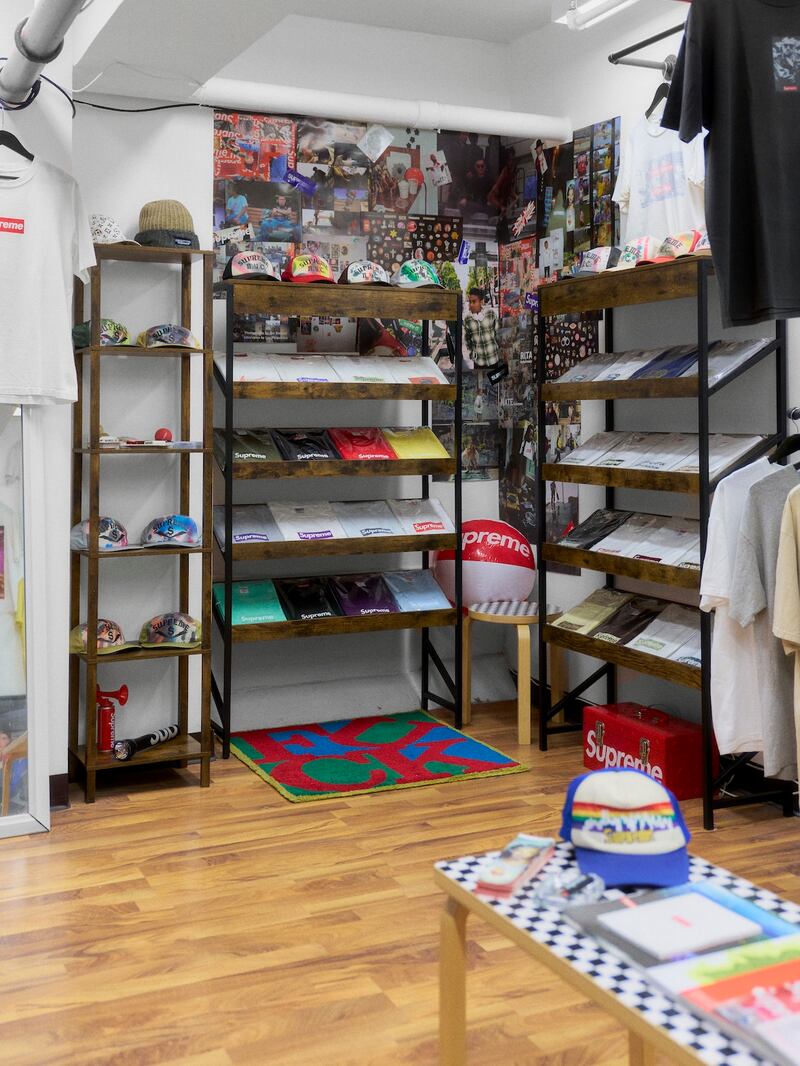
Instead of letting go of the brand entirely, he shifted his attention to buying and selling vintage pieces from Supreme’s 32-year-old past instead of new releases, like handpainted trucker hats by the late New York City graffiti pioneer Rammellzee. By the time Santos graduated from UC Santa Cruz with an economics degree last year, his business was doing so well that he decided to forgo a corporate job to focus on reselling Supreme full-time. He moved to New York City and opened a showroom in October to sell rare vintage pieces, like a T-shirt from the store’s opening in 1994 with art by Jean-Michel Basquiat, for over $10,000. His confidence in doing so was buoyed by a feeling that the brand’s hype is ascending again.
“Within the past two years, I’ve really felt an uptick in popularity for these older items,” said Santos. “That definitely comes with Supreme’s newer releases being a lot more hyped up. It feels like it’s going back to those 2016 days.”
Following a post-pandemic retail slump, a cooling resale market for streetwear staples like sneakers, and corporate acquisitions by VF Corp. in 2020 and EssilorLuxottica in 2024 — the former sold the label at a $600 million loss— streetwear pundits were quick to declare the end of Supreme’s allure. While EssilorLuxottica hasn’t disclosed financial details since buying Supreme, fresh consumer tracking metrics tell a very different story.
ADVERTISEMENT
Credit card panel data from Consumer Edge shows US direct-to-consumer spending at Supreme dropped roughly 20 percent annually in 2023 and 2024 before rebounding in late 2025 and surging over 35 percent throughout the first three quarters of 2026. That rebound was driven by market share gains among 25-to-34-year-olds as well as 18-to-24-year-olds — with the latter surpassing 2023 levels — as well as expanding traction at both the lower and upper ends of the income spectrum relative to competitors like Stüssy and Aimé Leon Dore. On the brand’s website, web traffic rose from 2.52 million visits in September 2023 to 3.92 million in September 2026, the first full month of releases for its fall and winter collection, according to web analytics firm Similarweb.
That momentum is also translating to the secondhand market: On StockX, Supreme became the top-selling apparel brand in 2026 for the first time since 2021, with sales volume increasing 38 percent year-over-year.
“Sure brands ebb and flow in relevance, but when a brand hits a certain scale, there’s a conversation that happens about how relevant a brand is that isn’t necessarily related or correlated to the state of its overall business,” said Nordstrom’s menswear director Jian DeLeon, who previously covered the brand’s rapid trajectory in the 2010s for streetwear media outlets such as Complex and Highsnobiety.
Supreme’s rebound is less the product of a revamped strategy and more so sticking to its core playbook, which resonates with longtime enthusiasts while simultaneously addressing a younger generation who are lining up for releases that speak more towards the brand’s cultural touchpoints and accessible pricepoints rather than its speculative resale value.
“They have a lot of stuff going on that proves that they can still be edgy, interesting and put out a product that’s unexpected even though they’ve been at it for 30-plus years,” said Brendan Dunne, StockX’s senior director of customer community and engagement. “It feels like they released big projects recently that got people talking, that may have been missing for a while.”
Dunne points out that two of the most popular apparel releases resold on StockX in 2026 included a Supreme Spider-Man T-shirt and a MM6 Maison Margiela collaboration centred on a rare zip-up variation of Supreme’s signature box logo hoodie that both released earlier this year.
The resonance of those releases on resale, he said, illustrates Supreme’s range, from broadly accessible T-shirts timed to one of the year’s highest-grossing films to high-fashion tie-ups. Despite broader collaboration fatigue, he argues that Supreme continues to cut through the noise by pushing larger partners like Nike beyond obvious silhouettes while also championing designers who appeal to fashion-forward consumers, such as A.Presse, Martine Rose or Vaquera, which went on sale this week. Supreme has also leaned into cross-generational partnerships, collaborating with artists like Salem and Lil B to appeal to both Zoomers and older fans, as well as brands like Number (N)ine, which deeply resonates with both new and old Japanese fashion enthusiasts.
It’s not a major shift in Supreme’s collab strategy, but DeLeon finds these partnerships continue to shape his perspective on what resonates with menswear customers broadly.
ADVERTISEMENT
“It really validates a lot of the things we’re thinking about,” said DeLeon. “When we see this person’s working with Supreme, it signals something in terms of how culturally relevant a brand is and how that aligns with our gut feeling on a direction we want to take.”
And that consistency to stay true to its brand playbook is what resonates with both young and old followers of the brand.
Ben Dietz, a strategy consultant who first visited the store during its opening year in 1994, finds that Supreme never strayed away from its brand expression, even amid multiple ownership changes. Founder James Jebbia remains involved in the brand and Supreme also has stayed committed to a retail strategy that still builds off its origins as a SoHo skate shop in the 1990s. Even as Supreme has slowly expanded into new markets — ranging from American cities such as Chicago and Miami to South Korea and Mainland China — Supreme continues to tailor its stores to local skate communities. For example, its new Seoul location that opened in September includes skateable benches made from granite salvaged from the demolished Sunae Station Plaza, a local skate landmark since the 1990s.
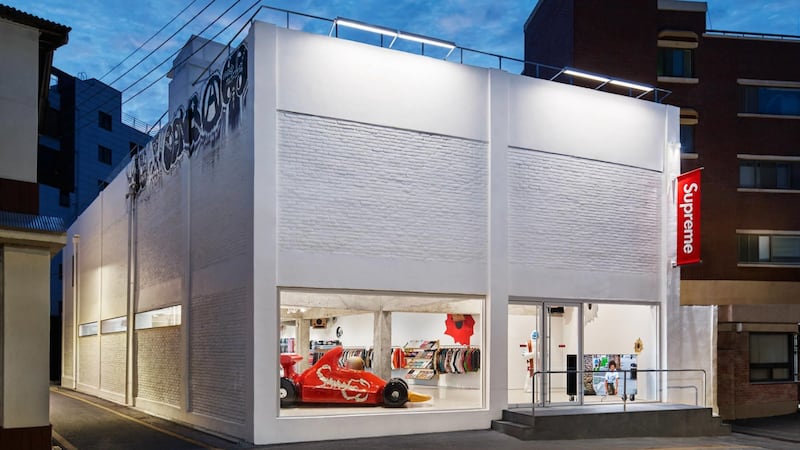
“The ways in which a new market begets a new store, skate video, box logo, shop crew and a new set of [skate] team riders, is a playbook that they’ve been running for decades that continues to work really well,” said Dietz.
Killian, a 27-year-old Paris-based Supreme content creator better known as DropsGG, has followed the label for a decade and got into the brand in the late 2010s when weekly drops were dominated by frantic resellers flipping everything. Today, while he finds that products still sell out in seconds, he believes that demand is driven by customers who are actually invested in the brand rather than its resale value.
“There’s still a chunk of the community that will always want their box logos or big collabs. But now people just stick around to see if what’s releasing matches their taste rather than trying to make money on top of it,” said Killian.
While resellers like Santos continue to find customers willing to pay a premium — eBay noted that Supreme’s global average selling price climbed 9 percent year-over-year — he finds the renewed secondary market demand is being driven by the brand’s heritage.
“A lot of people now spending money on this older stuff were introduced to Supreme when they were too young to afford any of it,” said Santos, noting that most of his customers are in their early-20s. “People who are my age are graduating, getting jobs and have adult money they are willing to spend when they’ve been looking for something for 5-10 years.”
ADVERTISEMENT
Whether it’s by casting Gen Z-aged rappers such as AgusFortnite2008 in lookbooks or releasing TikTok-ready branded mini mics, young collectors such as Santos feel like Supreme is increasingly addressing a younger customer segment. He also believes that Jebbia’s children becoming older and public-facing teenagers directly influences the brand’s current perspective on youth — similar to how children of the Stark family behind Chrome Hearts introduced the luxury label to a younger audience.
“I have teenage kids who are not skateboarders, but regard the brand as super cool and aspirational,“ said Dietz, who points out that Jebbia has mentioned in interviews that Supreme’s guided by what discerning New York City kids want to wear. “It’s gotten to that point where it just is an imprimatur of authenticity and respect.”
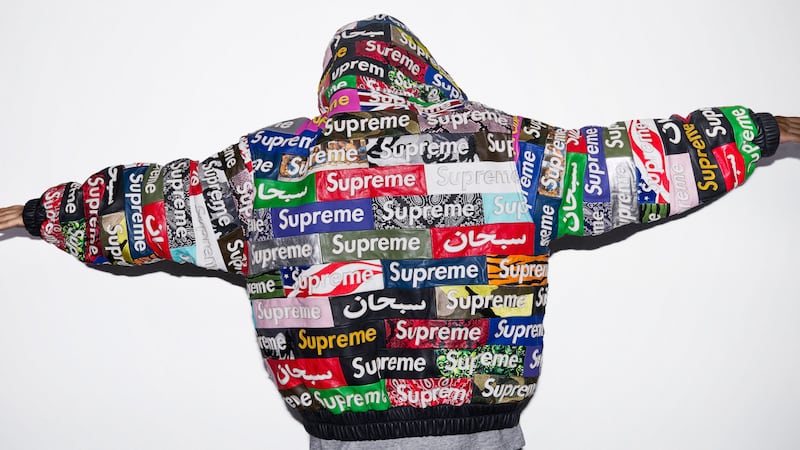
Yet Dietz and Santos find that, while Supreme focuses on a younger customer, it retains them even as they age out of their teenage years because of the brand’s unique cultural reference points, which prioritise tastemaking over being purely commercial.
“Supreme, the reason that they are what I would consider to be the largest streetwear brand at this point is because they touched so many different niches over the years,” said Santos. “That’s what keeps the customers coming back and what keeps them relevant.”
Supreme’s ongoing relevance with both younger consumers and older shoppers who are also increasingly becoming price sensitive is its relatively accessible price points. According to Consumer Edge, Supreme’s average order value has increased from $120 in 2022 to $150 in 2025, with market share gains concentrated at both ends of the income spectrum — led by households earning under $40,000 annually, followed by those making $150,000 or more. Dunne affirms that Supreme addresses both ends of the spectrum, pointing to how Hanes plaid boxers that retailed for $40 were just as popular on StockX as $298 hoodies.
“What Supreme really exemplifies is the importance of price value for today’s customer,” said DeLeon, who finds Supreme consistently offers well-made, easy-to-wear, apparel that’s competitively priced against higher-priced designer labels. “If you grew up buying and wearing it, then you’ll continue to do so because you can still get a lot of value and a lot of great pieces that you could mix it in with whatever you have.”
The rise of streaming culture and the social platforms that support it are influencing a generation of young men and spawning new menswear labels from Kai Cenat’s Vivet to Jarod John Leonard.
Human Made shares begin trading in Tokyo on Thursday, a milestone in streetwear’s evolution from a subcultural fashion trend to a mature fashion category.
Streetwear is by no means dead, but its customers are changing. Today they're embracing a diverse wardrobe that mixes logo T-shirts with heritage brands and traditional menswear or luxury.

Lei Takanashi is a Correspondent at The Business of Fashion (BoF). He is based in New York City and covers menswear, streetwear, young consumer trends, and the intersection between fashion and culture.
Loading recommended reads…
Backed by a $3 million pre-seed round, the made-to-order platform aims to lessen inventory waste by giving influencers the tools and supply chain to launch custom apparel lines.
Developing, not recruiting, top sales associates is the way to build client loyalty that lasts, argues Martin Shanker.
From Kallmeyer to Toteme, a new wave of fast-growing labels nestled at the top end of fashion’s contemporary segment is offering a luxury-like quality at prices that trigger ‘reverse sticker shock.’
Ultraceuticals is bringing its treatment-first approach to the US, positioning aestheticians as its most powerful brand ambassadors. BoF sits down with chief executive Catrin Thomas to learn more.