Agenda-setting intelligence, analysis and advice for the global fashion community.
Agenda-setting intelligence, analysis and advice for the global fashion community.

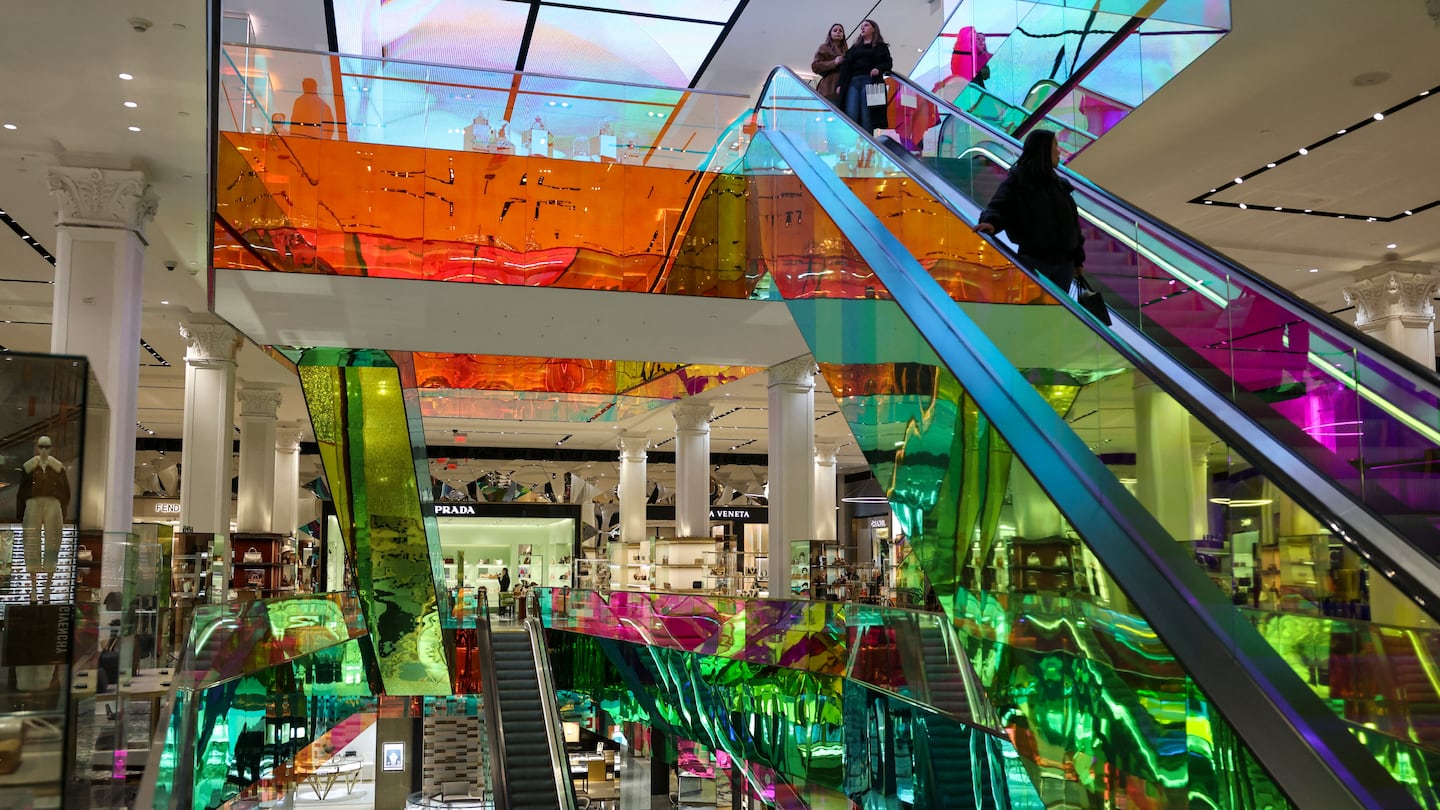
Saks Global may be emerging out of bankruptcy earlier than planned — a confirmation hearing is scheduled for early June — but new chief executive Geoffroy van Raemdonck is well aware that financial repair is only half the battle as he aims to get the luxury behemoth back on track.
The seasoned fashion executive, who helped steward Neiman Marcus Group out of its own bankruptcy in 2020, is now in the midst of a high stakes charm offensive aimed at mending fractured relationships with brands large and small after years of late payments, unfulfilled terms and broken trust. A number of independent brands will not be paid for money previously owed to them.
In an exclusive, in-depth interview with BoF on his post-bankruptcy strategy, van Raemdonck didn’t sugarcoat the damage done to brand partners in recent years.
“Our brands had gone through a long period of delayed payment,” he said. “There was a lot of PTSD and I think part of coming back was to instill some confidence.”
ADVERTISEMENT
A.L.C., a Los Angeles-based contemporary womenswear brand, is among the hundreds of labels that have resumed shipping to Saks Global this spring after receiving assurances from van Raemdonck and his team. “We’re cautiously optimistic,” said A.L.C. chief executive Jennifer Somer. “This team had a lot of trust with the vendor community because of how they ran [Neiman Marcus’] turnaround, which enabled them to move a lot more quickly and make more progress than if it had been a new team coming in.”
But rebuilding Saks Global’s reputation is still a work in progress. While inventory may be flowing again — Saks Global said it received 105 percent of the inventory it had bought and expected in the first quarter — psychological scar tissue remains.
“The big brands matter but so do the tiny ones,” said Julie Gilhart, former fashion director of Barneys New York, which filed for bankruptcy in 2019 and eventually liquidated its inventory and closed all of its stores in 2020, just one casualty of the years-long crisis in a US department store sector buffeted by the rise of e-commerce and monobrand retail.
“Until they get the trust back, there’s going to be hesitation because people want to feel secure that they’ll get paid,” she added. “Action does speak louder than words.”
Emerging from Bankruptcy
Saks Global filed for Chapter 11 in January 2026, buckling under $3.4 billion in debt — a direct consequence of its acquisition of Neiman Marcus in late 2024. But while in bankruptcy, it was able to secure $1.75 billion in new financing, a portion of which was earmarked for paying critical vendors back. The company is expected to exit bankruptcy following court approval in the second half of June with the support of its unsecured creditors.
Saks Global’s financial recovery will also be made possible by shedding non-retail distractions, van Raemdonck said. He and his team moved to eliminate expenses weighing on the company’s bottom line, most notably $55 million in annual rent Saks was paying to its real estate joint venture for Lord & Taylor stores that had shuttered years ago and the closing of the bulk of its off-price business, which was not profitable. The company also laid off 16 percent of its corporate workforce, eliminating about 640 positions.
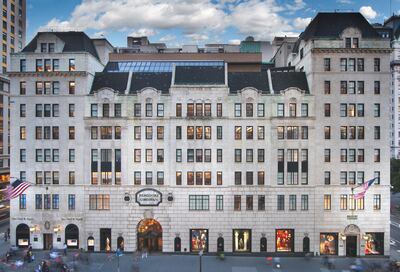
The new incarnation of Saks is also materially smaller. Its retail footprint now consists of 15 Saks Fifth Avenue stores, 33 Neiman Marcus locations, Bergdorf Goodman in New York City and a dozen off-price outlets for liquidating past season merchandise. That’s less than half of its total number of outposts going into bankruptcy just four months ago.
ADVERTISEMENT
Saks Global’s future owners are a group of former lenders, led by hedge funds Pentwater Capital Management and Bracebridge Capital, who will likely become the majority owners pending court approval.
In the long term, however, Saks Global has several ownership options, van Raemdonck said, including a possible public offering, acquisition by a strategic industry player, and a sale to sovereign wealth or private equity funds.
“The pool of interested parties is large,” he said. Saks Global is projected to be cash flow positive next year, he added, so in the meantime the business can fund the turnaround itself.
With about a third of the debt it carried going into bankruptcy and on track to post $85 million in adjusted earnings before interest, taxes, depreciation and amortisation this fiscal year, Saks Global has found solid financial footing. But long-term success will require a total reimagination of the department store model from its assortment and workforce to shoppers’ physical and online experiences, van Raemdonck said — an endeavour that will begin in earnest post-bankruptcy.
Van Raemdonck said Saks’ reinvention efforts will benefit from a powerful tailwind: the resilience of the US luxury consumer is a bright spot in an otherwise troubled global market.
According to a company survey conducted in March 2026, 76 percent of customers said they feel optimistic about their personal finances — up 11 percentage points versus October 2025.
And while brands now have more options to go direct-to-consumer, van Raemdonck argued that Saks Global remains the essential gateway to reach the US luxury customer. The company said it has retained 90 percent of its top-tier customers who spend an average of $36,000 a year at Saks Global and account for 40 percent of total sales.
“Brands want access to that customer and they don’t have that access because they don’t have the sales associates who know the customer and can wardrobe the customer across brands and across categories,” he said.
ADVERTISEMENT
BoF’s Imran Amed and Cathaleen Chen spoke to van Raemdonck at length to learn more about his plan for getting Saks back on track. Read the full interview below.
BoF: Walk us through the bankruptcy process. How were you able to move this fast, as it’s been less than five months since Saks filed for Chapter 11?
Geoffroy van Raemdonck: Well, it’s actually less than four months. First and foremost, we got access to $1.2 billion of new liquidity, which we’ve received, and we’ve secured another $500 million of liquidity that will be provided at emergence. What we did then was laser focus on two things.
One was restoring trust with the brands, because if you don’t have inventory and if you’ve not been paying brands, then your business is at a standstill. Many of the brands we were able to pay for a portion of what we owed them pre-petition in the critical vendor programme. Overall, we worked with more than 500 brands. Forty-six percent of those were small and independent brands. As we reestablished relationships with them by paying some of the prepetition amount owed and then committing to pay according to terms during the bankruptcy, we saw the inventory flow back. And so if I look at the end of Q1, we received 105 percent of the inventory we had bought and expected. So that’s allowed us to get the business going and to get a flow of revenue and therefore, as we buy and pay the brands, we generate more cash which will help for the purchase of the following month.
The second thing is we’re really focused on using the tools that are available during the bankruptcy to make sure this business grows in a profitable and sustainable manner. Neiman Marcus (pre-acquisition by Saks Global) was a profitable business. It had $450 million more operating income than Saks Global. And Saks’ business model was more focused on growth than it was on profitability. So we’ve now focused the business on the core, which is serving the luxury customer through retail and experiences. We’ve removed all that we had on real estate and development of properties. And then we’ve taken very sharp and measured but deliberate decisions to right size our footprint of stores. So going forward, we have 15 Saks stores, 33 Neiman Marcus stores and one Bergdorf Goodman. These are all in the markets where the luxury customer is present. All those stores are profitable and attract a large group of customers.
We’ve decided to exit the off-price and outlet business, so we’ve kept 12 stores that are there for liquidation of end-of-season products, but no additional buying for outlets, as that business was not profitable for us. We’ve downsized to two newly re-outfitted distribution centres on the East Coast and in the Midwest, and we have a small service centre on the West Coast, down from seven distribution centres. We’ve exited from contracts that were not core to our business or not advantageous to our business. We right-sized our corporate team to make sure that we invest in the capabilities that drive growth and make sure this organisation is lean and agile and can make decisions fast.
BoF: One thing I wanted to double-click on was the original rationale for this merger between Saks and Neiman Marcus. What didn’t work so far in the way the merger was originally conceived?
GVR: One thing that actually did work quite well was achieving some of the synergies. So the first year there were $200 million of synergies. It actually worked quite well to take the costs out and to refocus on the areas of the business where one of the two companies was doing it better and sharing the best practices. I think what was challenging is that the integration of systems became difficult and last August we had challenges as we were processing and receiving inventory that added to the liquidity issues.
The other thing that really saddled this business is that there were a lot of expenses that had nothing to do with serving luxury customers.
I’ll give you one example. We were paying $55 million of rent every year for Lord & Taylor stores that were closed and had no hope to reopen as Lord & Taylor because that business was liquidated. But because we own the real estate, the promise was if we keep paying the rent and that real estate, then the rent went to pay on the mortgage on those properties. There was a hope that you could realise the value of the real estate. But real estate is only valuable if it’s occupied by a credit worthy tenant. And so, these elements that are not linked to retail made it difficult to really operate.
The most important difference today is that we have ample liquidity to buy products, pay the brands and fund the operations, which then is the way to drive profitability and ultimately reinvest in our business. We only exist to serve the luxury customer and to be a gateway for the luxury brands to that customer. Anything that deviates from that is a dilution of our efforts and a dilution of what we are best at.
BoF: What has been the hardest challenge for you to navigate in the last four months and how did you manage to get through it?
GVR: There are two of them. One was to re-establish the trust with the brands. Our brands had gone through a long period of delayed payment. There was a lot of PTSD and I think part of coming back was to instill some confidence. It took time to just talk to everyone and hear everyone out and tell our vision and explain to everyone the bankruptcy process, explain to everyone that we had funding committed to them and that we were going to actually have a critical vendor programme that allowed us to pay some of the prepetition claims. And I think that is really something you can only successfully do if you talk to one person at a time and you get everyone comfortable. Now, we did achieve that because none of our top 200 brands have left us.
The other challenge is the court-supervised process. The beauty of it is that there is a process and it’s supervised, and so it brings rigour to everyone. As a CEO, it means that there’s a lot of decisions that I can’t make because they’re regulated by the code and other elements.
BoF: As Saks Global emerges from this process, who will now own the company? How does that affect your ability to make long-term investments?
GVR: The future owner, as defined by the plan of restructuring, will be a group of former lenders led by two hedge funds, Pentwater and Bracebridge, that own the vast majority of the debt and therefore will, according to the plan, become the majority owners of the business, alongside with a couple of other investors that owned the debt before. I think it’s really interesting to look at the fact that these groups invested and lost money from their investment, but continued to invest because they were the ones who committed additional funds. The business has a plan to grow its liquidity and grow its profitability but ultimately, we will be seeking long-term owners.
BoF: And what would the characteristics of a better fit long-term owner be?
GVR: There’s always the path of an IPO. We are the proxy of the US luxury market after all. There’s always different types of strategic owners. And then you have sovereign funds or private equity funds that invest in transforming and reimagining a business model and this business model, while profitable, is primed for continued reinvention. And so the pool of interested parties is large. The beauty is that there’s no urgency for us. Our plan calls for being profitable this year in EBITDA and cash flow positive next year so we can continue to fund the business and grow it for the foreseeable future.
BoF: Saks has made great progress in onboarding hundreds of vendors back onto the matrix. What is the importance of discoverability and partnering with smaller brands?
GVR: The diversity of brands is very important. That’s why in the critical vendor programme, 46 percent of the brands that we supported financially were small and independent brands. When we look at customer frequency, it’s often those smaller brands that create loyalty. If you look at today, in our top ten brands, you’ll see Christian Louboutin and Brunello Cucinelli, which started their business in the US with us when they were very small. Brunello Cucinelli met with the team at Neiman Marcus at Pitti Uomo when he didn’t have a store and was not widely distributed. Today those brands do more than $100 million with us.
Every brand deserves personalised attention and we need to get to all the brands to get them comfortable with our future. And then it’s really figuring out how we tackle the future, because there’s so many pockets of growth. We’re always also looking for exclusivity. Goyard is a brand that is only available in the US at Neiman Marcus and Bergdorf Goodman. If you look at Van Cleef & Arpels, it is only available at Neiman Marcus or Bergdorf Goodman. If you look at Schiaparelli, the only points of distribution in the US are Neiman Marcus and Bergdorf Goodman.
BoF: With the war in the Middle East, a challenged global market generally, a China market that’s not growing nearly as quickly as it was five or 10 years ago, the US luxury market has become a real focal point for brands. What does your customer data tell you about this US luxury customer and the resilience that we’re seeing in the results as all the big luxury groups are reporting?
GVR: In our most recent survey in March, 76 percent of our luxury American customers said that they felt optimistic about their personal finances. And that was up 11 percent compared to October. So the perception of how well they feel about the stability of their finances and their wealth is improving. We saw that 57 percent of customers said that they would buy equal or more in the next three months, which suggests that the appetite to engage in luxury is increasing. And then when we asked the question around buying full price, the answer was at an all-time high compared to what we’ve been surveying in the past.
I think the luxury customer is much more influenced by their wealth and the stock market than by the GDP and the employment level. Beyond that, the US customer who engages in luxury is very loyal. And yet, there’s still a big part of the American population of high net worth individuals who are not participating in luxury. The potential for more growth is really there. When you ask brands in Europe where is the avenue of growth, it’s resoundingly the US market.
BoF: But if you look at the US luxury market, recent growth has also been driven by entry-level customers, aspirational customers. And the same dynamics that you’re talking about at the high-end customer level are reversed for entry level customers. How do you see that evolving in what some people are calling a K-shaped recovery?
GVR: By increasing prices non-comparative to the value that was provided, we’ve actually pushed out some consumers because they’re either priced out or they recognise that this is not the value they’re receiving. When I look at the brands that are doing the best, it’s brands that bring products with craftsmanship and design that offer value. That value is not a nominal amount, but literally ‘what am I receiving for what I’m paying.’ We’re seeing it now with the new creative directors who are redefining the essence of their brand. I think we have an ability to bring some of those customers back. These customers need to see that they’re getting something that is really worth the word of luxury.
BoF: Does that also present an opportunity for brands that are sitting slightly below the pure luxury level?
GVR: There’s a huge opportunity there and that is frankly where a lot of the American brands play. When you look at the Rosen Group, his brands are beautifully designed, beautifully made and at a price point that some of the European luxury brands have vacated. It’s the Tory Burch space. A blend of functionality and unique design. That’s where we’ve seen not only growth but also the biggest delta between the brands that are capturing more of their fair share and some that are shrinking. They attract the entry price point of luxury customers, but they also are the best customers and come very often for contemporary brands because it gives them something to wear every day. It gives them a frequency of purchase that is different from some of the other luxury brands.
BoF: What is your plan in winning back some of the market share that Saks lost to its rivals such as Bloomingdale’s and Mytheresa?
GVR: I don’t think we’ve lost a lot of customers when it comes to the true luxury customer. Where there has been a decline for us is in more of an entry price point customer, in the beauty category and in customers that were not really loyal.
Almost 60 percent of our sales come from customers who spend more than $5,000 a year with us. And then if I zoom in, 40 percent of our business is made by customers who on average spend $36,000 a year with us. We’ve retained 90 percent of those customers and the reason being we have sales associates who build those relationships. It’s always a human relationship. We’ve got 1,500 sales associates who sell $2.8 billion of revenue a year. That’s about $1.9 million each on average. When someone is in a relationship — and we define relationship as shopping three times with the same sales associate — they spend 16 times more than the customers who are not in a relationship. I think technology is going to be a huge benefit to us to help scale this white glove service to more people.
BoF: I’d like to turn to a key strategic question which has come up over and over again as a strategic choice a lot of people in the industry don’t fully understand. I can understand why keeping Bergdorf Goodman is essential given it is a single destination with a clearly differentiated proposition, but why have you decided to maintain both Saks Fifth Avenue and Neiman Marcus as separate brands?
GVR: You’ve heard me talk about devotion to the customer. We’re following what the customer is telling us. There are seven cities where Saks and Neiman are in the same mall or in Beverly Hills where they are across the same street. The overlap in customers in these cities is between 11 to 15 percent. So even if the brands are selling about the same things, the customer is indicating to us that they perceive these two banners very differently.
The customer at Saks is a customer who enjoys fashion and really looks to Saks for inspiration and validation and guidance. The customer at Neiman Marcus is a customer who has a lifestyle of luxury in fashion, in travel and other elements. And then Bergdorf is the pinnacle of luxury.
Where we have more work to do is differentiating the voice, the positioning, the imagery. Part of what the industry should expect is a greater differentiation over time.
Forty percent of our business is made by customers who on average spend $36,000 a year with us.
BoF: If you closed one of those locations, wouldn’t the luxury customer just go to the other? Do you think it’s worth the complexity?
GVR: We put a lot of scrutiny on this internally and with our future shareholders. I think there’s two things that convinced us.
One is if you just look at the sizes of the stores. These stores are all significantly above $100 million in revenue. It is impossible to fit that level of business into one destination. And so we believe that we would have to really disappoint customers, disappoint brands, and actually leave business on the table in a place where these stores are profitable.
The other element is counter-intuitive math. When Barneys closed, we didn’t see an influx of all those customers. There’s a math in retail that isn’t logical. Usually, when you operate in a temporary store or have half the store in construction, you actually do equal or better.
BoF: How should the department store model be reinvented?
GVR: I fundamentally believe that there’s a reason for multi-brand retail. One-third of our business is ready-to-wear. The customer who is loyal to us is looking for wardrobing. They’re looking for advice that is not biased by any brand.
Stabilising the business is not the ambition, it’s reimagining it. I’ll tell you there are five ingredients that we’re going to amplify.
One is the collection — our ability to give to the consumer a collection that is really the right one for them.
The second is the sales associates who get to know our customers. Technology can help us be more predictive and personalise better. But I think it’s fundamentally a business that is driven by humans: the merchants and the sales associates. It’s where the art of luxury meets data science.
The third one is experience. The customers who go to our restaurants spend significantly more.
The fourth one is what I call the art of you. It is this that allows us to talk to you as a customer. The connectivity and knowing that what shows up on your landing page is where technology can transform.
And the fifth is talent. We need to be an organisation where people want to be, where they want to belong.
I would say that we look at our future in three phases. This year is about stabilising the business. And then the next two years are starting to selectively choose where in those five elements we make a difference. And then sometime in 2028 to 2030, execute on that reimagination. My main message is the prerequisite to that is that we need to be profitable and our growth needs to be profitable. Every conversation I’m going to have with brands is that we cannot do things together that deteriorate our profitability.
Editor's note: This article was amended on May 12, 2026 to reflect that any post-bankruptcy changes in ownership will not be subject to court approval.
Saks Global CEO Geoffroy van Raemdonck joins Imran Amed and Cathaleen Chen to explain how he is steering the retailer through bankruptcy in record time — and why he’s betting on the resilience of the American luxury customer to fuel what comes next.
Relations between Saks Global and many of the 2,000-odd brands stocked in its department stores appear to be worse than ever after the owner of Saks Fifth Avenue, Neiman Marcus and Bergdorf Goodman sent a letter this week setting new payment terms.
As Saks Global enters a blockbuster Chapter 11 filing, its creditor list shows who’s exposed — and sets off a scramble for ways to recover unpaid bills.
The luxury giant has filed its roadmap to exit Chapter 11 this summer, confirming it will not sell Bergdorf Goodman. Under the new deal, bankruptcy lenders will take full ownership, wipe away billions in debt and set the stage for a leaner, more profitable operation.

Cathaleen Chen is Retail Editor at The Business of Fashion. She is based in New York and drives BoF’s coverage of the retail and direct-to-consumer sectors.
Imran Amed is the Founder, CEO and Editor-in-Chief of The Business of Fashion. Based in London, he shapes BoF’s overall editorial strategy and is the host of The BoF Podcast.
Loading recommended reads…
This week, Europe’s leading luxury groups LVMH, Kering, Hermès and Prada will show who’s pulling ahead in the stubbornly choppy environment.
Sales of gems, precious metals and artwork at Japan’s department stores climbed 19 percent in the first half of 2026 from a year earlier to $2 billion.
Though Adidas dressed both teams in the World Cup finals, the global football tournament still presented some bright spots for Nike, writes Bloomberg’s Andrea Felsted.
From our archive, the creator and host of award-winning podcast “Articles of Interest” joins BoF founder, CEO and editor-in-chief Imran Amed to explore what clothing can reveal about identity, culture, labour and the world around us.