Agenda-setting intelligence, analysis and advice for the global fashion community.
Agenda-setting intelligence, analysis and advice for the global fashion community.

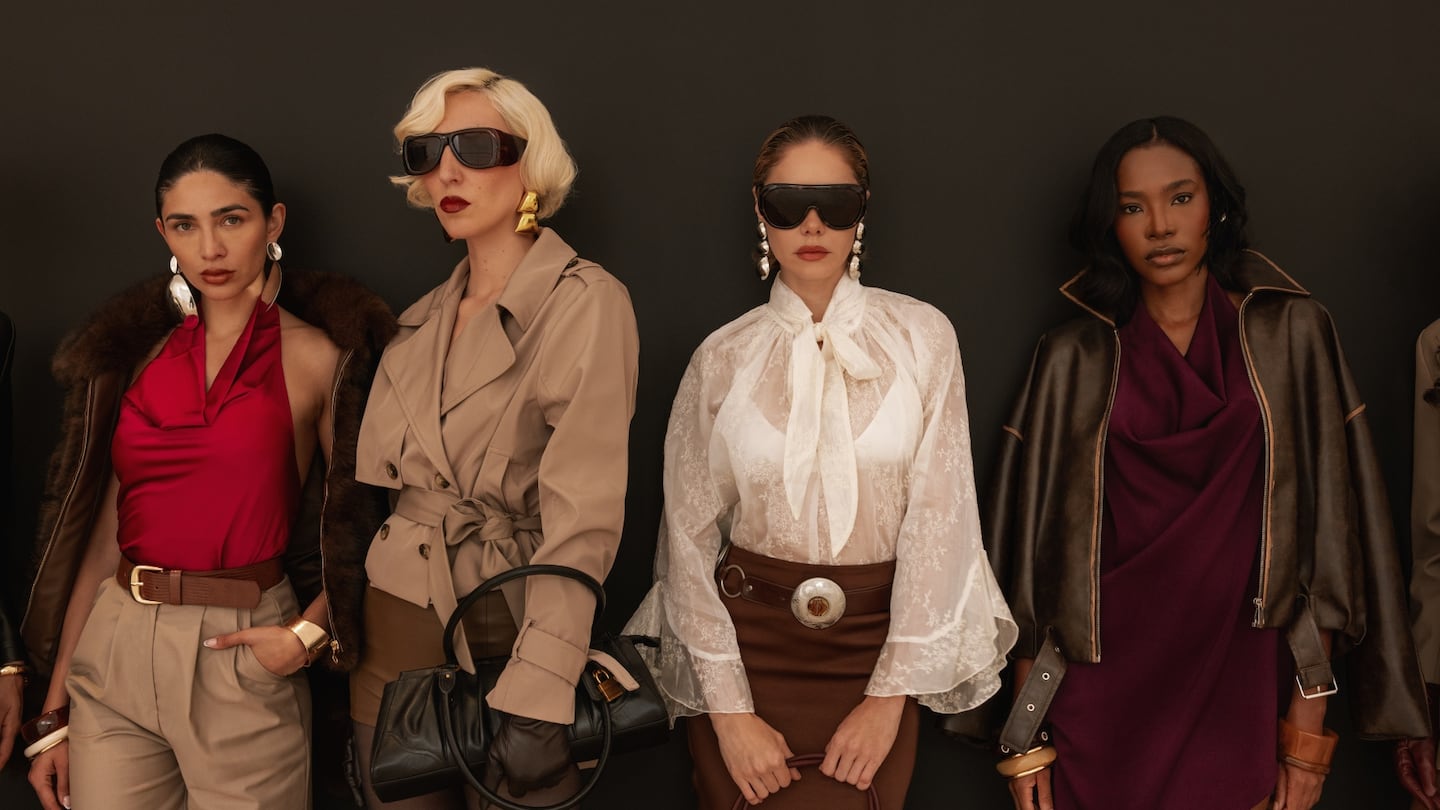
For decades, off-price retail’s biggest players — TJ Maxx, Burlington and Ross — have traded on a simple promise: more for less. None has leaned harder into the no-frills, rock-bottom-price pitch than Ross.
But when the Dublin, Calif.-based retailer takes over Manhattan’s Refectory on Nov. 5 for a first-of-its-kind elevated fashion presentation, Isha Nicole, Ross’ new creative director and senior vice president of brand strategy, hopes it will help encourages shoppers to see the chain in a new light.
“My goal is that people would leave with the impression of ‘holy smokes, I can get that from Ross?’” she said.
Ross already carries fashion labels including French Connection, Rachel Zoe and Rebecca Minkoff, and plans to beef up its assortment, though it couldn’t yet share coming additions beyond a new private label, Broadway 38. The goal is to maintain its bargain prices — analysts say much of its apparel sells for around $10 to $12, with prices across its assortment ranging from a few dollars to over $100.
ADVERTISEMENT
On its face, Ross’ “modernised” approach, as Nicole describes it, isn’t particularly novel. Fashion-forward storytelling helped make TJ Maxx a destination for style-conscious bargain hunters during its “Maxxinista” era, while Burlington has practically used the same line in its advertising: “Wow! You got that at Burlington?!”
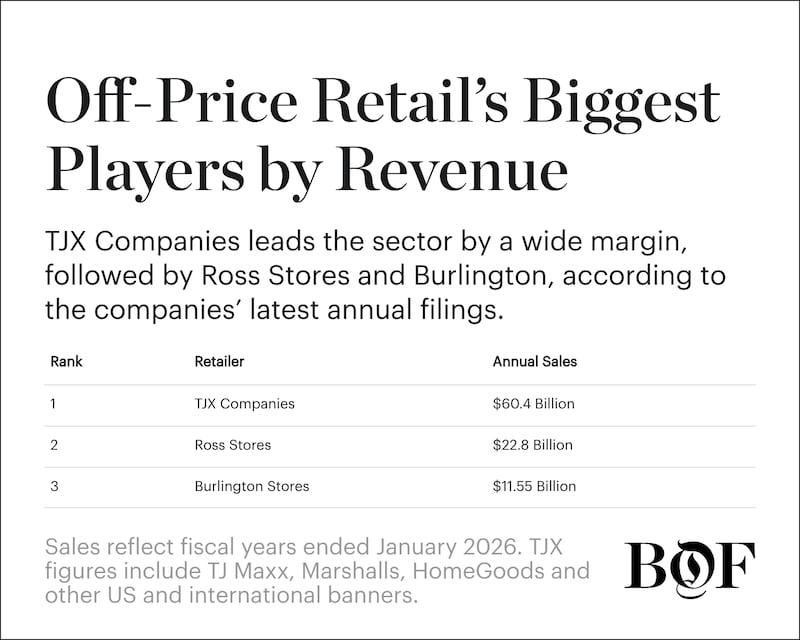
Ross is already a formidable player in its competitive set, ranking second with $22.8 billion in annual sales, behind TJX Companies at $60.4 billion. Burlington trails at $11.55 billion, according to the companies’ latest annual filings.
But Ross’ push comes at a moment when the competition to offer more than just low prices is getting tougher. Inflation and the rising cost of living are bringing new shoppers into off-price, while American retail’s biggest names are burnishing their own fashion credentials. Macy’s debuted exclusive capsules with designers including Theophilio and LaPointe in August, while Gap Inc.’s brands have been rolling out a revamped assortment and collaboration strategy under creative director Zac Posen. Even Walmart, which has spent years trying to shed its unfashionable image, cited fashion as a bright spot in its first-quarter earnings, helping drive mid-single-digit growth in general merchandise sales.
For off-price retailers, which have historically relied on opening more stores rather than e-commerce to fuel growth, the next opportunity is to get more out of those sprawling footprints by expanding their offerings and appeal. For Ross, that means reaching shoppers who might previously have overlooked the chain without alienating their current customer base of the bargain hunters. But a more elevated image comes with risks, even if Ross doesn’t raise prices.
“Ross’s biggest challenge is figuring out how to put more expensive products that are still a tremendous deal [on its shelves] but that doesn’t scare away people that were attached to a 10 to $12 item,” said Simeon Siegel, senior retail analyst at Guggenheim Securities. “That’s very hard but not impossible.”
Ross’ new approach is driven in part by requests from existing customers for a greater variety of brands and better quality merchandise, as well as an opportunity to attract new shoppers trading down as household budgets tighten, Nicole said. There’s also a third group worth courting: consumers who aren’t necessarily cash-strapped but are increasingly questioning premium brands’ prices, said Sonia Lapinsky, managing director of retail at consultancy AlixPartners.
“They think they’re paying silk prices for polyester, and they’re incredibly frustrated,” Lapinsky said. “But they still have a trust in off-price.”
Ross’ new strategy — adding more brands, elevating its image with a splashy fashion show and investing in more sophisticated in-store merchandising — is designed to appeal to all three customer groups. The revamped stores will feature “high-end visuals,” including displays that bring together complete outfits, while its marketing efforts will include a “trendy Gen Z collection and lookbook,” Nicole said.
ADVERTISEMENT

More significantly, the push represents an effort to broaden Ross’ appeal beyond the “treasure hunt” that has traditionally defined off-price shopping.
“Thrill of the find is part of the makeup that comes with off price, but I also think that there’s room as the fashion ecosystem has changed over time,” Nicole said. “There are customers who want to come into the store and they want to see a story be told. They want to be inspired.”
The distinction is between the allure of finding a bargain and the time and effort it takes to uncover one — a trade-off that may matter more as off-price retailers court shoppers accustomed to a more curated experience, Siegel said.
“Off-pricers have sold this idea of ‘how exciting the treasure hunt is,’ but there has not been a pirate in history that enjoyed hunting treasure,” he said. “They like walking away with treasure.”
Off-price is likely to remain one of retail’s most resilient sectors for the foreseeable future, Siegel and Lapinsky said. The opportunity now is to wring more sales out of their vast store networks by expanding product categories and moving further upmarket, Lapinsky said.
Those networks are substantial. TJX operates nearly 4,000 stores in the US, compared with Ross’ 2,377 and Burlington’s 1,200 — dwarfing the physical footprints of traditional department store chains like Macy’s, with roughly 430 stores, and Nordstrom, with about 380, including Nordstrom Rack.
Ross’ geographic expansion has already helped bring some of the new customers it hopes to court into the fold. For decades, its biggest markets have been California and the South and Sun Belt, particularly Texas and Florida. But the retailer entered New York in 2023 and has since added roughly a dozen stores in the state.
“We have expanded our core customer in that process,” Nicole said. “We think of ourselves as a nationwide brand.”
ADVERTISEMENT
As Ross takes a more fashion-forward approach, Siegel said it would be wise to follow TJX’s lead and pace itself.
“You’re not paving a path that no one’s walked,” he said. “[TJX] showed us they could have a constant influx of new traffic without scaring away their existing customer if they do this quietly, slowly and over time.”
And Ross, along with rivals like Burlington, has plenty of room to elevate its image without becoming an unrecognisably snobby version of its former self, industry insiders say.
“It’s very important for [off-price] retailers not to view themselves as a warehouse sale in a far off destination that happens to be a cheap rent,” Siegel said. “[But] the consumer will give them a pass on a lot of the experience if they do it right.”
Further down the line, there may also be an opportunity to win over younger shoppers who are increasingly questioning disposable fashion, some experts say. While price remains a priority for Gen Z, some young shoppers may see off-price as a way to buy better-quality, name-brand merchandise at a discount rather than turning to ultra-cheap fast fashion, Lapinsky said.
Still, for all the talk of elevating the off-price experience, price remains the sector’s defining advantage. Whatever changes Ross makes, shoppers must still believe they’re getting a deal.
“Their core consumer is going in there for a deal and the value, so they can’t come away with the perception that Ross is no longer providing that,” Lapinsky said.
Lower-income consumers are increasingly shifting to discount retailers, as economic uncertainty forces them to tighten budgets.
TJMaxx has quietly become a force in top-end goods, selling cut-price luxury fashion, but there are perils for both luxury houses and the discount retailer, Andrea Felsted writes.
Spend growth at off-price chains is among the strongest in retail, with gains across all income segments.

Sheena Butler-Young is Senior Correspondent at The Business of Fashion. She is based in New York and covers workplace, talent and issues surrounding diversity and inclusion.
Loading recommended reads…
Piccioli is leaving the Parisian house after less than two years as part of a sweeping creative shakeup at owner Kering.
This week, Brennan Kilbane is taking over to explore how the Bravo TV show holds up a mirror to our worst aesthetic impulses.
Less than a month to go, and only a limited number of places remain for BoF’s annual gathering for big thinkers.
After scrapping a major retrospective on controversial couturier John Galliano, the museum’s spring fashion exhibition will tackle ‘the poetics of the everyday.’