Agenda-setting intelligence, analysis and advice for the global fashion community.
Agenda-setting intelligence, analysis and advice for the global fashion community.

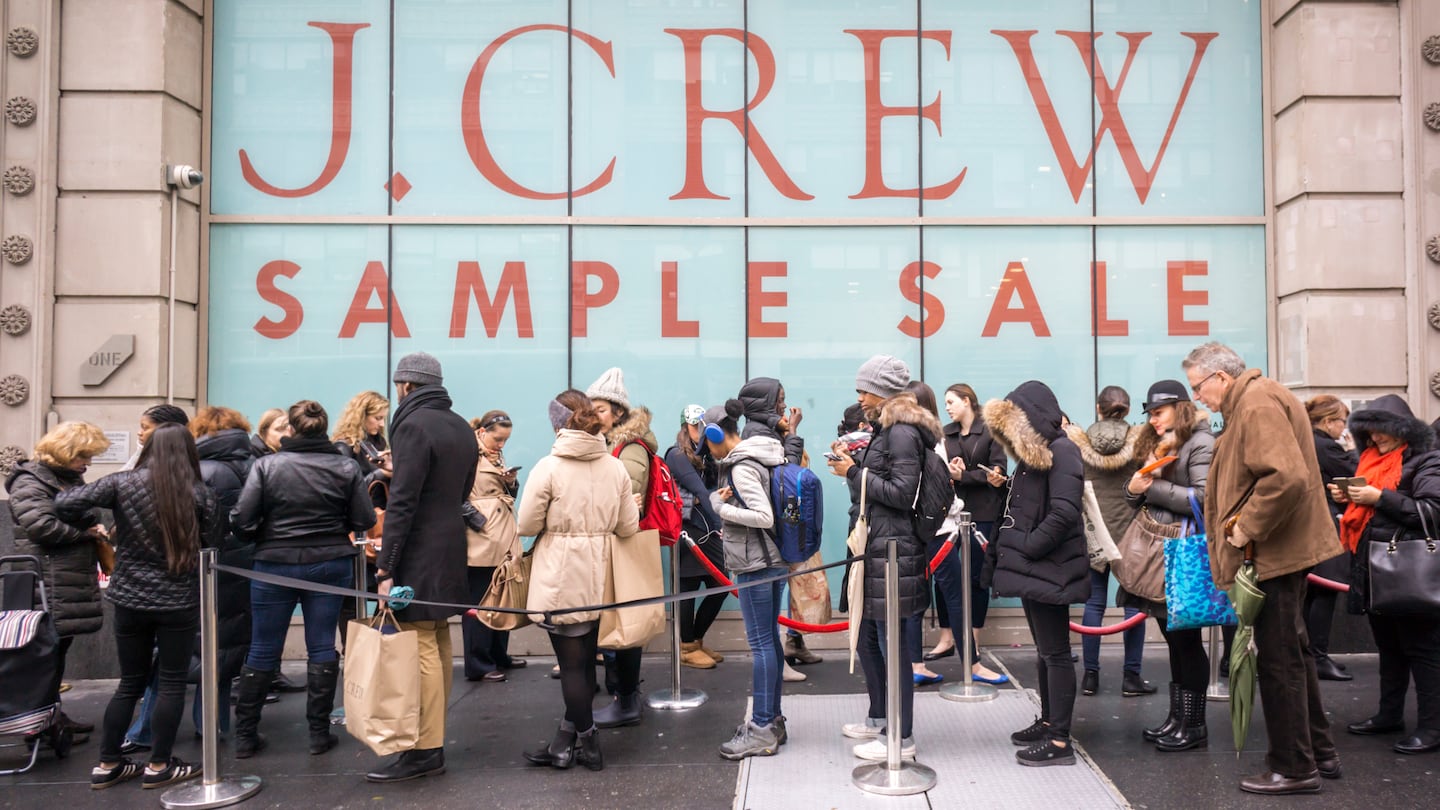
Ariana, a content creator better known as The Sales Girl online, has earned tens of thousands of followers across Instagram and Substack for sharing weekly guides to New York’s never-ending stream of sample sales.
But lately, she’s noticed a shift. Long lines are now omnipresent, not just for major sales like The Row. Discounts aren’t as steep. And the assortment is increasingly filled up by overstocked inventory rather than actual samples.
“True sample sale shoppers are a little pissed off with the situation, but it’s still a dream for the average person who goes because 60 percent off is more than they’re getting at Saks or Bergdorf,” she said. “The culture is changing very quickly.”
Her sentiment is echoed across TikTok, as creators continue to use sales for content, reporting on the length of lines and how fast they’re moving; the inventory and size selection and of course, the discounts. The recent verdict? The outsized boom in sample sales is starting to compromise their appeal.
ADVERTISEMENT
“The idea of a sample sale has gone so far away from what it actually was intended to do,” said Dakota Kate Isaacs, head of brand strategy for Quince, which intentionally focused its first-ever sample sale in August on true samples to “bring it back to what it actually is.”
But even if sample sales generate massive brand awareness, some seem to be tiring of the fervour: This autumn, The Row skipped its annual sample sale in New York, after hours-long lines (filled with paid line sitters) and countless video recaps reached new heights.
Still, devoted shoppers aren’t giving up just yet.
“It’s hard for me to make the jump from shopping at sample sales to buying at full retail because the gap is just so wide,” said Josh Galdo, a 30-year-old travelling nurse who began regularly shopping sample sales after discovering them on TikTok when he relocated to New York in May.
According to credit and debit card spending data from Bank of America, trading down activity has reached its highest level since 2021, with apparel purchases witnessing the largest shift to lower-cost retailers. That shift has only fuelled momentum for large in-house sample sales and operators like 260, which opened its first pop-up in Washington D.C. on Wednesday. Chief executive Assaf Azani said 260 witnessed a 10 percent jump in foot traffic across all its stores between 2024 and 2025 and saw double-digit digital growth through online sample sales over the past year. The gap between sample sales’ growing popularity and the brewing backlash to them online speaks to their ongoing evolution.
“Customers are a bit more discerning this year,” said Azani. “The off-price world has developed a lot and there’s a lot more off-price activity happening in a lot of channels, both digitally and physically.”
Today, even when consumers trade down, their expectations on what discount shopping experiences should offer are also rising. In particular as sample sales have gone from under-the-radar insider events to virality bait, consumers are increasingly seeking more than a good discount. Poorly organised sales, underwhelming inventory and a general lack of care for a brand’s image could turn sample sales into a negative shopping experience — one ripe for sharing online.
Yet great ones can also raise brand affinity.
ADVERTISEMENT
“We’re thoughtful about what we’re putting in a sample sale because it’s an opportunity to connect directly with a customer,” said Jennifer Smith, head of sales for the contemporary women’s ready-to-wear label 6397. “If anything, it makes our brand equity a little bit stronger, to a subset of customers.”
Smith, who also runs the New York City-based showroom The News alongside 6397 founder Stella Ishii, has hosted a twice-yearly public sample sale at their SoHo space since the 2000s. The event clears excess inventory for both their in-house label and brands that Ishii or The News has relationships with such as the millennial-beloved luxury sneaker maker Common Projects. For independent brands, Smith noted that sample sales are integral for cash flow.
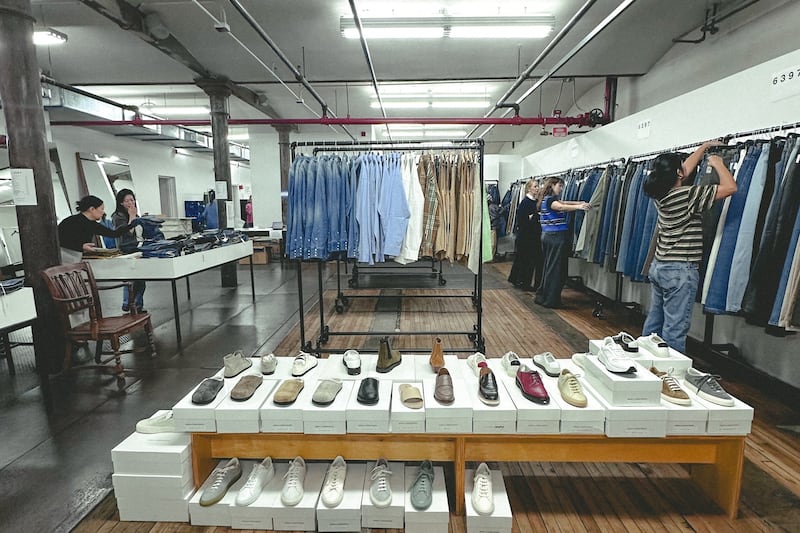
Curating those sales, however, requires a thoughtful approach. There are two main objectives: provide discount hunters with a great shopping experience but don’t compromise inventory that’s currently being sold at other retail partners.
That’s a perspective large operators like 260 also share, which finds that sample sales are increasingly comprised of overstock from all ends of the supply chain — ranging from unsold e-commerce stock to cancelled wholesale orders from major department store accounts — rather than pure samples.
“In general, if the product doesn’t reflect a really strong sale, we’re more than happy waiting until there is an accumulation that would create a respectable assortment for a future event,” said Azani.
He added that while a marquee brand name could drive excitement amongst shoppers, the events can quickly turn into disappointment if the label fails to back up the hype — meaning offering desirable, in-demand styles across a wide run of sizes at a compelling price point. The most passionate sample shoppers can easily see lacklustre products even through deep markdowns.
Carly Vaughan, a 44-year-old retail visual merchandiser who exited a multi-brand sample sale in New York City’s Meatpacking District organised by Mad Under, expressed mixed feelings about it, despite seeing discounts on brands she loved such as Undercover or Comme des Garçons, due to weak selections.
“Sales like that … lessens the brand because it feels like they’ve just gone through an old box of stock," said Vaughan. “You’re not necessarily seeing the brand in the best light.”
ADVERTISEMENT
That also holds true for satisfied shoppers, such as Galdo, who exited that same sample sale Vaughan browsed with over $1,000 in purchases.
“It really depends on how much effort a brand puts into the sample sale experience,” said Galdo. “It can definitely feel like an afterthought sometimes.”
Aside from strong product curation, longtime sample sale shoppers such as Hayley Corwick, the founder of the nearly 20-year-old New York City sample sale blog Madison Avenue Spy, find that great sample sales are organised, well stocked and staffed with employees that actually care about the product and are transparent about pricing.
“Once people see the items not being respected they lose respect for it too,” said Corwick. “If you don’t respect your merchandise enough to display it, and just throw it in a heap on a table, don’t expect me to respect your stuff to even pay the sample sale prices.”
Shoppers like Ariana find that, unless they get preferential entry before the public, they’ll avoid sample sales from certain brands who can’t control rowdy crowds. However, she’s willing to pay higher prices at sales if the experience feels more elevated, pointing out how sample sale operators like Arlettie are well-merchandised and also offer fitting rooms.
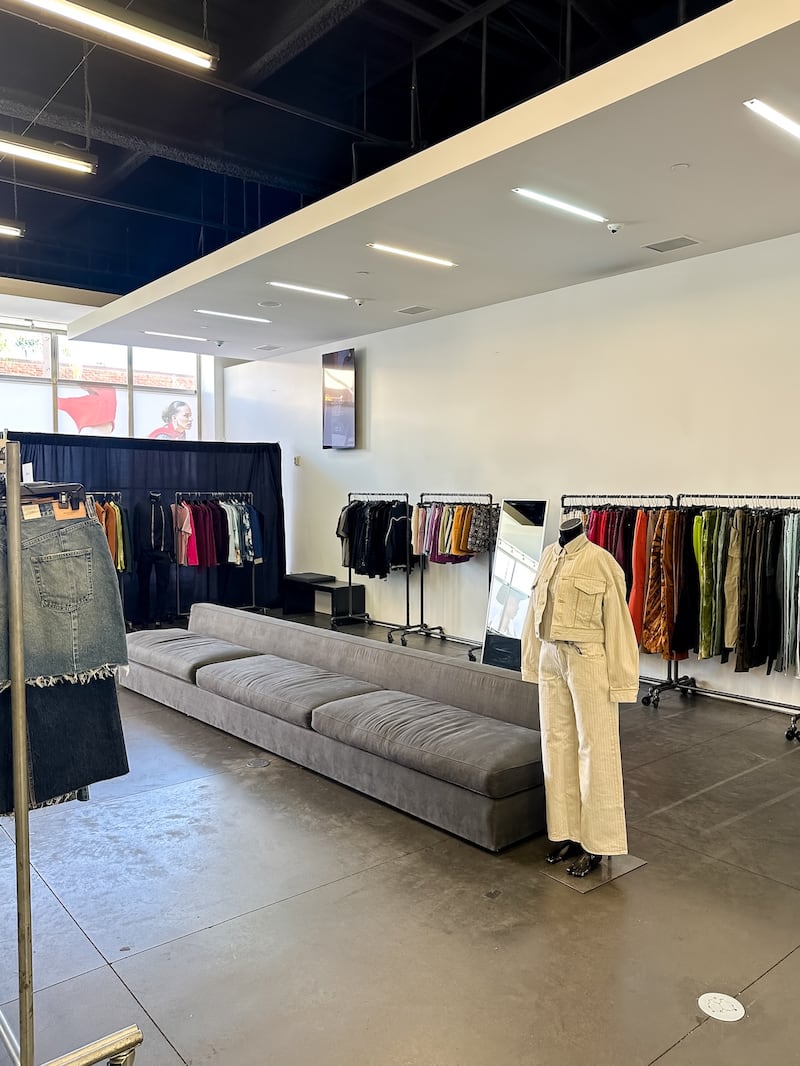
Azani said 260 has hired visual merchandisers who dress mannequins and even created a runway shop-in-shop within its Fifth Avenue flagship when a brand provided actual runway samples. Being more transparent about inventory, queues and pricing on social media has also helped ease the line issue. While resellers are another inevitable pain point, he said 260 pushes for conversations around shopping limits when they know a particular brand will be appealing. That’s part of why 260 has invested in building a loyalty programme that rewards frequent shoppers with early access perks.
“All we can do is roll out policies in place to try and curb that [resale] behaviour and reward [loyal] consumers by getting them in before those customers enter the sales floor,” said Azani.
For brand-operated sample sales, a good experience translates into offering personalised services where they engage with the customer directly. 6397 find their sales create an opportunity to personally style their customers and find what resonates with them, and can be more flexible with prices and purchases.
“Sometimes you can’t help but say, ‘You know what? Take this, because you like it so much and it all looks really good on you,’” said Ishii. “Whereas in a normal retail situation, you don’t really tell a customer, ‘You buy one, you get two more.’ It’s not the right moment for that. But in a sample sale, you can.”
Sample sales can be beneficial even for labels whose prices are already accessible like Quince, which drew four-block long lines to its sample sale across two days and sold out six hours before the sale ended.
Isaacs added the sale offered an opportunity for customers to interact directly with a digital-first brand that currently has no brick and mortar stores. She said that while they won’t become a regular occurrence — the worry is that they’ll condition shoppers to only make discounted purchases — the opportunity to generate awareness on social media and connect with customers still makes them worthwhile.
“If you go back to why a sample sale existed in the first place, it does give your consumer a chance to really feel like they’re more part of your community,” said Isaacs.
Ross is adding more fashion brands and staging its first elevated fashion presentation in New York as discount stores compete to attract style-conscious shoppers without abandoning their base.
It’s the question everyone is asking — from uptown to downtown, offline and online — as the brand’s annual clearance event kicks off in New York.
Formerly the domain of fashion insiders, sample sales have become a viral phenomenon on TikTok, with influencers dispensing tips, tricks — and sharing their product hauls.

Lei Takanashi is a Correspondent at The Business of Fashion (BoF). He is based in New York City and covers menswear, streetwear, young consumer trends, and the intersection between fashion and culture.
Loading recommended reads…
As value-seeking shoppers line up for sample sales in hopes of scoring a great deal and finding content fodder, brands and operators increasingly need to rethink the experience for a more discerning consumer.
After years caught between luxury and mass market, contemporary fashion brands are seeing a renaissance fuelled by changing consumer tastes and a new generation of ambitious brands, from Reformation to Sézane.
With preexisting contracts at Dior and Jaeger-LeCoultre, the newly minted 007 brings built-in luxury horsepower — and a potential shakeup for longtime Bond mainstays like Omega.
BoF’s latest Go Deeper series examines fashion’s new bright spot: middle-market brands are thriving, as customers look for good design and quality at prices they can afford.