Agenda-setting intelligence, analysis and advice for the global fashion community.
Agenda-setting intelligence, analysis and advice for the global fashion community.

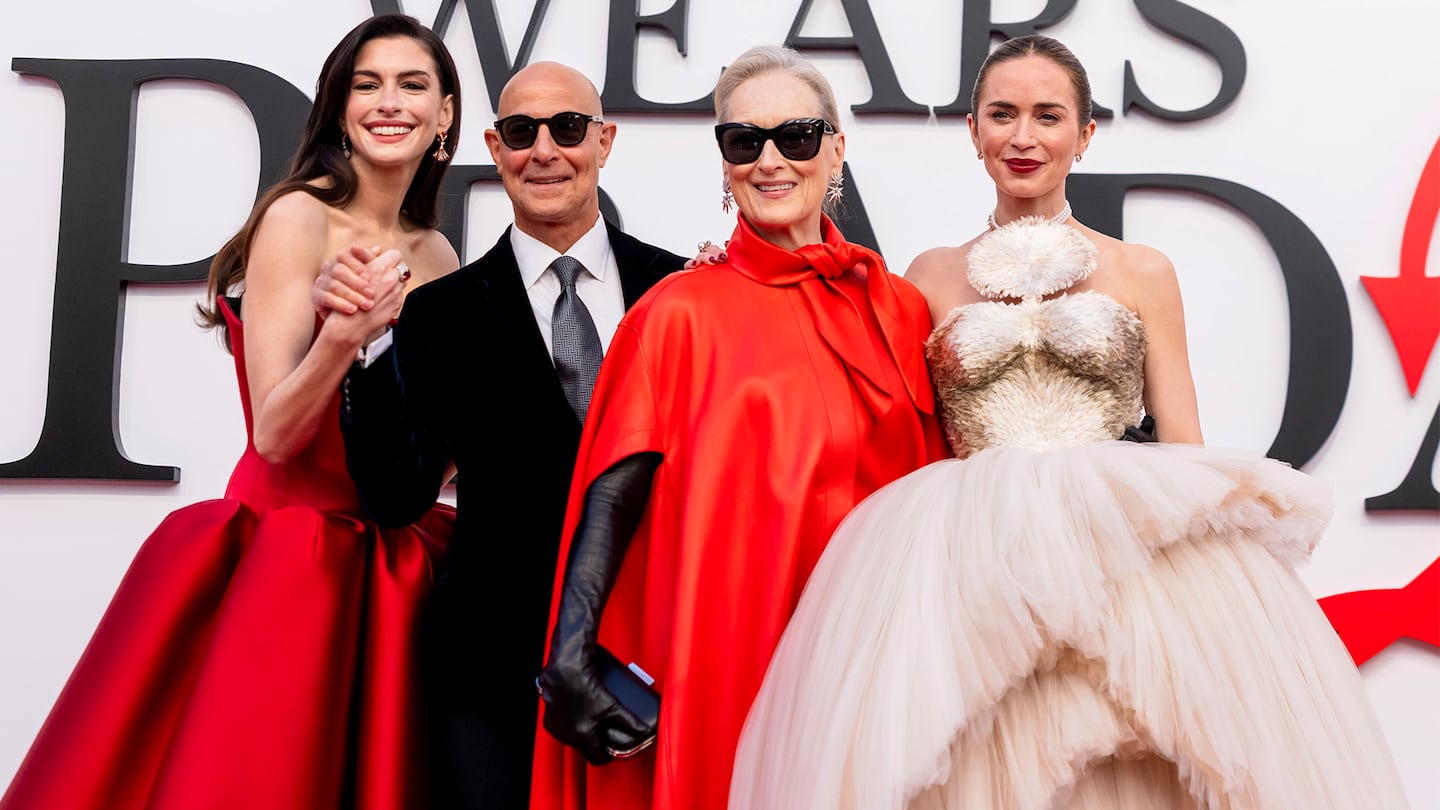
When the first “The Devil Wears Prada” film premiered 20 years ago, fashion brands were reluctant to engage.
Vogue‘s then editor-in-chief (today global editorial director) Anna Wintour is widely considered to be the inspiration for icy editor Miranda Priestly; Lauren Weisberger, who wrote the book the film is based on, once served as one of Wintour’s assistants. Luxury labels were wary of providing clothes for the film and rumours swirled that its stars would never be featured in Vogue again.
Now, as “The Devil Wears Prada 2” hits theatres Friday, that’s completely reversed.
Brands have clamoured to dress the film’s stars at the cast’s exhaustively covered tour stops across the globe, while others including Old Navy, Walmart’s Scoop and Re-Done have put out themed collections or products, as have official partners like L’Oréal, Tresemmé and Lancôme. Dior — which gets major screen time in the movie — hosted a lounge at the premiere and is staging a “Devil Wears Prada”-themed event at its New York flagship later this month. J.Crew nodded to the infamous cerulean monologue from the first film, dressing Meryl Streep in a sweater of the same colour for an appearance on “The Late Show.” Even Vogue has embraced the movie, putting Wintour alongside Meryl Streep (as Priestly) on the cover of its May issue.
ADVERTISEMENT
It’s the latest example of how intertwined fashion has become with the Hollywood promotion cycle. If “Barbie” laid the groundwork and “Wicked” tested the limits, “The Devil Wears Prada 2” is solidifying this style of promotion is here to stay. Even on a smaller scale, “Marty Supreme” and “The Drama” have recently used merch and fashion in identifiable colours to rally interest.
“Brands need to find more ways to cut through and get into the conversations that are naturally happening,” said Benika Brown, global head of marketing at influencer marketing agency Buttermilk. “Attaching themselves to moments in culture that are popping, they’re borrowing that equity.”
For brands, plugging into pop cultural moments is a chance to assert their place in the zeitgeist; for Hollywood, it helps drum up excitement around films and get moviegoers in seats. But in jumping on a hot moment, brands risk exhausting an inundated consumer. Marketers today are trying to craft sharper, more intentional strategies around these cultural touchpoints rather than just moving up the merchandise featuring a movie’s signature colour (like “Barbie” pink) to the front of the store.
“Consumers are super savvy, they can tell if something feels forced,” said Lauren Leger, senior director of brand marketing at Fashionphile. “We’re not just showing up. It’s added value for the production, for us and for the customer.”
Because “The Devil Wears Prada 2″ is literally about fashion, the pull for brands to participate was strong, said Erica Larsen, senior vice president at marketing agency Shadow. Disney, the studio behind the film, started ideating official partnerships as soon as it was in the pipeline.
“We thought about it like you would think about creating a fashion collection,” said Lylle Breier, executive vice president, global marketing partnerships and special events at Disney. “We thought about who were the best brands that make the most sense, that could be very unique and all live together.”
Whether an official partner or not, brands and the studio both looked to be savvy and curated in how they approached messaging, given how ubiquitous this style of marketing has become.
“It has to be even more carefully curated now because there is so much out there,” said Breier.
ADVERTISEMENT
For brands, “The Devil Wears Prada 2” presented a challenge. While the movie’s promotion has leaned into its chosen colours of red and black, it doesn’t have as recognisable an aesthetic to plug into as “Barbie” or “Wicked.” But instead, the film has a plot about work and achievment that anyone could connect to, said Larsen. The fact it’s a broadly beloved sequel gave brands well-known moments to play with, riffing off the cerulean monologue or memeing the Chanel boots exchange, for example.
Larsen’s client Google Shopping put out on an advertisement showing Stanley Tucci using its AI shopping tool to find a gown, which culminated in an activation at the premiere that Shadow produced. She’s also worked with her clients like Bonobos and Express on lower-lift edits that help shoppers get the look of characters in the film. In both, she thought about making things that felt like they “lived in the universe of the film,” rather than slapping on a logo.
For brands that have managed to stand out in the hubbub, relationships were paramount.
British handbag label DeMellier got coverage in Vogue, The Independent and Grazia after Streep, Anne Hathaway and Simone Ashley were photographed carrying its bags heading into various promotional events. It wasn’t an intentional moment to capitalise on interest in the film, but the result of the brand’s recent focus on getting to know stylists, and being more proactive in sending products to them, said Susanna Battaggia, head of global communications at DeMellier.
Resale platform Fashionphile helped source items for the movie because of an existing relationship with costume designer Molly Rogers, with whom it first collaborated on “And Just Like That.” It allowed the company to do “a lot of cross-promotion to talk about the pieces you can only get on Fashionphile whether they were made long ago or are inventory-restricted,” said Leger. The retailer has an edit of items curated by Rogers live on the site.
The appeal wasn’t just in driving traffic or building awareness, but in using the platform of the movie as a legitimising force, said Leger.
“Inherently being part of something like this gives us more of a trust factor because they’re not partnering with just [anyone],” she said.
For brands, plugging into the hype around the movie represents a timely way to put storytelling around products that would be hard to make stand out in a crowded retail environment, said Patrick Buchanan, senior vice president of brand marketing at Lulus, which put out a collection of “The Devil Wears Prada”-inspired red taffeta, printed pink and sparkly silver dresses, licensing the branding from Disney.
ADVERTISEMENT
People do have strong emotional ties to the film, as evidenced by the early uproar around the costuming, which ended up bringing a lot of attention to Valentino in particular. In the four months after the teaser featuring its Rockstud pumps dropped, chatter and coverage online brought Valentino $1.9 million in media impact value, according to Launchmetrics.
There’s a sense that rising tides still lift all boats when it comes to these moments of high-volume cross-promotion, said Larsen. Marketing around a well-known or highly anticipated movie is more compelling than just pushing a holiday edit, for example, which everyone does, said Leger.
Even as some consumers may bristle at obviously branded plays, among marketers there’s a sense that if the marketing is clever enough, consumers will be willing to look at it like entertainment — and will be won over by a superior push.
“Everyone is so marketing-aware, it isn’t so much about subtle marketing, but good marketing, [making the consumer go,] ‘That makes so much sense’ or ‘I never thought about that angle,’ and surprising them with these narratives around the product,” said Brown.
Editor’s Note: This story was updated on 1/5/26 to clarify Shadow’s work with Google.
Looking to repeat last year’s marketing phenomenon, a slew of brands have dropped collaborations tied to the much-anticipated film’s release this week.
As brands seek new ways of connecting with ad-weary consumers, they are experimenting with series-style content that allows them to lean into humour, tell more elaborate stories and keep customers engaged over time.
The hit HBO show’s lead makeup artist Donni Davy spoke exclusively to The Business of Beauty about how she brought ‘Euphoria’ makeup to market — and why it took so long.

Joan Kennedy is Correspondent at The Business of Fashion. She is based in New York and covers beauty and marketing.
Loading recommended reads…
Chanel’s surging sales underscore that the luxury industry’s challenges may be less about demand than desirability.
Chris Green joins Imran Amed to explain how his self-funded Brooklyn menswear store earned a place among the world's best fashion stores — by staying off the internet and betting everything on how it feels to walk in the door.
Global editorial director Steff Yotka will succeed Bettridge, who is leaving to focus on his creative studio Content World.
Kith's new collaboration with Salomon on the XT-Evo is the latest example of the way footwear companies are leveraging influential outside partners to help them debut their newest shoes or even co-design entirely new styles.