Agenda-setting intelligence, analysis and advice for the global fashion community.
Agenda-setting intelligence, analysis and advice for the global fashion community.

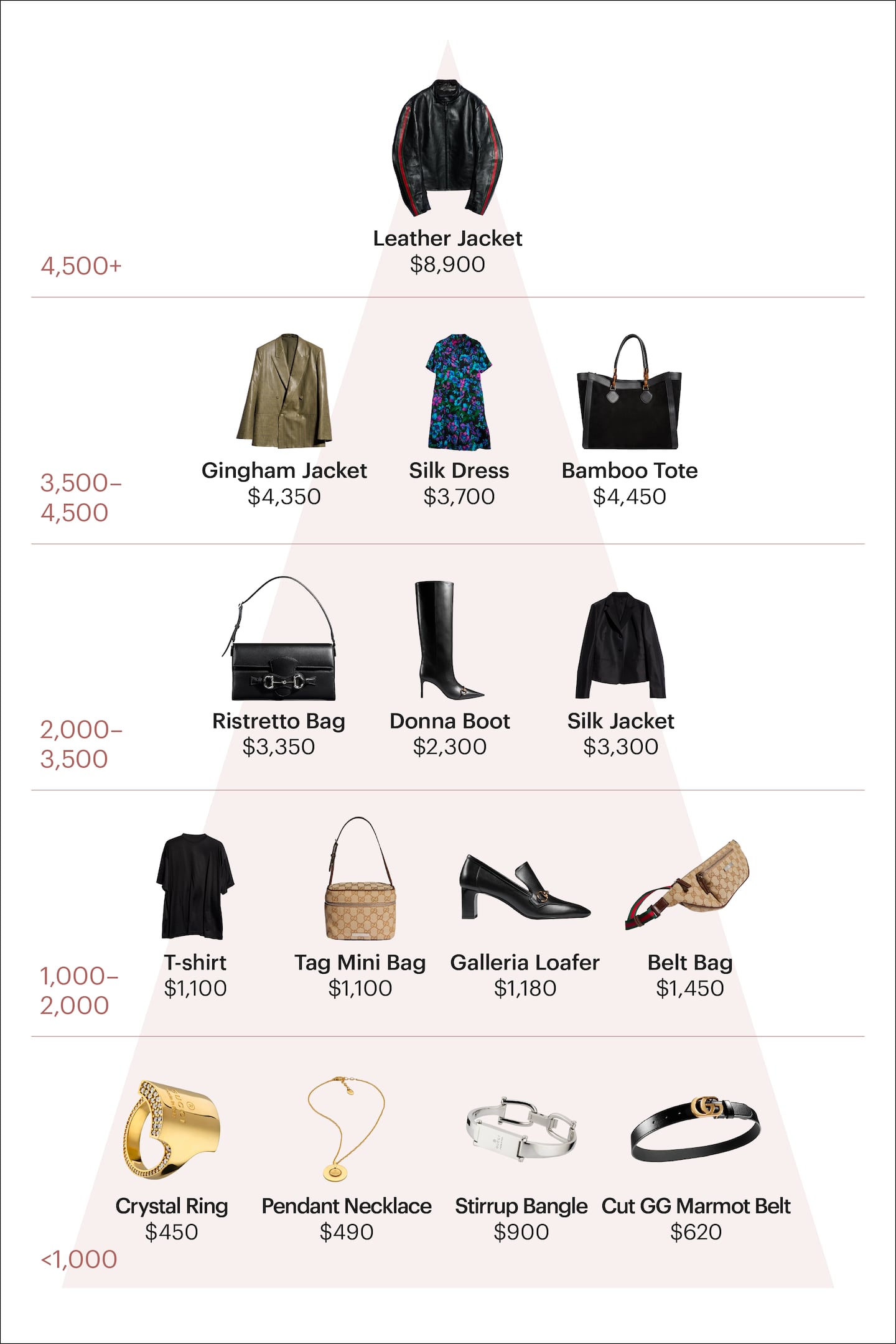
It has been a couple of weeks since the first products from Demna’s polarising Primavera runway debut for Gucci hit stores, and the collection’s prices — as well as early data on how customers are responding — offer the latest window into the brand’s efforts to reignite demand.
For Kering, getting things back on track at its flagship brand is an urgent matter: sales have plummeted by more than 40 percent since their peak in 2022. The storied Italian brand is aiming to reassert both its fashion authority and its luxury credentials, while rebalancing its pricing mix after punchy hikes during the post-pandemic luxury boom, an issue that key rivals like Chanel and Dior have started to address.
Demna’s first runway show for Gucci generated significant buzz, cementing the brand’s place at the heart of the fashion conversation. It was the most talked-about collection at Milan Fashion Week by a long shot, according to Creator IQ, an influencer marketing platform. But whether that conversation will fuel demand for Gucci products in the longer run remains to be seen.
The surge in traffic to Gucci’s website following the show offers early promise: worldwide visits jumped to over 316,000 on the day of the outing, up from a daily average of between 180,000 and 210,000 for the month of February, according to digital marketing platform Semrush.
ADVERTISEMENT
In stores, initial data shows foot traffic to Gucci boutiques in the US strengthened in February and March with spending rising even more, said Thomas Paulson, head of market insights at Advan Research.
“Interest and spending on the brand have materially improved in February and March,” said Paulson.
Meanwhile, close inspection of the Primavera drop offers some interesting new data points on how Gucci is adapting its product and pricing mix as it plots a revival.
As it seeks to regain territory lost in recent years to top-tier rivals like Chanel and Dior, Gucci has embarked on an elevation drive aimed at reinforcing its aura of luxury.
Most SKUs launched on the first day of the collection’s online debut were priced significantly above the brand’s existing offer, noted Bernstein. The mean price of women’s ready-to-wear was nearly $200 higher than the overall offer before the drop. Handbag prices for the new styles skewed around $550 higher.
Sneakers were notably absent, replaced by pricier leather loafers, pumps and boots in the Primavera collection. This reflects an ongoing shift at Gucci: across the brand’s overall mix, the share of footwear priced below $1,000 has shrunk from over half of the footwear mix in 2024 to just a quarter in 2026, retail data firm Edited said.
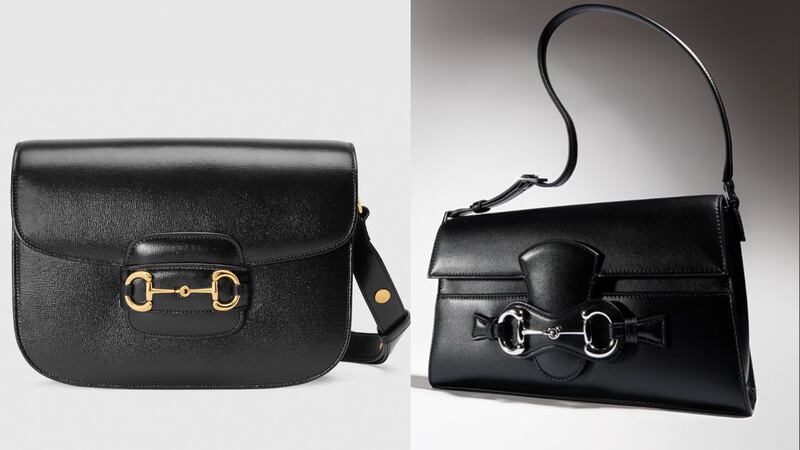
While average handbag prices rose overall, Gucci expanded its most iconic bag families, adding new variations including some options at lower prices. The sleek Horsebit Ristretto, $3,350, features the same signature hardware of the Horsebit 1955 bag for $200 less.
This echoes the strategy undertaken for the flagship Jackie style in September’s La Famiglia drop: the new Jackie Slim ($2,450) and small Jackie ($1,690) were both priced quite a bit lower than the Jackie 1961, which starts at $3,450.
ADVERTISEMENT
Other more accessible options include the top handle, vanity-style Tag mini bag priced $1,100.
Bulking up the core of its offer, Primavera also fronted a functional, leather tote bag with a bamboo detail on its handle — a nod to the brand’s pricier Bamboo 1947 bag — priced at $4,450.
April’s Generation Gucci drop and the upcoming cruise collection presented in May in New York are expected to build on the strategy of elevating its price mix with top-end variations on icons as well as desirable new options at the base of its pricing pyramid.
An advanced lookbook for Generation Gucci features oversized Jackie bags in crocodile, and a reworked Dionysus handbag in a longer, sharper shape and with embellishments. Both suggest a continuation of a move upmarket.
Even as Gucci introduces new key styles as part of its creative overhaul, the overall number of carryover items should actually decline by 20 percent, according to RBC analyst Piral Dadhania. Gucci wants to focus on fewer and more impactful carryover SKUs, Dadhania said in a research note following a meeting last week with Kering CEO Luca de Meo. Mid-price points will also be reinforced to address a lack of focus on mid-tier shoppers, he said.
Kering will detail its strategy on April 16 at a capital markets day.
The French luxury conglomerate’s quarterly sales fell less than expected ahead of Demna’s high-stakes Gucci debut.
The hottest show in Milan confounded those seeking a clear answer to the question: can Demna save Gucci? What we got was an urgent meditation on beauty and sex. ‘Clear and attractive and hot. More than ever, I need fashion to be like that for me,’ the designer told Tim Blanks, ‘and Gucci is a perfect place for it.’
Sex sells — if anyone can figure out what sexy means in 2026. Robert Williams tracks the search for a new silhouette at Kering’s Gucci, LVMH’s Dior and more.
Loading recommended reads…
The Australian hair care brand has named Elisa Fischer its new global chief executive as it looks to push deeper into international markets.
The company, which also owns brands Nude by Nature and Poni, also announced its new global headquarters and chief marketing officer.
As extreme weather and nature loss threaten fashion’s access to key raw materials, the industry is looking for ways to shore up supply chains. Early results show it’s possible to build resilience, but also how difficult it is to scale effective action.
The Italian luxury sneaker brand, on pace to reach €150 million in sales this year, is tapping former Golden Goose chief consumer officer Danilo Piarulli as it ramps up direct-to-consumer growth across the US and Asia.