Agenda-setting intelligence, analysis and advice for the global fashion community.
Agenda-setting intelligence, analysis and advice for the global fashion community.

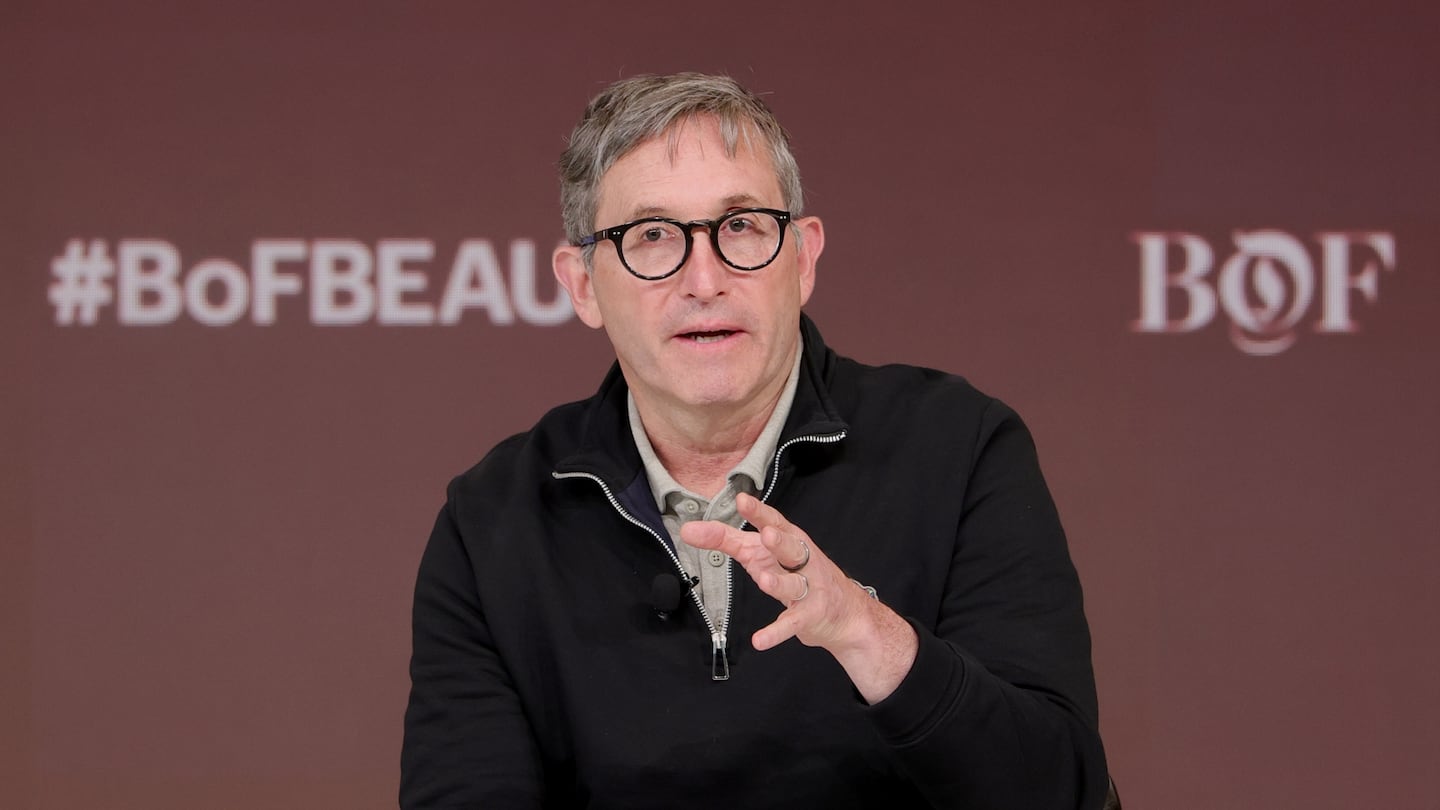
NAPA, California — In the midst of a busy season leading up to its initial public offering, Oura’s chief executive took the stage at The Business of Beauty Global Forum to share how the company has grown from $220 million in annual revenue in 2022 to $1 billion last year. The maker of the near-ubiquitous, biomarker-testing ring was valued at $11 billion in October 2025.
“We are there to make you have a healthier long run. That’s why we have a membership subscription,” said Hale, explaining that sales of the company’s ring are just part of the business’s overall revenue plan.
In conversation with Imran Amed, founder and CEO of The Business of Fashion, Hale charted out how Oura has grown its user base by improving the innovation of its offering while building its membership base. Oura rings start at $399, with membership around $69.99 a year, and the company secures recurring revenue through those subscriptions as customers continue to learn more about their bodies and make changes based on the data it provides.
According to Hale, Oura’s rapid growth is due to the granularity of the data it can extract with its rings and the behaviour changes it can affect in its users. Small changes in temperature, heart rate and respiration can be early indications of viral infections or other illnesses. When users are alerted to preventable ailments ahead of time, they’re more likely to stick with a wearable, after seeing it take care of them. (To wit, 11 percent of Oura ring wearers are doctors or nurses.)
ADVERTISEMENT
“[Oura] is a check engine lock for your body, or an early warning system for your health… but that predictive power coupled with behaviour change… that’s important,” said Hale. you “You need both to see the quantitative and meaningful change in your physiology,” said Hale, adding that it’s both science and validation that makes the model work, and that 11 percent of Oura ring wearers are doctors or nurses.
Asked about the company’s forthcoming IPO, Hale demurred on specifics, but said that “in many ways, it’s actually just another event,” for a company its size. Then he quipped to any shareholders watching: “Don’t sell!”
Sign up to The Business of Beauty newsletter, your complimentary, must-read source for the day’s most important beauty and wellness news and analysis.
Loading recommended reads…
Introducing an insider’s guide to the independent retailers with the most distinctive edits and experiences, hand curated by the editors of BoF.
To build our index of the global independent retail landscape, we established a rigorous, multi-tiered evaluation process, by casting a wide net and starting from the bottom up.
As shoppers incorporate weight-loss drugs and more sophisticated skincare into their daily routines, a cottage industry is growing.
The makeover of its landmark Pantheon store serves as the testing ground for CEO Stuart Machin’s broader vision: modernising M&S’s store fleet, capturing younger fashion shoppers, and making its long-awaited turnaround stick.