Agenda-setting intelligence, analysis and advice for the global fashion community.
Agenda-setting intelligence, analysis and advice for the global fashion community.

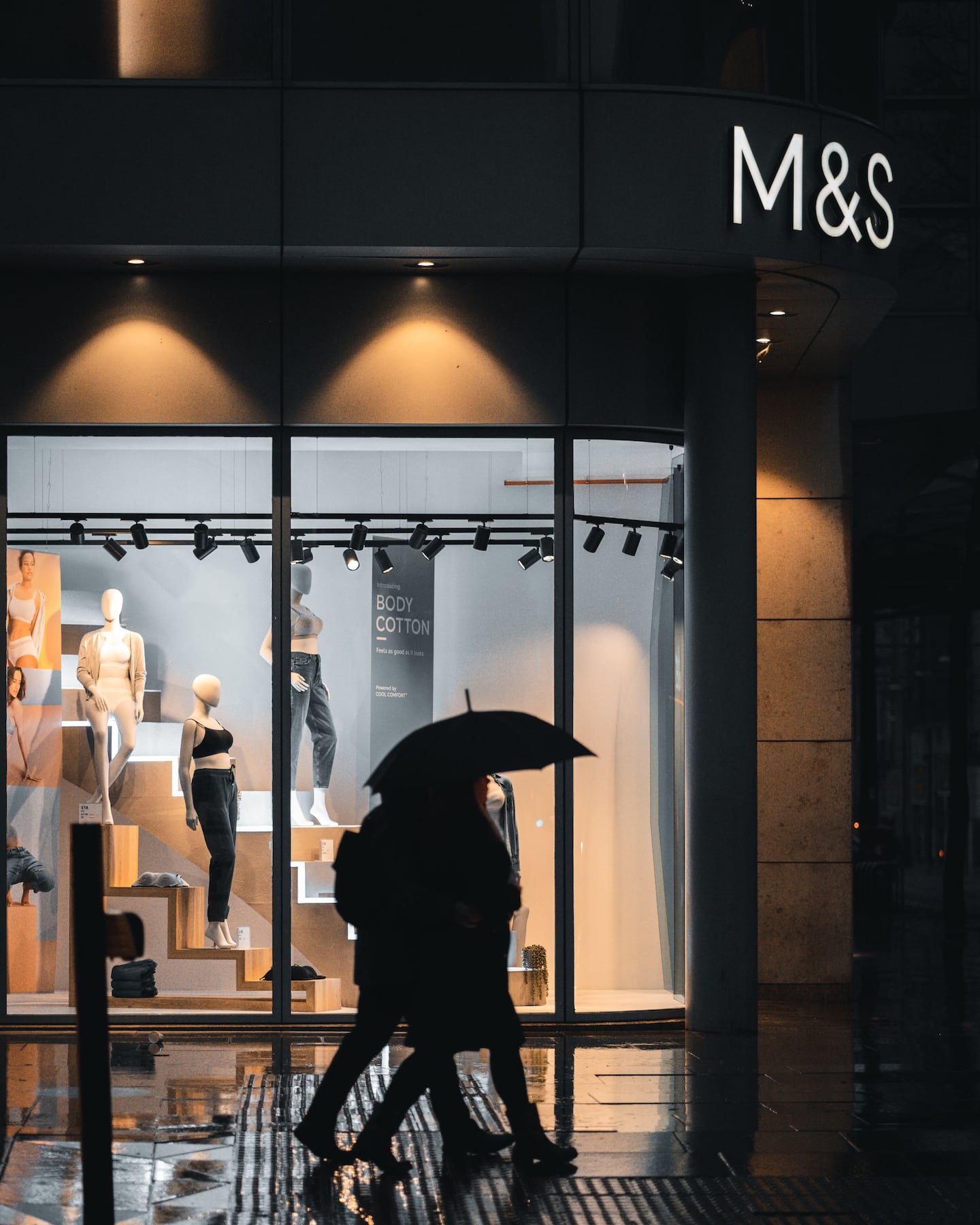
On a hot summer’s evening on London’s busy Oxford Street, a crowd of fashion influencers, models, journalists and the odd City analyst gathered for a first look at the upmarket revamp of Marks & Spencer’s landmark Pantheon store.
Some may have had to double-check they had the right address, such is the scale of the makeover at the 88-year-old outlet, which is intended as a blueprint for change across the retail chain’s more than 200 large stores.
“We know we’ve got a big job modernising the store experience and modernising the online experience as well,” M&S’s chief executive, Stuart Machin, told the crowd.
He said a collection of “legacy old stores” — such as outlets in Newcastle or central London — had remained profitable so “most previous leadership just kept them open”.
ADVERTISEMENT
But Machin has a bigger vision. He is an exacting, obsessive leader who loves to wade into the detail of store operations and warehouse refurbishments. He once admitted to disliking “all this talk about work-life balance.” Four years into the job, he is keen to leave his mark on the 142-year-old retail group.
After a tough year marred by a cyber-attack that knocked out M&S’s online trading for almost seven weeks and hit profits by more than £300 million, Machin told shareholders at its recent annual meeting that the year ahead was “one of the most important in our history.” He went on to say: “The next three years are critical for M&S as we invest for growth.”
The Pantheon, which was built in the late 18th century, was an opera house and entertainment venue before its reconstruction for M&S in the 1930s. With the latest revamp now finished, the next big project for the retailer will be its Marble Arch store, at the other end of Oxford Street.
Machin said the group’s most profitable but rather low-ceilinged and labyrinthine outlet would be knocked down next year, a plan which has prompted outrage over the potential environmental impact.
The new, 10-story building won planning permission only after a legal challenge and approval by the housing secretary, Angela Rayner, in 2024. It will include just two and a half floors of shop space — compared with five at present — topped by offices and a gym, and will stand at the eastern tip of the London mayor Sadiq Khan’s pedestrianisation of Oxford Street, which is due to be in place next year.
The rebuild is expected to take four years, during which M&S will lease a temporary store across the road in the same block as Zara. Machin told those gathered at the Pantheon that “hopefully” he would still be chief executive when the Marble Arch rebuild was completed, adding: “So let’s see how we do.”
It is a question many shoppers and analysts may well be asking as Machin, backed by his retail veteran chair, Archie Norman, attempt to lead a turnaround of M&S that actually sticks and extends beyond a few high-profile outlets.
Several predecessors have come up with flashy, short-lived revival plans to combat competition from Primark, H&M, Zara and younger, online rivals. After losing momentum, M&S only briefly regained annual pre-tax profits of £1 billion in 2008, having first reached that milestone in 1998.
ADVERTISEMENT
Despite a global financial crisis, Brexit, the coronavirus pandemic and the cyber-attack, the retailer appears to be on the front foot — with strong food sales and fashion credentials to match.
Underlying profits fell to £671 milliong last year, and Machin told the Guardian that climbing back to £1 billion was not the aim. “Profit will be what it will be,” he said. “Our plan is for a growth business.”
While some shareholders may complain about lacklustre dividends, Machin said they would thank him in the long term. His plan involves £700 million of investments in revitalising stores, modernising its supply chain and distribution system, and further improvements in products.
The group, which employs more than 65,000 people, has 227 full-line stores — containing food, clothing, homewares and beauty — after closing dozens of old and out-of-place outlets. More will shut over the next two years and a handful of new outlets are opening. It aims to have 200 full-line stores in the UK.
In contrast, M&S’s food arm is expanding, with 18 food-only stores opening this year as it heads for a target of 420, compared with 335 directly operated outlets now. Franchise partners run another 466 in the UK and more overseas.
A wave of new food stores and some cheaper groceries may have brought a broader range of shopper into M&S, but Machin said the retailer was “just at the starting blocks” with changes in fashion, home and beauty.
The Pantheon store is “where we’re testing how we make shopping our ranges easier, more curated and more inspiring,” he said.
The fashion floors are now broken up into bright “rooms” for different brands and product types — flanked by digital displays, green-tiled pillars and modern shelving.
ADVERTISEMENT
On its product offering, Machin has said M&S had “finally dumped the frump” — grasping the No. 1 spot on style perception from its Spanish rival Zara to add to its existing top position on value, according to Worldpanel.
M&S is regaining market share — now controlling more than 10 percent of the UK fashion (clothing and footwear) market — and driving for more. It has even had to buy in more smaller-sized womenswear and lingerie as consumers in their 40s, 30s and even 20s reappraise the brand.
With the help of its marketing director, Sharry Cramond, who is bringing the social media-fuelled interest to fashion that she first delivered on food, the brand is creating a buzz.
Senior industry insiders believe M&S is now “in a solid place”. One said it had “re-established itself and its credentials”, and another that it had “a lot more self-confidence.” “Clothing has finally got its mojo back,” according to one former senior executive.
But another former executive needled that despite Machin’s “quite high ego quotient,” massaged with appearances on social media with glamorous influencers such as the Chicken Shop Date comedian Amelia Dimoldenberg or the actor Gillian Anderson, there was more work to do.
“It has lost a massive amount of market share on womenswear which it will never recover,” he said.
Another industry insider said M&S, which once had a vast empire, was continuing to struggle overseas. Two decades after quitting the US, it still has a presence in 70 countries — but many operations are small. He added that the acquisition of a 50 percent stake in Ocado’s retail arm in 2019 was largely unprofitable, even if it had brought in a younger audience.
Machin said revamping the international business had been harder than he envisaged, but said its fashion revival was helping overseas too.
Perhaps his biggest challenge lies behind the scenes, with big warehouse projects in the next few years in south-west England and the Midlands. “Deadlines are realistic. We are not going from zero to 10 overnight,” he said.
By Sarah Butler
To survive in the long run, the likes of Macy’s and Nordstrom need more than new ownership structures or retail formats; they must reinvent their entire value proposition with a selection that can compete with online fast fashion and off-price players.
To survive and even thrive, the ailing retail format doesn’t have to reinvent itself, according to Olivier Bron. Bringing his international experience to parent company Macy’s Inc., the new chief executive wants to give customers a more exciting experience and be a better partner to brand vendors.
Loading recommended reads…
As shoppers incorporate weight-loss drugs and more sophisticated skincare into their daily routines, a cottage industry is growing.
The makeover of its landmark Pantheon store serves as the testing ground for CEO Stuart Machin’s broader vision: modernising M&S’s store fleet, capturing younger fashion shoppers, and making its long-awaited turnaround stick.
The sustainability-focused showcase returns next week with regional staples Marimekko and By Malene Birger coming back, the debut of Collina Strada, and a continued focus on community that's made it one of fashion's most influential regional fashion weeks.
The fashion icon, as famous for his singular talent as a scandal that cost him one of the industry’s top jobs, will become one of only three living designers to get a major solo exhibition at the museum.