Agenda-setting intelligence, analysis and advice for the global fashion community.
Agenda-setting intelligence, analysis and advice for the global fashion community.

When Yinka Ogunbiyi, founder of hair-braiding device startup Halo, pitched venture capitalist and Reddit co-founder Alexis Ohanian, she had a relatable edge. Ohanian already understood how time-consuming braiding could be, thanks to insights from his wife, tennis legend Serena Williams, and their eight-year-old daughter.
“He brought one of his daughters onto the screen” during the pitch call, Ogunbiyi recalled. He was sold on Ogunbiyi’s revelation that her new invention could help get the job done five times faster than the usual four-plus hours.
In June, Halo announced a $7 million round led by Ohanian’s VC firm 776, joining a tech portfolio that includes Anthropic, xAI and ElevenLabs.
“Our round moved really quickly,” said Ogunbiyi.
ADVERTISEMENT
The announcement is the latest rebuke to the narrative that Silicon Valley venture capitalists have moved on from beauty. Money is certainly less free-flowing than it was in the peak 2010s DTC era: Consumer goods are seen as less scalable than digital investments. But brands are still securing funding from New York and Bay Area VCs, albeit with a different rulebook and an evolved set of expectations.

“There are a very small number of investors that are excited by beauty,” said Dino Ha, the founder and chief executive of K-beauty company Memebox, which secured a $10 million Series E round led by tech VC firm ASQ in April 2026. Its total funding, now at $200 million, has attracted investment mostly from Silicon Valley, including 8VC, founded by Palantir co-founder Joe Lonsdale; Goodwater Capital; Altos Ventures; Pear Ventures; Cowboy Ventures; AME Cloud Ventures, founded by Jerry Yang; and Y Combinator.
“Most of the money is going into AI, but beauty is a very strong category,” he said.
While ASQ is specifically focused on Korean startups, K-beauty is one category exciting tech-oriented investors more broadly thanks to the potential of social commerce. As recent investments show, founders able to effectively sell their disruption story to the right investor are proving beauty is still able to inspire early-stage leaps of funding faith.
“I’ve been reaching out to a lot of VCs, and obviously you get 400 nos for every one yes,” said Constance de Monravel, the founder of home fragrance label Maison Monravel. In July, Monravel secured a €150,000 ($171,000) investment from Kima Ventures, the firm owned by billionaire Xavier Niel, who is married to Delphine Arnault, after sending him a cold email.
“If you’re a founder or co-founder, and if you’re able to tell your story with your heart, it’s worth the best deck in the world,” she said.
The landscape for beauty investment has changed considerably since the era of peak DTC. In late June, former VC darling Glossier announced $45 million in funding — not from a VC investor, but in the form of non-dilutive debt from Tiger Finance. It was a marked shift from its 2010s-era funding, which reached $266 million in venture capital from the likes of Sequoia and IVP.
“People are going to look to other areas of funding because they don’t want to take the dilution hit, [and] because they have the cash generation in order to justify taking on debt,” said Nick Brown, co-founder and managing partner of VC firm Imaginary Ventures, who was previously on Glossier’s board while at VC firm 14W, and last invested in the brand in 2018.
ADVERTISEMENT
VC firms’ interest cooled towards beauty, and consumer products in general, as their enthusiasm about DTC scalability waned. Allbirds’ pivot from shoes to AI, announced this spring, demonstrates the shift from physical goods to tech products. According to PitchBook, VC beauty activity dropped from a peak of $3.3 billion raised across 388 deals in 2021 to $438.8 million and only 93 deals in 2024.
“A lot of people are sceptical of consumer because of certain stories around this era where there were a lot of consumer businesses that raised a lot of capital at very high valuations, and then they weren’t able to continue growing at a sustainable pace,” said Patrick Finnegan, founding partner at VC firm Second Sight Ventures. Beauty has been a significant priority for the firm. Its most recent investment, luxury body-care brand 39BC, was confirmed last week.
Consumer-focused firms like Imaginary and Second Sight are stepping in where generalist VC companies have leaned out. But their expectations are tempered this time around.
“I’m not going to pay an enormous valuation for a beauty business — just won’t,” said Finnegan.
Unlike tech, VC investors in beauty no longer expect blockbuster IPOs. “One needs to be open-minded to a strategic exit from an acquirer and also the potential of a private equity acquisition,” said Brown. But he argues that the return potential is very much there.
“If you invest in a business pre-launch, and then within 10 years get that business to $100 million of revenue and 20 percent EBITDA, that is a venture return ... no matter how you slice it.”
In Finnegan’s view, the consumer goods sector isn’t going anywhere for investors, citing its contribution to nearly 70 percent of the US GDP. “People are still going to buy makeup products; they’re still going to buy skincare.” His firm’s growing beauty portfolio includes Lore, Uni, Lemme and 4AM, following his previous investments in names like Starface, Augustinus Bader and Wonderskin (which secured a $50 million Series A round last year).
Certain categories are especially attractive in beauty at the moment. Thanks to the rapid growth of brands like Medicube through digital channels, K-beauty is a growing target for US investors, with Memebox’s announcement likely to be one of several this year.
ADVERTISEMENT
“K-culture is taking a huge front row seat and really showing up globally,” said Finnegan, who expressed strong interest in investing in K-beauty.
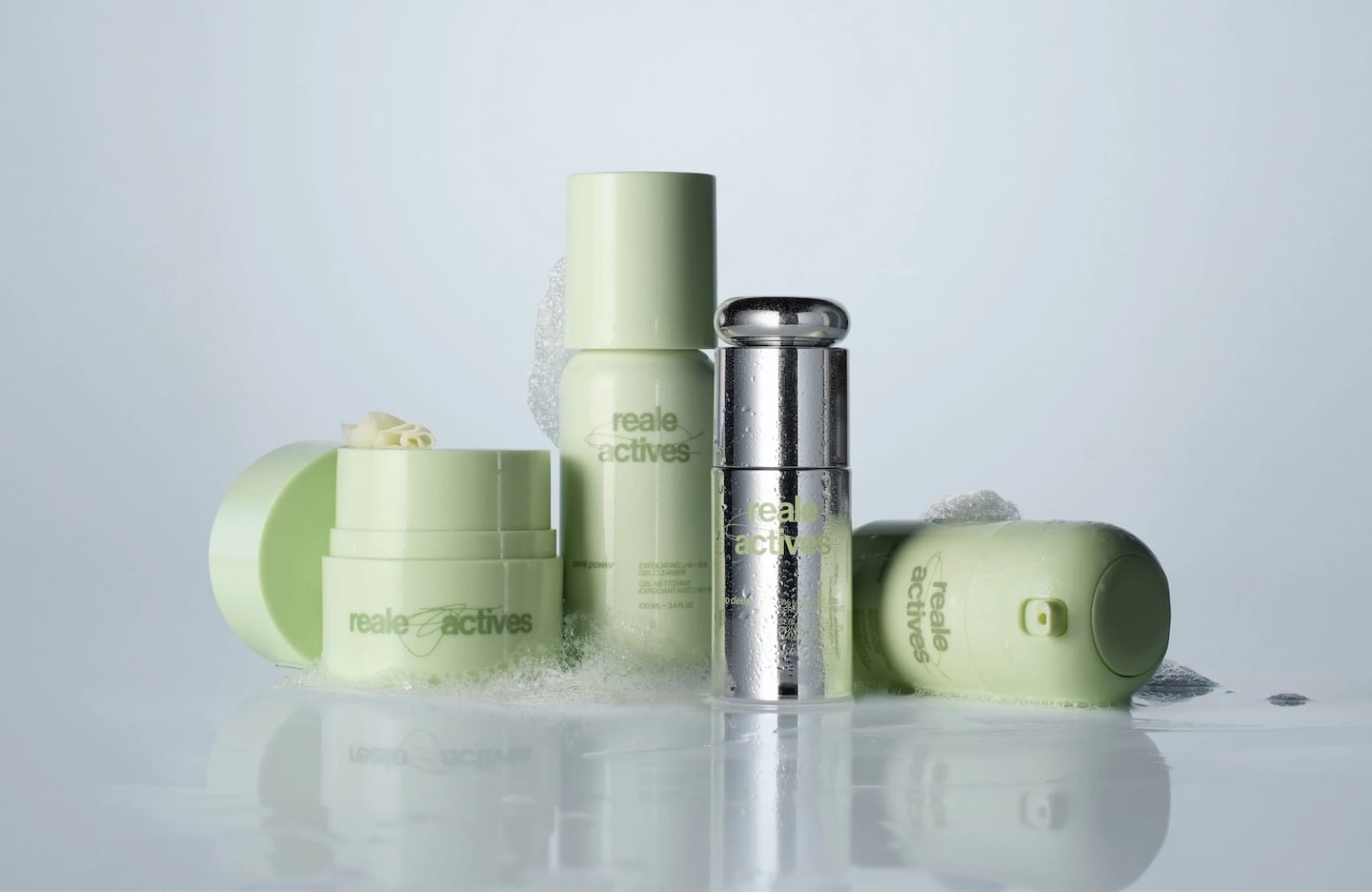
Another category continuing to show high potential is the “founder-led” category, as Imaginary has invested in influencer labels like Mikayla Nogueira’s POV Beauty and Alix Earle’s Reale Actives.
“The customer’s response to Reale has been one of the more extraordinary responses that I have seen in my professional career,” Brown said.
To win over early-stage funders, startups need to find ways to prove growth potential beyond reliance on social media ads alone, given the fact that price changes on Instagram ads previously dealt a massive blow to DTC brands. Finnegan evaluates brands’ cultural impact, average order value, retention, and loyalty.
Founders looking for VC funding need to tout the business fundamentals of their brands more than ever. Ogunbiyi found that the potential for scalability in Halo’s business model was what really inspired her investors, as she highlighted the fact that the US sees 70 million hair-braiding appointments a year and the brand’s offering of a fee-per-appointment stylist payment model.
“I don’t believe [beauty brands] should be viewed as technology companies, but just because something’s not a technology company doesn’t mean that you can’t have venture outcomes,” said Brown.
Sign up to The Business of Beauty newsletter, your complimentary, must-read source for the day’s most important beauty and wellness news and analysis.
In a conservative investment environment, the few start-ups that can access traditional venture capital are opting to take out loans, and battle higher interest rates, to fund business essentials like marketing and inventory.
Known for its TikTok-viral lip stain, the UK and US makeup brand has received an influx of cash from VC firm Insight Partners, known for its investments in Quince and Prose.
A new generation of brands like Alix Earle’s acne line shows that launches can still beat influencer brand fatigue.

Liz Flora is a Beauty Correspondent at Business of Fashion. She is based in Los Angeles and covers beauty and wellness.
Loading recommended reads…
Expansion beyond an exclusive retail arrangement brings new growth, but brands must have the resources to make sure both old and new partners remain happy.
Robert Triefus believes his role as a brand leader is not to invent authenticity. It is to protect it and leave it stronger than it is found. Two years of brand tracking with BoF's advisory team, BoF Insights, confirmed Stone Island could grow without losing the authenticity that has defined it for more than four decades.
According to documents the ultra-fast-fashion company filed in connection with its planned Hong Kong IPO, Shein is cooperating with the investigation and could face significant fines.
The billionaire Mike Ashley’s investment arm disclosed Tuesday it holds an interest worth a potential 4.2 percent of the voting rights in Burberry.