Agenda-setting intelligence, analysis and advice for the global fashion community.
Agenda-setting intelligence, analysis and advice for the global fashion community.
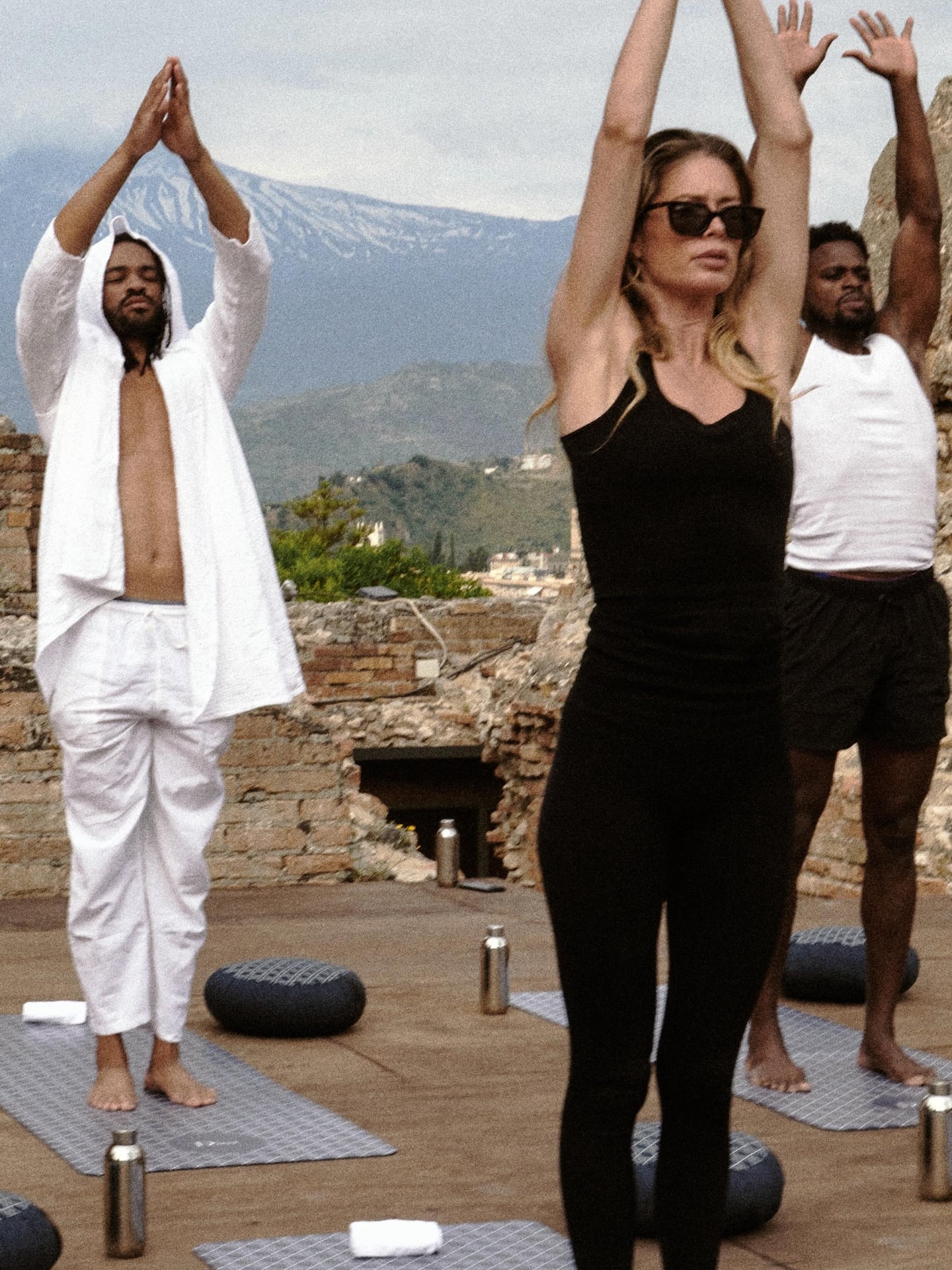
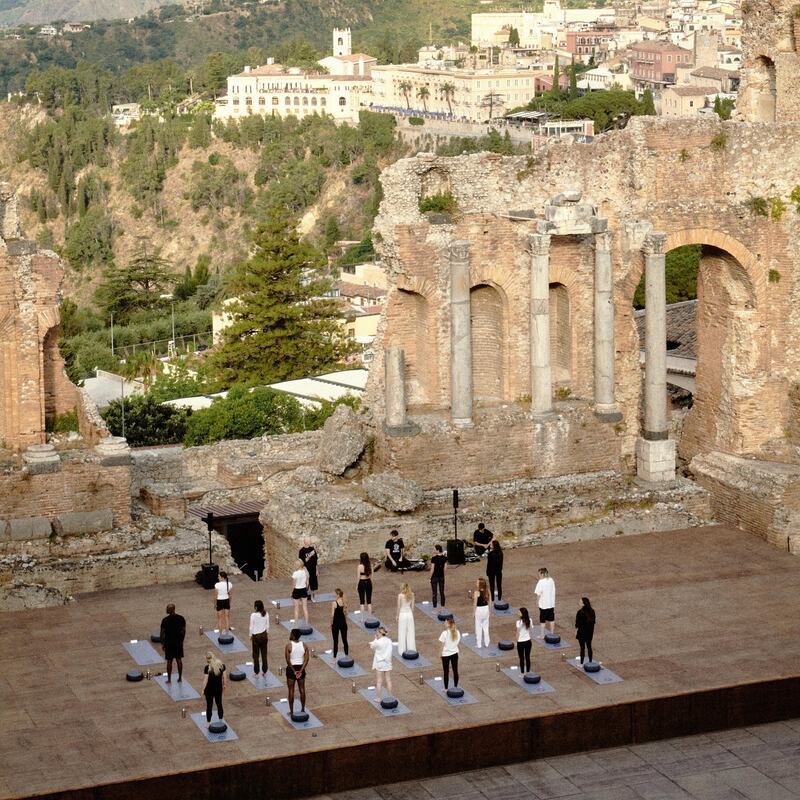
Amid the ruins of an ancient Greek amphitheatre, beneath the shadow of a volcano, a group of well-heeled travellers convened for a yoga class presented by Dior.
The group was hosted by Vogue France with the title’s head of editorial content Claire Thomson-Jonville, and included influential guests like the models Doutzen Kroes and Andreea Diaconu and the makeup artist Aaron de Mey. They gathered during a three-day retreat in celebration of Dior’s upgraded spa at the Grand Hôtel Timéo in Taormina, which offers, among other things, an “energy talisman” treatment. The LVMH-owned house has spent the last few years refining what it terms “haute wellness”: health, fitness and well-being-focused products and services that are decidedly upscale, and singularly Dior.
“I’m really careful about how we articulate anything in the wellness space. It’s important to me that everything feels authentic and considered,” said Thomson-Jonville. “Dior gets it.”
Wellness spending, on products and services geared toward nutrition, sleep, “mindfulness” and other pursuits of the body and mind, totalled $2 trillion in 2024, according to McKinsey and The Business of Fashion’s State of Fashion 2026 report, and could rise to $2.5 trillion by 2028. But luxury brands by and large have been slow to take on the category.
ADVERTISEMENT
Dior, by contrast, has been pushing the upper bounds of the trillion-dollar category. The brand has recently expanded its spa offering beyond skin and body treatments to include sleep, nutrition or “meridian reconnection.” It also hired fitness trainers and scientists as spokespeople, created bespoke getaways for high-spending clients and released a line of workout equipment, including yoga blocks and meditation journals.
“Our true promise is all around transformation,” said Olivier Hann, Dior’s general manager of retail and spa development. The takeaway from a Dior treatment, he adds, is “not just about something physical, but something that you can and should feel deep inside.” He calls it “haute wellness.”
Dior’s vision of “haute wellness” springs from its beauty division, and particularly its growing network of 12 global spas — in cities like Paris, New York and Dubai, or aboard the Royal Scotsman or Eastern & Oriental Express luxury train journeys. But, despite their frequent coupling, beauty and wellness might as well be like comparing apples to vacations. The former sells a commodity, but the latter taps into an experience, journey or even transformation.
“What is luxury beauty? Is it because it’s expensive and rare, or is it because nobody else has it?” said Thomson-Jonville. “We know it’s to sell a product, but [luxury wellness] feels more like a connection,” she added.
As the luxury market remains under pressure, major players are focusing on core categories like fashion or leather goods. For a brand like Dior with a built-in beauty and spa business, wellness is not only a complementary offer but could act as a bulwark against greater luxury slumps.
Big players are considering wellness more and more, said Anne-Laure Bismuth, an analyst at HSBC who covers the luxury market. Dior is casting its net wide, and cautiously testing experiences like its getaways, which have mostly been one-offs. The house is strategically betting on a first-mover advantage that could write the playbook for luxury wellness — or serve as a cautionary tale.
Wellness, as a pursuit, has long been available only to those with abundant time and money — whether through batteries of treatments or a premium Pilates membership. But as the category becomes more broadly accessible to lay consumers, luxury brands must elevate their offer.
This is happening through experiences, which are increasingly critical to luxury companies, Bismuth said.
ADVERTISEMENT
Hann, an LVMH veteran with 18 years of experience working at Dior, is the architect of the house’s “haute wellness” strategy, which centres on its global fleet of spas.
These spa menus have been updated to offer cutting-edge wellness treatments: The brand’s New York spa, its largest in North America, is stocked with infrared mattresses and features a “happiness programme” with a sleep expert. Bespoke wellness experiences complement the services, like its three-month post-partum protocol available at Paris’ Hôtel Cheval Blanc called “Haute Motherhood,” starting at $3,300, or a four-day retreat at Cannes’ Hôtel du Cap-Eden-Roc, available to the public for over $30,000 per person.
“We really want to be in these iconic locations where our clients are, with one philosophy to offer the best experience a client can imagine,” Hann said.
Dior has expanded its spokesperson and expert roster significantly in the past half-decade, forming its “Reverse Aging Board” of global scientists advising LVMH’s research and development on anti-aging skincare. More recently, it added wellness ambassadors like the nutritionist Rose Ferguson or the fitness instructor Bryony Deery, both of whom are on hand for Dior’s wellness retreats.
Deery, who operates her own fitness brand Pilates by Bryony, has taught Dior-branded classes in the jungles in Malaysia, aboard the Orient Express and upon the Seine in Paris during the Olympics. “Our environment has such a big impact on our health and wellness and experience as a whole. They’re really good at setting the scene,” she said.
The house has chosen Pilates as its preferred form of exercise, developed in the 1910s by Joseph Pilates and focused on long, lean calisthenic movements. “You can’t overdo it,” said Deery, who began her practice in physical therapy after a car accident. “It really links well with the Dior house. They like it because of the heritage and the classical form.”
But more than the offering itself, bringing these experts and clients together is core to the experience.
Hann said, “It’s all about the people that make the difference, and all about this capacity to provide to each of our guests a sanctuary where they can really fulfill their physical and emotional needs. This is a privilege that cannot be massively produced.”
ADVERTISEMENT
More than any other heritage luxury house, LVMH seems the most tuned in to the wellness boom; aside from Dior, Céline has also unveiled their own branded workout equipment, angling toward health-minded shoppers. The conglomerate’s contemporaries like Richemont and Kering are focused on their core jewellery and fashion businesses, respectively, with Kering divesting its beauty arm to L’Oréal in 2025.
“They are trying to invest, but not too much, because the focus is elsewhere,” said Bismuth. Even large beauty conglomerates like L’Oréal have been shy about breaking new ground: Its deal with Kering was heralded as a new partnership in “beauty and wellness”, but its plans for the latter remain unclear. Kering CEO Luca de Meo has said that experiences in wellness are a key focus area.
Demands for new kinds of treatments have vastly upgraded consumers’ expectations for their spa menus. “If I’m paying money for a luxurious stay, I want to know that the wellness is top notch,” said Deery.
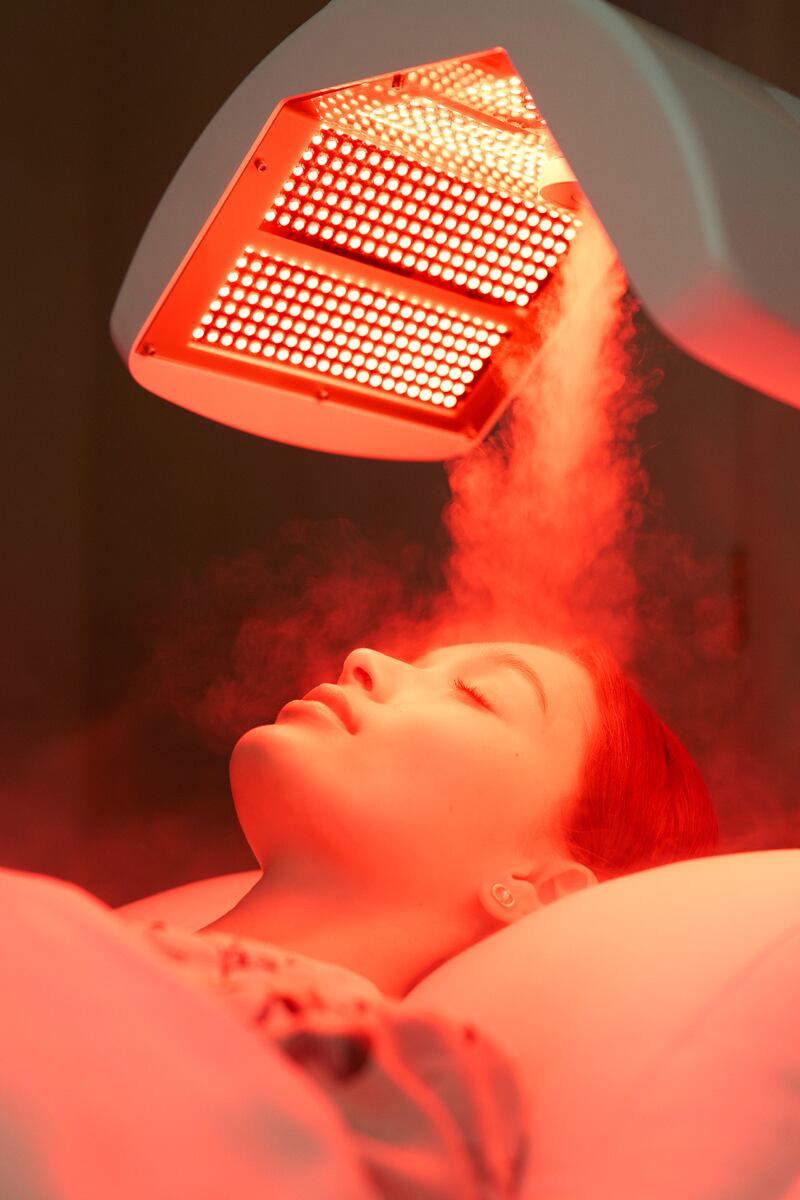
These experiential wellness offerings are going up against the hospitality sector, where five-star hotels and “longevity”-focused retreats alike are clamouring for the same luxury wellness consumer. The German clinic Lanserhof recently introduced a six day “wellness residency” across the Atlantic in partnership with Four Seasons yachts, with its maiden voyage scheduled for fall 2026. The hotel group Chenot, which offers weeklong detox programmes at its clinics in Italy and Azerbaijan, has added “experiences” around experts and limited-time treatments at its flagship property on Switzerland’s Lake Lucerne. This week, Bloomberg reported that L Catterton was close to acquiring Hyrox, the global fitness competition.
Labels like Chanel or Beiersdorf’s La Prairie, which make products and operate global spas, could easily expand more into wellness with minimal risk. Partnerships offer a simple solution: Equinox and Casa Cipriani have a deal with Higherdose that brings the latter brand’s LED tech into their hotels and spas; the New York members club Kith Ivy is equipped with an Armani spa, a padel court and an Erewhon outpost.
“Some of the smartest luxury brands are the ones that are plugging into that space, either associating themselves with sports performance brands or hotels that represent a feeling or an aspiration,” Thomson-Jonville said. “We’ve moved on from these product-push collabs to something much more meaningful.”
Sign up to The Business of Beauty newsletter, your complimentary, must-read source for the day’s most important beauty and wellness news and analysis.
Disclosure: LVMH is part of a group of investors who, together, hold a minority interest in The Business of Fashion. All investors have signed shareholders’ documentation guaranteeing BoF’s complete editorial independence.
The Sunshine State has long been a destination for plastic surgery, but has more recently become a hub for founders and a clandestine birthplace for new policies shaping national health.
From daily vitamins to luxury recovery retreats, brands are racing to meet the needs of women navigating the transition into motherhood.
In an era of economic constraint and a growing loneliness epidemic, affordable bathhouse and sauna culture is undergoing a global renaissance. But building a mass market wellness empire comes with steep financial and operational hurdles.

Brennan Kilbane is News and Features Editor at The Business of Beauty. He is based in London, and supports BoF’s coverage of the multifaceted cosmetics industry, from fine fragrance to wellness trends.
Loading recommended reads…
The British retail group has brought its stakes in Burberry, Hugo Boss and Mulberry together with its luxury retail operations.
When Nike is at its peak, there’s usually a central product that gives it a cultural resonance that no other brand can touch. Typically, that’s come from Jordan Brand’s retro business. With that no longer working, let’s talk about where the brand can turn.
The retailer is investigating after users of its mobile app received a notification claiming hackers had ‘fully compromised’ company data.
L-Beauty, a new e-commerce site created by the non-profit organisation Latinas in Beauty wants to introduce shoppers, retailers and investors to emergent Latin-owned brands.