Fashion’s Climate Emissions Increased Almost 14% Over Two Years
Greenhouse gas emissions rose in 2023 and 2024, due in part to increased global production of fibre, especially polyester, according to a new report by the Apparel Impact Institute.

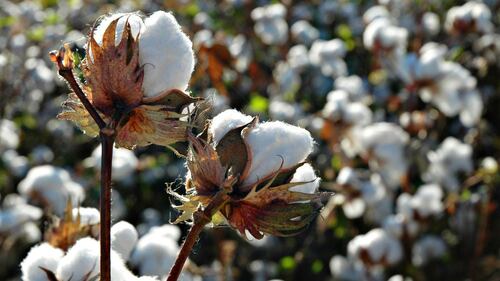
Most companies using cotton do nearly nothing to improve environmental sustainability in its supply, environmental groups have announced.
Most companies using cotton do nearly nothing to improve environmental sustainability in its supply, environmental groups have announced.

Social Goods is a weekly roundup of the most important news at the intersection of fashion and ethics, sustainability and corporate social responsibility.
Social Goods is a weekly roundup of the most important news at the intersection of fashion and ethics, sustainability and corporate social responsibility.

Social Goods is a weekly roundup of the most important news at the intersection of fashion and ethics, sustainability and corporate social responsibility.
Social Goods is a weekly roundup of the most important news at the intersection of fashion and ethics, sustainability and corporate social responsibility.

Social Goods is a weekly roundup of the most important news at the intersection of fashion and ethics, sustainability and corporate social responsibility.
Social Goods is a weekly roundup of the most important news at the intersection of fashion and ethics, sustainability and corporate social responsibility.

At the Copenhagen Fashion Summit, economic growth and social and environmental responsibility were not seen as opposing ideas, reports Imran Amed.
At the Copenhagen Fashion Summit, economic growth and social and environmental responsibility were not seen as opposing ideas, reports Imran Amed.

Social Goods is a weekly roundup of the most important news at the intersection of fashion and ethics, sustainability and corporate social responsibility.
Social Goods is a weekly roundup of the most important news at the intersection of fashion and ethics, sustainability and corporate social responsibility.

Social Goods is a weekly roundup of the most important news at the intersection of fashion and ethics, sustainability and corporate social responsibility.
Social Goods is a weekly roundup of the most important news at the intersection of fashion and ethics, sustainability and corporate social responsibility.

With first access to Kering’s 2016 sustainability report, BoF speaks to chief sustainability officer Marie-Claire Daveu to unpick the data and what it reveals about luxury supply chains.
With first access to Kering’s 2016 sustainability report, BoF speaks to chief sustainability officer Marie-Claire Daveu to unpick the data and what it reveals about luxury supply chains.

Social Goods is a weekly roundup of the most important news at the intersection of fashion and ethics, sustainability and corporate social responsibility.
Social Goods is a weekly roundup of the most important news at the intersection of fashion and ethics, sustainability and corporate social responsibility.

Fashion’s failure to move beyond the most easily achievable — and easily marketable — sustainability issues puts it behind other sectors, argues Lucy Siegle.
Fashion’s failure to move beyond the most easily achievable — and easily marketable — sustainability issues puts it behind other sectors, argues Lucy Siegle.

Social Goods is a weekly roundup of the most important news at the intersection of fashion and ethics, sustainability and corporate social responsibility.
Social Goods is a weekly roundup of the most important news at the intersection of fashion and ethics, sustainability and corporate social responsibility.

Since the worst disaster in the history of the garment industry, collaboration on safety has improved, but worker welfare lags behind, experts say.
Since the worst disaster in the history of the garment industry, collaboration on safety has improved, but worker welfare lags behind, experts say.
Greenhouse gas emissions rose in 2023 and 2024, due in part to increased global production of fibre, especially polyester, according to a new report by the Apparel Impact Institute.
Lululemon and apparel manufacturer MAS Holdings are among the investors backing the French startup as it scales a proprietary process for recycling nylon from mixed-textile waste.
The changes, which will go into effect in December 2027, are a win for the leather industry.
Major retailers’ ads promoting “recycled” clothing and shoes have been banned by the UK watchdog after advertisers were unable to prove their green claims.
The British group positioned itself as an industry leader five years ago when it announced a goal of net zero by 2040 — ahead of other luxury brands and the Paris Agreement on climate change.
The National Chamber of Italian Fashion will no longer promote fur at events or on social media.
Labour representatives worry the shift to standardised conditions would erase years of locally negotiated terms in A Coruña.
The Clean Clothes Campaign and four Dutch consumers have accused the denim brand of failing to meet the responsible production standards it promotes in its marketing.