Agenda-setting intelligence, analysis and advice for the global fashion community.
Agenda-setting intelligence, analysis and advice for the global fashion community.

NEW YORK — The suits showed up in force, and they were early.
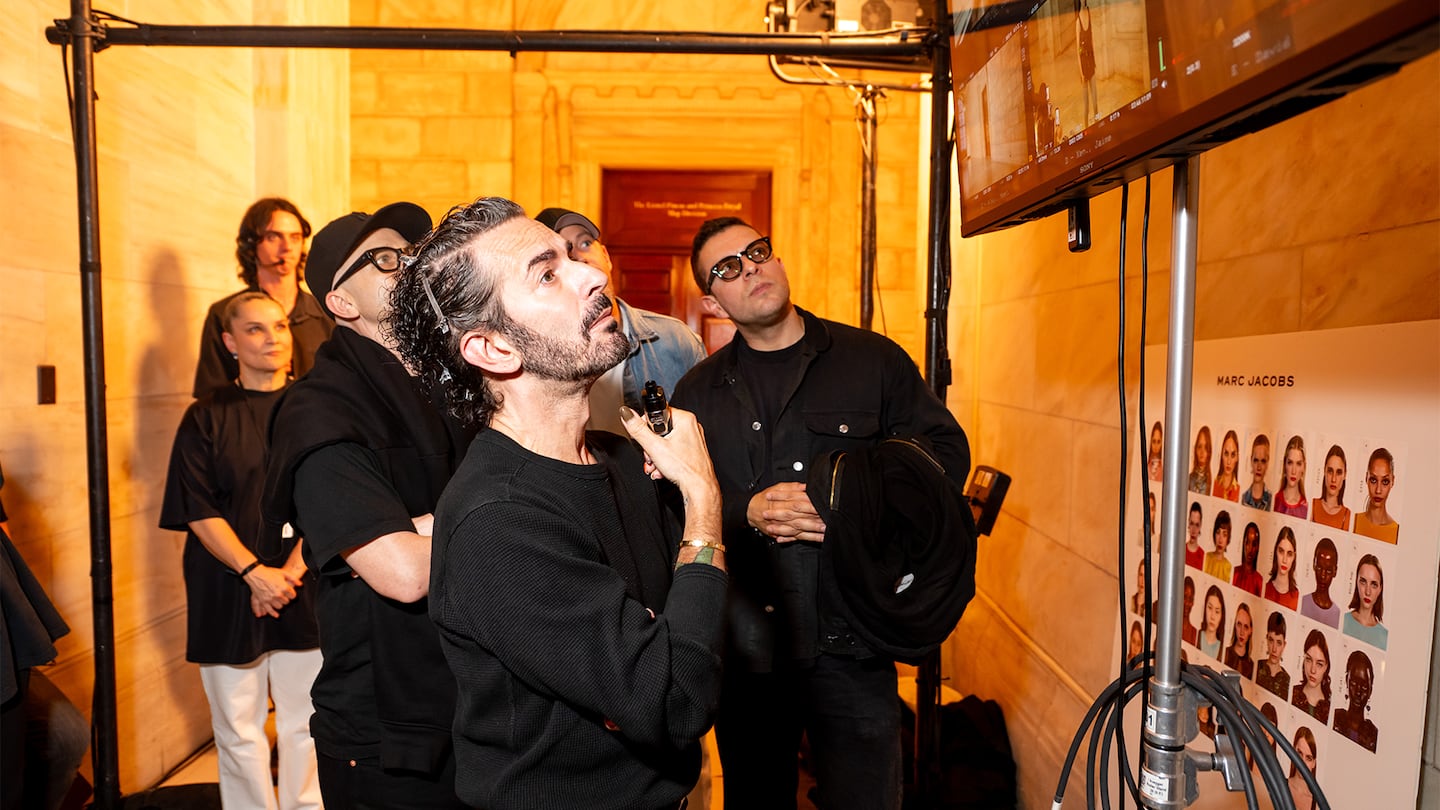
A few minutes before 7 p.m. on Monday, before the doors were even open, Yehuda Shmidman, the founder, chairman and CEO of the brand management firm WHP Global, was whisked into the Fifth Avenue entrance of the New York Public Library, where Marc Jacobs was showing his first runway collection since LVMH announced the sale of his company to WHP and G-III Apparel Group in May.
The grand lobby inside the main branch of the library looked like it often does during a Marc Jacobs show, as fashion legends Mario Sorrenti, Grace Coddington, Phyllis Posnick, Anna Sui and others mingled on a hot summer night, but with the added element of the executives, who at one point included Shmidman, G-III chairman Morris Goldfarb and Eric Marechalle, whom LVMH appointed CEO of Marc Jacobs nearly a decade ago, all in a scrum surrounding Anna Wintour. LVMH veteran Sidney Toledano, a longtime champion of Jacobs, was there too. Toledano said he flew in from Paris Monday morning and was flying back Monday night. “I move at the speed of light,” the executive said.
There’s a lot of curiosity about the sale of Marc Jacobs, after 29 years with LVMH (more than half of them as the designer who made Louis Vuitton a luxury fashion behemoth), and how the brand’s new owners, once the transaction closes, will manage a designer who is one of the most influential in American fashion and yet whose runway offering isn’t as visible as it once was. While Jacobs has expanded his retail footprint substantially with his own stores for accessories, his lower-priced sportswear and a newly relaunched beauty line with Coty, his runway designs are currently sold only at Bergdorf Goodman in New York and Isetan in Japan.
ADVERTISEMENT
WHP, whose fashion portfolio includes Vera Wang, Rag & Bone and G-Star, and G-III, which bought Donna Karan from LVMH in 2016, teamed up to spend a reported $925 million for Marc Jacobs and plan to invest in its expansion, so some guests predicted the return of the Marc Jacobs glory days, when his shows were cultural touchstones with elaborate sets and massive budgets, while others worried such spectacles might fall by the wayside in the pursuit of positioning Jacobs as a “volume luxury” business, as Goldfarb has recently described it.
“We’re committed to keeping them going, committed to getting the spirit of Marc, the energy of Marc, the validity of what he’s created,” Goldfarb said on Monday. “And this is the way to get the message out on a semi-annual basis. We’re happy to do it.”
Jacobs’ latest show, for spring 2027, was scheduled for 7.30pm, which was exactly when the first of 31 models appeared on the catwalk in a five-minute show that paid reference, according to the show notes, to Yves Saint Laurent, Miuccia Prada, Junya Watanabe and, ahem, Bob Fosse. This is why people in fashion love Marc Jacobs. He is all that jazz.
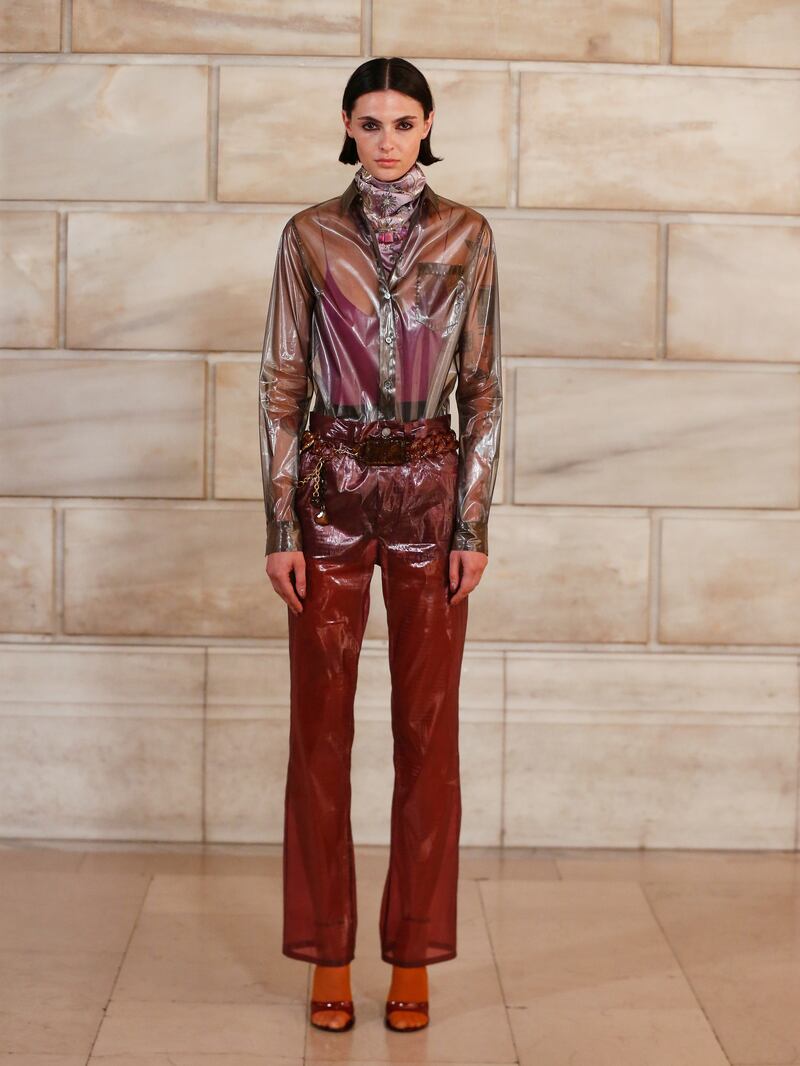
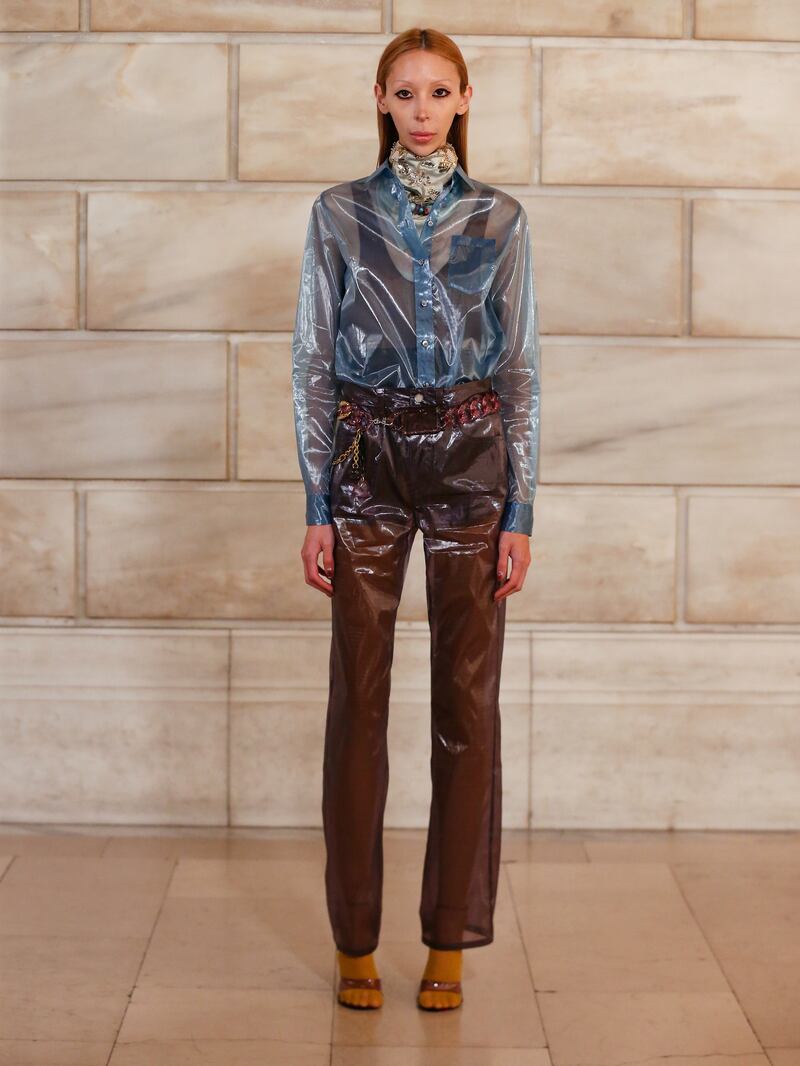
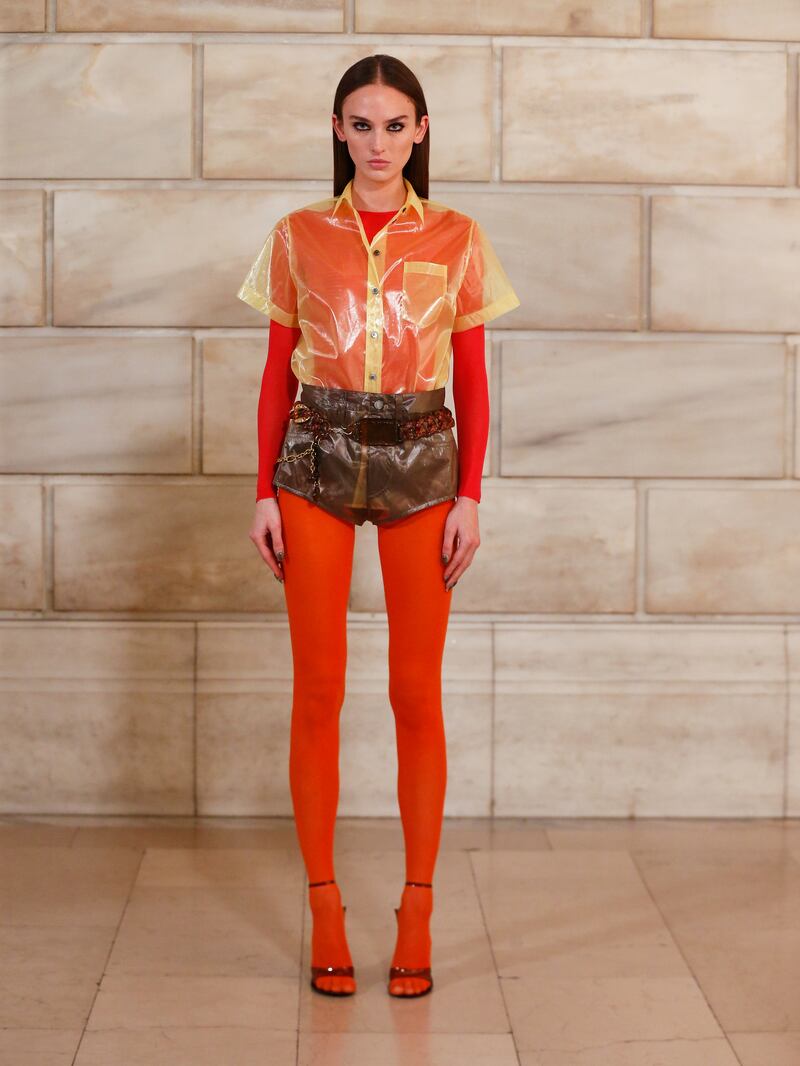
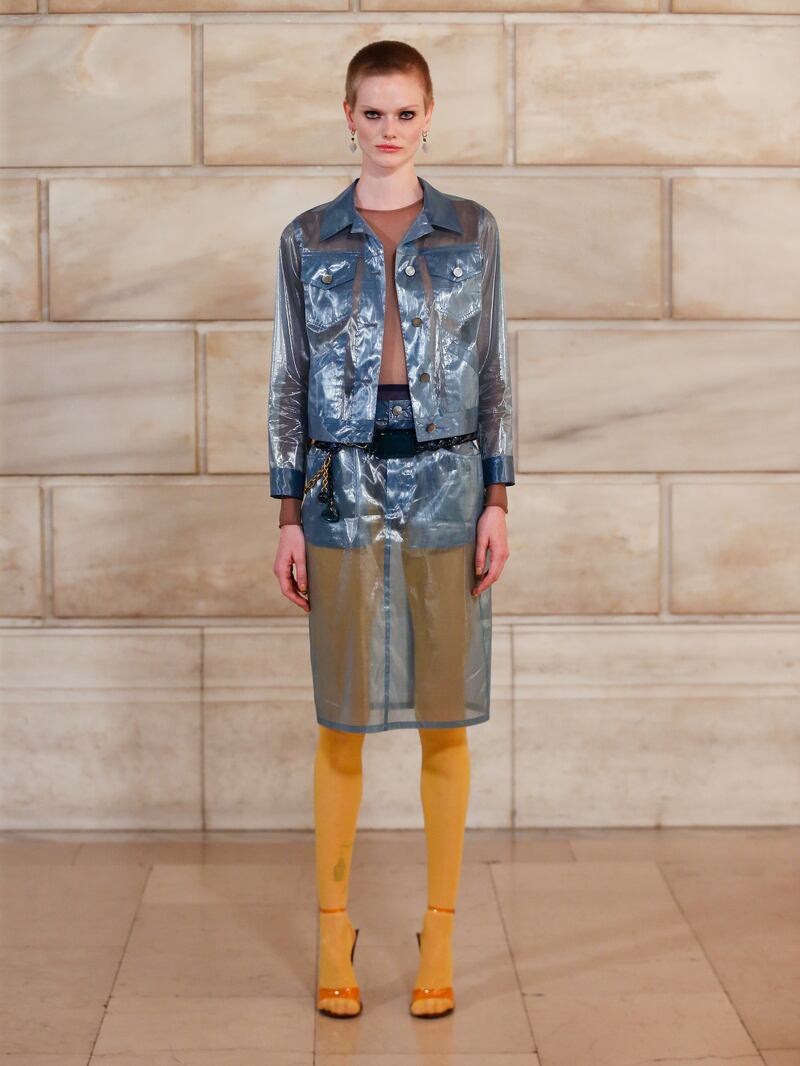
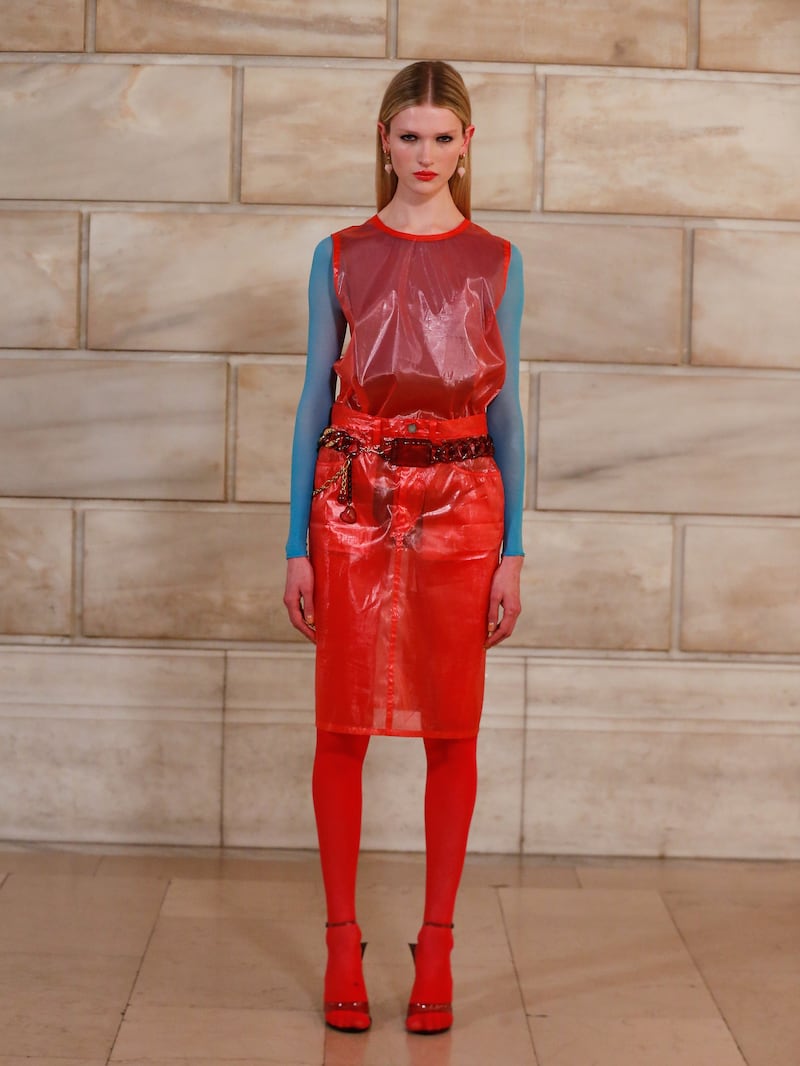
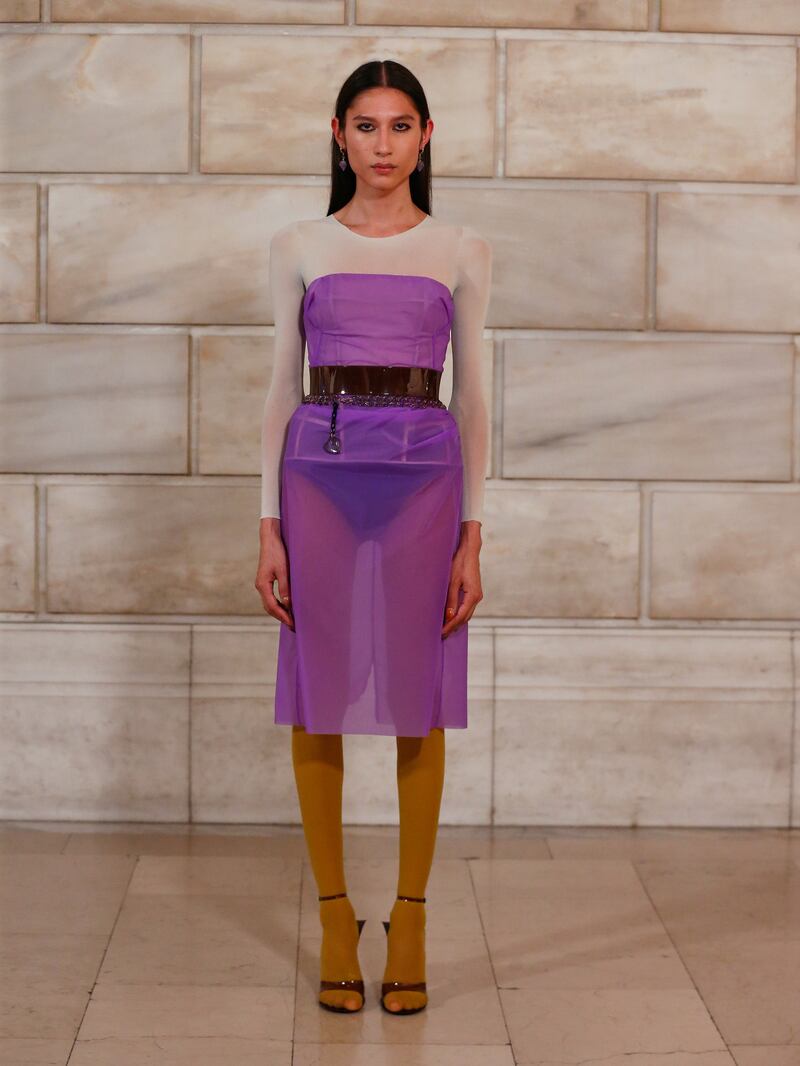
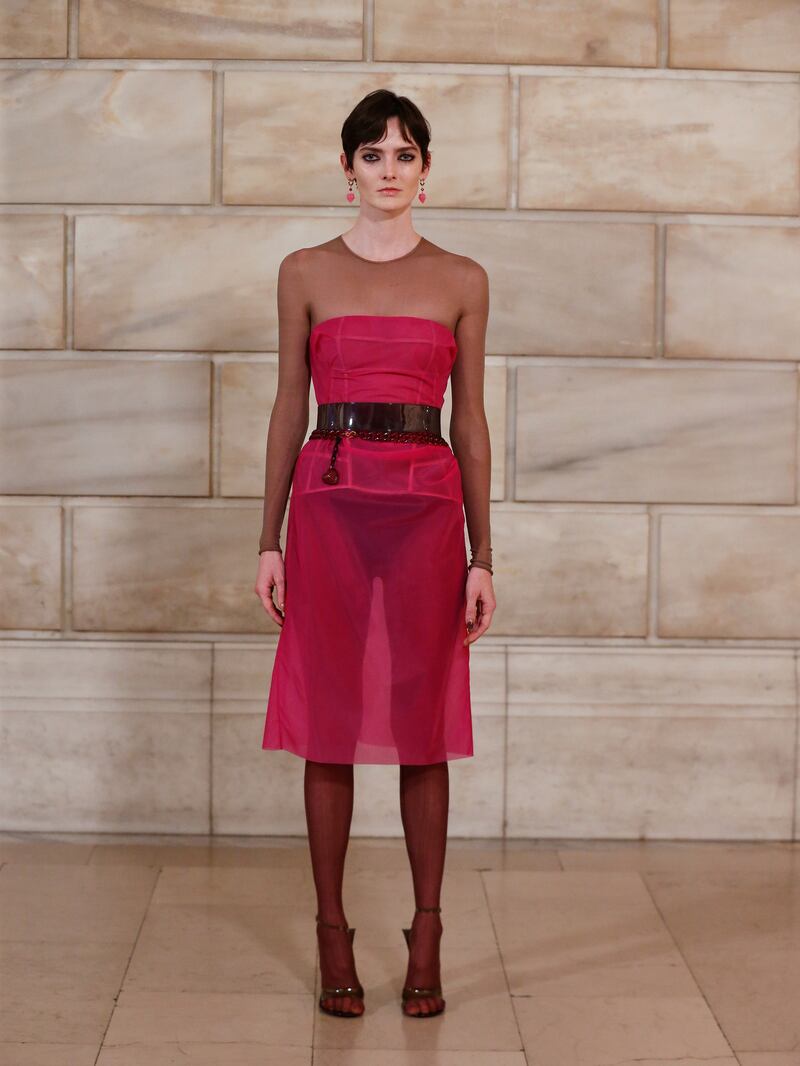
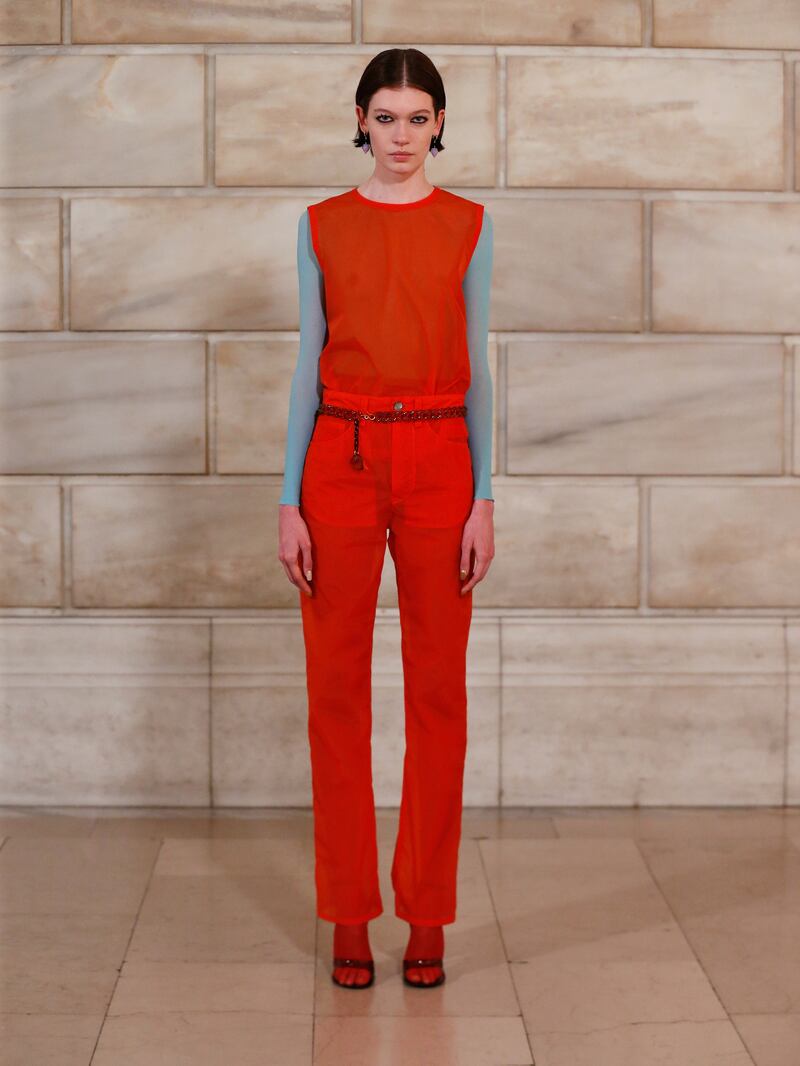
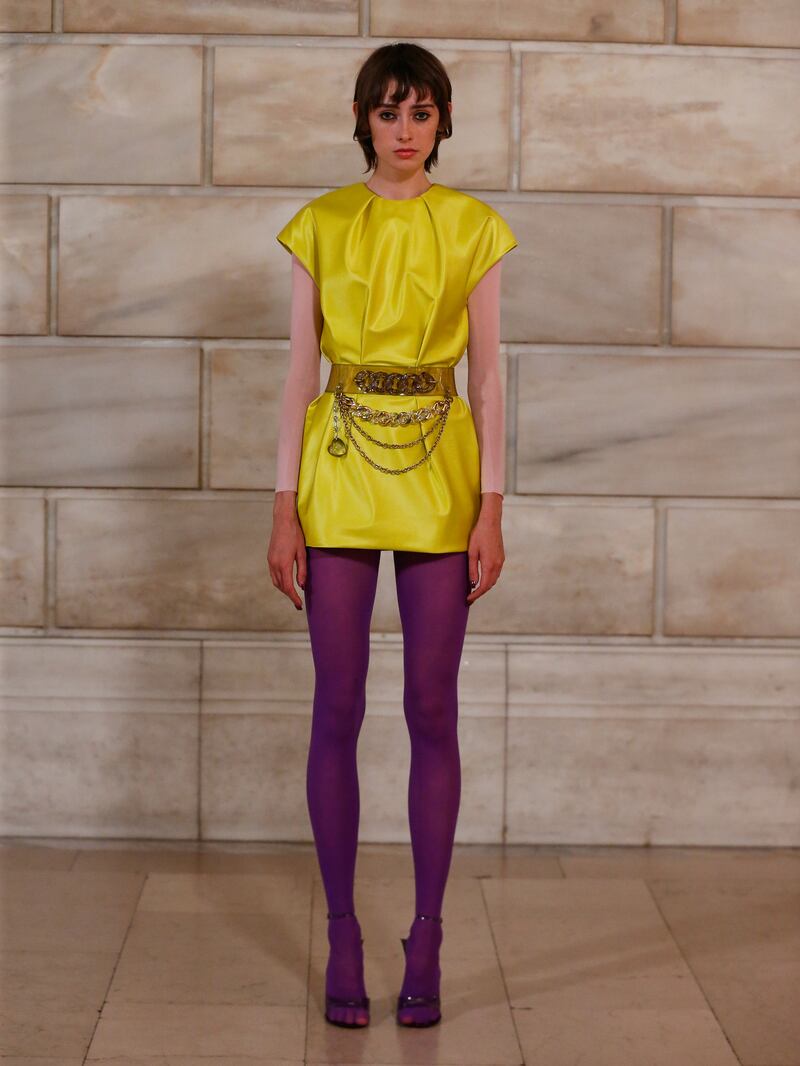
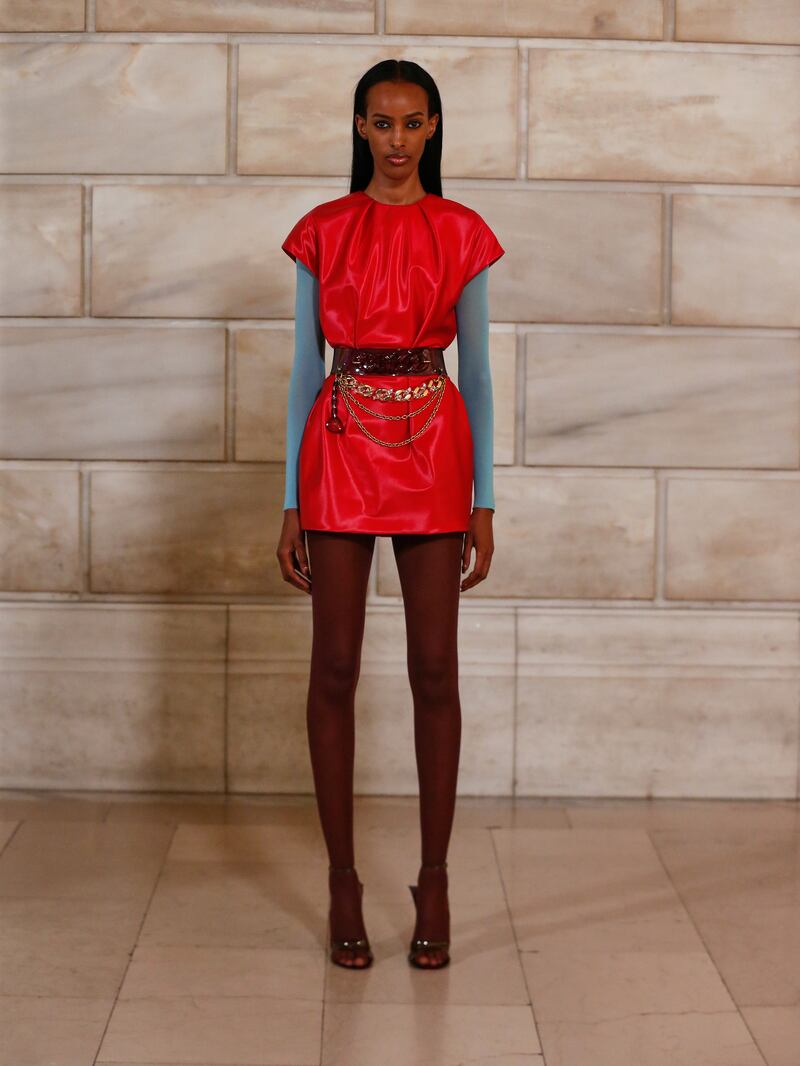
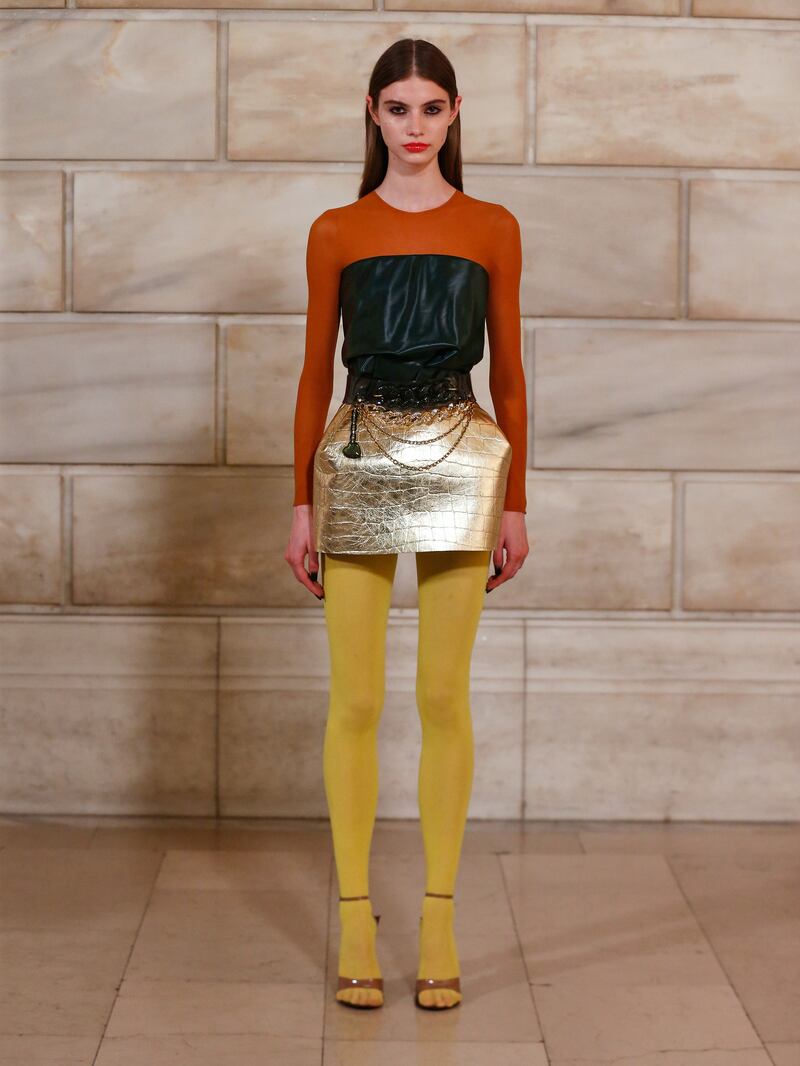
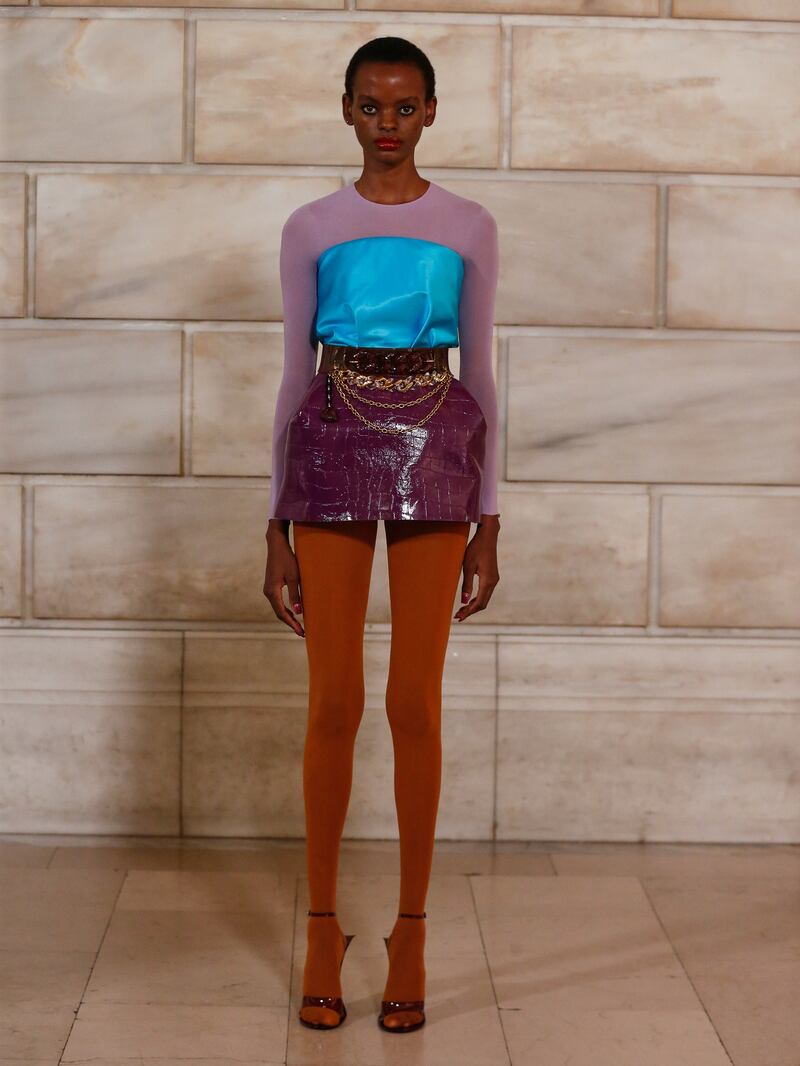
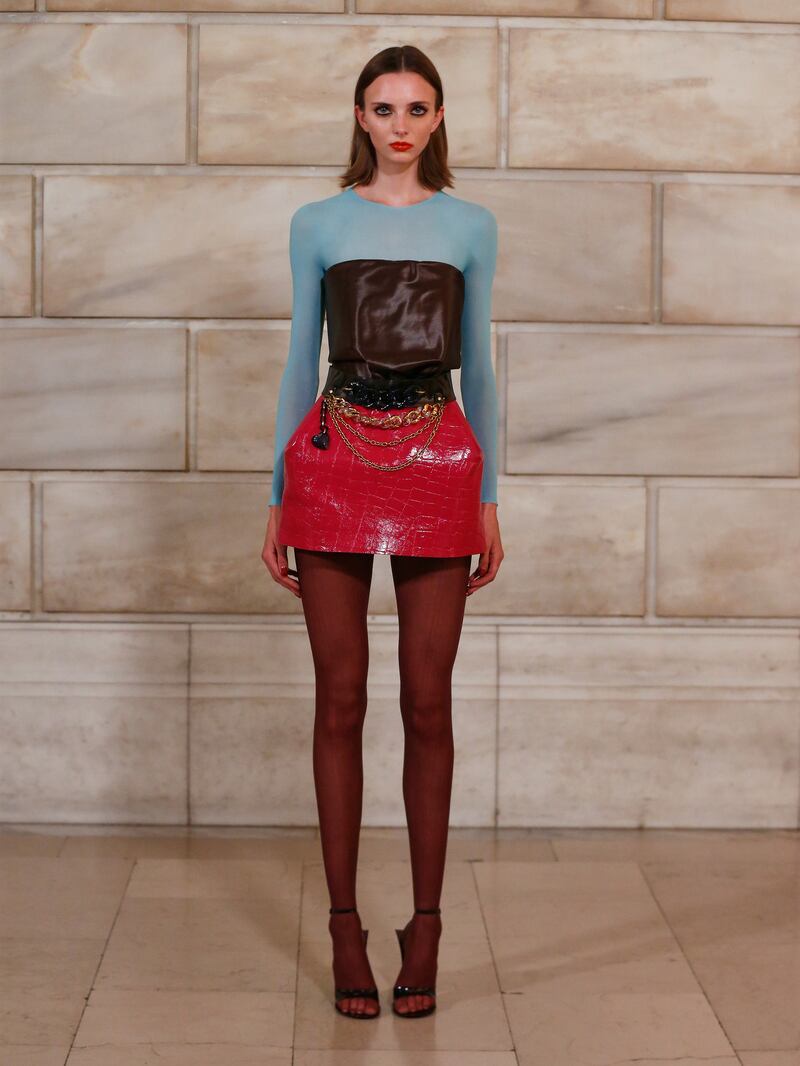
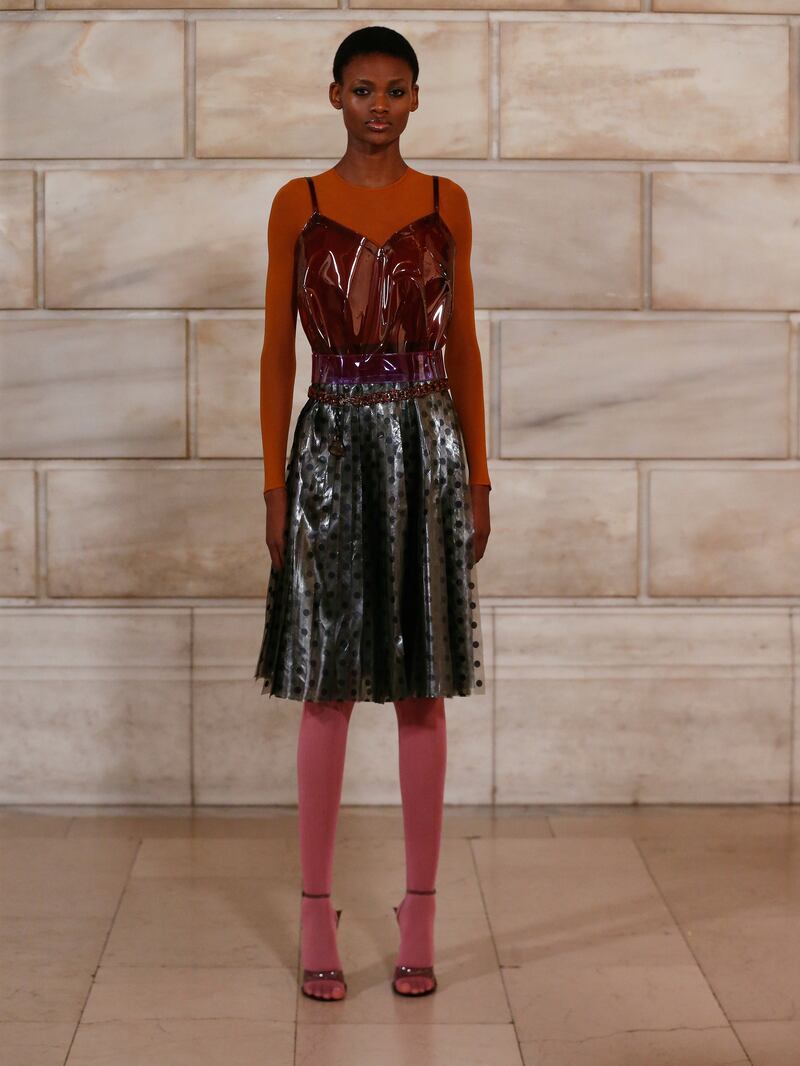
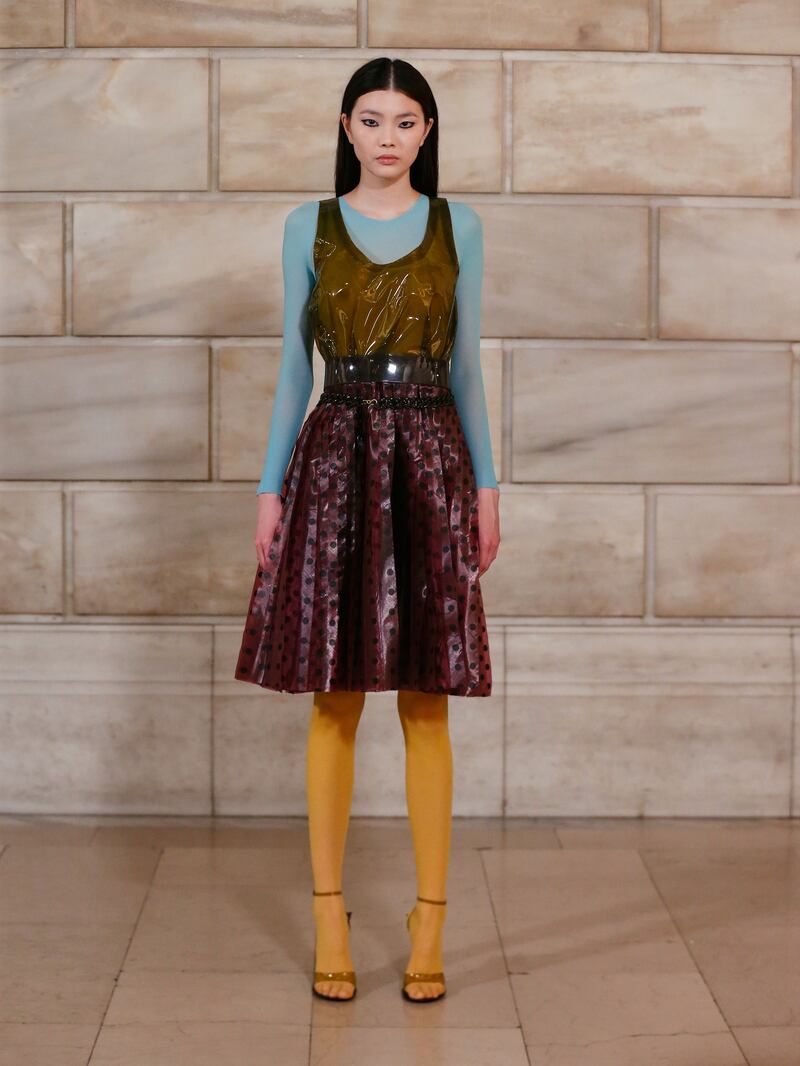
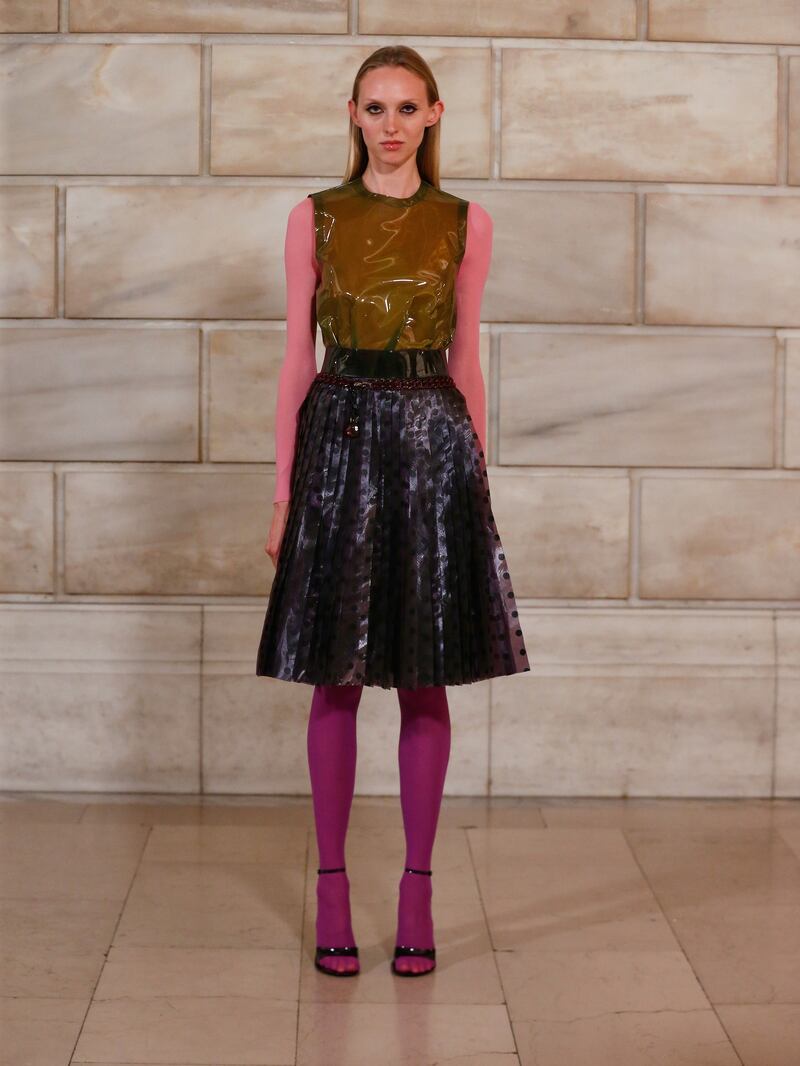
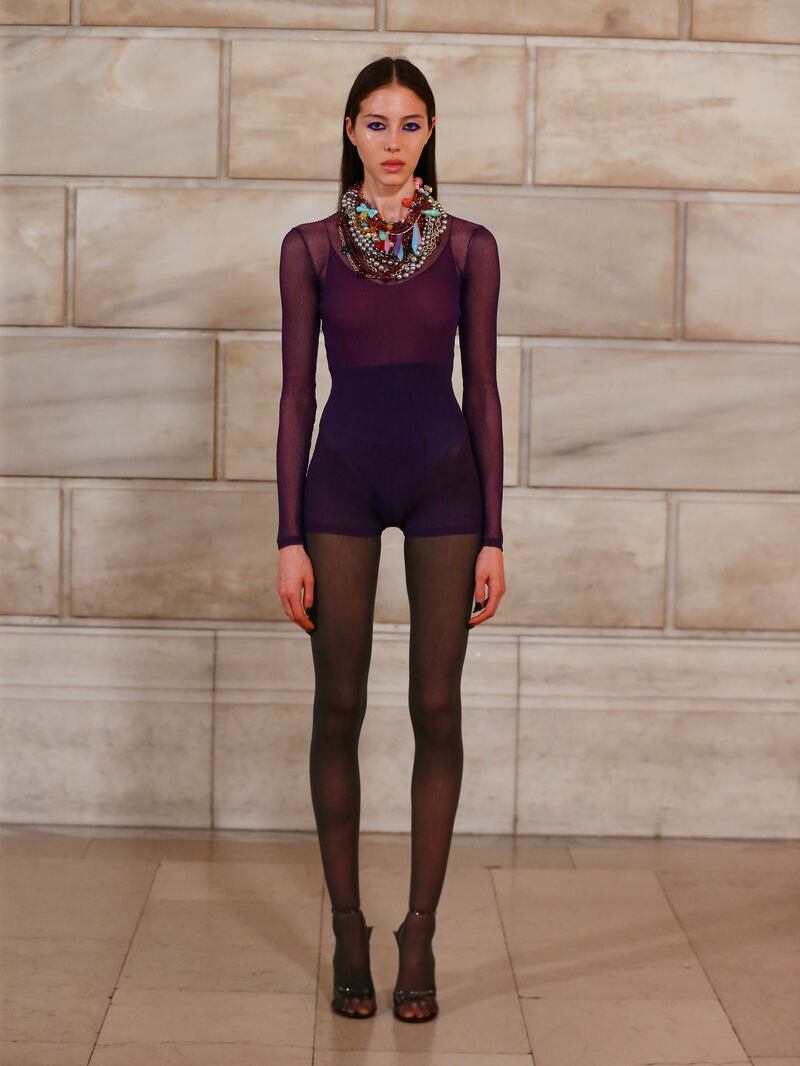
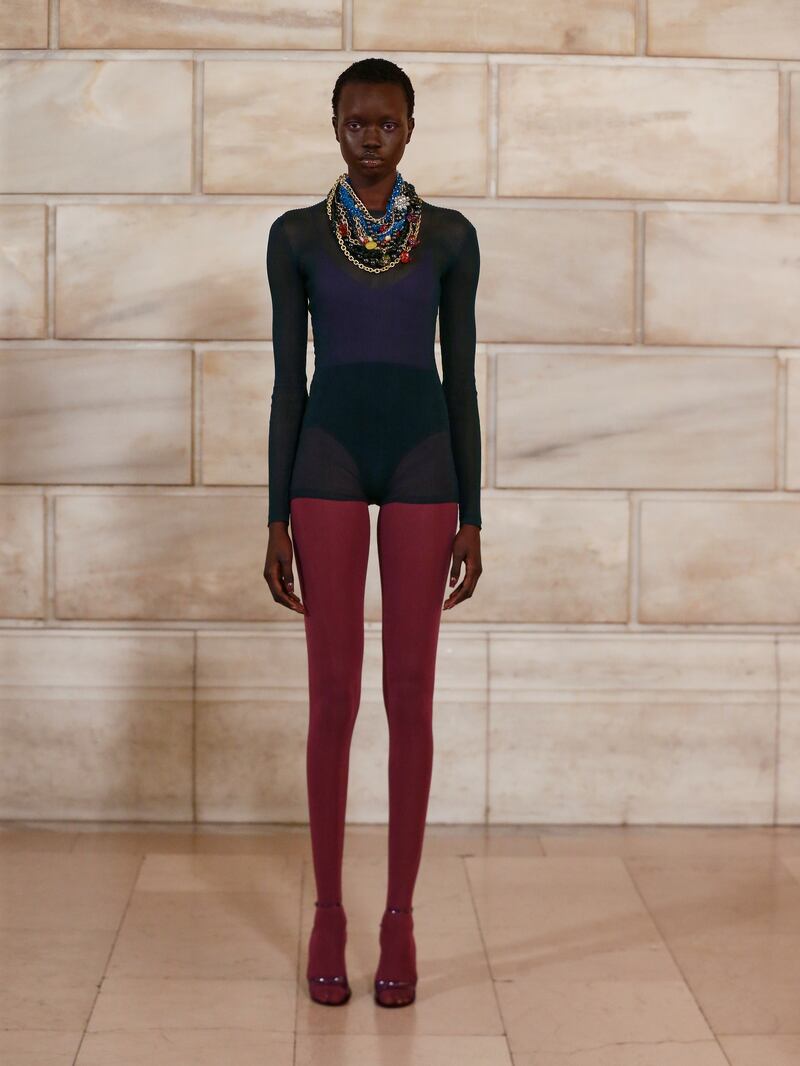
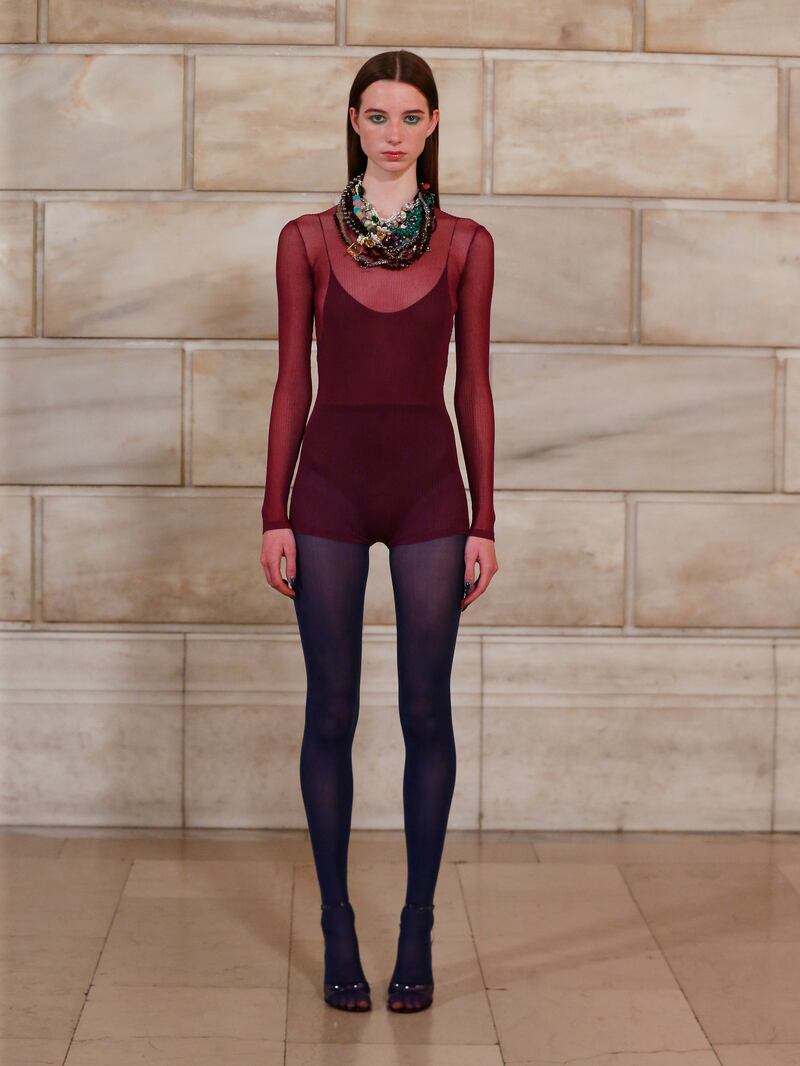
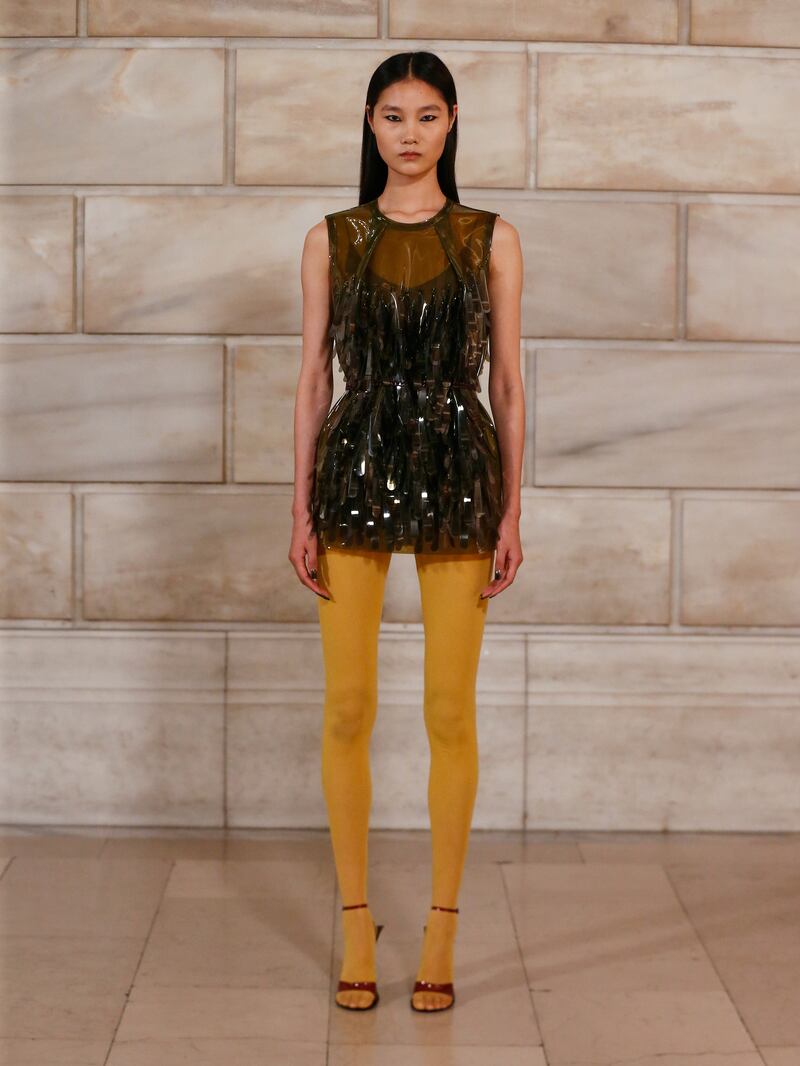
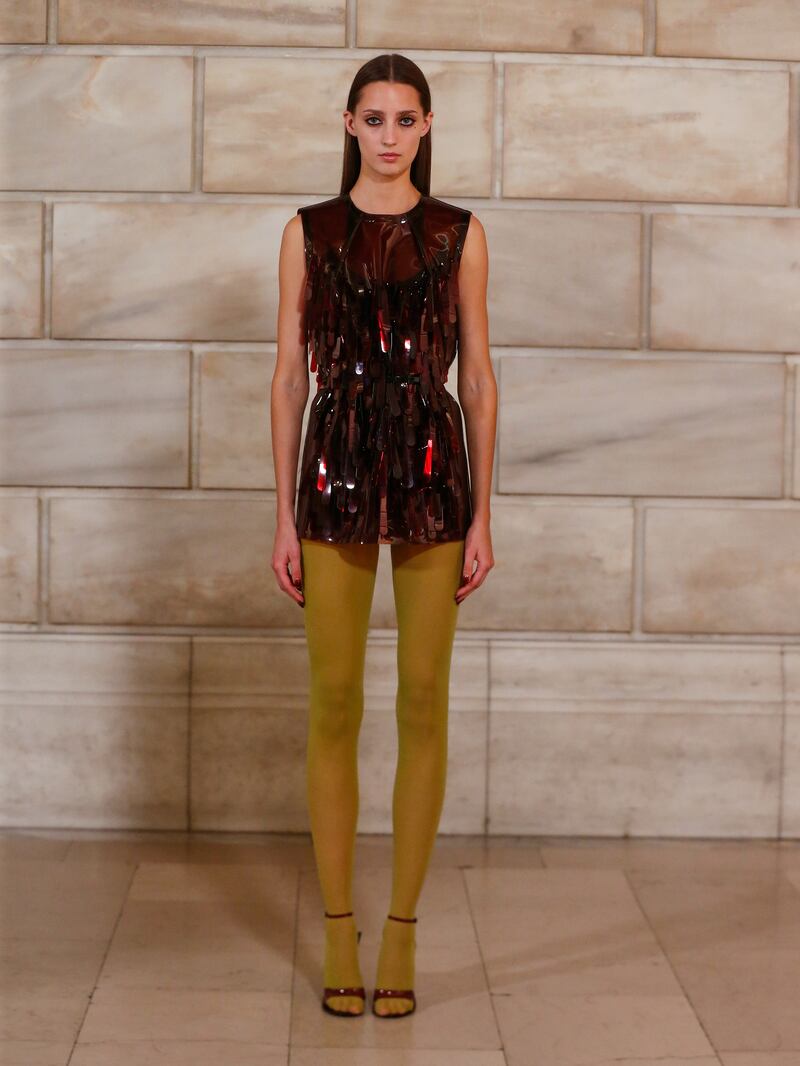
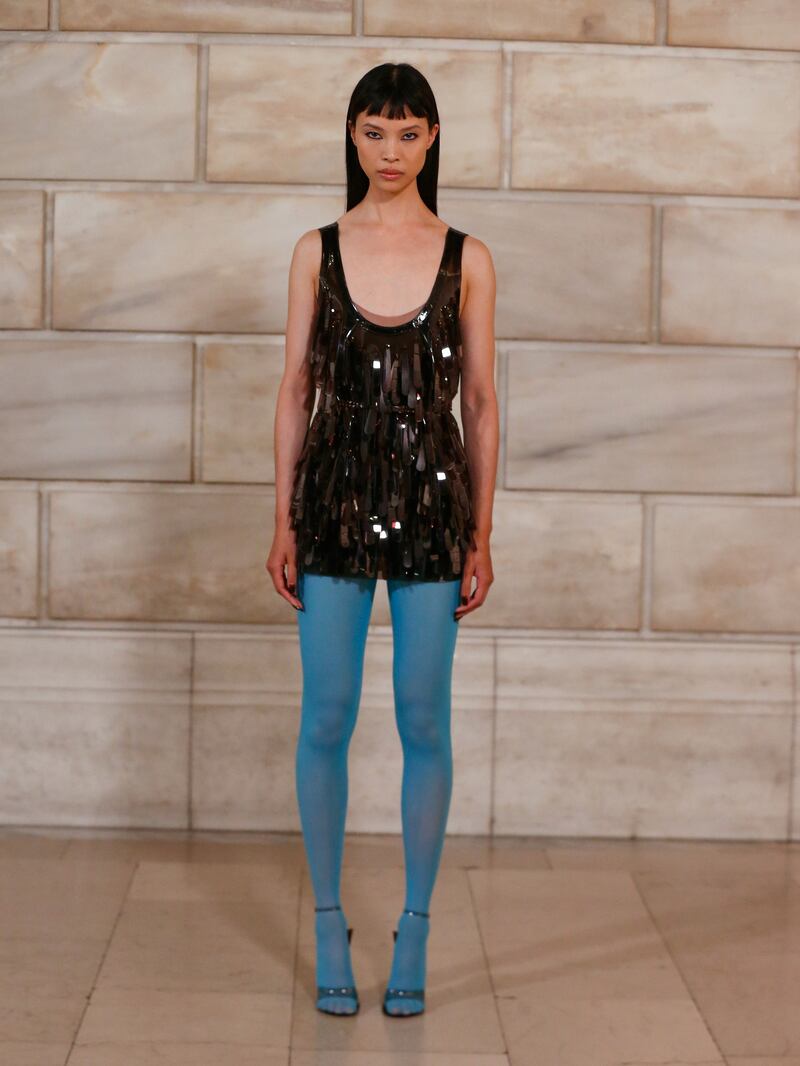
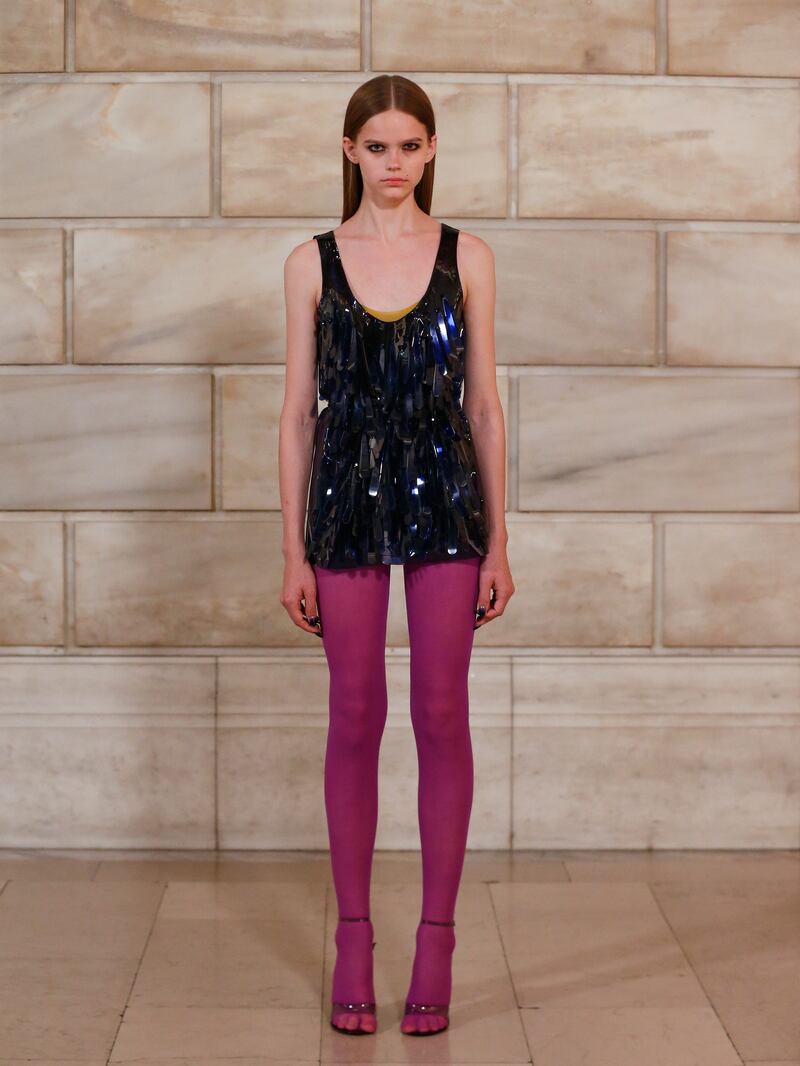
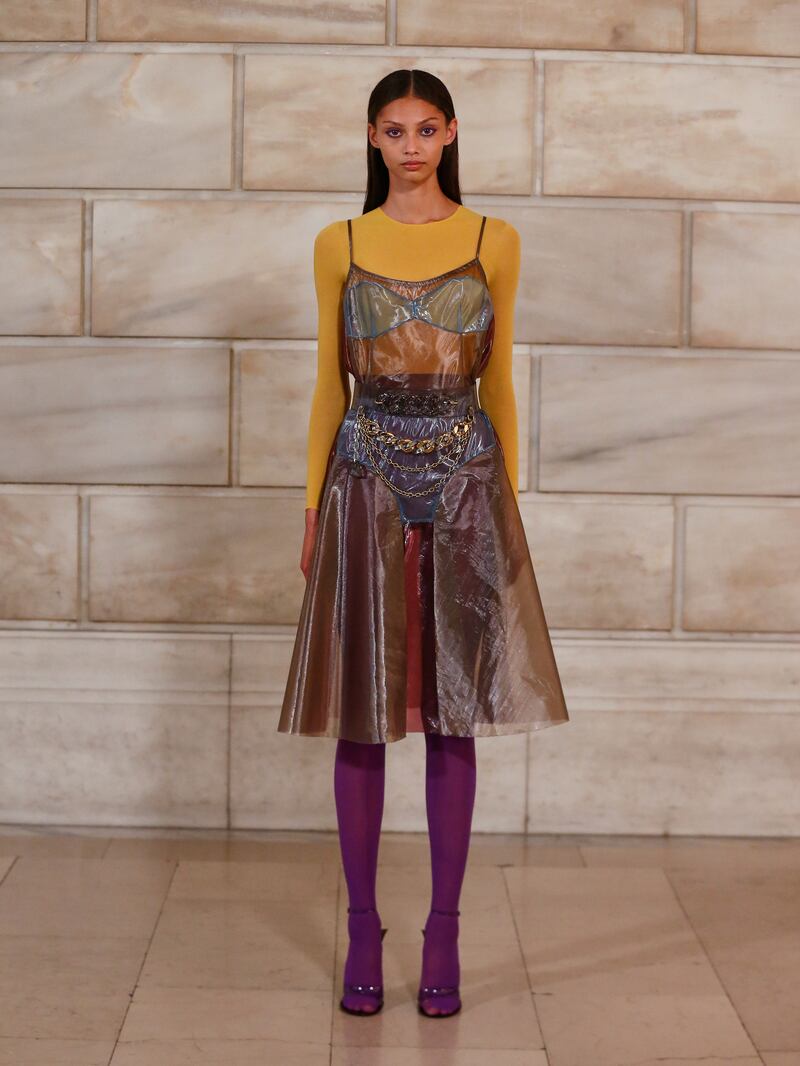
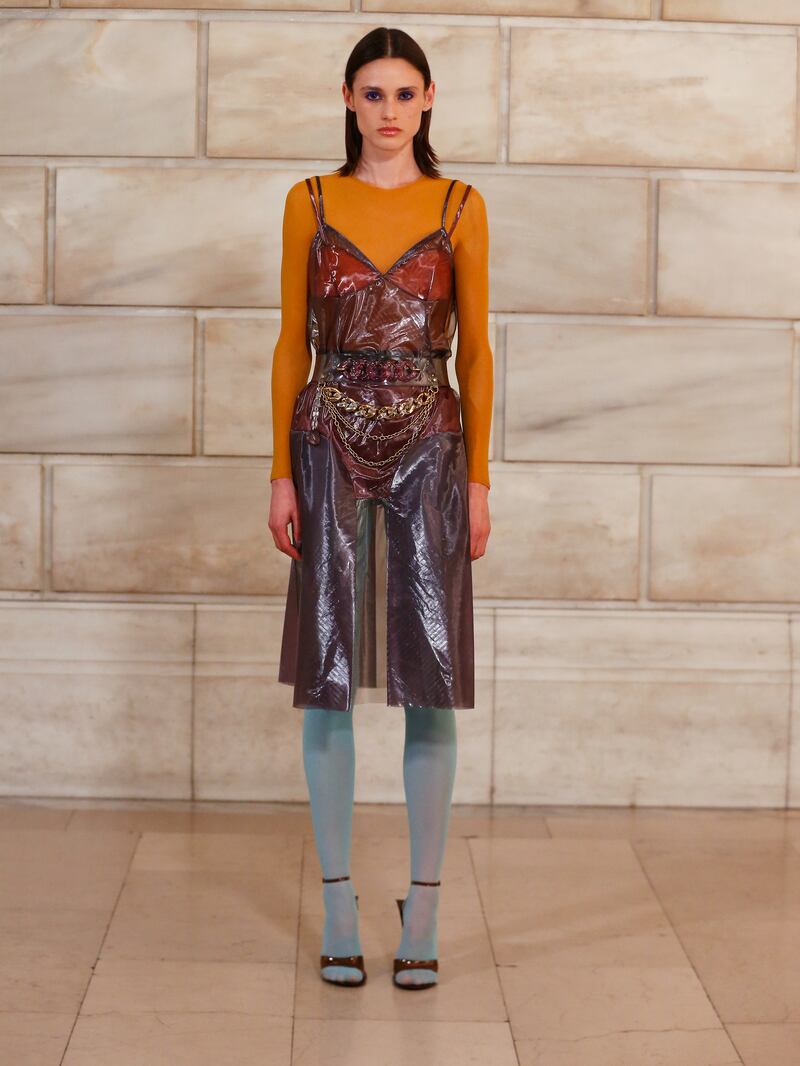
The looks went by fast, but the message was clear, a further stripping down of the simpler, less cartoonish and less voluminous shapes he introduced in his previous outing in February, with more transparent materials (many of them made of cellophane organza), more short skirts and shorts, and a lot of bright tights. The collection was called “Gratitude,” which goes along with the unflappable spirit Jacobs has embraced in life and career for more than a decade now.
“Creating as an act of gratitude is my truest form of self-expression,” he wrote in the show notes. “With every opportunity I hope to offer a little light, shine, colour, beauty and joyful exuberance in return for the people, experiences and moments that have shaped me and provided the invisible threads of structure to my life.”
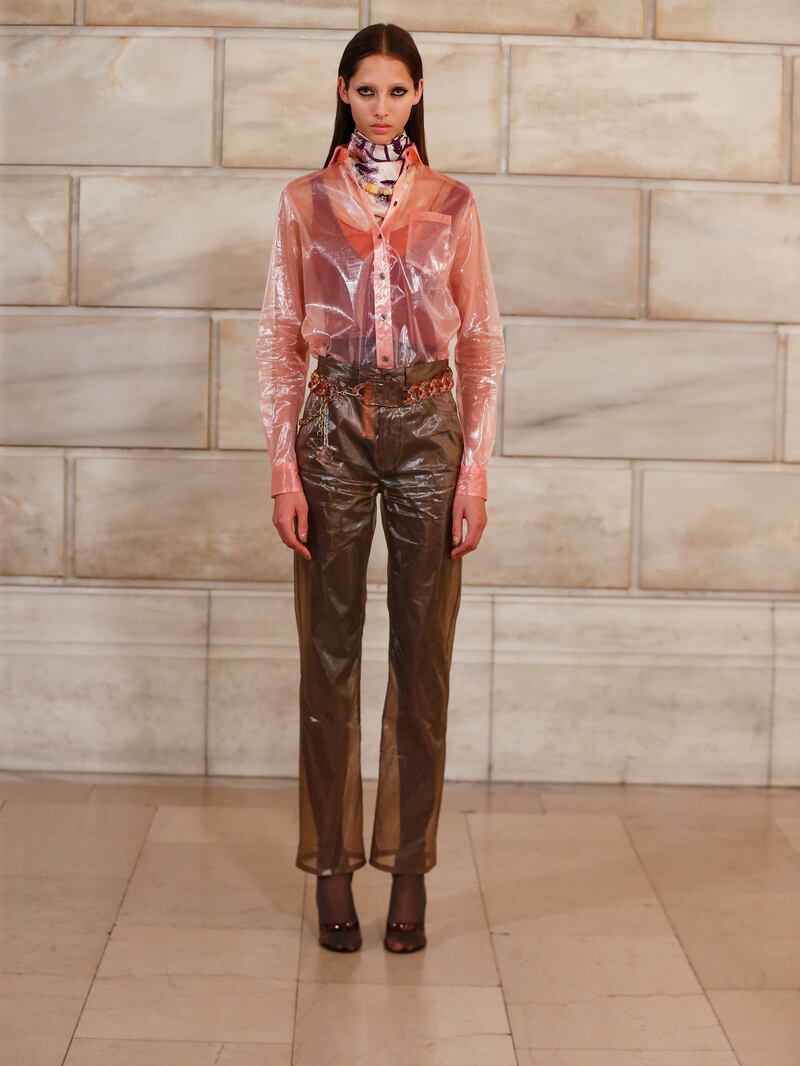
It’s an admirable sentiment. The lightness is also doing wonders for his designs. The sheer organza looks that opened the spring show, counterintuitively in autumnal colours such as a sepia-toned russet and loden, looked and moved a lot like the innovative (and expensive) technical fabrics popularized by Japanese running clubs.
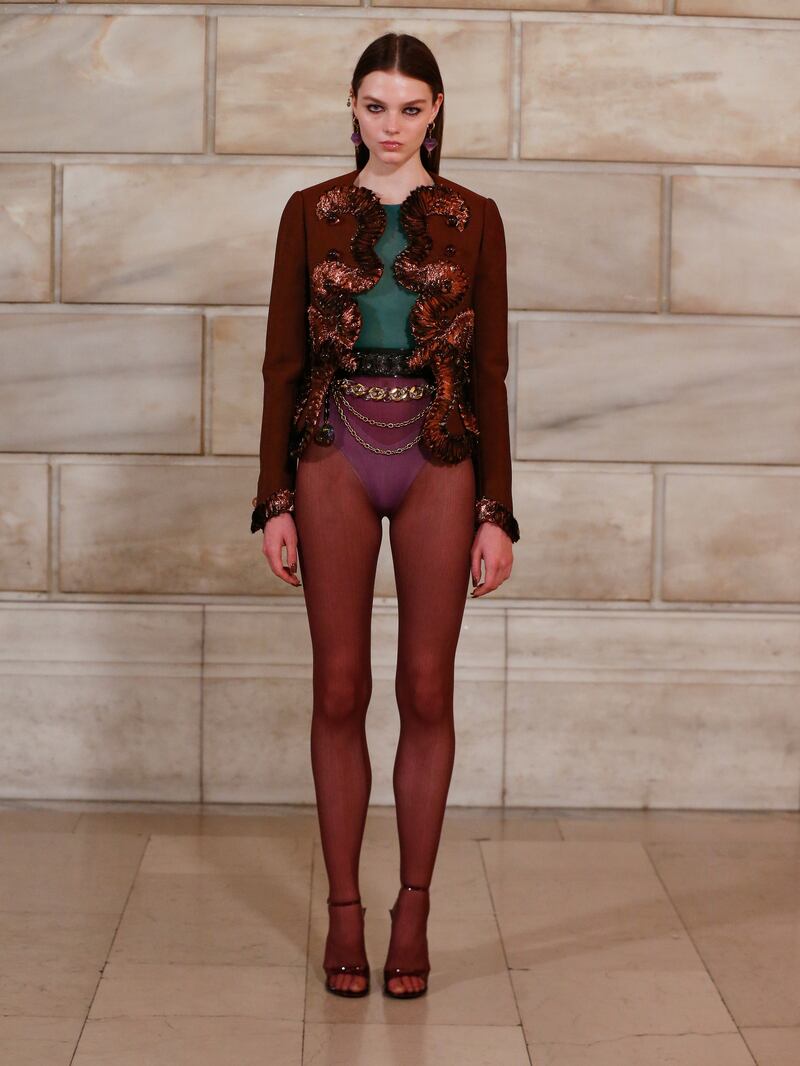
Jacobs seemed to be painting colour-block collages. A little tobacco-coloured lingerie dress and later a pair of organza trousers each came with a belt of chains at the waist that seemed not to weigh either down. The shoes were simple open-toe heels worn over tights.
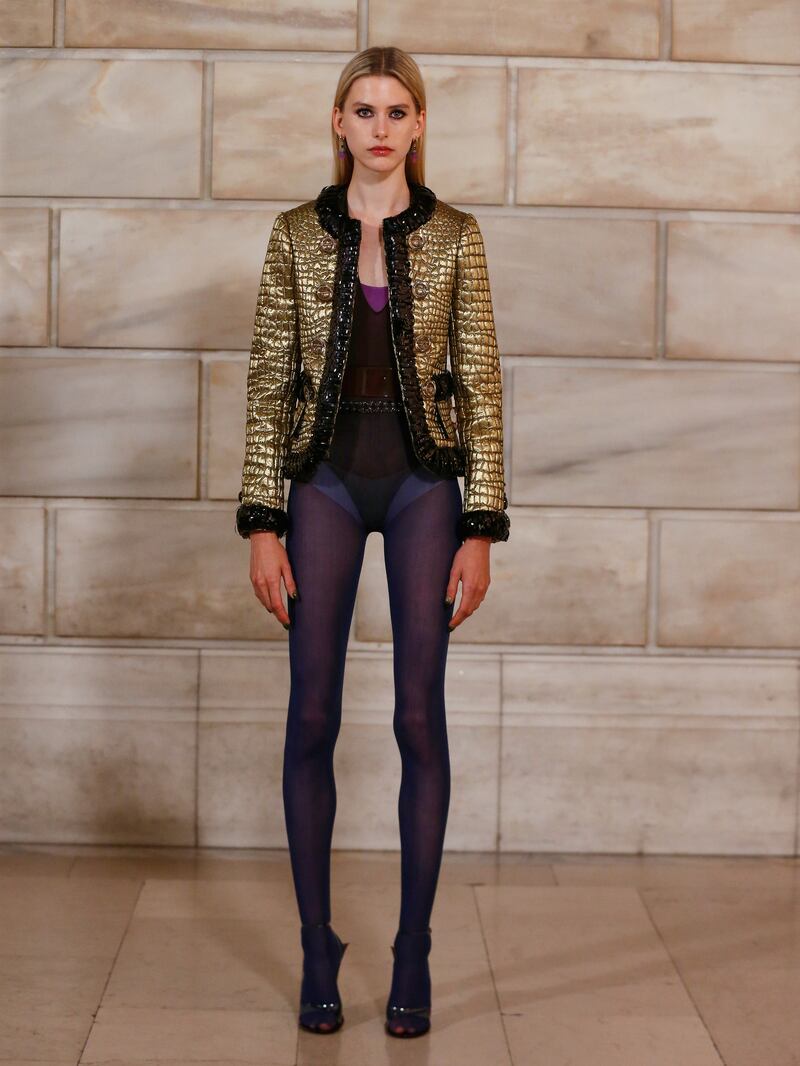
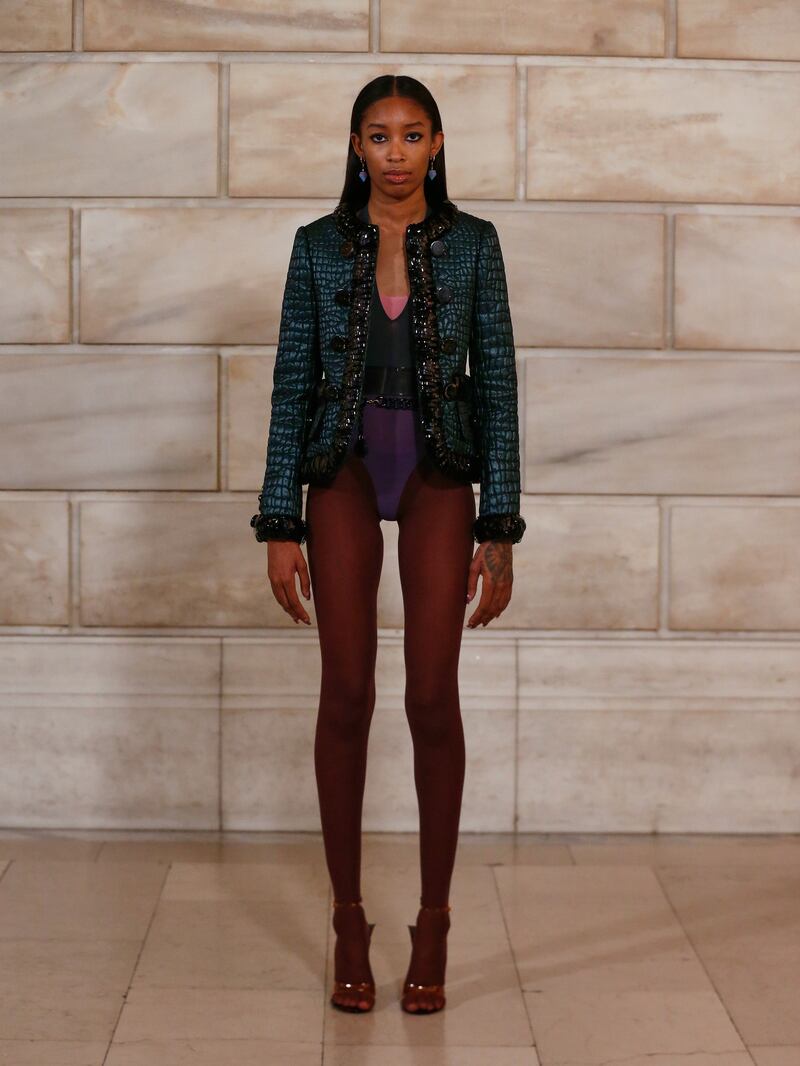
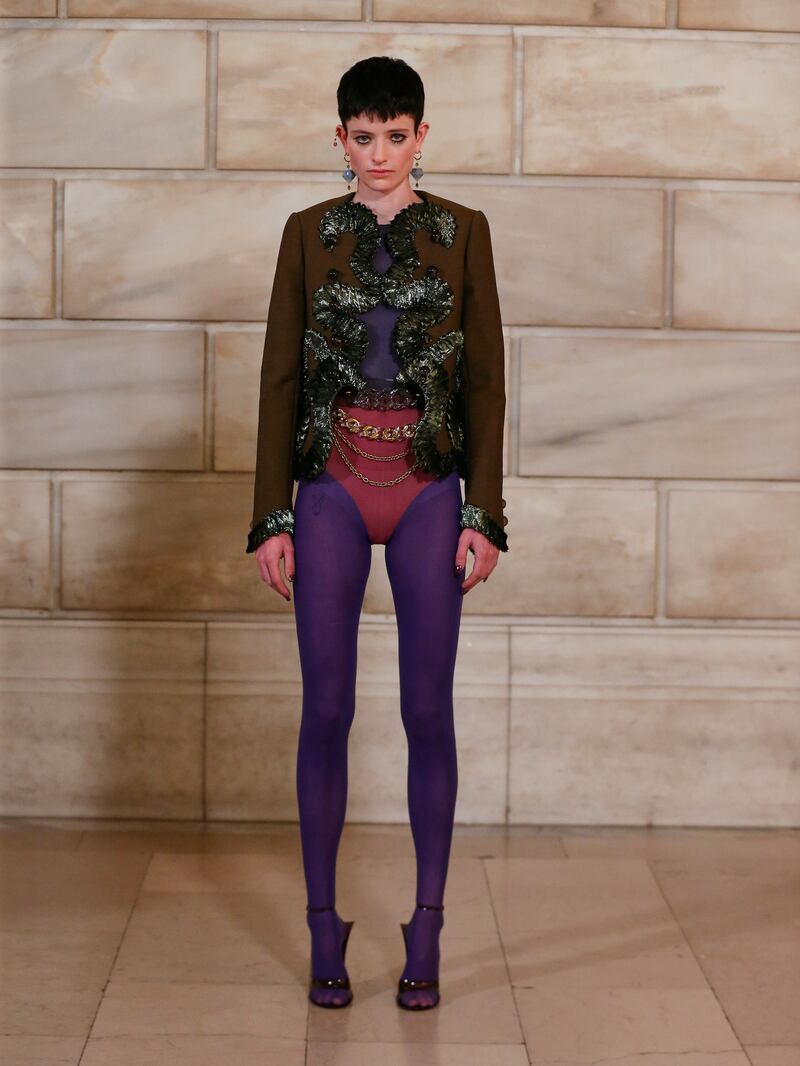
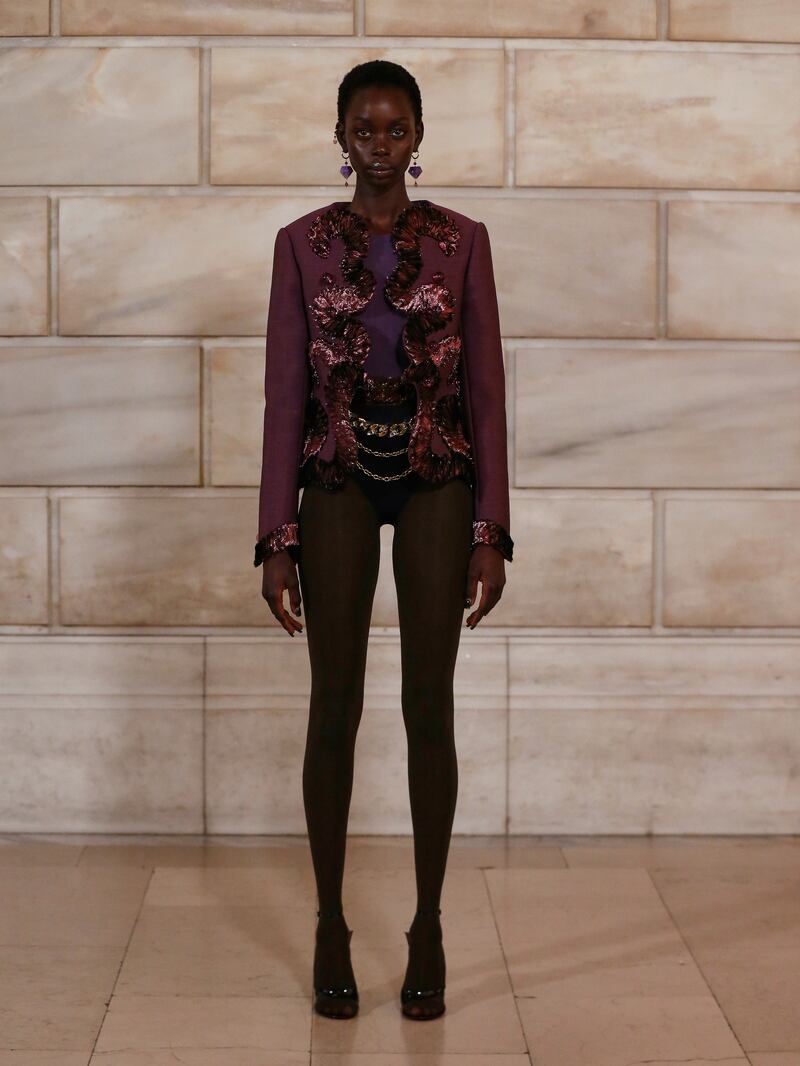
Near the end of the show, a trio of marvelously tailored blazers — mossy green, cinnamon and eggplant — each trimmed with thick curlicues of sequins, added more substance to a collection that could have otherwise felt a bit devoid of texture. Interestingly, there were no bags, remarkable for a designer who has created so many commercial hits in the field of accessories.
ADVERTISEMENT
As is his custom of recent years, Jacobs left the venue as soon as the last look cleared the runway and he took his bow, but Goldfarb lingered. “I thought the show was great,” he said. “I’m not sure it’s the clothing we’d market in absolute form, but clearly the message of colour and drape and attitude is what Marc is marketing.”
0 of 31
Jacobs will remain in his role as creative director.
Loading recommended reads…
According to documents the ultra-fast-fashion company filed in connection with its planned Hong Kong IPO, Shein is cooperating with the investigation and could face significant fines.
The billionaire Mike Ashley’s investment arm disclosed Tuesday it holds an interest worth a potential 4.2 percent of the voting rights in Burberry.
The Franco-Italian eyewear maker reported a 15 percent rise in first-half profit, beating expectations, while revenue growth was driven by strong demand for AI-enabled glasses myopia products.
Leahy joins the wearables brand from Glossier, where she was chief executive for three years.