Agenda-setting intelligence, analysis and advice for the global fashion community.
Agenda-setting intelligence, analysis and advice for the global fashion community.

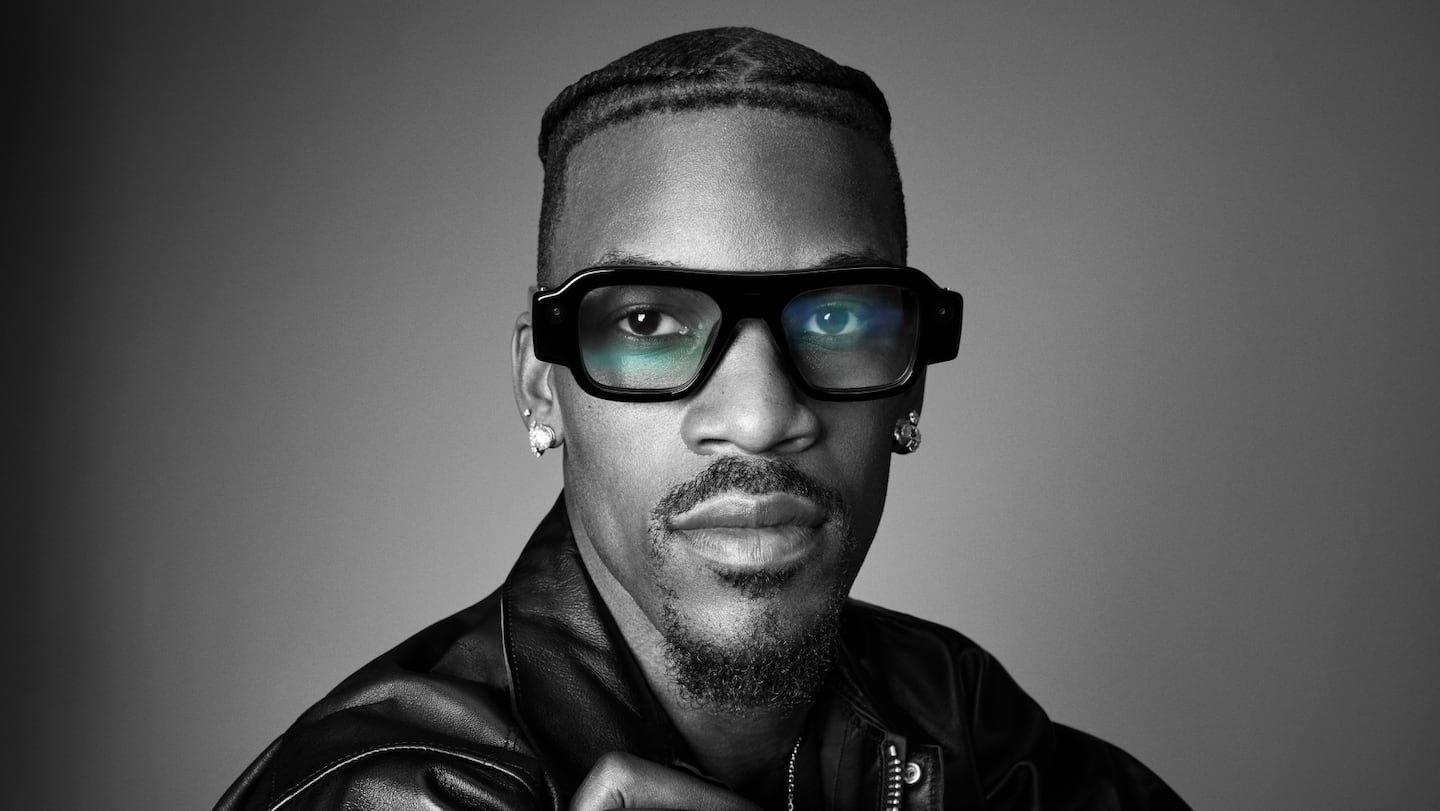
Snap Inc. introduced Specs, a $2,195 pair of augmented reality glasses that co-founder Evan Spiegel described as a leapfrog advancement and the computer of the future.
The thick-rimmed eyeglasses, which go on sale this autumn, were unveiled at the AWE mixed-reality conference in Long Beach, California, on Tuesday. They have a traditional, albeit bulky, design, and the lenses can automatically transition between clear and tinted states depending on lighting conditions.
The Snap Specs are built around advanced displays and cameras that enable augmented reality, allowing users to run apps and third-party software, play games and receive notifications overlaid on the real world through transparent lenses. The product builds on prior efforts that Snap has made in the field of wearable technology, marking a major bet for Spiegel’s Santa Monica, California-based social media company. It comes in two sizes and is compatible with prescription lenses.
In an interview, Spiegel, who is also chief executive officer, called the glasses a “really big long-term opportunity” for Snap. The Snapchat operator is in a period of upheaval after it cut 16 percent of its workforce and activist investor Irenic Capital Management took a stake in the company. Snap’s stock is down nearly 30 percent this year. In January, Snap created a Specs Inc. subsidiary to give its latest product independence from the rest of the firm.
ADVERTISEMENT
The Snap Specs stand out from devices such as Meta Platforms Inc.’s Quest and Apple Inc.’s Vision Pro, which rely on cameras to capture the surrounding environment and display it on digital screens inside a headset. They also differ from the growing category of screen-free smart glasses, which take a simpler and more affordable approach. The company entered that market roughly a decade ago with Spectacles, and competitors including Meta and Apple are now investing heavily in similar products.
Spiegel called the Specs both “very, very” wearable and highly capable, which he said gives Snap an opportunity “in a market that’s focused either on very large and clunky headsets that are super capable or very lightweight glasses that don’t really do much.”
Key features include a virtual external computer display, contextual artificial intelligence voice assistance, turn-by-turn directions and notifications from a connected phone. The company also showed off third-party apps for helping with scenarios like golf, drumming and education.
“The reason why we have a first-mover advantage today with Specs is because we’ve been investing in augmented reality and our developer tools for such a long time,” Spiegel said, adding that hundreds of Lenses, or AR apps, will be available for the device at launch.
The glossy black glasses can run for four hours on one charge and include a case that can recharge them as many as four times. The displays enable a 51-degree field of view, with up to 16 million colours. That’s narrower than the 70-degree specification that Meta touted two years ago on its prototype glasses known as Orion, but is considerably better than the 20-degree specification offered on Meta’s current non-AR display glasses.
Snap’s device uses hand tracking for control and includes two Qualcomm Inc. processors. Meta has indicated its eventual AR glasses will be controlled using a neural wristband — a device that senses hand movement — while Apple’s current headset uses eye and hand tracking.
Spiegel referenced his long-running feud with Menlo Park, California-based Meta over Snapchat features, saying that “those copycats up north aren’t going to be stealing this one. We’ve filed more than 7,000 patents.”
While expensive, the $2,195 price is competitive with other advanced products in the space. Apple’s Vision Pro starts at $3,499, while Microsoft Corp.’s HoloLens and Magic Leap devices were similarly priced. Meta’s current smart glasses, which have built-in displays but not full AR capabilities, start at $799.
ADVERTISEMENT
Spiegel defended the price of his device by saying that the 1984 Apple Macintosh would cost roughly $8,000 in today’s currency. The CEO said that his company’s offering beats the competition by providing visual quality close to expensive high-end headsets and wearability closer to the non-display models.
The big question is whether people will be willing to buy the product. Apple, despite its marketing prowess and brand appeal, has struggled to find a market for its device. Meta has had more success, moving millions of units of glasses, but its price is far lower. Magic Leap and Microsoft no longer sell headsets.
“I think Specs are arriving at a moment where people are really ready for something new, nearly two decades since the iPhone,” Spiegel said, while acknowledging that the first version is more of a complement to smartphones than a replacement.
He said he believes initial buyers “will be early adopters, people who want to try a new type of computing,” as well as developers passionate about the mixed-reality space. “Surprisingly, we’ve had a ton of interest from enterprise,” he added.
Snap is introducing the product this year because several components it has developed over the past decade, including a new operating system, optical systems and displays, “converged in this moment,” Spiegel said. Over time, he sees attributes like the weight and price on a path to improvement. The device could also help address screen addiction, he said.
“People are questioning their relationships with computers and with screens and they’re wondering, ‘Is there something better than this? I feel like I’m looking down all the time at this tiny screen,’” Spiegel said. “Instead of participating in the world, I feel like I’m distracted instead of present.”
The Specs, on the other hand, are “a really profound shift and one that I think will help make computing more human,” he said.
By Mark Gurman
ADVERTISEMENT
Learn more:
Smart Glasses Are Ready for a Breakthrough Year
The category is reaching an inflection point as more brands release style-conscious frames equipped with capabilities like AI, according to the BoF-McKinsey State of Fashion 2026.
Loading recommended reads…
Reebok’s head of basketball, Jide Osifeso, has been revamping the category the brand was once known for. To do it, he’s turning to a new generation of rising stars from the WNBA and NBA.
Tommy Hilfiger topped Launchmetrics’ media impact value ranking for the week, with Calvin Klein and Carolina Herrera following closely behind.
This week’s round-up of global markets fashion business news also features Chinese cashmere giant Erdos, Indian jewellers heading for IPOs and New Zealand’s outdoor brands.
As dupe brands become more brazen, the line between taking inspiration from competitors and shamelessly knocking them off has become increasingly blurred.