Agenda-setting intelligence, analysis and advice for the global fashion community.
Agenda-setting intelligence, analysis and advice for the global fashion community.

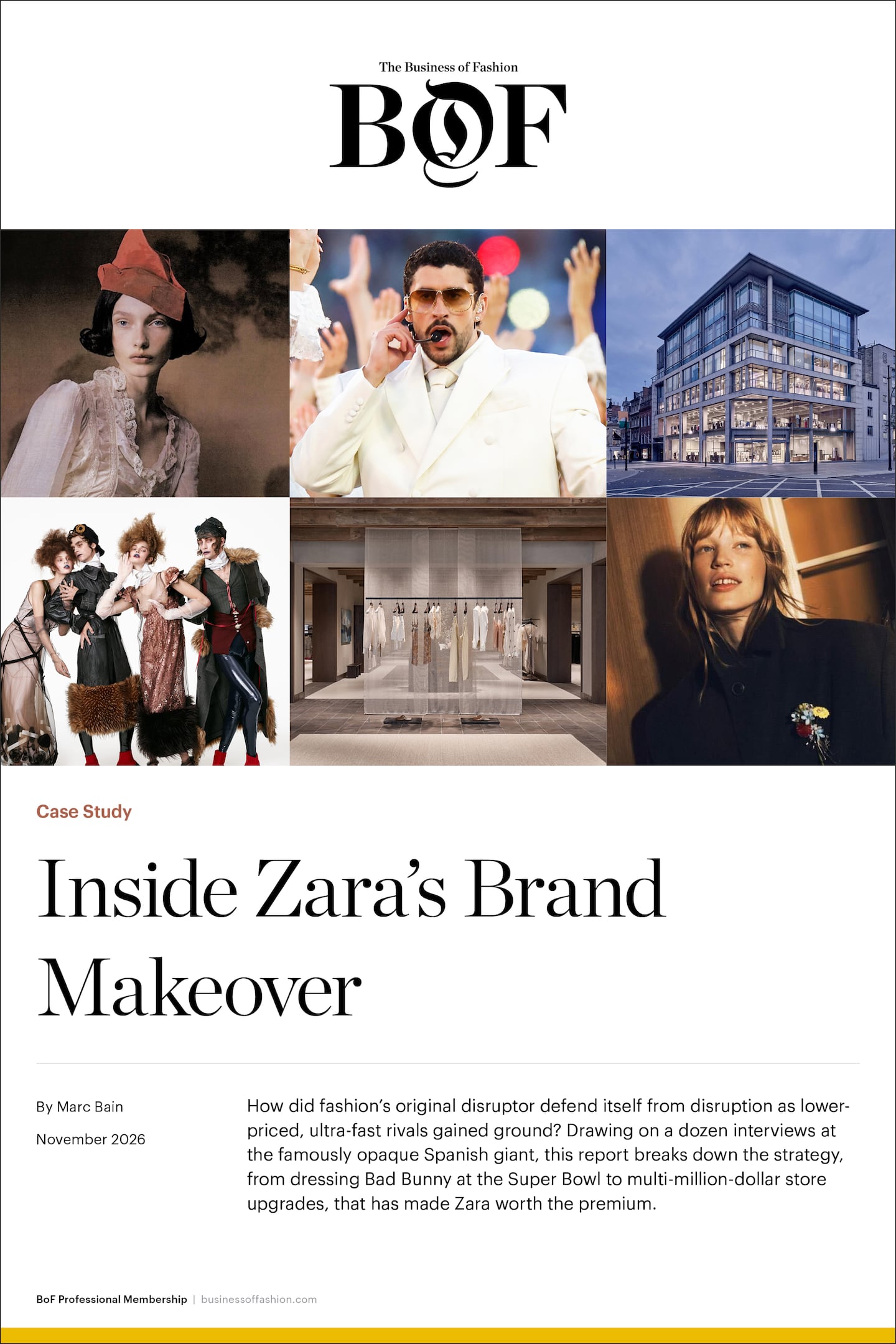
Zara was one of fashion’s original disruptors, pioneering the read-and-react model that allowed it to get the latest styles to customers faster than its competitors, at prices most could afford. The strategy gave rise to the term “fast fashion” and allowed Spanish parent company Inditex to become the largest fashion player in the world.
But by 2021, the company found itself in danger of disruption from even faster, cheaper Chinese competitors at the same time its founding family was handing control to the next generation.
Shein and Temu quickly captured the low end of the market by listing products at even greater speeds and at lower prices. Where Zara introduced thousands of new styles in a year, Shein could list more than a million.
To Zara, these new rivals posed the biggest competitive threat the brand had confronted since Swedish rival H&M’s rapid expansion in the 1990s.
ADVERTISEMENT
At the same time, many consumers in the brand’s biggest markets, from Europe to the US, were under economic pressure from forces like inflation and a burgeoning cost-of-living crisis, forcing them to weigh every purchase in search of the best value possible.
Zara needed to prove its prices were worth the premium. More than ever, it needed to compete on the quality it offered for the cost, not just its speed. It also had an opportunity to attract middle-class luxury aspirants trading down as luxury’s value proposition, unbalanced by the segment’s soaring prices, failed to add up for them.
Zara has been able to navigate these currents by elevating its brand image and boosting its perceived value in the eyes of shoppers. Steered by Inditex chair Marta Ortega Pérez and chief executive Óscar García Maceiras, it has worked to project an image of fashion authority across its marketing, stores and product.
It has encroached on luxury’s territory by dressing Bad Bunny and Stevie Nicks for the 2026 Met Gala and unveiling a collaboration with controversial couturier John Galliano. It has pared back its store footprint to focus on bigger, better spaces in prime locations. It has also continued to release higher-priced, limited collections that look at times as if they could have been pulled from a designer boutique.
The efforts have bolstered Zara’s value proposition to consumers. Today, the brand is seen as more premium than Shein, and simultaneously a viable alternative for would-be luxury shoppers priced out of the segment by its years of aggressive price hikes.
Yet as upmarket as its image has become, its clothing remains largely affordable. A Barclays analysis of more than 1,000 of its womenswear items between April and June 2026 in Spain, its largest market, found most of the offer remains priced below €50 ($56).
“The idea is to remain with this ambition of combining aspiration and affordability,” said García Maceiras.
In a dozen interviews at Zara’s headquarters in Arteixo, Spain, The Business of Fashion gained a firsthand look at how the brand has elevated its image through its clothing, marketing and distribution, allowing it to defend its turf in a hyper-competitive market.
Brands are elevating their offerings to avoid competition with Shein on the low end or capture high-end shoppers squeezed out by luxury's soaring prices, says the BoF-McKinsey State of Fashion 2026.
Inditex is leaning on high-profile designers, larger stores and pricier furniture to give Zara Home a distinctive identity and position Zara as a more premium brand. But turning design cachet into lasting pricing power is not so easy.
Not so long ago, the ‘it’ bags, shoes, jackets and belts usually bore the logo of a big luxury brand. But relentless price hikes have opened the door for premium players like Sézane and COS — and even mass brands like Uniqlo and Ugg — to capture the cultural zeitgeist.

Marc Bain is the UK Editor at The Business of Fashion. He is based in London and oversees BoF's case studies and executive memos, as well as driving its technology coverage.
Loading recommended reads…
At the 2026 Cotton USA Summit, BoF’s Nick Blunden and McKinsey & Company’s Rushan Guan outlined four shifts reshaping fashion demand, and what they mean for the businesses that grow, spin and source cotton.
Brands have access to more data than ever, but too often they’re focusing on conversation volume and not getting a complete picture of how top-of-funnel awareness translates to sales. Executives need a unified playbook that ties cultural buzz to commercial growth.
Makeup, skincare and body care labels are tapping cult franchises like ‘The Hunger Games’ and ‘Harry Potter’ to find cultural resonance. But translating audience obsession into sales isn’t as easy as it seems.
The Italian jeweller helped boost the international profile of his family’s business with bold use of colourful gemstones, attracting celebrity clients including Sophia Loren and Elizabeth Taylor.