Agenda-setting intelligence, analysis and advice for the global fashion community.
Agenda-setting intelligence, analysis and advice for the global fashion community.


What's up, down and making news this week in the fashion and beauty businesses.
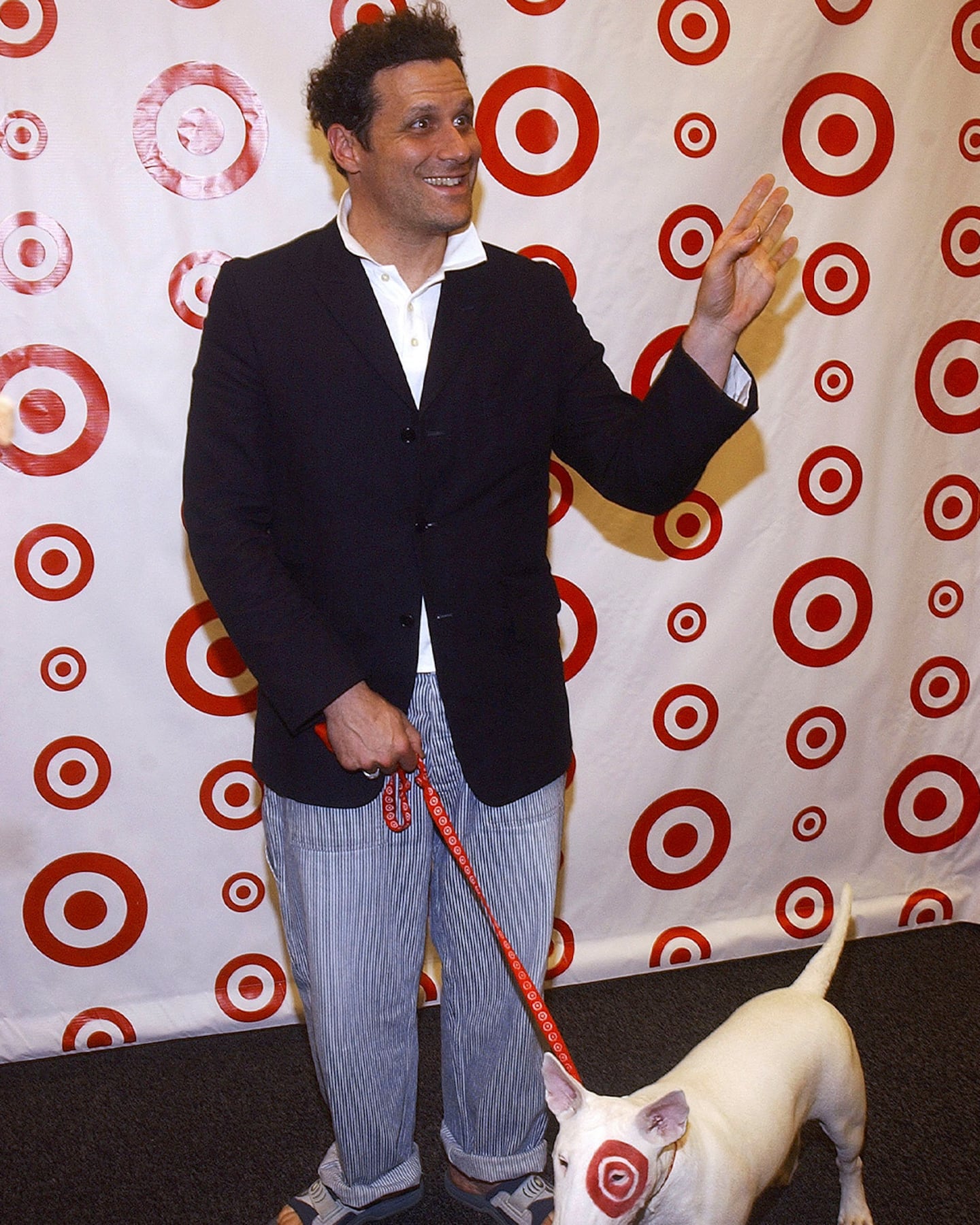
Isaac Mizrahi helped Target pioneer the modern designer collaboration. Now, the question is whether he can help reinvent it.
This week, Target announced that the veteran designer would return to the company as creative director at large, a newly created role helping oversee fashion and design. It’s a full-circle moment for both. Mizrahi launched his diffusion line for Target in 2002, helping establish the big box chain as a destination for affordable style and effectively kicking off its now long-standing tradition of designer collaborations that’s included everyone from Missoni to Jason Wu.
But repeating history will not solve Target’s problem, which is that collabs, no matter how unexpected, are nothing special in 2026.
Today, every major retailer uses the playbook that Target helped pioneer. Designer partnerships, limited-edition drops and elevated private labels are no longer differentiators but standard practice. Consumers can find fashion credibility almost anywhere, whether it’s through Uniqlo’s collaborations with J.W. Anderson and Marni or Walmart’s increasingly polished apparel assortment from designer Brandon Maxwell.
ADVERTISEMENT
What Target needs is a full fashion reset, and urgently. In recent years, it’s fallen behind its peers in apparel, failing to generate the excitement it once did. After all, its affordable but stylish fashion earned Target the beloved moniker Tar-jay. Without a distinct clothing assortment, Target has effectively lost a piece of its identity
The good news is that creative leadership can make a difference.
At Uniqlo, designer partnerships have evolved far beyond marketing exercises. Christophe Lemaire’s influence in the recurring collection Uniqlo U helped shape the Japanese retailer’s overall product strategy, setting the stage for creative director Clare Waight Keller, who joined in 2024, to further elevate its design credibility. Under Maxwell and fashion chief Denise Incandela at Walmart, apparel has become a major growth engine for America’s biggest retail chain. In February, CFO John Rainey said apparel had delivered several consecutive quarters of mid-single-digit growth.
At Target, Mizrahi will work alongside Gena Fox, senior vice president of design, and no doubt lend a discerning eye towards product, partnerships and brand storytelling. But is he the right person to lead Target fashion’s much-needed transformation?
Fashion rewards newness, and there is no shortage of emerging designers who could have brought a fresh perspective to the retailer’s assortment. Designers such as Ashlynn Park, Colleen Allen or Mike Eckhaus and Zoe Latta (the duo behind Eckhaus Latta) might have offered a more contemporary point of view. Henry Zankov, another emerging talent, was recently named artistic director of Diane von Furstenberg. Instead, Target opted for a figure whose industry influence was at its strongest more than two decades ago.
Then again, retail turnarounds have a way of humbling conventional wisdom. Zac Posen did not strike many industry observers as the most disruptive choice when he joined Gap, yet its momentum continues to build. (Though that’s thanks in large part to wunderkind chief Richard Dickson.)
And here lies the real lesson: Creative directors don’t save retailers on their own. They do so with the help of savvy leadership.
Mizrahi can help Target sharpen the assortment, elevate the brand and perhaps remind consumers why Target fashion once felt special. But translating creative vision into commercial success requires merchandising discipline, supply chain execution and a willingness to take calculated risks.
ADVERTISEMENT
That responsibility ultimately falls to Fox, chief merchandising officer Cara Sylvester and Michael Fiddelke, who became Target’s CEO last year. If Target’s fashion business is going to regain its edge, Mizrahi may be the one with the vision, but his bosses in the C-suite will have to provide everything else.
Who’s up and down in the business of fashion, luxury and beauty this week.
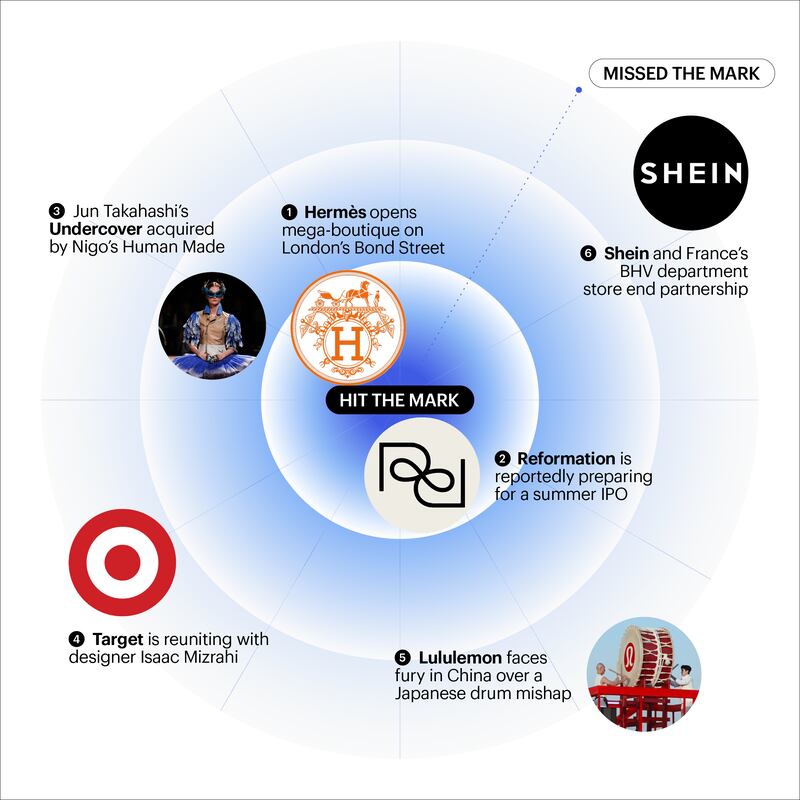
1. Hermès has opened an ultra-luxurious Bond Street mega-boutique in a big bet on London’s enduring appeal for luxury shoppers despite current headwinds in the market.
2. Reformation, one of the most successful direct-to-consumer fashion brands of its era, is eyeing an initial public offering this summer, according to the Wall Street Journal.
3. After skipping Paris fashion week, Jun Takahashi’s Undercover has been acquired by Nigo’s Human Made in a deal that unites two longtime friends.
4. Target is reuniting with Isaac Mizrahi more than two decades after their initial designer collaboration defined the strategy in a bid to refresh the big-box retailer’s apparel lineup.
5. Lululemon faced the wrath of Chinese netizens for mistakenly using a Japanese taiko drum during a wellness event at the Great Wall of China.
6. Paris’ BHV Marais department store is cutting ties with Shein after its new owners labelled the controversial partnership a strategic mistake.
Catch up on all the news of the week in fashion, luxury and beauty here.
Loading recommended reads…
The lingerie label is courting younger, digitally native customers through a YouTube docuseries, theatre screenings and live show access, while preserving the sexiness that made it iconic.
Some of fashion’s biggest brands have started to drive down their planet-warming emissions as proven solutions roll out across the supply chain.
October marks one decade of agenda-setting, independent journalism, serving a global community of 125,000 members.
Protestors targeted public buildings, looted luxury boutiques and supermarkets and attacked police vehicles and officers in demonstrations against rising cost of living.