Agenda-setting intelligence, analysis and advice for the global fashion community.
Agenda-setting intelligence, analysis and advice for the global fashion community.

Interviews and views on creativity and business in the world of luxury writ large — from fashion and watches to art, wellness, travel and more — from our chief luxury correspondent in Paris.
Subscribe to High Margin by Robert Williams: perspectives on creativity and business in the world of luxury.
Hello from Paris, where fans (and fashion brands) are feeling left out of the loop in the final days of Roland-Garros. Familiar — sponsored — names like Lacoste frontman Novak Djokovic, Rolex’s Coco Gauff and Gucci’s Jannik Sinner were all knocked out before the quarter-finals. None of this year’s semi-finalists have previously won a Grand Slam, a first since 1977.
Elsewhere on metro line 10, the mythic cinéma Le Saint-Germain-des-Prés reopened its doors Tuesday with support from Chanel. The company has been diversifying its bets on cinema: The brand still dresses stars for the Cannes red carpet, but it’s more closely involved in the nascent festival Nouvelles Vagues in Biarritz (longtime Chanel muse Kristen Stewart will preside over this year’s jury) in addition to sponsoring Deauville’s film festival since 2019.
In this newsletter:
ADVERTISEMENT
A few weeks ago I wrote about “The Bear Case for Luxury,” as sell-side analysts issued a spate of bearish reports, their forecasts finally catching up with investors who have been cutting exposure to luxury aggressively since the start of the year.
Luxury brands still might shake off the Middle East crisis and lift sales at a modest pace this year, leveraging resilience in the US as well as some signs of life in China. But the anticipated growth rate is barely ahead of inflation, and not expected to accelerate into anything resembling the double-digit expansion that was the norm before the pandemic (much less the levels seen during luxury’s post-pandemic boom).
“We expect no more than 3 percent industry growth in 2026 and global luxury sector CAGR to normalise at 4 percent 2027–2029. … This outlook assumes no deterioration in macro conditions, no escalation of geopolitical conflicts and no major shocks to global wealth creation — risks that remain very much present,” Barclays wrote. “Longer term, we expect 2.5 percent growth for the sector as we question the durability of the pillars that have historically underpinned luxury growth.”
“I don’t think anyone is planning on zero growth, per se, but they are planning on low single-digit growth. No one is planning on strong acceleration. They are planning on growth rates that are much more moderate than in the past, even for brands that are in a growth or investment phase,” Bain partner Claudia D’Arpizio said.
That more cautious outlook chimes with recent commentary from the industry’s highest levels. The impact of the Middle East crisis has been “less brutal than anticipated” but “China will not be as we used to remember,” Zegna chairman Ermenegildo Zegna said at a Financial Times event last month. “The industry’s growth has been extraordinary but not sustainable,” Saint Laurent CEO Cédric Charbit echoed.
Shares in Burberry tumbled last month even as sales and profits beat expectations. Investors were worried by the company’s decision to scrap its guidance, pledging only “continued momentum” without providing more detailed targets.
At Kering, too, the absence of growth targets led to a cool reception from investors when new CEO Luca de Meo presented his strategy for the group last month. Meanwhile, cost cutting has intensified with implications that will ripple long term: After selling off top-priced real estate assets and culling 75 net stores last year, the group plans to shutter 100 more net stores this year, mostly Gucci locations in China. Alexander McQueen is also undergoing a radical downsizing, closing 50 percent of stores as well as cutting 20 percent of staff at its London HQ and 30 percent of its headcount in Italy. Even Saint Laurent — long the group’s most consistent driver of growth — is streamlining its footprint, closing six net stores last year.
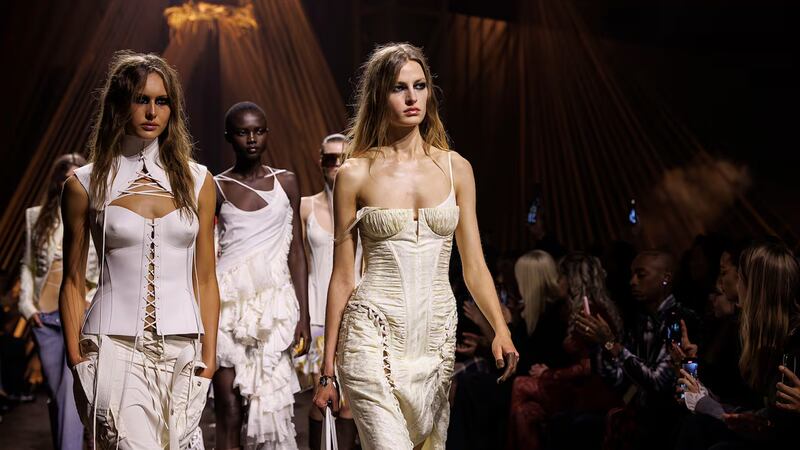
Ferragamo also announced plans to close around 30 net stores, mostly shuttering underperforming doors in China.
ADVERTISEMENT
Repositioning store networks is partly about modernising luxury’s brands’ footprints: Being present at this many locations simply isn’t necessary in today’s digital world, where must-visit destinations and loyal, top-spending clients are driving the market rather than pop-in traffic in suburban malls. But the cut-back also reveals declining optimism, as fewer stores are sure to capture fewer clients should demand come roaring back.
While Kering has put a potential sale of McQueen on hold, as it works to restructure and reposition the label, the British brand’s future in the group — as well as that of underperforming tailoring house Brioni — is hardly certain.
Parent company Artémis has also trimmed its fashion portfolio, selling its majority stake in Giambattista Valli back to the couture house’s founder.
At LVMH, chairman Bernard Arnault usually brushes off crises as cyclical — seizing the occasion to take market share with down-cycle investments such as Dior’s Avenue Montaigne flagship, where construction forged ahead during the bleakest days of the pandemic with no expense spared. But in 2026, LVMH’s tone has shifted, saying that brands’ “ability to inspire dreams“ needs to be weighed against “the highest levels of vigilance with regard to cost management.”
Cost-cutting has shifted from merely tightening short-term operating costs to longer-term moves aimed at reducing complexity and culling underperforming units. The group has spun off unproductive stores and regions at duty-free giant DFS, sold off the smallish, perennially unstable Marc Jacobs brand, as well as its stake in Stella McCartney, and parted ways with the creative director of ready-to-wear startup Patou. The futures of Fenty Beauty (for which the group is reportedly exploring a sale) and Kenzo (which downgraded its January show to an intimate presentation) are now in question. The same goes for Eminente rum, according to the FT.
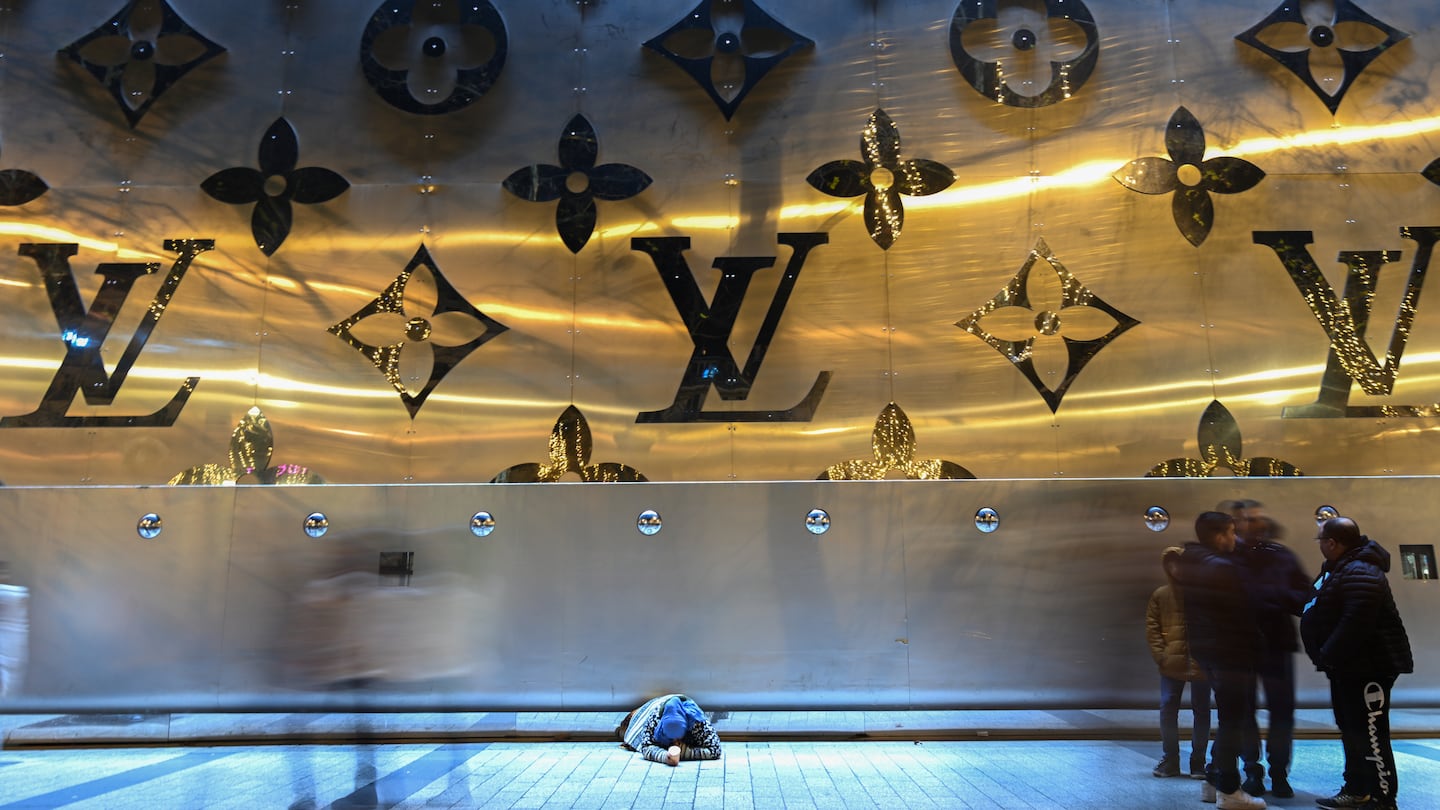
Those changes are peripheral to LVMH’s business. But even Louis Vuitton, the group’s core driver of sales and profit, has slowed the pace of flashy activations in favour of quietly optimising its efforts. The seasonal menswear collection has been deemphasised in stores to make room for a new line of understated men’s carry-overs called “Trunk.” (The program is likely aimed at restoring conversion and cross-selling after an underwhelming reception to Pharrell’s first few runways.) Construction for a new megastore on the Champs-Élysées is moving ahead, but ambitions to integrate the first-ever Louis Vuitton hotel seem to have been scrapped or at least scaled back. “There won’t be a Vuitton hotel. Vuitton is focusing, not diversifying,” Arnault said in January.
Who will lead luxury’s new era? Budgets and headcount are no longer based on bullish expectations for growth, with clear implications for the workforce.
Headhunters say movement has picked back up to an extent, even if "job hugging“ persists. But where companies used to assemble big teams to tackle new markets or category expansions, the focus is now on finding profiles with depth of skills and a 360-degree vision.
ADVERTISEMENT
“We are moving from a mindset of growth to a mindset of quality of growth,” said Yvonne Pengue, founder of executive search firm Spot on Minds. “After these years of incredible expansion, where we forgot a little bit what luxury is really about, the industry is looking for leaders who can restore credibility and coherence in the face of a very savvy and sophisticated audience.”
“Leadership skills are no longer only creative, commercial or operational — companies are looking for leaders who combine all of that, who can combine fiscal discipline with cultural intelligence, as well as an understanding of the brand’s message, which needs to be consistent.”
A CEO like Bartolomeo Rongone, Bottega Veneta’s former chief who just decamped to Moncler Group, comes to mind as a recent example.
“The US has become such an important driver, so also someone who has been strongly exposed to the US market is an in-demand profile,” Pengue added.
Something to think about.
Loading recommended reads…
Fenty Beauty’s first 12-hour online shopping event, featuring Rihanna, shows how a new generation of brands are embracing the practised art of live selling.
The policy bars ads from ByteDance, which remains in charge of key parts of TikTok, and extends to third-party advertisers running campaigns that link to TikTok.
The departure of Athleta’s CEO for Lululemon is a chance to ‘reimagine the brand’s path forward,’ Gap Inc. CEO Richard Dickson wrote in an internal memo viewed by Bloomberg.
Opening in Q4 2026 on Saadiyat Island — at the heart of Abu Dhabi’s cultural district — Saadiyat Grove brings together luxury retail, hospitality, residential living and culture in one of the emirate’s most ambitious new developments. BoF speaks to Jonathan Emery, chief executive officer of Aldar Development, about the strategic vision behind the project.