Agenda-setting intelligence, analysis and advice for the global fashion community.
Agenda-setting intelligence, analysis and advice for the global fashion community.

Subscribe to High Margin by Robert Williams: perspectives on creativity and business in the world of luxury.
Hello from Florence.
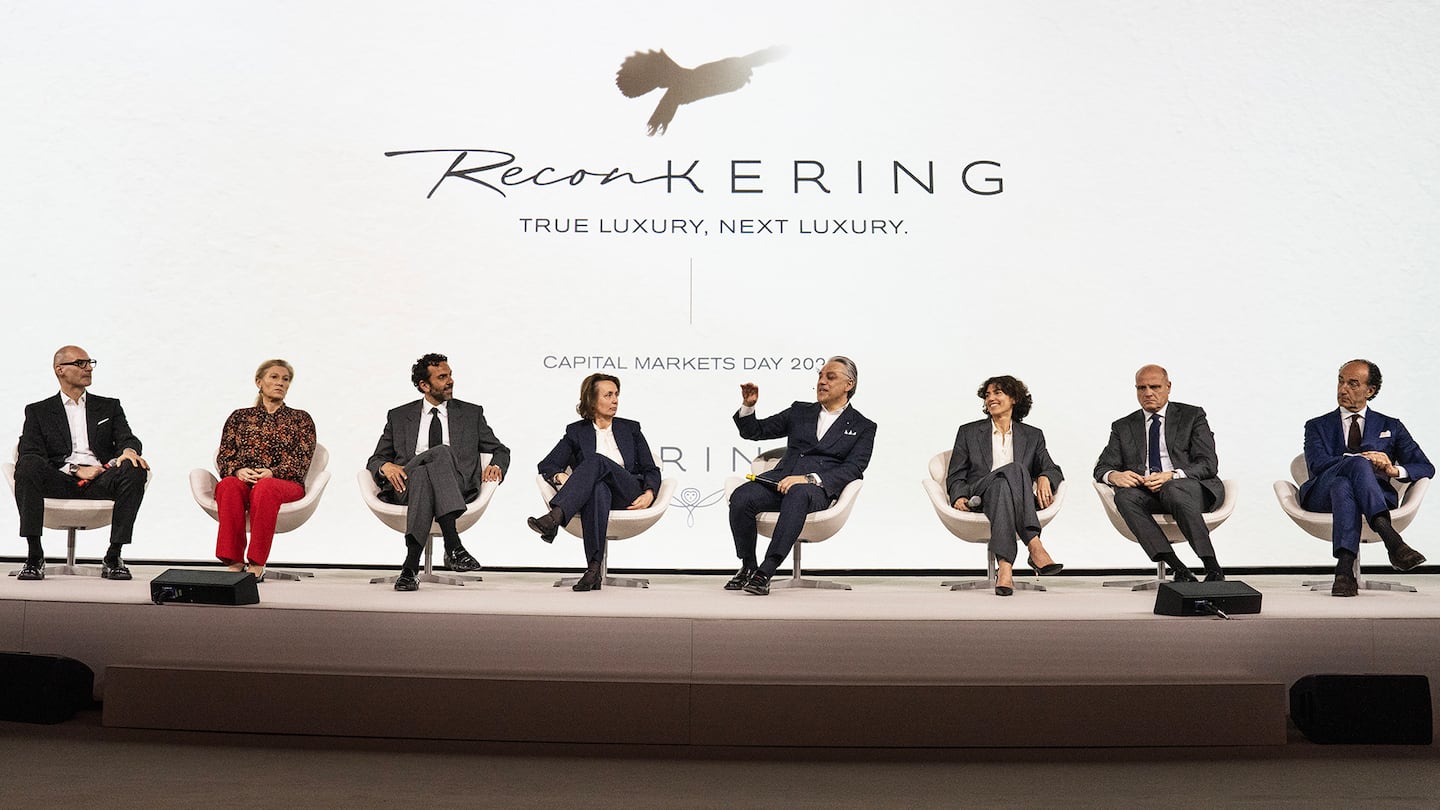
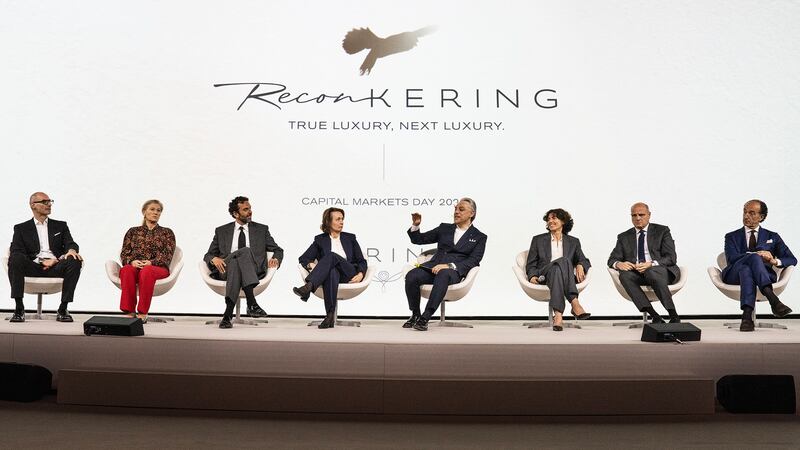
In case you missed it, this morning Kering unveiled a multi-pronged strategy overhaul aimed at reviving sales and profitability across its brands.
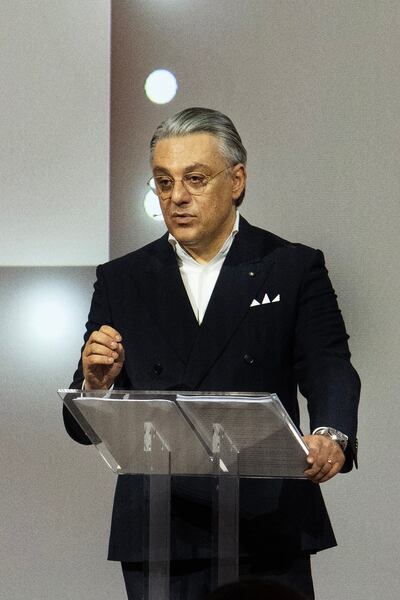
It feels like we were younger then: New CEO Luca de Meo spoke for no less than three hours and 20 minutes before rolling straight into an analyst Q&A and press conference.
ADVERTISEMENT
In this week’s newsletter:
Kering’s headline announcement this morning was an ambition to more than double operating profitability “mid-term” compared to 2025. It sounds flashy, but the notion that it could take the group until 2030 to get margins back above 22 percent — a level that is still pretty well below its previous peak of 30 percent in 2019 — was hardly a green flag for markets. There was also no guidance for revenue growth other than a “gradual return to market outperformance.”
Shares fell 6 percent at market open before regaining some ground over the course of the day, closing down 4 percent.
Chalk the pared losses up to strategic clarity — there were a few ultra-clear priorities set for each key brand in the group’s portfolio — de Meo’s virtuosic narration, or simply a chance to buy the dip.
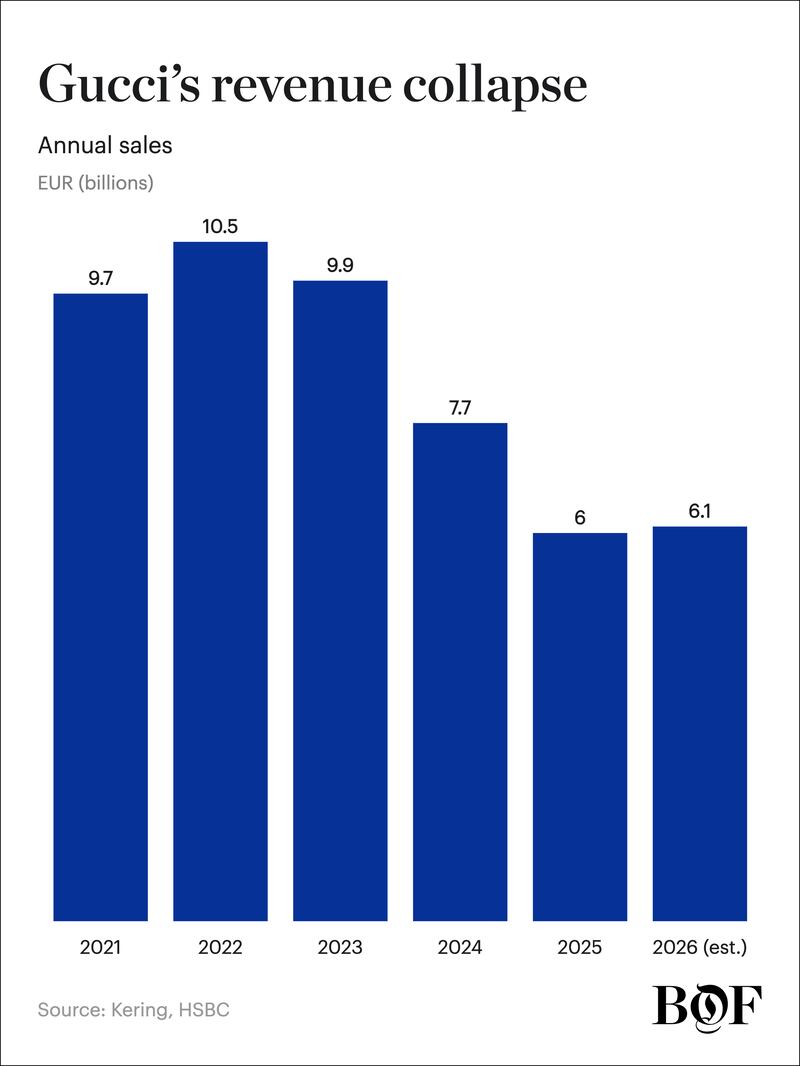
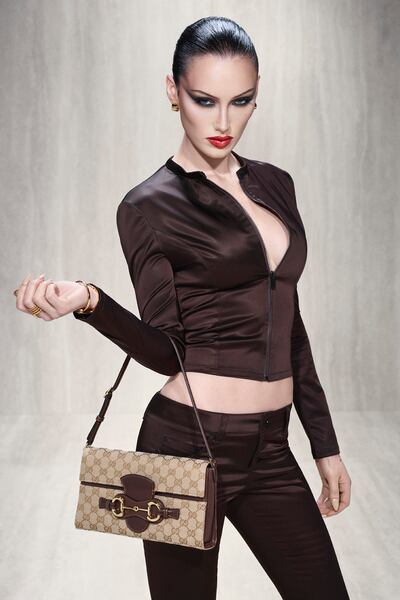
There were also some revenue targets snuck into de Meo’s deck that might have helped reassure investors: Gucci is hoping to add €1 billion ($1.18 billion) in leather goods sales and €600 million in footwear and shoes by 2030. The brand will also relaunch jewellery and watches, working to get its hard luxury sales back to their previous peak of €700 million from roughly €200 million today.
Add all of that to last year’s revenue, and you can infer Gucci sales of €8.1 billion by 2030. That’s a notch above UBS’ forecast of €7.9 billion.
Under de Meo, Kering plans to move quickly to address the fact that its store network is no longer aligned with how shoppers discover products or how brands create demand today. The group simply has way too many stores, and too many of them are too small or ill-placed to positively drive perception.
After closing 75 net stores last year, more than a 100 net closures are planned for this year “with more under review,” de Meo said. Most of those are Gucci stores in China. McQueen is also shuttering half its doors by year-end. The executive plans to prioritise “high-impact flagships, with stores designed as immersive brand environments… which can act as a media, amplifying brand desirability.”
ADVERTISEMENT
This aligns with the moves we’re seeing at LVMH — where sprawling, flashy new destinations in Shanghai and Seoul are helping to bolster interest in Louis Vuitton — and Hermès, which is preparing to reveal a massive expansion on New Bond Street in London in June.
Kering will need to be extremely selective as it navigates these investments in retail, however. The brand said Thursday that it would limit capital expenditures to 5 to 6 percent of sales. That’s around €900 million annually to spread across retail, technology and manufacturing for a dozen brands.
Kering said its M&A strategy would be “highly selective” going forward, consisting of “bolt-on” acquisitions aimed at strengthening craftsmanship, vertical integration and raw material security.
Good examples include jewellery supplier Raselli Franco and a stake in the manufacturing consortium HModa.
A more baffling move was a newly announced minority position in Icicle, a Chinese brand best known for its premium cashmere. This initiative might have benefitted from a dedicated roll-out, as the rationale was tricky to parse in the context of Kering’s sweeping strategic overhaul.
One tactical reason could be the urgent need to get closer to Chinese customers, who’ve been “treated like a bit of a trash bin by Gucci — a place to look for easy growth,” according to de Meo. “China is now becoming very discerning” in line with other mature markets, he said, and consumers there are “feeling a lot more pride to buy their own brands.”
“Part of the reason for our investment in Icicle is to be more at home there — to understand what’s going on and to open some doors to the Chinese ecosystem,” de Meo said. “Coming from the car industry I know what it looks like when you neglect the power of innovation in China,” added the former Renault chief, likely referring to the swift rise of Chinese electric vehicle firms like BYD.
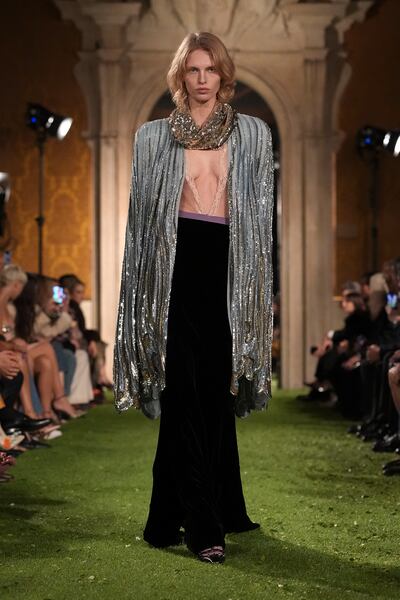
De Meo said that Kering’s conservative approach to M&A was part of “preparing in a disciplined way for Valentino’s integration towards 2029 or 2030.”
ADVERTISEMENT
One of de Meo’s first moves as CEO was to push out Kering’s option to acquire the remaining shares in Valentino from Mayhoola to at least 2028.
Valentino “could really complement our portfolio,” de Meo said. His latest admission of doubt that acquiring the Roman couture brand remains a good idea?
Asked to elaborate, de Meo said: “I have a great admiration and respect for the work CEO Riccardo Bellini is doing. It’s clear that Valentino is deep luxury, a marvellous brand. Likely in a bit of trouble right now, but one of the greatest. But I also happen to care about complementarity, and Kering has enough brands to manage them in a portfolio way — not too many and not too few.”
Depending on where Kering and Valentino each are in their respective turnarounds by 2028, “there’s potential for it to be a fit,” de Meo concluded.
His candour makes sense in the context of Kering’s finances: He needs to be clear with the market that Kering is in no shape to invest in adding a relatively large, tricky brand that’s been loss-making since 2024.
At the same time, deal partners typically stick to tightly controlled, boiler plate language regarding acquisitions: My instinct is that generating this kind of uncertainty for Mayhoola and Valentino could be de Meo’s way of prodding the Qatari investment vehicle to find another solution for the brand’s future.
On the other hand, de Meo could be talking down the deal to secure a better price.
Kering flagged five areas where it wants to centralise expertise — and, in some cases, decision power — at the group level: industry, client relations, technology, sustainability and support functions.
The goal is to create “speed and efficiency.” But the extent to which luxury brands can really offload such crucial functions to their parent company remains unclear. Synergies beyond real estate, ad buying and logistics have historically been scarce in the sector.
De Meo said the plan wasn’t about disempowering or micromanaging brands, but that Kering needed to rebalance, having been “too extreme” in its decentralised approach to operations.
Industry is an area where he is particularly bullish — even radically so — regarding the potential for synergies. “More than 80 percent of our manufacturing is in Italy, since it’s all already here I think we can lift from the brands a lot of the industrial part to build a shared ecosystem,” he said.
In de Meo’s vision, a shared platform could eventually cover 70 percent of the needs of Kering’s brands, while 30 percent of the supply chain could be managed at the brand level to preserve differentiation. “You’re not going to make the difference by producing your own pair of jeans.”
Like Audi A3s and Volkswagen Golfs on the same chassis, the future of footwear this way comes…
Loading recommended reads…
Sales of gems, precious metals and artwork at Japan’s department stores climbed 19 percent in the first half of 2026 from a year earlier to $2 billion.
Though Adidas dressed both teams in the World Cup finals, the global football tournament still presented some bright spots for Nike, writes Bloomberg’s Andrea Felsted.
From our archive, the creator and host of award-winning podcast “Articles of Interest” joins BoF founder, CEO and editor-in-chief Imran Amed to explore what clothing can reveal about identity, culture, labour and the world around us.
Saunders, the brand’s first creative director in five years and a skilled colourist, promises to give Kate Spade the clarity it has long lacked. Now, Tapestry must apply the same long-term brand-building discipline that fueled Coach’s success.