Agenda-setting intelligence, analysis and advice for the global fashion community.
Agenda-setting intelligence, analysis and advice for the global fashion community.


In 2024, approximately 132 million tonnes of fibres were produced globally — more than double the amount at the turn of the century, according to Textile Exchange’s 12th annual Materials Market report. By 2030, apparel production is expected to reach around 169 million tonnes, with fossil-based synthetics at the heart of this surge. Polyester — which accounts for 60 percent of global fibre output — is 88 percent fossil-based.
Spandex — or elastane — accounts for only about 1 percent of total apparel fibre by weight, but its penetration continues to expand on the back of sportswear growth and comfort-driven fashion trends, being functionally critical to modern clothing’s performance. As that role grows, and demand for the material increases, industry leaders are considering more sustainable alternatives.
The fashion industry’s continued reliance on virgin fossil-based synthetic materials — brand-new plastic or synthetic fibres like polyester or nylon made of petrochemicals — increases exposure to volatile markets, supply disruptions and rising freight costs, as evidenced by disruptions to the Strait of Hormuz this year.
At the same time, brands are under scrutiny as new climate and sustainability regulations approach. The EU’s Ecodesign for Sustainable Products Regulation (ESPR), which came into force in July 2024, is putting pressure on brands to design products with circularity in mind, while the planned regulatory use of digital product passports (DPPs) will require them to disclose a garment’s composition in detail.
As with polyester and nylon, the most common lower-impact option for spandex’s afterlife today is recycling. But recycled spandex is made from manufacturing-process waste, which puts a hard ceiling on how far it can scale to around 1 percent of total spandex production. It also carries an inherent blind spot: recycled elastane is physically indistinguishable from virgin fibre, so a recycled claim rests entirely on certification rather than on anything in the material itself. In some markets that gap is known to be exploited, with certificates changing hands separately from the fibre — meaning verifiable, end-to-end traceability matters more than a label alone.
Bio-based spandex, made from renewable plant resources rather than fossil fuels, has emerged as a credible solution to such limitations. Hyosung, a South Korean textile and materials company and the world’s largest producer of spandex, began commercial production of its sugarcane-based bio-spandex earlier this year — offering a way past the problems that have constrained the alternatives until now.
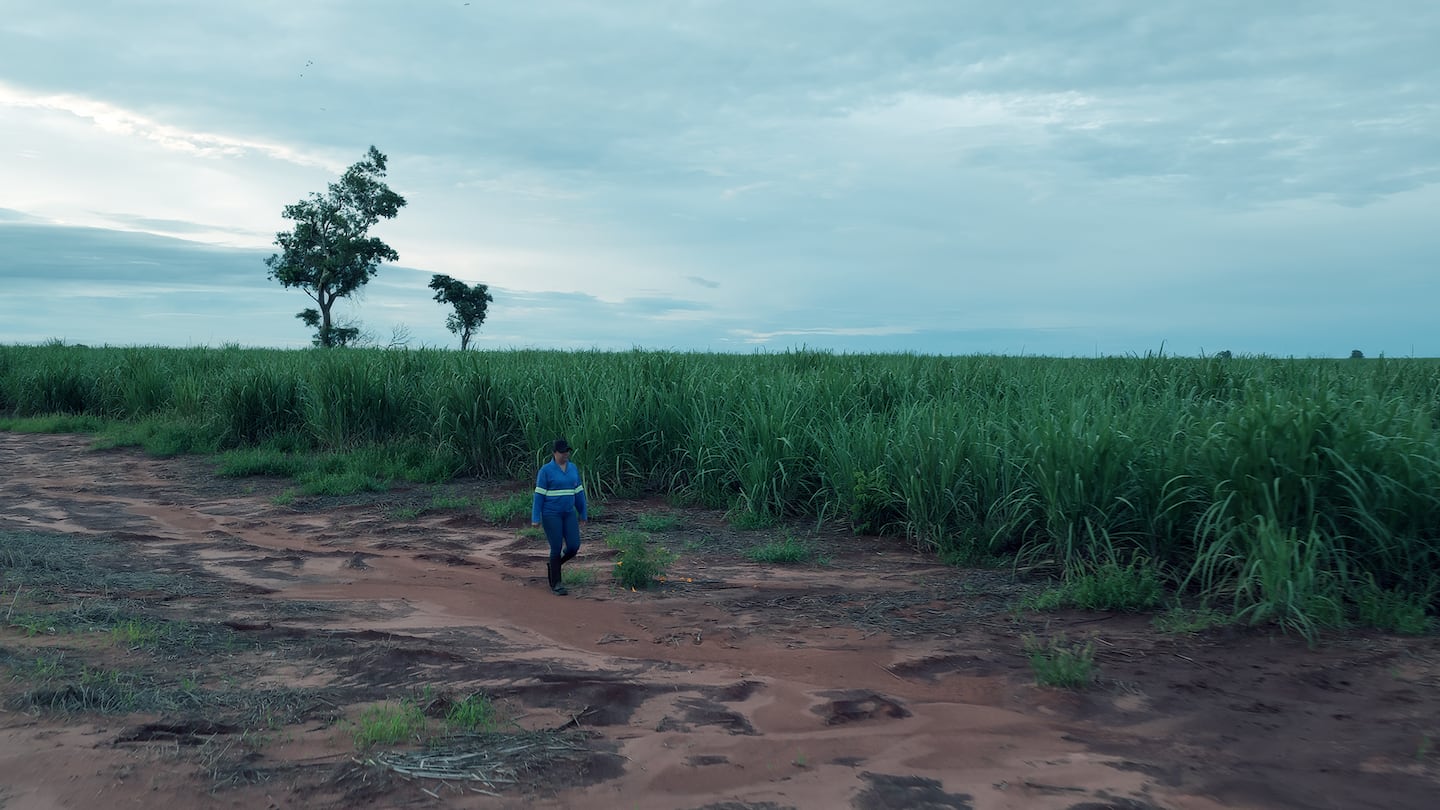
The conventional spandex alternative is designed to integrate seamlessly into preexisting productions, requiring no changes to mill equipment, manufacturing processes, or formulations. The material is made using sugarcane sourced from Brazilian regions governed by strict agro-ecological zoning laws designed to support sustainable bio-energy production.
Now, BoF sits down with Chang Hwang Lee, CEO of Hyosung, to discuss the company’s strategy for more sustainable production as its new material moves towards commercial production and global availability.

What regulations really do is expose material choices that used to be hidden deep within the supply chain.
With Digital Product Passports (DPPs), a garment’s full raw material composition will be visible to consumers, regulators and competitors. When materials become fully transparent, sourcing decisions become brand identities. When everything becomes visible to consumers and regulators, businesses must consider what they want their products to say about them.
Brands that answer early gain something very concrete: guaranteed access to superior materials. In any material transition, early supply is strictly limited. The brands that move now secure volume and lead the narrative.
We made our move in 2024: investing $1 billion to fundamentally transform what spandex is made from. The brands partnering with us today are securing their market leadership for the next decade.
Brands should have a thorough understanding of where their carbon comes from. When we analysed Hyosung TNC’s [Hyosung Group’s textile and trading subsidiary] carbon footprint, energy consumption in factory operations accounted for only 8 percent of our emissions, whereas raw materials accounted for 67 percent.
To make one tonne of spandex, you need one tonne of BDO — or butane-1,4-diol, a chemical intermediate that goes into products from automotives and electronics to apparel. If you don’t change the feedstock, you haven’t actually decarbonised — you’ve only changed the packaging. Most of a garment’s carbon is stored directly in its raw materials.
Secondly, brands should beware of the illusion that a single solution fixes everything. We supply recycled spandex made from 100 percent manufacturing waste, cutting carbon by 75 percent — however, industrial waste streams are strictly finite. Moreover, recycling keeps existing fossil-based materials in circulation, but it doesn’t change what enters the system.
When everything becomes visible to consumers and regulators, businesses must consider what they want their products to say about them.
Recycling and bio-based feedstocks must work together. While recycling manages current loops, bio-based materials transform the system’s foundation. Executives must stop relying on spreadsheet-only sustainability and act on raw material data first.
Three things. Our spandex is thoroughly bio-based, which lowers a brand’s dependence on fossil feedstocks. It is a “drop-in,” which means a brand can adopt it without changing anything about how its products are made. It is also verifiable, which means every sustainability claim behind it can be proven.
The drop-in process is at the heart of it. We changed the raw material, but not the fibre. The BDO we make by fermenting sugar extracted from sugarcane is identical on a molecular level to conventional BDO. As such, the spandex performs the same — in stretch, recovery and durability. Therefore, a mill needs no new equipment, settings or processes: it simply swaps in Hyosung’s spandex under its existing conditions and produces fabric and garments of identical quality.
The third piece is proof. Simply being bio-based does not make a material sustainable — the source and impact must be verified. Our sugarcane is grown under Brazil’s agro-ecological zoning and traced through the VIVE sustainability programme, while the product’s bio-based content can be verified through SGS’s EEPS certification. We also plan to obtain USDA BioPreferred and ISCC+ certification for future products, and a full third-party LCA will follow once commercial production begins. Further down the line, we plan to diversify our sourcing base to reduce additional transportation between processing stages.
Scalability is often a promise about the future. Ours is an operational reality. Mass production of our bio-based spandex begins in the second half of 2026 at our Vietnam facility. This is the world’s first fully vertically integrated production system for bio-elastane: fermentation of sugar extracted from sugarcane into bio-BDO, conversion to bio-PTMG and spinning into final fibre — all within a single location.

Initial bio-BDO capacity starts at 50,000 tonnes per year, structured to scale up to 200,000 tonnes. Vertical integration guarantees consistent quality, shorter lead times, minimised supply disruption and reduced logistics emissions. When a brand’s bio strategy relies on third-party joint ventures or fragmented supply chains, it inherits external bottlenecks. Our strategy rests on our own proven facilities.
Behind this is 30 years of manufacturing mastery supplying one-third of the world’s elastane.
I define process optimisation as more than tweaking factory equipment and instead eliminating uncertainty across the entire value chain — from feedstock sourcing to consumer trust.
The biggest threat to global brands today is regulatory risk and greenwashing. We eliminate this bottleneck upfront by providing fully traceable feedstock data alongside carbon metrics and third-party certifications — safeguarding our partners’ brand equity.
We also partner closely with brands to ensure that every claim — down to the messaging on a hangtag — is transparent and credible. Our end goal is to provide our partners with a risk-free playbook for their sustainable transition.
The hard truth is that across much of the world, carbon still carries no price — while renewable feedstocks and energy continue to cost more than fossil ones. The feedstocks that emit the most remain the most cost-competitive, and that is the single hardest fact in this industry.
A partner once put it plainly: they would convert 100 percent of their spandex the day it became cost-neutral. I understand the economics behind that. But when price parity with conventional material becomes the precondition for moving at all, sustainability has effectively been made optional — something to adopt only once it costs nothing to do so. Real commitment doesn’t wait for the price to be free.
And cost neutrality isn’t a point we wait to arrive at — it’s one the industry builds its way to, together. The premium is a function of scale and scale is a function of demand: every brand that commits early adds volume, which brings the costs down, which then brings in more brands.
The companies that wait for cost-neutral will achieve it last. The ones who help build it — suppliers investing ahead of demand; brands moving before the price is perfect — get it first, and shape it on the way.
A few years ago, brands asked whether a sustainable option existed at all. Now they ask about certification and traceability — and, most tellingly, about volumes and delivery dates. When a customer asks how much they can secure and by when, it’s less of a sustainability conversation and more of a supply negotiation.
Not everyone moves at the same speed — some are placing commercial orders, others are still building the case internally. But the direction is one way: from “show me something new” to “show me something I can put into next season.” This shift is why we built the Vietnam plant.
The industry has traditionally viewed sustainability as something you add on top of a product, rather than something you build into it from the raw material up.
A big misconception is that moving towards lower-impact means giving up performance. That fear made sense when the alternatives were compromises. But we didn’t compromise the fibre — we simply changed what it’s made from. The bio-BDO is the same molecule as the conventional one, so the spandex is identical in stretch, recovery and durability.
A big misconception is that moving towards lower-impact means giving up performance.
This comes as more brands realise that recycling alone no longer suffices to meet emission targets. Recycling draws from a finite waste stream, and underneath it is still a fossil raw material — it lowers carbon, but it never changes where the material comes from. That is the ceiling recycling can’t break through and it’s the reason we committed to bio. Recycling manages the past while bio-production changes the source.
Consumers demand low-impact less than the industry likes to claim — and I’d rather be truthful about that than pretend the demand is already here.
“Recycled” still hints at something used, “sustainable” sounds good for the planet but not for me and even “bio-based” doesn’t yet answer the question every consumer asks — is this better for the person wearing it? Until that lands, sustainability stays a nice-to-have, not a reason to choose.
Closing that gap is not only the brand’s job. We sit at the origin of the material — the molecule itself — so the meaning of it has to begin with us. So we don’t see consumer demand as something to wait for. We see it as something to earn — by making a material good enough that it asks for no compromise, and by helping people understand why it matters.
This is a sponsored feature paid for by Hyosung as part of a BoF partnership.
Loading recommended reads…
Phoebe Gates and Sophia Kianni pushed for features in the e-commerce startup’s software that took credit for sales it didn’t drive, according to internal communications and people with knowledge of the matter.
Africa’s streetwear scene is grabbing the spotlight in 2026 as Ghanaian brand Free the Youth prepares to release one of the most coveted Air Jordan collaborations we’ve seen this year.
The star's wedding dress remains under wraps, but chains such as David's Bridal are already betting brides will want one just like it.
The premium perfume line, created by former fashion executive Yasmin Sewell, is closing in on a new owner.