Agenda-setting intelligence, analysis and advice for the global fashion community.
Agenda-setting intelligence, analysis and advice for the global fashion community.

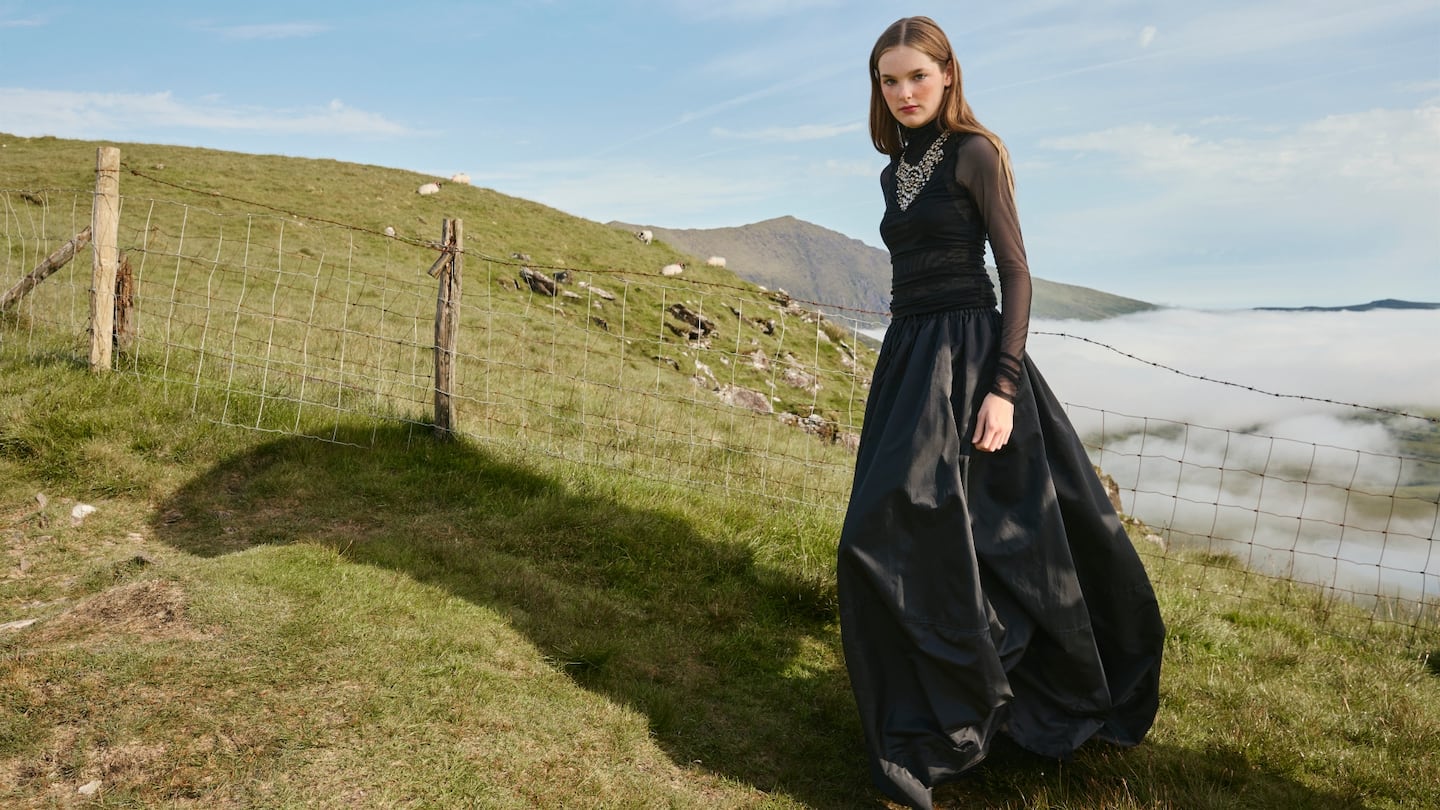
Cinq à Sept took a decidedly unfashionable approach to building its womenswear business when it launched in 2016. It was the height of the direct-to-consumer boom, when companies were buzzing about “cutting out the middleman” and betting they could build better operations through an unmediated connection with shoppers.
But Jane Siskin — Cinq à Sept’s founder and co-chief executive, who had spent decades building brands in New York — only knew one way to build a fashion business: wholesale. From the get-go, it was the brand’s priority. In fact, it took over a year after launch for the brand to start selling through DTC channels at all.
“This comes from being a dinosaur in the business and just doing things the way we’ve always done them,” said Siskin. “We didn’t really take [DTC] as seriously as we probably should have, as early as we should have.”
That decades-old strategy has worked, allowing Cinq à Sept to outpace the growth of even its more successful DTC-focused peers. Last year, the brand grew 20 percent year over year and hit $200 million in annual sales for the first time. It’s been profitable from the jump. For comparison, Hill House Home, which also launched in 2016 and has earned much more publicity thanks to its viral nap dress, marked $110 million in sales in 2025, with over double the number of brick-and-mortar shops.
ADVERTISEMENT
Wholesale still represents a majority — 75 percent — of Cinq à Sept’s business, with a robust list of stockists, from department stores (Bloomingdale’s, Saks, Nordstrom), to e-tailers (Revolve, Shopbop, Farfetch) to over 150 speciality shops scattered across the US.
Where it lags, however, is brand recognition. For much of its history, the brand relied on the cachet of selling at a Saks or a Bloomingdale’s to build credibility and reach new customers, Siskin said. That shows: While Cinq’s sales are double that of Hill House, when it comes to Instagram followers, the opposite is true. According to Google Trends, searches for Cinq à Sept over the past year are less than 10 percent what they have been for Hill House, both globally and in the US.
“I used to meet women and they could be wearing it, and they’ve never heard of it,” said Siskin. “The honest truth is we built it as a business more than a brand.”
But as it enters its second decade, those priorities are changing. Cinq à Sept hired a creative agency for the first time earlier this year with an eye to telling a wider story around its tenth anniversary. It’s also establishing a brick-and-mortar footprint of its own: A Beverly Hills flagship opened its doors this month, and another location in Scottsdale, Arizona, is set to follow before the end of the year.
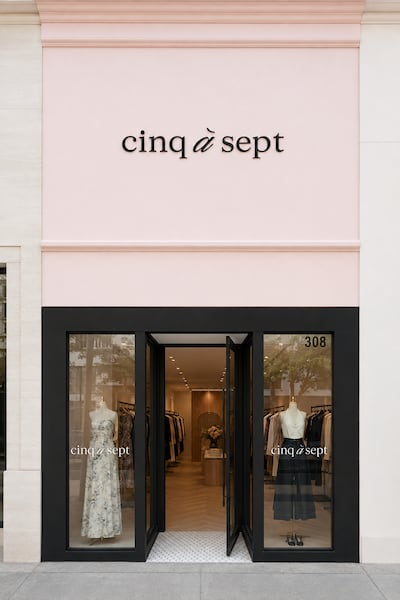
Siskin said, “We know we’ve gotten to this point doing what we do well, and we’re never going to stop doing that.” Now, however, the team is increasingly asking itself how it can build on top of that. The next step will be to craft a clear identity without losing the same laser focus on product that propelled the business to success in the first place.
“She’s built this powerhouse brand without the hype machine around it,” said Kelcye Ball, SVP of ready-to-wear at Bloomingdale’s, which has stocked Cinq à Sept since its launch. “The idea of it touching more customers and speaking to a broader audience, can only amplify the business they’ve already built.”
Cinq à Sept launched with several built-in advantages.
One was Siskin herself. By 2016, she had spent years leading retail companies at the helm of Jaya Apparel Group, the entity that still owns Cinq à Sept today. There, she oversaw the growth and expansion of labels like 2000s denim favourite Seven for All Mankind, and later, Elizabeth and James, the now-defunct contemporary line from The Row’s Mary-Kate and Ashley Olsen.
ADVERTISEMENT
But perhaps an even bigger advantage was Cinq à Sept’s pre-existing infrastructure. When Jaya’s licensing agreement with Elizabeth and James ended, its team, already well-versed in operating a wholesale-driven retail business, was in need of a new endeavour. In considering what to do next, Siskin saw an opportunity in the advanced contemporary space to build something that took a cue from Alessandro Michele’s Gucci, embracing a more overtly feminine aesthetic at a time when the category leaned more androgynous, thanks to the popularity of labels like Rag & Bone or J Brand.
That infrastructure — and Siskin’s established relationships — also made the brand easier to pitch to wholesalers.
“Retailers were super excited about the idea of a new brand with no new-brand problems,” she said.
They also put the brand on shelves, Siskin said, because of the assortment, much of which is “core” pieces — blazers, trousers, denim and silk blouses appropriate for both the office and drinks afterwards. Dresses are another major category, ranging from everyday shifts to wedding-guest ready. With every item, Siskin said she’s a self-proclaimed obsessive about fit, and feels that nailing that aspect is the secret to building a base of loyal customers.
No one category outshines another. “We have at least one thing in every category working at all times, from denim all the way to evening gowns,” she said.
The core offering is tweaked from year to year depending on trends and consumer demand. Right now, Cinq à Sept is investing more in skirts, when two years ago, Siskin said, it couldn’t “give them away.” One year, it may introduce a cropped style of its Kerry pant; the next, a slightly wider leg. There are 41 versions of its signature Khloe blazer currently available on the brand’s website, including an unembellished, standard-length version, one that features a dickey mimicking a zip-up hoodie dickey and one covered in rhinestone bows.
“[Siskin] gets customers in through those gateway pieces, and then they feel more comfortable transitioning to the more fashion pieces,” said Ball.
The updates on key pieces “give her another reason to buy a new one,” she said, adding that they usually doesn’t retire core styles because “there’s always someone who wants to buy another one of what they have.” The brand will restock a smaller number of those core items.
ADVERTISEMENT
Consumer feedback comes from a variety of channels. There’s a field team that visits stores (both owned and wholesale) to talk to sales associates about what they’re hearing from customers. Siskin herself travels around two months out of the year to attend store events and trunk shows across the US. Those discussions inform not just design, but other elements of the business, too, like pricing strategy — Cinq à Sept didn’t raise prices in the face of tariffs because they knew it was “really important” to their customer that they didn’t.
“There’s a fine line in advanced contemporary because, if you get to a certain point, the customer is mostly shopping designer,” she said. “We like to stay under that decision point.”
If Cinq à Sept’s first 10 years were about giving the customer the product she wanted, the next 10 will be centred around building a brand world around that.

Cinq à Sept — French for “five to seven” — was named for “the time of day when the light changes and anything can happen,” Siskin said. That feeling, she added, evokes a sense of emotion that the brand wants to build upon.
“We’re always going to be an optimistic, sexy, romantic brand,” said Shaun Lewis, the brand’s executive vice president of brand marketing and DTC. “It’s less about something brand new, but really honing in on what makes us special.”
The wheels are turning in that direction. The brand has ramped up its ad spend on streaming, Meta and out-of-home, and launched a catalogue three years ago, which Siskin said has delivered significant ROI. It hosted its first influencer trip last fall, at Diamond Cross Ranch just outside of Jackson Hole, Wyoming, where it had shot its fall campaign. An upcoming series of creator partnerships tied to the 10-year anniversary are soon to come, too.
Brick-and-mortar is also a priority, as Siskin feels stores are one of the best avenues to bring the brand to life; the plan is to open three more stores next year, as well as open more shop-in-shops at wholesale partners, including at Bloomingdale’s in Century City in Los Angeles. So far, the brand eschewed collaborations but is open to the right one in the future.
Product, of course, will still be the driving force of the business. But Siskin said they only want to expand when there’s room for innovation, saying she has no interest in jumping on the dupe train and introducing Cinq à Sept’s version of another brand’s hit. Shoes, for instance, were added in 2024 because she felt there was a gap in the contemporary space for more affordable, design-led footwear. But she’s hesitating on bags because it’s a tricky category to reinvent.
In general, Siskin said, she’s not in a rush to reach the next growth milestone. Profitability has been a priority from the beginning, and she’s happy to grow more slowly if it means maintaining that.
“It’s very simple business logic,” she said. “If we can’t make money, why do it?”
Six years after going viral during the pandemic, the New York-based brand is generating profitable double-digit sales growth, rolling out a series of collaborations — the latest with Williams-Sonoma — and expanding its retail footprint.
A crop of brands founded in 2016, including Dôen, La Ligne and Cinq à Sept, steered clear of the once-dominant growth model that led direct-to-consumers darlings like Everlane to bust in favour of a more sustainable approach.
Stylists Emily Current and Merritt Elliott had an instant success and a quick exit with their denim brand Current/Elliott in the 2010s. For their second venture, The Great, they’re taking an alternative approach.

Diana Pearl is Senior News and Features Editor at The Business of Fashion. She is based in New York and drives BoF’s marketing and media coverage.
Loading recommended reads…
The company’s stock has plunged 39 percent this year as Nike’s sportswear division struggles to compete with challenges like On and Hoka.
The Swiss watchmaker initially sought about $170 million from the Korean technology giant for failing to prevent apps that mimicked its luxury brands on its smartwatch displays.
The landmark settlements will resolve allegations from multiple US states that the company purposefully designed Facebook and Instagram to encourage compulsive use among youths
Kohl’s turnaround attempt showed some progress after the retailer raised its annual earnings outlook, but it still doesn’t see sales growth this year.