Agenda-setting intelligence, analysis and advice for the global fashion community.
Agenda-setting intelligence, analysis and advice for the global fashion community.

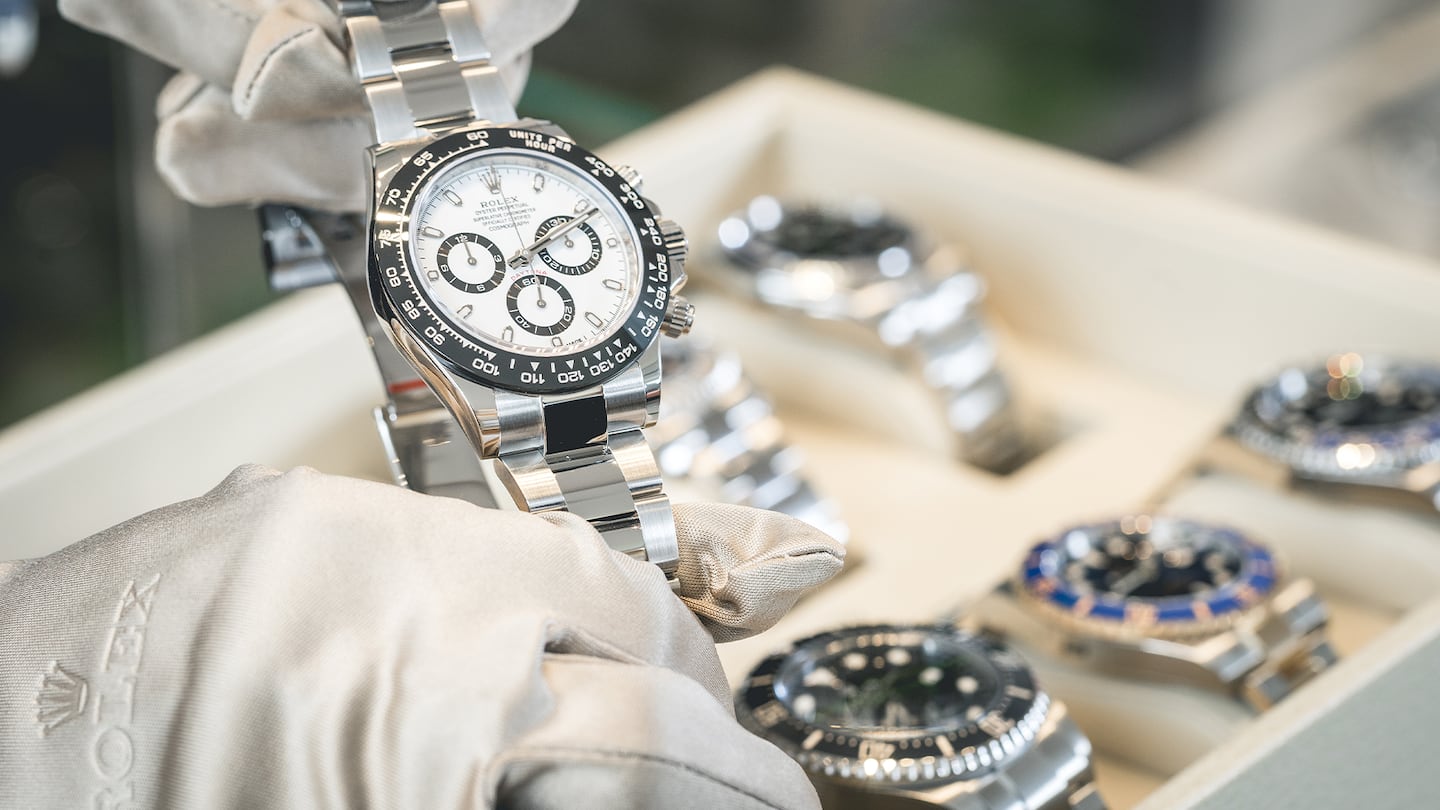
They’re priced out of property, up against AI in the jobs market and tasked with solving a climate crisis they didn’t create. So why should the luxury watch industry be looking to Gen Z to revive sales?
For watchmakers, little was expected of Gen Z, born roughly between 1997 and 2012. Digitally native and brought up on smartphones and wearables, what desire would the generation have for an analogue watch?
But there are growing signs Gen Z is switched on to mechanical watches. Social media, the nostalgic neo-vintage trend and “wrist awareness” culture have powered up interest in the category. Brands are taking note.
Gen Z’s enthusiasm for watches may have come from an unlikely source, the wearable devices like the Apple Watch seen primarily as disrupting the watch industry. “I don’t think anyone was interested in watches when I was growing up,” said Austen Chu, the 29-year-old chief executive of the Hong Kong-based watch marketplace Wristcheck, which he co-founded in 2020. “But that changed when I was in college and people started wearing wearables. Wrist awareness wasn’t a thing prior to Apple Watch.”
ADVERTISEMENT
Music and pop culture also played a key role in drumming up interest in watches. “I learned about AP from a Jay-Z song,” said Chu, referring to Swiss watchmaker Audemars Piguet.
“Now, it’s all about nostalgia,” he added, noting watches that piqued interest “back in the day” — are desirable again.
For Gen Z, back in the day is as recent as the mid-2010s, a time when the watch industry was still coming to terms with social media. Few brands used it well, as many relied on aging ambassadors and old-school sports sponsorships to build relevance.
Audemars Piguet was one of a handful of exceptions, aligning with a high-profile roster of Gen Z-adjacent A-listers with campaigns and watch collaborations with LeBron James, Lionel Messi, Serena Williams, Ed Sheeran, Tinie Tempah and Freida Pinto.
Models rising to prominence like AP’s Royal Oak, Patek Philippe’s Nautilus and all types of Rolex watches were mostly steel sports watches. They sparked curiosity, serving as a gateway to broader interest — despite price tags keeping them out of reach for most young enthusiasts.
“After they developed their own taste, Gen Z got into Cartier and Piaget,” said Chu.
“Pre-Covid, it was just watch nerds collecting Cartier, and then that changed with Taylor Swift and Timothée Chalamet.”
The so-called “Chalamet effect,” contributed to rising interest in Cartier watches on both the primary and secondary markets. The brand sold 695,000 timepieces last year, up nearly 40 percent since 2019, according to Morgan Stanley estimates. On the secondary market, where Gen Z searches for value against a backdrop of rapid primary market inflation, prices have ticked up, too, with prices of pre-owned Cartier watches up 64 percent since 2019, data from online watch marketplace Chrono24 shows.
ADVERTISEMENT
Chrono24 data shows Gen Z’s interest in watches rising, with the share of requests from Gen Z shoppers more than doubling since 2020 to account for 21.6 percent so far this year. “The more they buy, the more their taste matters for the market,” said Chrono24 brand engagement director Balazs Ferenczi.
Gen Z has been focused on designs from the late 1970s into the 1990s, previously unpopular pieces that had languished in the bargain bins of secondary market sellers. For new buyers, they opened the door to dial-name cachet — and a new habit.
Small, shaped and often stone-dialled Piaget designs from the 1970s became popular. New sites like Mendel Watches and Doble Vintage cropped up, and Geneva-based watch magazine Heist-Out, emerged – all founded by and catering to Gen Z. A cult following developed on social media, quickly becoming a trend.
Piaget’s new collections seem to reflect this interest. In 2024, the Richemont-owned brand launched Polo 79, a sports watch based on a voguish 1980s piece associated with Ursula Andress, Roger Moore, Bjorn Borg and Robert de Niro, who wore one in the film Casino. Piaget followed with the quirky Andy Warhol collection, offered with all manner of stone dials. This year, it released a trio of 1970s-inspired Swinging Pebble sautoir necklace watches, wrapped in solid tiger’s eye, verdite and pietersite.
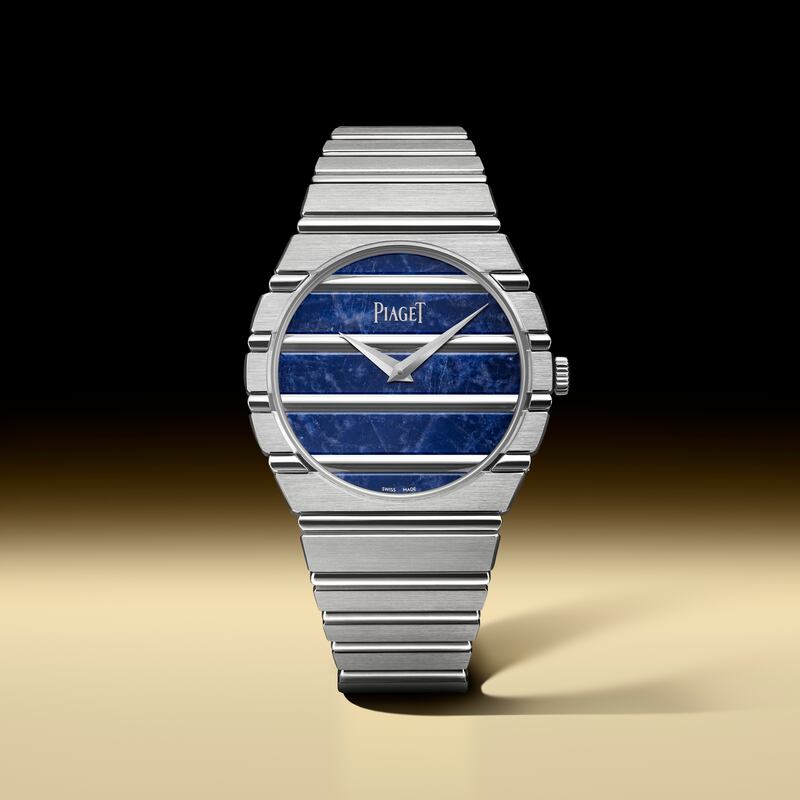
Acknowledging Gen Z’s appetite for Piaget’s retro designs, the brand’s CEO Benjamin Comar cautioned against focusing specifically on any one generation. The veteran luxury executive, who has also worked for Chanel and Repossi said he’d tried producing product categories aimed at specific groups of clients. “It was never a success,” he said.
Piaget’s recent release of stone-dialled watches were not aimed at targeting new generations, he insisted: “We did it because it’s part of our DNA.”
Brands like Cartier and Piaget are riding the wave of interest more than taking a proactive approach to winning the generation, in the view of Oliver Müller, founder of the Swiss specialist luxury watch consultancy LuxeConsult.
“The Swiss watch industry has mostly been opportunistic,” said Müller. “Brands have been surfing a trend whose roots lie elsewhere — in fashion, furniture, jewellery and even hair styles.”
ADVERTISEMENT
Still, it would be foolish not to leverage Gen Z’s tastes and secondary market activity, analysts noted.
“When young collectors converge on part of a brand’s archive, as they did with vintage Piaget stone dials, they’re effectively handing the maison proof of demand for a design language it already owns,” said Dominic Baldwin-Weir, strategy director at marketing intelligence firm Digital Luxury Group. “The secondary market has become a discovery engine for primary-market desirability. Brands that listen to it are being rewarded.”
Other brands may be catching on. Swatch Group’s Blancpain recently co-hosted an exhibition in London with the buzzy UK-based watch trading platform Subdial. On display were a series of neo-vintage Blancpain pieces from the 1980s and 1990s.
Blancpain’s past designs trade at a fraction of the price of products by other prestigious watchmakers, said Christy Davis, 32, co-founder of Subdial, which caters mostly to shoppers under 45.
The recent refresh of its Villeret collection, a line first issued in 1983, was not aimed at specifically targeting Gen Z, Blancpain executives said. “But of course, we are going to be influenced,” conceded Alexios Kitsopoulos, a marketing executive for the brand.
“We are a very design-led demographic,” said Scarlett Baker, 29, Heist-Out managing editor. “It’s not a disregard for mechanics, but we have been trained by technology to see first and then understand afterwards,” she added, citing Piaget’s ability to grab attention with distinctive designs.
“When people say Gen Z don’t care about heritage, it’s not true,” she said, noting nostalgia for “pockets of the past.”
“They like rarer finds, offbeat moments, looking in the places people aren’t expecting. No one’s asking brands to eradicate their collection and start again — it’s a case of diversifying what you already have, like Matthieu Blazy has done at Chanel,” suggested Baker.
In-person events are key for connecting with her generation, she said: “So much of our lives is online. To get those touch points is what we’re missing.”
Pricing remains contentious. “Primary brands have out-priced themselves,” said Chu of Wristcheck, noting Gen Z shoppers purchase more readily on the secondary market. “If anything, they’re more comfortable doing that than going into a boutique — it’s more flexible and it’s on demand.”
Short attention spans are another potential challenge for watch brands seeking to tap into Gen Z interest. Some of the heat at Cartier has dissipated, a couple of years after it peaked, said Ferenczi of Chrono24. “The rise was real,” he said. “But the pace has come off its high.”
Blancpain’s sister brand Breguet, which is marking the 225th anniversary of its tent pole tourbillon device this year, has potential to become the next Gen Z obsession, some insiders say. “Breguet is the most underrated brand on Earth,” said Chu, noting its secondary market values currently track well below The Big Three, in line with the brand’s primary market profile.
Other models fetishized by Gen-Z watch enthusiast sites include late 20th century designs by largely forgotten brands such as Corum and Ebel, along with unusual shaped pieces by Jaeger-LeCoultre and Chopard. With new investor backing, Corum may be well-positioned.
As Gen Z hits 30, its influence on the watch market will likely be more than a flash in the pan. “You can’t afford property, you don’t need a car and you have a desk job so you can’t queue for sneakers,” said Chu, noting the waning Gen Z-led sneaker boom. Interest in watches, meanwhile, is “here to stay,” he predicted, citing the rise in earning power over the next three decades.
Digital dominance also fuels interest, said Davis of Subdial. “It’s something to do with the analogue story that’s tangible and real and takes you back to a past time in an incredibly digital world,” he said. “There’s a generational desire for human connection and watches fit perfectly into that.”
Loading recommended reads…
LVMH’s sales report and Shanghai Fashion Week will bring fresh insight into the Chinese retail environment as Western brands seek to navigate the wobbly market and local labels angle to capture more spending.
As Milano Beauty Week closes its biggest edition yet, Cosmetica Italia and its partners are betting that the country’s entire beauty ecosystem can become a brand in its own right.
The ultra-fast fashion company said sales had been bolstered by marketing partnerships with music festivals, a pop-up shop on London’s Oxford Street and local Christmas gift events.
Frasers Group is expanding its holdings in luxury and retail brands, but what it wants from those investments is not always clear.