Agenda-setting intelligence, analysis and advice for the global fashion community.
Agenda-setting intelligence, analysis and advice for the global fashion community.

A cluster of independent fine jewellery brands are drawing on favourable market conditions and evolving shopper preferences to move beyond their original niches and compete with established mega brands like Cartier and Tiffany & Co. for some of the world’s most prestigious clients.
Jewellery has emerged as a bright spot in a lacklustre luxury market with sales growth between 4 and 6 percent last year while the broader market for personal luxury goods stagnated.
Necklaces, bracelets and earrings are seen as having a better long-term value than other luxury products like handbags — a category that has suffered following steep price hikes without corresponding product innovation during the post-pandemic boom.
Growth in the fragmented market for branded jewellery – which has risen at double the rate of unbranded jewellery in recent years – has prompted increased competition among Place Vendôme giants as the category becomes a key priority for luxury groups. More fashion brands are also developing their own jewellery collections.
ADVERTISEMENT
In this competitive environment, independent designers are building their own brands by attracting clients through capitalising on personal connections in their own retail spaces and pushing their distinct aesthetics into high jewellery as they seek to convert first-time buyers into lifelong collectors.
The rise of jewellery’s role as a means of self-expression has made room for independent brands.
The focus for many shoppers has moved from gifting around occasions like weddings to self-gifting, said Anita Balchandani, who leads McKinsey’s apparel, fashion and luxury practice in EMEA. Leading the charge are women, who have far greater spending power than they did 10 years ago, along with men for whom wearing jewellery has become more acceptable.
“You have a luxury consumer that is saying, ‘I’m tired of wearing that obvious ring setting from the obvious brand,’” added Balchandani. “They are looking for the next thing and something that is more individual, more craft-oriented and much more collectable.”
As people dress more casually, jewellery is also being worn more casually.
Jessica McCormack’s “day diamonds” approach — antique-influenced designs with a modern, wearable twist — has found an enthusiastic audience. “Today, there is far less emphasis on saving pieces for special occasions, and much more interest in everyday jewellery that feels personal, effortless and layered into daily life,” said McCormack.
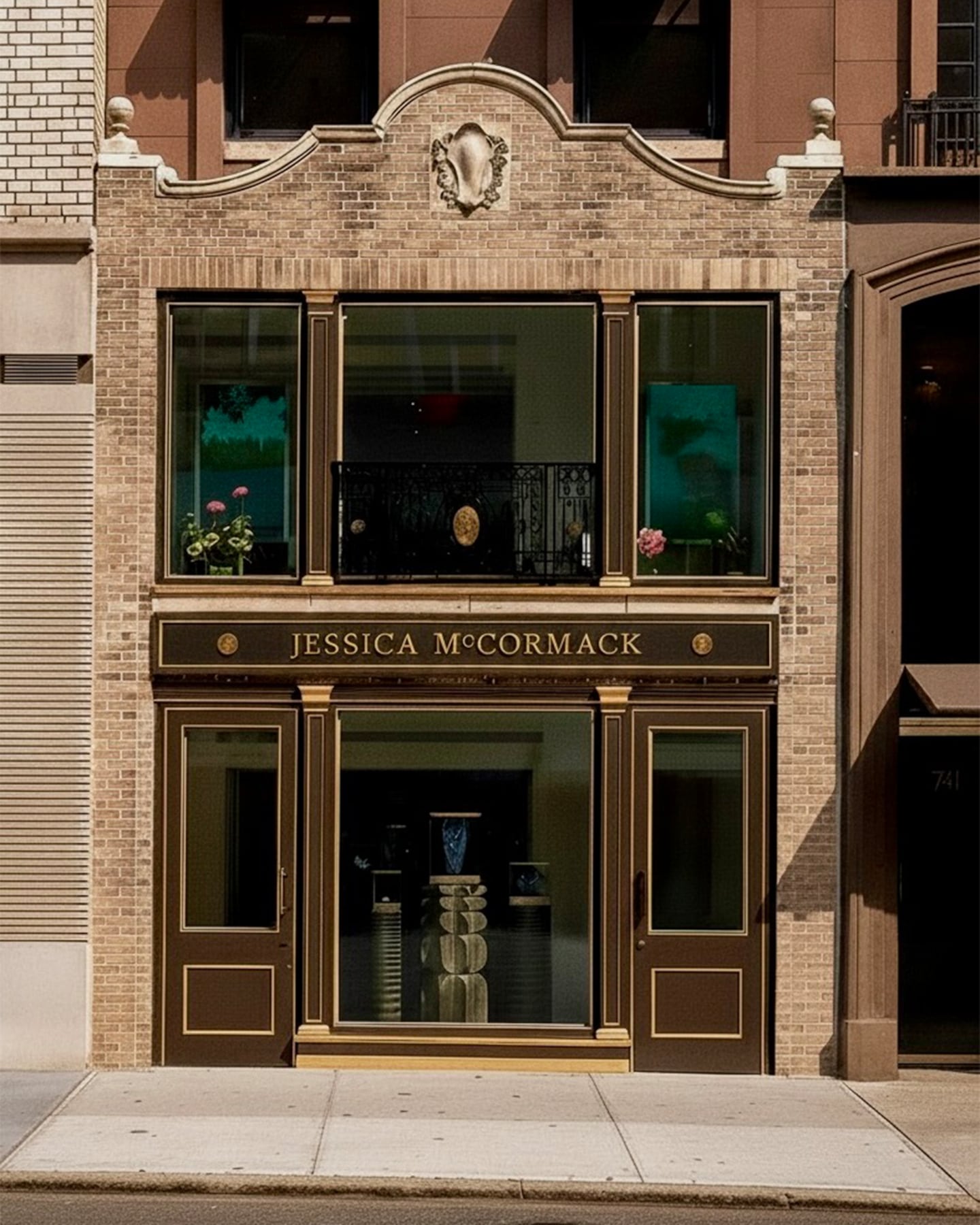
Last year, her namesake brand reached sales of around $80 million, a 60 percent increase on its previous record of $50 million in 2024, making it among the top-performing assets of investor Lingotto Horizon, owned by the Agnelli family’s Exor holding. Growth was driven by the opening of the brand’s first US store on Madison Avenue in New York City, together with the launch of its first permanent Harrods concession and strong performance at its two existing London boutiques, according to CEO Leonie Brantberg.
Building a direct relationship with clients, who are mostly women, has always been central to growth, said McCormack, who draws on her brand’s retail space to do so. In 2012, with support from early investors diamantaire Michael Rosenfeld and Oppenheimer scion Rachel Slack, she opened a five-storey townhouse on Carlos Place in Mayfair.
ADVERTISEMENT
“I wanted clients to experience the jewellery in a way that felt personal, intimate and relaxed – somewhere they could connect with the brand beyond just the product itself,” said the designer. Marrying the display of original artwork with sophisticated visual merchandising, it also provided invaluable insight into their purchase decisions:
“We could see how they wore jewellery day-to-day, how they responded to each new collection and how they wanted to collect pieces over time,” said McCormack.
The brand will open a second US store in South Coast Plaza in California this year followed by a Rodeo Drive boutique in 2027. “It comes back to the core of what Jessica can deliver, which is incredible creativity in the retail environment,” says Brantberg.
Athens jeweller Nikos Koulis is also betting on retail to broaden his client reach. He is marking two decades in business with the opening of his first store outside Greece, a two-storey boutique on rue Boissy d’Anglas in Paris, near Hermès’ flagship. The new location will help reinforce his brand identity and allow him to meet new clients, he said.
“Paris is an international destination and it’s also the heart of high jewellery,” said the designer.
The new store includes space to present moNO, his first line of luxury objects and furniture. It comes 12 years after Koulis opened his first boutiques, in Mykonos followed by Athens – just as the Greek economic crisis hit. It was a big risk, but allowed the designer to create his own universe and develop lasting relations with clients. The brand’s sales rose 27 percent in 2025, following 46 percent growth the previous year.
Trust, the age-old foundation of every jeweller’s relationship with a client, takes time to build but creates valuable loyalty, said Koulis. He recently exchanged WhatsApp messages with an established but dormant client who, after a gap of four years, contacted him looking for a new pair of earrings. “Within three messages, I had sold her a pair for €460,000,” he said.
Koulis reinvests profits into retail expansion and unique product — renewing freshness at the brand.
ADVERTISEMENT
“The client is looking for exclusive pieces and if you’re creative and can keep offering new things, it creates the appetite,” said Koulis. Today, his one-of-a-kind pieces featuring exceptional gemstones, which are priced at €250,000 and above, account for 40 percent of total sales.
For independent jewellery houses that cater to a broad spectrum of clients, the luxury and ultra-luxury range of clients offer not just higher profit margins, but also a buffer from economic volatility.
“There is resilience especially at the ultra-luxury end of the scale where buyers of six figure jewels are not affected by global conflict and stock market jitters,” said Balchandani.
Clients at the very high end tend to value exclusivity and design above other considerations – motivation for Brazilian-born, London-based Fernando Jorge to reach collectors by exhibiting at art and design fairs.
“They consider themselves arbiters of taste. They have a curiosity for discovering the new and they want to support that talent,” said Jorge. In March, the designer exhibited at Tefaf in Maastricht for the first time, offering his core collection as well as high jewellery pieces ranging from £45,000 to over £450,000 ($60,500 to over $605,000).
The key is to build on what made a brand successful in the first place, he said. This means “leaning into your original spark and revisiting your strengths – design is mine,” said Jorge.
Sticking to one’s core identity helps brands maintain relations with clients as they grow older and their spending power increases. For Danish jewellery brand Sophie Bille Brahe, this has meant an increased proportion of its premium diamond collection, which has grown by nearly a third in recent years to reach 82 percent of total turnover. Before, “it was fifty-fifty pearls and diamonds,” said CEO Anne-Sofie Moller.
The brand is launching its first high jewellery collection — in response to requests from clients. Prices start at €85,000 and run up to €1.13 million, featuring larger, more valuable diamonds than those of its commercial collections. The goal is to balance the rarity of stones with the brand’s style. “I still want it to feel like me,” says Bille Brahe. “That means it’s everyday high. We have bigger diamonds but it’s still easy to wear.”
The collection will be presented in Harrods’ high jewellery event in July alongside collections from independent brands like Jessica McCormack, Graff, Messika and a host of jewellery giants including Cartier and Tiffany & Co.
The department store has seen strong appetite for individuality and newness within fine jewellery, said Beth Hannaway, Director of Buying, Fine Jewellery and Watches at Harrods.
“It is about creating a balanced and compelling ecosystem that reflects how today’s luxury customer shops — across heritage houses, emerging voices and highly personal brands with strong creative identities.”
Similarly, in the realm of fashion, it is “those smaller brands that create loyalty,” Geoffroy Van Raemdonck, CEO of Saks Global told The Business of Fashion. Small independent fashion brands will represent nearly half of the names on offer as the department store company emerges from bankruptcy.
But independent brands are becoming choosy about wholesale partners.
For Beth Hutchens of New York-based Foundrae, her individually designed store buildouts are a huge investment — but worth it. The designer is opening her first international store in London’s Mayfair, her seventh in total, and has lowered her reliance on wholesalers to 20 percent of overall sales, compared to nearly half before the Covid pandemic. Hutchens’ priorities shifted after all but one wholesaler cancelled orders when lockdowns hit — leaving her with high levels of inventory.
“If you’re trying to build trust and long-term relationships, you need to show you’re here for the long haul,” said Hutchens. “We need the space and time to tell the story of the collection — as well as having an engraver and jeweller on the premises.”
Loading recommended reads…
The Franco-Italian eyewear maker reported a 15% rise in first-half profit, beating expectations, while revenue growth was driven by strong demand for AI-enabled glasses myopia products.
Leahy joins the wearables brand from Glossier, where she was chief executive for three years.
Kering’s reported organic growth for the first time in three years. Gucci’s second-quarter sales remained in negative territory, but declined less than expected.
This week’s round-up of global markets fashion business news also features the Ghanaian textile sector, Russian e-tailer Wildberries and the record fine incurred by Chinese marketplace AliExpress.