Agenda-setting intelligence, analysis and advice for the global fashion community.
Agenda-setting intelligence, analysis and advice for the global fashion community.


While the global luxury sector navigates a period of recalibration, the jewellery market has proved an economic bright spot. The category is projected to record annual unit growth of 4.1 percent between 2025 and 2028 — four times the rate of clothing, according to The Business of Fashion and McKinsey & Company’s The State of Fashion 2026 report. Diamond jewellery, which accounts for roughly one-third of global jewellery sales, is expected to expand at 4 to 5 percent per year through 2028, the report states.
Driving this momentum is a fundamental shift in consumer behaviour: jewellery purchases are moving beyond traditional gifting, becoming a powerful tool for self-expression. The State of Fashion 2026 highlights that 42 percent of women are buying more jewellery for themselves than they did two or three years ago, reflecting a broader movement towards self-reward and empowerment.
Founded in Boston, US in 1996, Hearts On Fire, which was acquired by the Chow Tai Fook Jewellery Group of Hong Kong in 2014, has built a reputation for its craftsmanship and the particular sparkle of its gemstones.
By cutting and polishing its diamonds at 100x magnification — 10 times the industry standard — Hearts On Fire achieves a level of microscopic precision that maximises light reflection. This accuracy allows the brand to create hearts and arrows (H&A) diamonds — high-quality, 57-faceted stones which reveal eight symmetrical arrows face-up and eight hearts face-down — valued for their optical symmetry. Even in low-light conditions, these diamonds sparkle intensely where traditional cuts might lose their brilliance.
Over the past two years, Hearts On Fire has undergone a comprehensive brand transformation, transitioning from its roots as a wholesale diamond business into an international luxury jewellery brand. Chief creative officer Yunjo Lee — a veteran of LVMH-owned Tiffany & Co. and contemporary fine jewellery brand Mejuri — brings a new visual identity alongside signature collections that explore the brand’s refreshed codes.
A cornerstone of this strategic renewal has been a targeted retail expansion in Asia — a region The State of Fashion 2026 projects will continue to drive the largest share of global jewellery market growth. This trajectory is led by China and India, where jewellery sales already represent around two-thirds of the APAC market, according to the report.
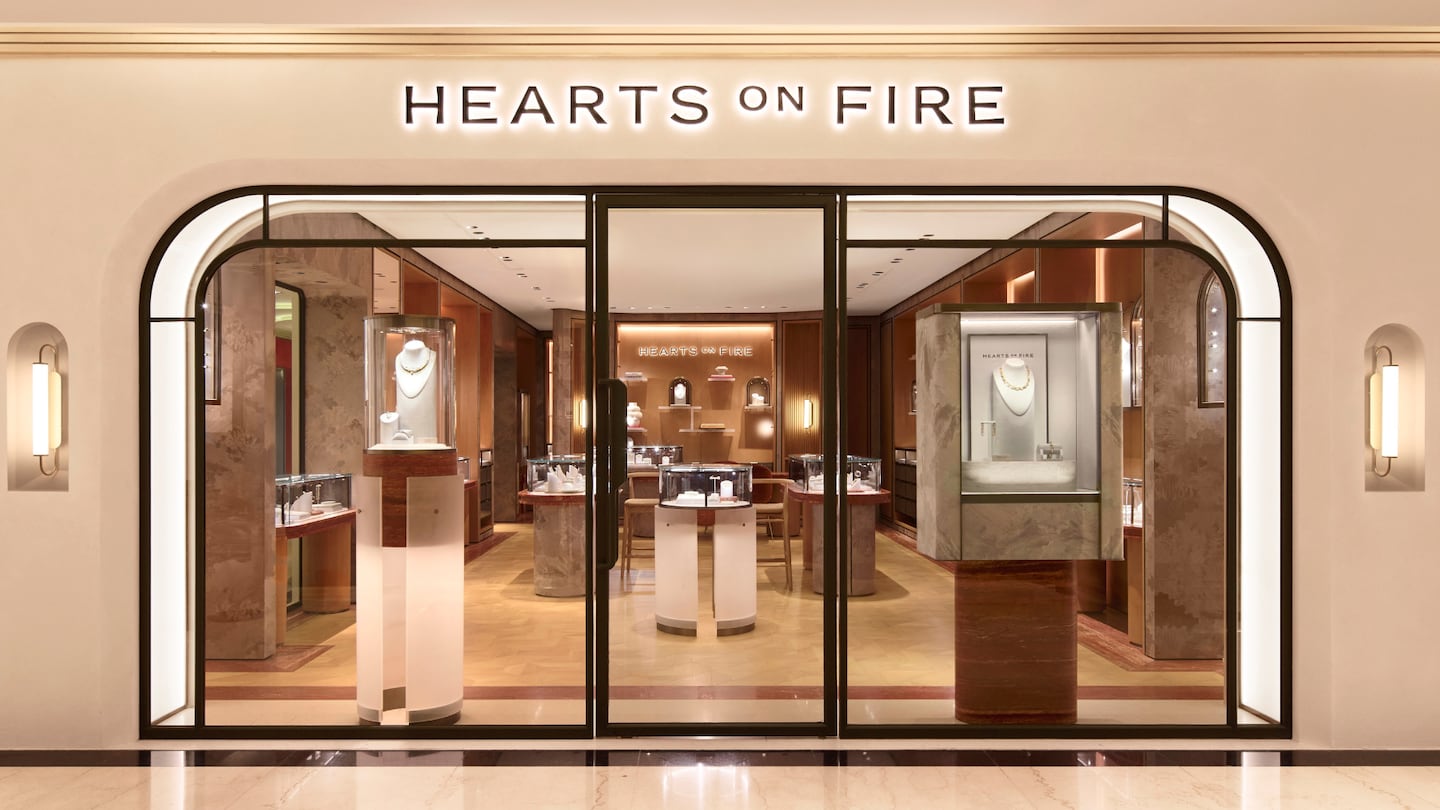
Over the last year, the brand has opened a series of boutiques across Macau and Wuhan in China, following the opening of its first flagship in Central, Hong Kong in 2024. Sitting at the intersection of diamond authority and female empowerment, the brand is positioning itself to capture the modern luxury Asian consumer.
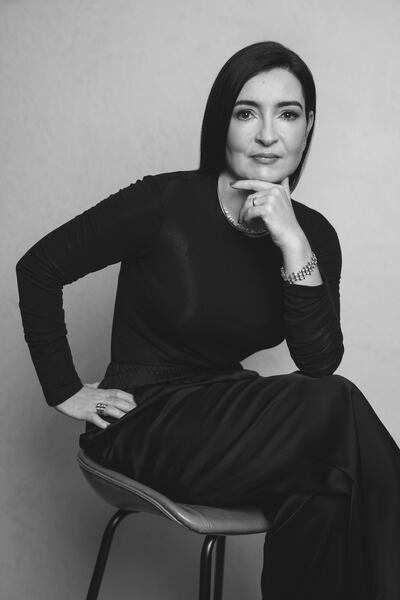
Now, BoF sits down with Rita Maltez, global president of Hearts On Fire, to discuss the company’s transformation, the evolving demands of diamond clients and what’s next for the jewellery category.
The transformation has been a long and thoughtful process. We officially relaunched the brand exactly two years ago, but laying the groundwork for that transformation began years prior. We reimagined our legacy brand — originally built entirely on the perfectly cut diamond — into a modern jewellery brand, which is distinct from traditional heritage luxury.
The relaunch truly came to life six months later when we opened our first new retail concept, bringing together our new jewellery collections, brand codes, colours and overall experience. Since then, we have opened seven new retail concepts.
Our biggest challenge was shifting the brand perception both internally and externally. We needed to bring loyal customers with deep connections to the brand on a journey, alongside long-standing team members, to adjust mindsets and demonstrate that while we retained our core DNA, we were evolving into a modern, design-led brand.
Now, two years in, we are seeing how these changes have resonated. We have retained strong relationships with existing clients while attracting newcomers who may not have connected with the brand in its prior form.
We are seeing real momentum in Asia. Our heritage, quality and credibility resonate with Asian consumers, but we are now speaking to them in a much more modern way. While opening seven new stores in two years is significant, our expansion is deliberate and intentional, focusing on positioning and visibility alongside international powerhouses and influential local brands. For instance, we recently opened a standalone store in Wuhan’s SKP, which is a premier luxury mall chain in China.
Beyond the diamonds, consumers are increasingly drawn to the values, storytelling and sense of identity that a brand provides.
However, North America also remains vital as the birthplace of the brand. Our strategy there is not focused on directly operated retail, but rather on building strong partnerships with premium, influential retailers like Bloomingdale’s, Nordstrom and Just One Eye in Los Angeles. Both regions are integral to our growth strategy moving forward.
Consumers still strongly desire quality, craftsmanship and credibility — our authority in diamonds resonates just as much today as it did in the past. What has changed is how consumers expect to connect with a brand.
For us, modern luxury sits at the intersection of diamond authority and a modern experience infused with modern design. This means creating jewellery that isn’t just kept in a safe for special occasions, but is instead integrated into everyday life.
Additionally, traditional luxury experiences can feel intimidating or overly serious. We want to make luxury feel approachable and inviting, which is why we worked with a renowned hospitality designer to give our stores a warmer, residential feel.
To stand apart in a crowded market, we also inject playfulness into our designs, such as the transformable earrings in our new Dream collection— pieces that can be adapted and styled according to the user’s preference and occasion.
We have four core values that define the brand: openness, creativity, expertise and empowerment. This philosophy underpins our entire vision — we truly want as many customers as possible to experience Hearts On Fire. Just as we have focused on making our jewellery relevant for everyday life and our retail stores more welcoming and accessible, this same commitment extends directly to our product and pricing architecture.
The guiding principle is to cater to a broad customer base, covering a wide range of price points. Our daily-wear jewellery begins at around $2,000, while our more statement pieces range from $50,000 to $100,000. This approach ensures that clients — from those seeking pieces with greater rarity and craftsmanship to those entering the Hearts On Fire universe at a considered price point — can find something that resonates with both their aspirations and occasion.
It is a very different proposition. Cutting a H&A diamond takes four times longer than a standard cut. It is a labour-intensive process and very few polished diamonds meet the rigorous standards required to be qualified by the American Gem Society.
Traditional luxury experiences can feel intimidating or overly serious. We want to make luxury feel approachable and inviting.
Because we invest so much time and so many resources into the material, there is a natural barrier to entry. Our appeal comes from a combination of diamond expertise, modern design, storytelling and an elevated experience refined over three decades.
We recently launched our “What’s Your Signature?” campaign to coincide with our 30th anniversary. For a long time, we focused heavily on our own “signature” — the perfectly cut diamond. We wanted to flip that message to communicate that we are here to empower and enable our clients’ personal signatures — their sense of self.
The campaign promotes the idea that through our diamonds and jewellery, customers can find their own personal style. It is no longer just about the brilliance of the diamonds, but about how they become a vehicle for our clients’ creative expression.
Branded jewellery will only continue to become more appealing. Beyond the diamonds, consumers are increasingly drawn to the values, storytelling and sense of identity that a brand provides. As choice expands, people naturally gravitate towards brands that connect with them on a deeper level.
This is why we have invested in our brand relaunch and retail footprint. When an exceptional product is paired with a compelling story and an elevated experience, it creates a stronger emotional connection with the customer.
This is a sponsored feature paid for by Hearts on Fire as part of a BoF partnership.
Loading recommended reads…
Sales of gems, precious metals and artwork at Japan’s department stores climbed 19 percent in the first half of 2026 from a year earlier to $2 billion.
Though Adidas dressed both teams in the World Cup finals, the global football tournament still presented some bright spots for Nike, writes Bloomberg’s Andrea Felsted.
From our archive, the creator and host of award-winning podcast “Articles of Interest” joins BoF founder, CEO and editor-in-chief Imran Amed to explore what clothing can reveal about identity, culture, labour and the world around us.
Saunders, the brand’s first creative director in five years and a skilled colourist, promises to give Kate Spade the clarity it has long lacked. Now, Tapestry must apply the same long-term brand-building discipline that fueled Coach’s success.