Agenda-setting intelligence, analysis and advice for the global fashion community.
Agenda-setting intelligence, analysis and advice for the global fashion community.

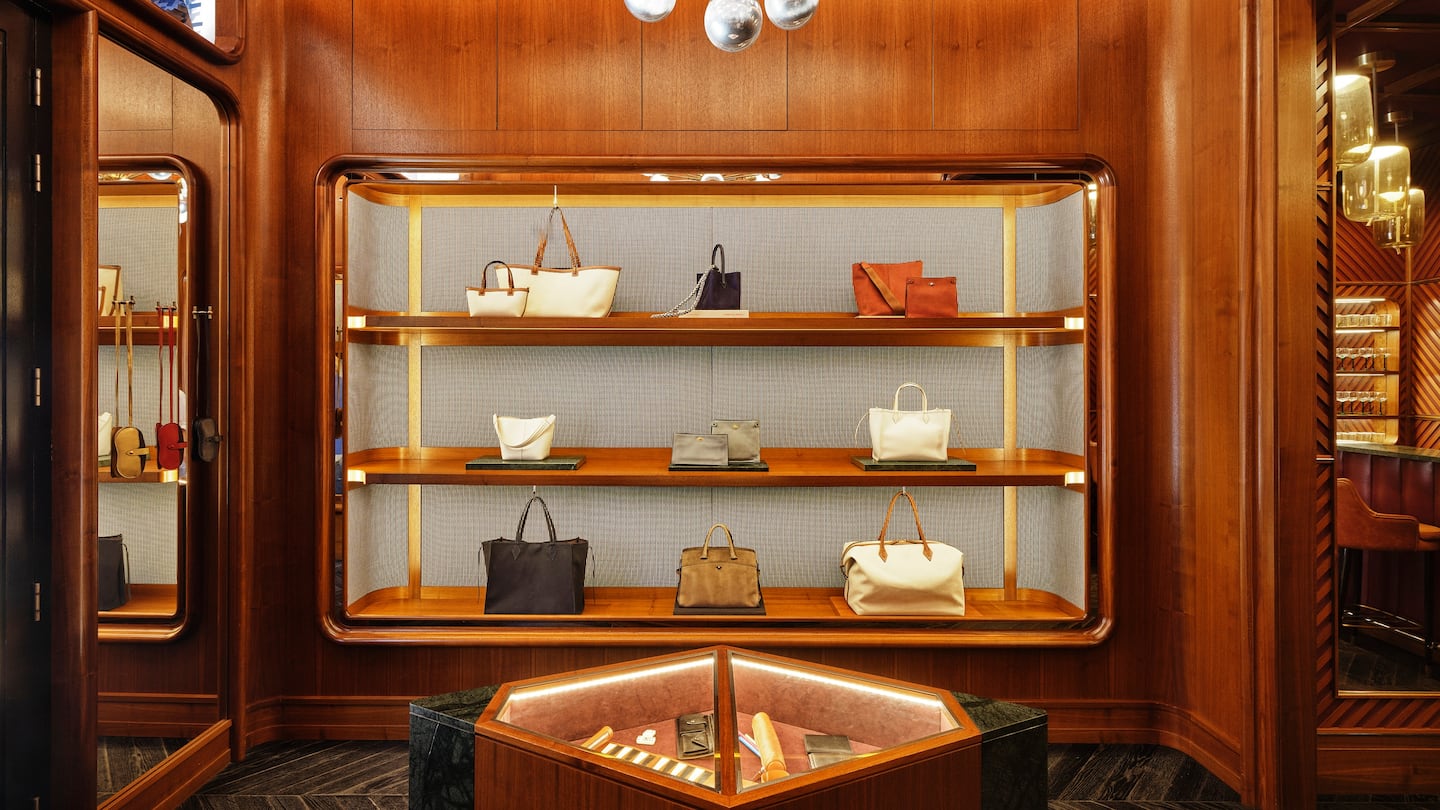
LONDON — It’s been a decade since Melissa Morris founded her leather goods startup Métier, best known for selling £3,650 ($4,900) Private Eye handbags and suede weekenders out of its original store on South Audley Street in Mayfair.
Its discreet branding — an antidote to the logo-driven designs that dominated luxury in the 2010s — and a design ethos focused on functionality and classic style have helped power word-of-mouth momentum for the label, alongside fashion editorials and placements in film and television programmes like “Succession,” which crystallised consumers’ vision of contemporary “stealth wealth” aesthetics.
While Métier is closely associated with a cohort of London-based fashion editors and businesswomen who rallied around the brand’s pragmatic, androgynous angle on style (and whose attendance has made the brand’s annual dinner at River Café a fixture of the city’s holiday circuit), its business is increasingly global. International customers account for two-thirds of sales at the Mayfair store.
Métier is poised to reach operating profitability in the coming months, a crucial milestone for the brand, Morris and CEO Sofia Fagring told The Business of Fashion in a recent interview.
ADVERTISEMENT
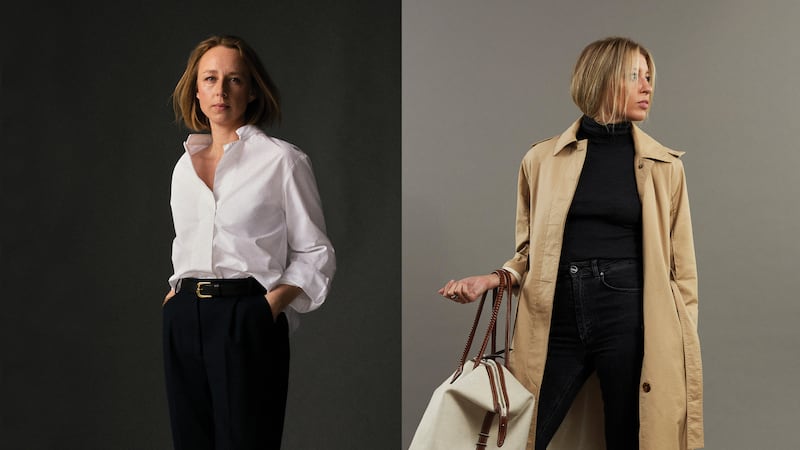
“It’s a great feeling to know we can stand on our own two feet,” Morris said.
“When you start out, everyone comes out of the woodwork telling you what you should do or shouldn’t do, who you should be working with, the best practices. And that’s all true for different businesses, but it’s not necessarily right for you,” she added. “That’s a really scary place to be when you’re trusting your gut to do something different. So having defined our own playbook, knowing that it’s profitable, knowing that our physical retail is profitable, that’s really the best for me.”
The sizeless, seasonless, high-ticket handbag business, with its favourable economics, has long been targeted by fashion brands aiming to drive up profits. But few have managed to crack the category, which is dominated by a handful of global luxury names.
In recent years, founder-led brands like The Row and Brunello Cucinelli have managed to gain a foothold in the category, using ultra-high price tags to signal value while leaning into more discreet branding as an alternative to logo-driven luxury. Growing demand for stealthy luxury goods has lifted Métier’s business, too — albeit at a smaller scale — with sales up 30 percent last year.
(While the company declined to disclose annual revenues, it was small enough to be exempt from UK public filing requirements as recently as 2024.)
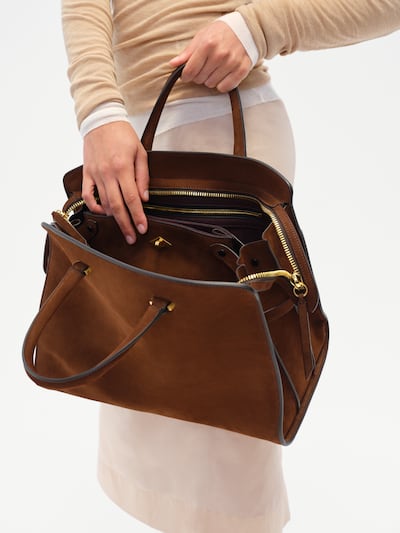
Within that space, Métier has sought to set itself apart with its design philosophy and focused on functionality, with a selling ceremony that borrows a page from the worlds of watches, tech and suitcases. Features like dividers and organisers are presented in a way that rhymes with the male-coded world of “gear” without veering into gadget, resonating with women whose interest in products’ functional aspects is often overlooked. (As it happens, the brand has also caught on with men, who now drive a third of sales.)
“The brand is unbelievably customer-centric. It’s wedded to form and function,” said former Net-a-Porter CEO Alison Loehnis, now a board member at Lululemon and advisor to JPMorgan Chase. “Métier speaks to a customer who wants something distinctive but [who] doesn’t walk into the room before you do.”
Métier’s London shop — decked out in walnut and teak panelling that’s reminiscent of a Riva speedboat — has always been the brand’s beating heart. Physical retail was central to Morris’ vision for the brand, in contrast to many other direct-to-consumer concepts born in the 2010s.
ADVERTISEMENT
“We believe in ‘brick and mortar’ as the cornerstone of what this brand can be,” Morris said in a recent interview at the store. “When we launched here in London that seemed like such an unpopular decision at the time. But we felt that for this category, as a luxury leather goods brand, the way we display leather goods, the way we tell the story of the quality, product, concept ... that needed to be done through us directly.”
While Métier has leveraged third-party retail as a means of growing its audience (Barneys was an early booster, as was Net-a-Porter), DTC accounts for 80 percent of sales, which are divided roughly half and half between digital and physical channels, the brand says.
Now Métier’s South Audley Street flagship is poised to become one of many beating hearts for the business as it embarks on an ambitious expansion plan, which is hoped to include as many as 20 physical boutiques.
The brand is currently in talks with investors to secure growth capital to fund the strategy, which targets multiplying revenue by five over the next five years.
Last year the brand opened its second store on Wooster Street in New York’s SoHo — “a very important test,” according to Fagring, a former equity analyst and real estate entrepreneur who came aboard as Métier’s chief executive in 2023.
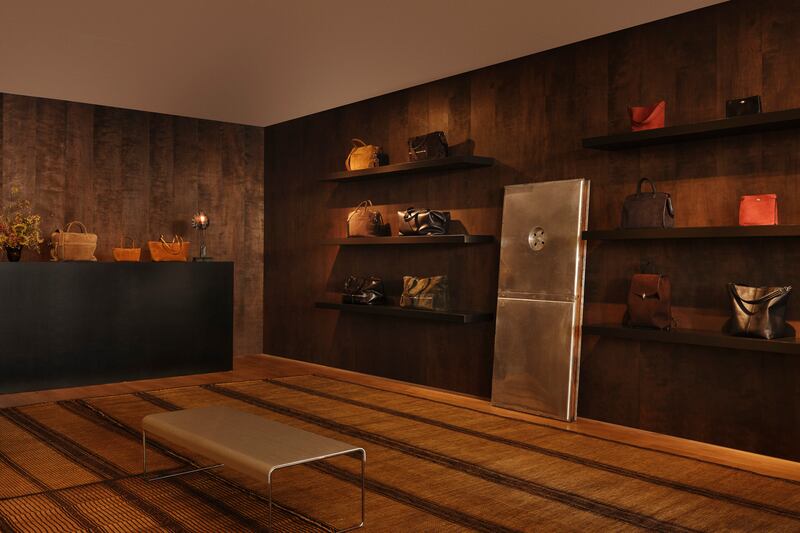
The downtown address lent itself to a different vibe from Mayfair — less old gentlemen’s club, more industrial. But the retail economics were similar: high-ticket items with a long shelf life, sold in a relatively small space.
“The stores are profitable. New York was profitable within the first month and has remained so throughout the period,” Fagring said.
With overall profitability within reach, the pressure is on in terms of continuing to expand the brand’s store footprint — adding one to three stores per year in addition to department store corners and pop-ups — without sliding back into the red.
ADVERTISEMENT
“The key is to sign the right stores at the right pace and timing,” Fagring said. “Of course nothing is going to be perfect. But you plan for everything and model it out.” Options currently being explored include Los Angeles, Paris, Doha and Dubai.
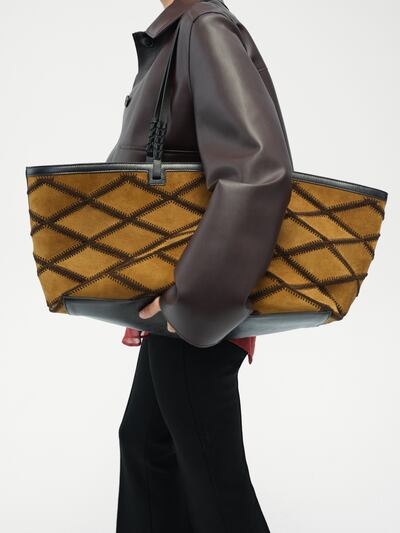
The brand is also mapping out plans for how to scale its image. “My big piece of the puzzle is to make sure that as the brand scales, the voice scales with it, but in a way that maintains what has made it what it is,” Morris said.
Reinforcing the meaning of the brand’s name — “métier” means craft, or trade, in French — is something currently on her to-do list. Engaging with various talents about their respective crafts is one way the brand could tap the power of celebrity as it scales, while staying aligned with its vision for “smart” luxury, Morris said.
Fresh investment will help accelerate Métier’s plans. But the brand says it isn’t in a rush.
“Having reached profitability, we can take our time to find the right partner, who understands what this brand is,” Morris said.
“The idea is to be a real, major player with longevity,” she added.
Loading recommended reads…
In the newly minted role, Nguyen will oversee entertainment, sports and brand partnerships, while continuing to lead Skims’ global communications.
Companies from luxury groups to high-street giants are rethinking what to do with unsold goods in the EU as its ban on destroying excess inventory takes effect. Critics say loopholes in the rules could cause problems.
Fashion and beauty workers are AI optimists — but their employers aren’t keeping up. BoF Careers’ annual survey of 2,926 professionals reveals a widening gap between what talent expects and what the industry delivers.
Chanel, Hermès and Dior lead the pack as 1,173 fashion professionals and aspiring workers from 93 countries tell BoF Careers which brands they most want to work for — and why.