Agenda-setting intelligence, analysis and advice for the global fashion community.
Agenda-setting intelligence, analysis and advice for the global fashion community.


The eight girls who took the stage knew they were making history. For years, the Coachella Valley Music and Arts Festival has hosted a rotating lineup of global acts from the Beastie Boys to Blackpink, but recently Bini became the first all-Filipino act — or P-pop group — to perform. On their bodies were embroidered and cut-out bodysuits in gradient teal-to-cerulean that evoked the Philippines’ Sulu sea; on their faces was Filipino makeup from their own brand, Bini Cosmetics.
The line, which the group launched in 2025, “reflects how we see Filipino beauty,” Bini lead vocalist Gwen Apuli told The Business of Beauty. “Not just one look, but something diverse, expressive and always evolving.”
P-beauty is a growing force in the global cosmetic conversation. A steady swell of soft power out of the US and Philippines, including the popularity of stars like Olivia Rodrigo, phenomena like the Broadway musical “Here Lies Love” or the forthcoming animated film “Forgotten Island,” plus relatively recent instalments of Vogue and Allure Philippines, are fuelling an awareness and creating more mainstream opportunities for Filipino beauty brands all over the world.
A raft of upstart Filipino brands is also beating the global competition at home. “Many P-beauty brands have entered into the market alongside Estée Lauder and L’Oréal and are outpacing foreign brands,” said Steven Tan, president of SM Supermalls, the largest mall retailer in the Philippines. Coupled with the country’s highly online population and robust beauty creator community, Filipino brands are known for their performance-driven products, often made to withstand an extremely humid climate and dizzying daily commute while providing a high colour payoff that stands out on social media videos and tutorials.
ADVERTISEMENT
As Filipino creators accelerate P-beauty’s growth, Filipino brands and retailers are delivering on newness and innovation at a quicker pace than most other markets, shaping a compelling new category of beauty that is socially driven and centred on Filipino culture and daily life.
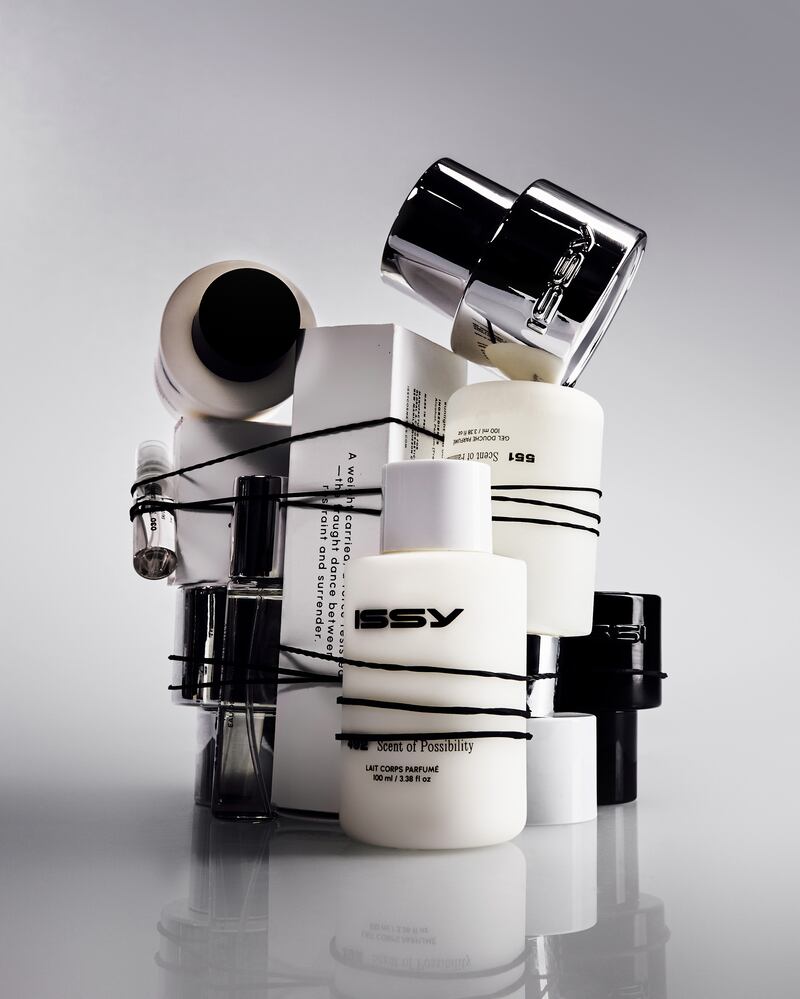
But, for many Philippines-based beauty brands, which were built originally to solve very specific Filipino consumer needs, the tension in expanding sits in operating with far smaller budgets and resources compared to global beauty companies. Foreign brands entering the Philippines already come with large-scale manufacturing and distribution capabilities along with years of international brand equity behind them, said Joel Martin Andrade, founder of popular P-beauty brand Issy & Co. “Filipino brands trying to move outward are often building those systems from scratch while simultaneously trying to compete globally.”
Plus, there is the challenge of perception and education around P-beauty. While terms like “French beauty,” “K-beauty” or “J-beauty” already carry built-in associations and trust internationally, Filipino beauty is relatively new as a category.
“Part of the challenge is simply introducing the idea that high-performing, innovative beauty products can come from the Philippines, too,” Andrade added.
Unlike some Western beauty markets, the Philippines’ beauty scene centres on the mall: An average of over five million mall-goers enter one of SM Malls’ 90 locations in the country daily, 77 of which include a beauty offering.
In 2020 SM opened its first flagship for the premium specialty retailer Look At Me Beauty Hall at SM Supermalls. Conceptualised by SM group and Hong Kong-based drugstore chain Watsons, Tan said Look addresses the need for an elevated beauty offer that carries both foreign and local brands in one immersive space. There are currently three Look locations inside SM Malls which sell established Western brands next to a selection of local Filipino brands.
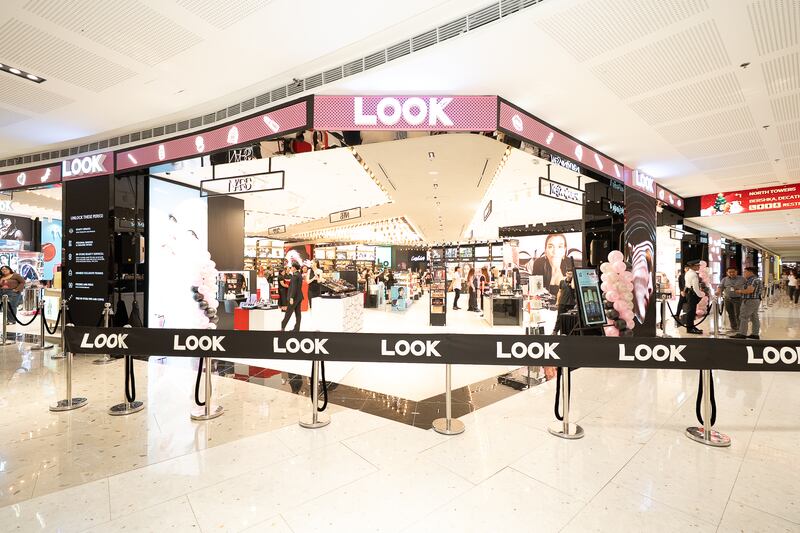
“Ten years ago, all beauty in the Philippines was price-driven,” Tan added, but more recently, brands are ticking up into the mid-market and more premium price points.
At the end of 2025, SM expanded their SM Beauty concept which sells brands like Dior, Lancôme and Clarins, alongside more than a dozen local brands, to include hair colour and makeovers. Both Look and SM Beauty’s P-beauty assortments range from legacy Filipino beauty brands like Ever Bilena and Nichido to mid-market players BLK, Happy Skin and Sunnies Face. Both retailers also include “Findies” or Filipino Indie brands like GRWM, Issy & Co and Vice Ganda. Six months ago, P-beauty comprised 5–10 percent of the store’s offering. Now it’s 35 percent.
ADVERTISEMENT
“P Beauty brands know their market, they know the Philippines.” He says. “Our skin tone is different from the West. They know the challenges we’re facing and their offering becomes more credible.”
P-beauty has piqued global interest mainly on its reputation for product performance, inspired by the Philippines’ unique climate and culture.
“Beauty here evolved very functionally because consumers learned to make products work harder for them,” said Andrade. He describes the Philippines’ climate as “consistently hot, humid and sunny.” (If it’s not sunny, “it’s a typhoon.”) Issy & Co’s All Day Setting Spray went viral when a beauty creator on TikTok documented how her makeup remained intact through a tropical storm.
With heavy traffic and an unreliable train system — the country has a population of 117.7 million spread out over 7,000-plus islands — it is not uncommon for many Filipinos to face a two- or three-hour daily commute, often traveling by open-air “jeepney” vehicles that are the country’s most popular mode of public transport, or by motorbike taxis called Angkas. “After multiple jeepneys or putting the Angkas helmet on, then off, all before arriving at work, where you’re expected to look polished, makeup here has to work incredibly hard,” said Andrade.
Filipinos’ long-standing reverence for beauty pageants require products that stand up to sweat and stage lights. “Pageants are like a national sport for us,” said Rachelle Bravo, owner of New Lounge, a salon specialising in lash extensions, brow lamination and manicures, with 16 locations in the Philippines and a flagship spa in Beverly Hills. Pageants have become a platform that helps define beauty standards, representation, and aspiration for many Filipinos around the world. To date, four winners of the Miss Universe pageant have been from the Philippines, ranking it among the top five most-crowned countries in the global contest.
Widely poor economic conditions throughout the country also drive the need for lower-priced, yet high-performing products that Filipinos resourcefully stretch or reimagine. The Filipino blush trend on TikTok — which involves painting a bold shade of blush across the face in a “w” shape on a powdered complexion — is rooted in this reinvention and common characteristic of Filipinos to adapt. Andrade said the “unofficial beauty look of the Philippines” is “gandang pulbo at lip tint,” or beauty achieved through baby powder and lip tint.
The American-Filipino journalist and beauty creator Kristina Rodulfo noticed it when scrolling TikTok one day: The Filipino term “bebot,” meaning “pretty woman” in Tagalog, pierced through the screen like a siren, as frame after frame of fellow beauty creators applied icy-toned eyeshadow, defined sharp eyebrows and emphasized their olive complexions with bronzer, resulting in a Y2K-coded aesthetic reminiscent of the early 2000s’ Filipino nightclub scene.
The Philippines is one of the most digitally connected countries in the world — 81.9 percent of the Filipino population uses social media and for an average of three hours and 32 minutes a day — more than an hour above the global average, according to a 2026 report from consumer insights company, Meltwater.
ADVERTISEMENT
Social media has been a fast highway for P-beauty growth. “Filipinos watch a lot of TikTok and that has really helped us push the needle,” said Jacqe Yuengtian-Gutierrez, the co-founder and chief executive of P-beauty brand BLK, which has been aggressively marketing on the platform. P-beauty brand BLK recently surpassed Maybelline as the #1 cosmetic brand on TikTok Shop Philippines.
“Beauty here is communal,” said Andrade. “Trends move extremely fast because everyone participates in the conversation online.” He also credits “budol” culture, a term used to describe playfully convincing people into buying products because of reviews or hype online, for how quickly P-beauty has grown.
“It’s Filipino collectivism versus American individualism,” Rodulfo said of the communal spirit that fuels much of the need for connectivity Filipinos find through social media. “Our community is very good at galvanising and supporting one another.”
Social media has caused P-beauty to surge rapidly, but many see a deeper cultural shift and amplification of Filipino pride among younger generations as the foundation for why the category is gaining worldwide popularity.
“What’s changed most dramatically in recent years is the confidence around being distinctly Filipino,” said Martine Ho, a co-founder of Sunnies Face. “In the past, there was more emphasis on Western ideals of beauty or positioning local brands in relation to global ones. Now, there’s much more pride in creating brands that are rooted in our own climate and culture.”
Aiah Arceta, of Bini, echoed this sentiment. “People are more open to celebrating beauty that looks like them.”
Sign up to The Business of Beauty newsletter, your complimentary, must-read source for the day’s most important beauty and wellness news and analysis.
The nation is a major exporter of entertainment, fashion and cuisine, but its skincare and cosmetics output has contracted recently as global competitors have gained.
A new wave of South Korean conglomerates are ascending the ranks of the world’s largest beauty companies.
Canadian chain Sukoshi is expanding into the US quickly, having opened six stores since the start of 2025 vending a variety of beauty products from Korea, Japan and China. It enters a crowded market, but wants to set itself apart as both a specialist and a generalist.
Melissa Magsaysay is a contributing writer at The Business of Fashion. She is a LA based journalist and entrepreneur who writes about fashion and beauty.
Loading recommended reads…
According to documents the ultra-fast-fashion company filed in connection with its planned Hong Kong IPO, Shein is cooperating with the investigation and could face significant fines.
The billionaire Mike Ashley’s investment arm disclosed Tuesday it holds an interest worth a potential 4.2 percent of the voting rights in Burberry.
The Franco-Italian eyewear maker reported a 15 percent rise in first-half profit, beating expectations, while revenue growth was driven by strong demand for AI-enabled glasses myopia products.
Leahy joins the wearables brand from Glossier, where she was chief executive for three years.