Agenda-setting intelligence, analysis and advice for the global fashion community.
Agenda-setting intelligence, analysis and advice for the global fashion community.

Despite the torrential downpours here in New York, we are officially in the throes of summer. I can’t believe how fast the season has gone and I have yet to get some real time off. I guess that’s life with a two- and four-year-old. I’m ready for August!
I’ve got a newsy briefing for you this week — special thanks to Daniela Morosini for her insights on Fenty Beauty, below. Let’s get started.
Read more for:
Many makeup brands are struggling to secure investors and retain relevance — Merit is managing to do both.
ADVERTISEMENT
The cosmetics label, known for its “five-minute morning” and utilitarian products like its Minimalist foundation ($38) and Flush Balm blush ($30) has somehow captured wallets and mindshare without a celebrity or makeup artist founder or even TikTok virality. Its business has been steady — clocking $200 million in retail sales last year — and is the kind of operation that is piquing investor interest, too.
When Merit launched in 2021, it had a slew of notable backers — L Catterton, MarcyPen Capital Partners and Sonoma Brands. Now it’s now adding one more bold-faced name: Vasiliki Petrou, founding chief executive of Unilever’s Prestige, via her first investment at private equity platform Semcap. (After leaving Unilever last summer, she joined Semcap as managing partner in February.)

Petrou found Merit’s values to be in line with her own.
“I’m obsessed with curation,” she told me. “I always wonder if a brand is going to be around in 10, 15 years, not here today and gone tomorrow. In Merit, I saw all the signs of a timeless brand.” She declined to disclose the size of Semcap’s minority investment.
Petrou’s thoughtful and direct decision-making usually means her bets are spot on. Think of Hourglass, Dermalogica or more recently, K18. (I routinely peppered her with questions over the years of if a brand was going to make it; almost always when she said they wouldn’t, they didn’t.) Beyond the product, Petrou was particularly attracted to Merit’s client base — firmly in the Millennial and Gen-X cohort.
Merit chief executive Philippe Pinatel said that Petrou offers “an expertise beyond the typical growth conversations,” that brands have with investors, whether it’s launching new products or entering a new distribution channel. “She has a lot of practical experience, and the gravitas and maturity to think through difficult and important decisions.”
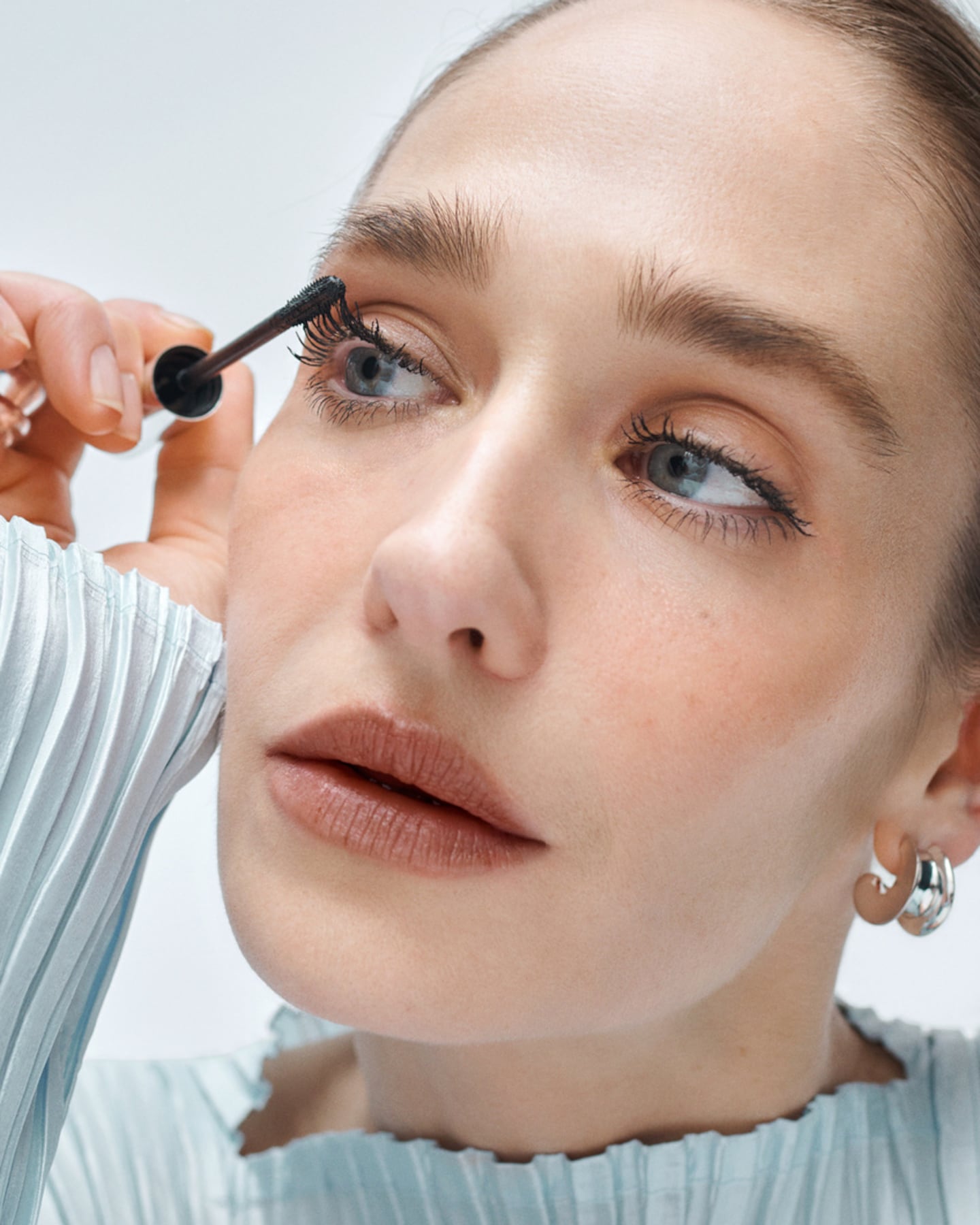
Merit isn’t on the growth at all costs flywheel (lots of products, lots of partners), though it is experiencing double digit growth, said Pinatel. In fact, the promotion for its latest launch, the Clean Volume Volumizing Tubing Mascara, starring artist and actress Jemima Kirke, is expected to be the main conversation the brand is having for the next three months, said Pinatel. Early results seem to be paying off; It launched as the #2 ranked mascara at Sephora when it debuted last month.
At a time when other colour cosmetics brands are veering too far from their roots, Petrou believes that makeup as a category fundamentally has no issues. She’s not wrong — it still accounts for a quarter of the beauty market. While other firms and buyers are hoping to find wins in haircare, fragrance or body care, Petrou is happy to go against the grain.
ADVERTISEMENT
“I like that Merit makes the complex clear,” she said.
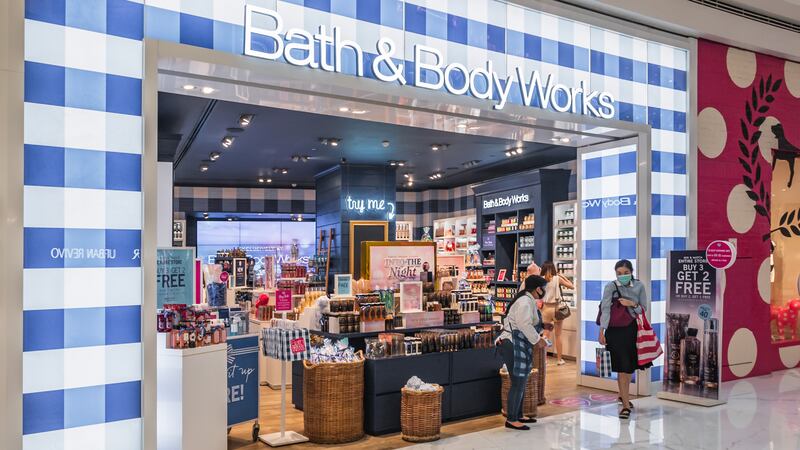
While out in Napa for our Global Forum last month, I heard that Bath and Body Works was bringing its fruity and bright scents to 600-plus Ulta Beauty locations. It’s a retail alliance that makes sense on paper: Ulta is winding down its Target partnership and wants to boost its body-care assortment. Bath & Body Works, meanwhile, is looking to grow its market share in a less capital-intensive way (BBW closed roughly underperforming 100 stores in the last year).
But there is a lot of customer crossover between the two, especially among the tween set and I do wonder what the mall overlap will look like. It neatly meets BBW’s expansion goals with less overhead, as it simply needs to provide inventory and marketing support to Ulta as it does with Amazon, where it launched in February.
But Bath and Body Works’ isn’t giving up on its roughly 1,900 owned stores. Under chief executive Daniel Heaf, it opened more than 90 shops and renovated other existing locations. The Ulta play is more about top-line revenue and de-risked expansion. But let’s be real here, all brands and retailers have decided they need to be everywhere to satisfy the customer, which inevitably leads to some unexpected partnerships; that’s why MAC is now in Sephora, and Ulta Beauty is buddying up to TikTok Shop. Sephora is too; a proposed launch was floated at the start of the year and has yet to be finalised. Sephora did not respond to requests for comment.
Owned stores still have a certain allure: As Daniela explored in June, beauty brands often covet their own doors when they start to feel disgruntled with the big margins they pay in the wholesale. But running your own stores requires a different set of skills, like being great at people management, talent retention and knowledge of knowing the local community. Plus, they are expensive. Glossier, for example, is in the process of closing nine of its 12 stores due to both cost and productivity.
Whether or not these deals give way to further store closures is too early to tell. Insiders told me that MAC is reevaluating its fleet with the hopes of a more streamlined network. (The Estée Lauder Companies did not respond to requests for comment.) Other labels like Chanel and Victoria Beckham are reportedly toying with increasing their store counts; VBB just opened its delightful fragrance-themed pop-up in downtown New York. But it is doubtful that any new locations will match the revenue earned from a bigger partner.
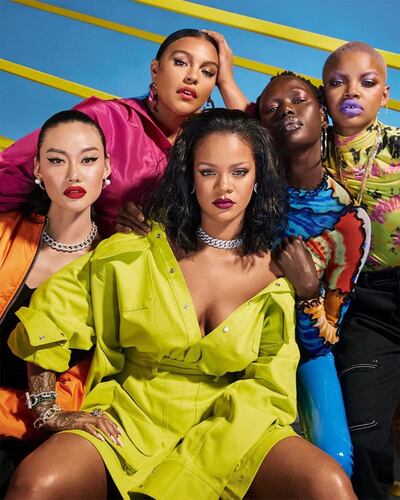
When, almost a decade ago, Rihanna launched Fenty Beauty with 40 (and later expanded to 50) shades of foundation, she put the beauty world on notice. Not only did it force the industry to take celebrity founders seriously, but the line laid bare how few products offered a robust and compelling selection of foundation for deeper skin tones.
Today, an inclusive shade is expected by customers, even when brands fall short.
ADVERTISEMENT
So I was surprised when I saw that Fenty announced on Instagram this past weekend that it is discontinuing its hero foundation.
My first thought was that it was going the same way as Armani Luminous Silk or the Estée Lauder Double Wear, and being reformulated to remove the soon-to-be-banned-in-the-EU cyclopentasiloxane. But it doesn’t contain that. I texted a couple of cosmetic chemist friends who pointed out a couple ingredients, like talc, are under more scrutiny or could be harder to source, but noted the foundation could just be reformulated. I contacted the brand, who said to “stay tuned.” Instagram posts suggest a new foundation product will be launching.
It’s not like the product doesn’t have fans: according to the mournful comments on the post, it will be very missed. But the full-glam, full-coverage look it gives is not what’s trending right now. Even with loyal diehard fans, the foundation’s popularity is likely only being maintained, not sharply growing. Given reports are swirling that LVMH is looking to offload its 50 percent stake, a foundation that appeals to today’s customer, similar to Haus Labs Triclone Skin Tech Medium Coverage Foundation, is likely necessary. The brand may finally be accepting its limitations — which is the first step in starting over.
Leave it to Mco to create a ‘superdupe.’ [The Business of Beauty]
But a Cyklar copycat begs the question: when does duping become plain old theft? [Alex Padgett via Instagram]
Women are foregoing potentially toxic synthetic extensions in favour of cornrows this summer ... All eyes on Ruka, which just launched at Sephora US. [The Strategist]
For beauty’s new crop of celebrity ambassadors: less is more. [The Business of Beauty]
Grim. Teenagers are becoming famous for promoting weight loss peptides. [Air Mail]
Brennan Kilbane’s profile of the next-generation of makeup artists is a must-read. [The Business of Beauty]
Thanks y’all,
Priya
Editor’s Note: This story was updated on July 24 2026 to clarify that Fenty Beauty launched with 40 shades before expanding to 50.
Loading recommended reads…
Sales of gems, precious metals and artwork at Japan’s department stores climbed 19 percent in the first half of 2026 from a year earlier to $2 billion.
Though Adidas dressed both teams in the World Cup finals, the global football tournament still presented some bright spots for Nike, writes Bloomberg’s Andrea Felsted.
From our archive, the creator and host of award-winning podcast “Articles of Interest” joins BoF founder, CEO and editor-in-chief Imran Amed to explore what clothing can reveal about identity, culture, labour and the world around us.
Saunders, the brand’s first creative director in five years and a skilled colourist, promises to give Kate Spade the clarity it has long lacked. Now, Tapestry must apply the same long-term brand-building discipline that fueled Coach’s success.