Agenda-setting intelligence, analysis and advice for the global fashion community.
Agenda-setting intelligence, analysis and advice for the global fashion community.

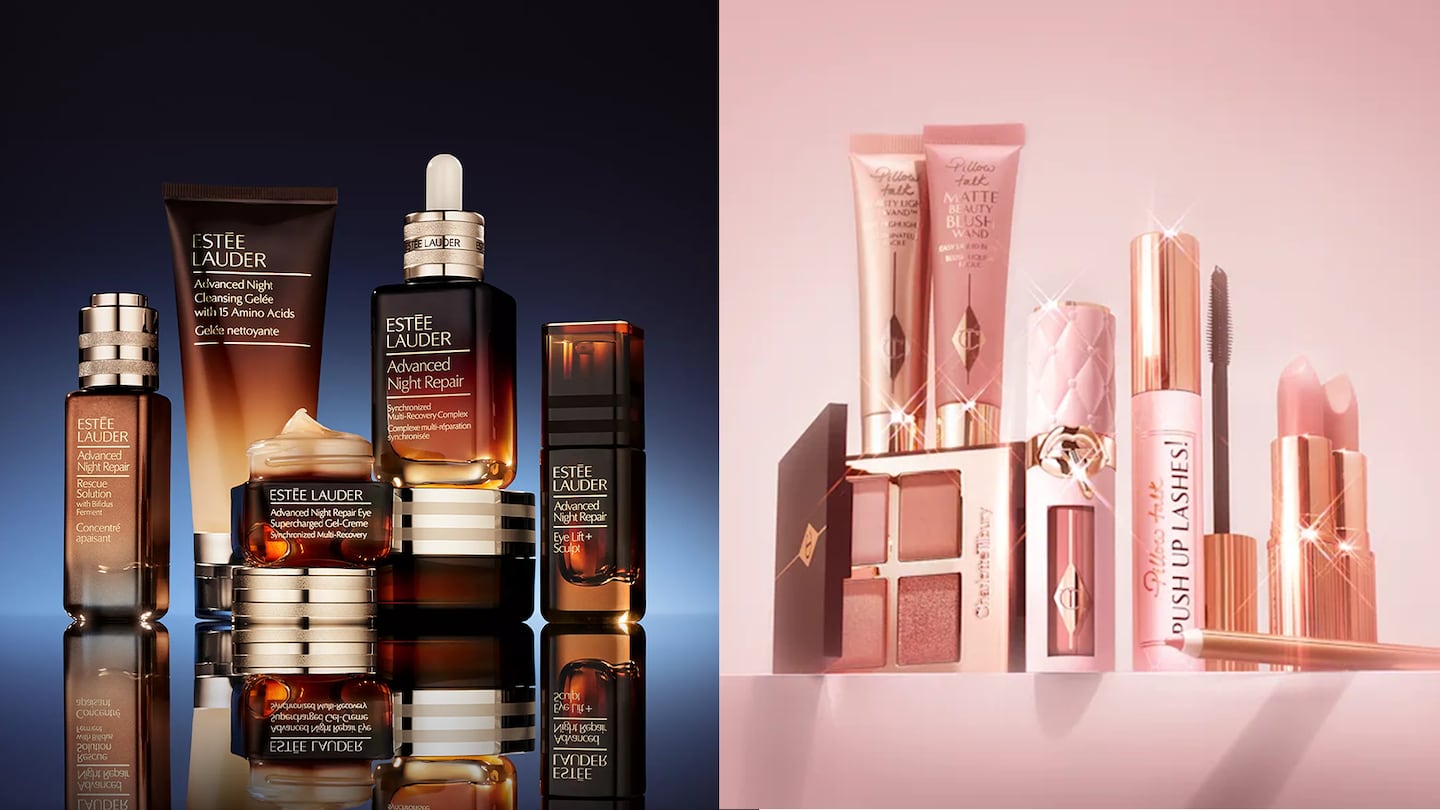
Estée Lauder Companies and Puig couldn’t make it work.
After a two-month period of highly publicised discussions around a potential business combination, the American cosmetics giant and the Spanish beauty conglomerate announced on Thursday that they had terminated their discussions, ending the possibility of a merger.
The two companies had synergies on paper. There’s an attractive stable of prestige brands on both sides — Estée Lauder Companies owns the likes of La Mer, MAC Cosmetics and Tom Ford; Puig has Charlotte Tilbury, Byredo and Rabanne — that would theoretically complement one another without cannibalisation. Linking up would also represent diversification through unification. Estée Lauder excels at skincare and is growing its perfume presence, and while it has a global icon in MAC Cosmetics, its broader cosmetics offering could use fresh thinking. Puig, with cult names like Byredo and L’Artisan Parfumeur and designer labels like Carolina Herrera and Jean Paul Gaultier, has mastered fragrance and has a modern hit with artistry-led makeup line Charlotte Tilbury, but is still working on its retail footprint and broader geographic expansion.
Though talks of a deal were said to be progressing, Spanish paper Expansión reported on Tuesday that Tilbury was attempting to negotiate a change to her earn-out structure if control of the company changed. This could have created a multi-hundred-million-dollar outlay for Puig, which Estée Lauder Companies was not willing to assume, according to sources close to the company.
ADVERTISEMENT
The reality is the collapse of a Lauder-Puig merger, which would have given the companies more scale to compete with the world’s largest beauty company, L’Oréal, was far more multifactorial. Investors were unconvinced of the deal’s potential to solve Estée Lauder’s underlying brand modernisation needs — or to do much beyond generating hefty integration and administrative costs.
While the two companies positioned the talks as a possible merger, implying a combination of peers, the market saw things differently.
Estée Lauder’s stock sank 16 percent when news first broke of the potential merger in March. Puig’s, however, rose 15 percent. That inverse correlation reflects the discrepancies investors saw: For Puig, which has only been a public company since 2024, linking up with an American-listed legacy firm with a market capitalisation some nine times greater than its own would represent new scale.
For all its recent struggles, Estée Lauder Companies has far greater global reach and portfolio diversity than Puig. Its stock sank because investors read the possible merger as the company losing faith in its own turnaround plan. Since February 2025, it has been engaged in its Beauty Reimagined strategy, a four-pillar plan to reinvigorate its business by investing in consumer-facing initiatives and improving its speed to market led by newly installed chief executive Stéphane de La Faverie. None of the strategies included finding growth by merging with another firm, nor were they solved for with Puig specifically.
Refining Estée Lauder’s brand portfolio and channel strategy is key to its future success. While Byredo and Charlotte Tilbury, which it was originally in talks to acquire, are desirable brands, they don’t sufficiently patch up the company’s greater holes. (Talks to sell Too Faced, Smashbox and Dr. Jart are ongoing.) And as Estée Lauder no longer has a safety net in China, it needs diversification in Europe and emerging markets like India and the Middle East. Both companies are still very reliant on department stores, though Charlotte Tilbury is a top-seller at Sephora and MAC Cosmetics recently entered the retailer; the two firms were later adopters to Amazon.
The stock dip also likely represented caution around increasing Estée Lauder’s exposure to fragrance. In 2025, fragrance made up about 17 percent of Estée Lauder Companies’ overall sales, up from 7 percent in 2020. But for Puig, which derives more than 70 percent of its revenues from fragrance, adding in more skincare and makeup brands would assuage investors’ concerns about its ability to substantially grow its future revenues. Its stock has fallen some 30 percent since its 2024 initial public offering following cautions that fragrance’s once-bombastic growth rate is slowing.
Mergers are complex, thorny and protracted. A business combination of this calibre would likely take years to fully integrate, generate millions in administrative and capital expenditures and create bottlenecks. A new company would not be focused on further incubation or acquisition. The confirmation that the merger was off the table saw positive sentiment from investment banks, including Citi and Raymond James, both hailing in notes that Estée Lauder can now avoid execution risk and better focus on its turnaround.
Coty’s 2016 acquisition of 43 of P&G’s beauty brands in an $11.4 billion deal is the closest analogue to the aborted merger. It made Coty into the third-largest beauty company in the world, but in the years that followed, it had to offload many of those brands. Its stock has cratered 92 percent in the last ten years, and it has struggled to remain competitive and consistently excel, even with a trimmed version of the portfolio.
ADVERTISEMENT
At the start, mergers can seem like a synergistic fusion of two companies’ strengths, with hopes that they can cancel out their weaknesses. But if the goal was to make firms more competitive, the risk profile was asymmetric. Lauder-Puig could have made for a modern mega-conglomerate, but it also could have very easily ended in goodwill write-offs, impairments and a complicated company structure.
Sign up to The Business of Beauty newsletter, your complimentary, must-read source for the day’s most important beauty and wellness news and analysis.
Want to dive deeper into an insight from this article? Check out The Brain of Fashion, BoF’s new generative AI tool where you can unlock BoF’s beauty archive with a single question.
The Spanish owner of Byredo, Rabanne and Charlotte Tilbury and the American conglomerate confirmed on Monday that they are in discussions to combine their businesses. A merger could reshape the beauty and fashion landscape.
International sales at brands like La Mer and Le Labo are improving, but the cosmetics conglomerate is still struggling to connect with American consumers.

Daniela Morosini is Senior Beauty Correspondent and Special Projects Editor at The Business of Beauty at BoF. She covers the global beauty industry, with an interest in how companies go to market and overcome hurdles.
Loading recommended reads…
The sunscreen label has appointed former Coty executive Jamie Parker to the newly created role as it gears up to become a “global skin health company.”
The underwear juggernaut has been hard at work revitalising its offer by returning to its glamorous roots. But its massive cosmetics and fragrance business has been slower to transform.
LuxExperience posted a rise in sales as the luxury multibrand platform’s strategy of catering to the ultra wealthy helped it navigate a difficult environment for high-end fashion.
The former Versace designer is set to open a new aesthetic era at one of Giorgio Armani’s biggest lines. The appointment marks the Italian fashion empire’s first creative shake-up since its founding.