Agenda-setting intelligence, analysis and advice for the global fashion community.
Agenda-setting intelligence, analysis and advice for the global fashion community.

For most of the past three decades, Dubai was primarily a regional distribution hub for international beauty brands: products flowed in, local distributors placed orders and the Emirate mainly re‑exported or distributed to nearby markets.
That dynamic is now shifting as Dubai‑based brands and manufacturers expand exports and regional production. It is against this backdrop that Beautyworld Dubai returns for its 30th edition. Formerly known as Beautyworld Middle East and organised by Messe Frankfurt Middle East — the Dubai-based subsidiary of the German trade fair group Messe Frankfurt — the show is one of the world’s largest beauty trade fairs.
Between 6 and 8 October 2026, the event will take over the Dubai World Trade Centre once again, with exhibitors spanning raw ingredients, packaging, finished cosmetics, fragrances and new salon technology.
Huda Kattan built the global cosmetics brand Huda Beauty in Dubai in 2013, while Kayali, founded by her sister Mona Kattan in Dubai in 2018, was the top fragrance brand at Sephora US in the first half of 2025, according to YipitData.
A standout category in the UAE is fragrance exports. The Gulf nation has become one of the top exporters of perfumes, with overseas fragrance sales amounting to roughly $2.7–$3.0 billion in recent years, according to the United Nations Comtrade database.
Emirati houses such as Lattafa and Armaf have scaled via Amazon US and offer competitive price points and scent profiles in mass-market tiers. A 2025 report by Spate and YipitData shows Lattafa’s fragrance market share has more than doubled from early 2023 to early 2025. The brand also generated $4.9 million in US TikTok Shop revenue in May 2025 alone.
Beautyworld Dubai returns to a market that is still expanding: revenue in the Middle East and North Africa (MENA) beauty and personal care market is projected to grow from $51 billion in 2026 to $62 billion by 2031, according to Statista Market Insights.
The programming will also host a roster of live events with speakers from across the global beauty industry, unpacking the trends, challenges and opportunities shaping the year ahead.
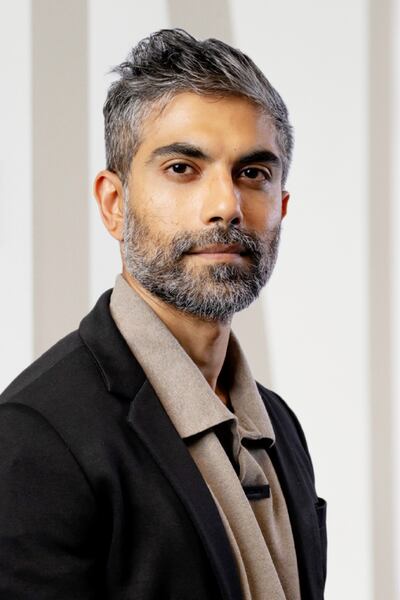
“We are a trade show, but we are also a source of knowledge for people within the beauty industry,” Ravi Ramchandani, show director of Beautyworld Dubai, told BoF.
The Next in Beauty conference track will tackle pressing industry developments, including the integration of AI in beauty, the surge in men’s cosmetics, the rise of biohacking and longevity and the growing influence of Gen Z and Gen Alpha consumers.
Speakers include leaders such as Mia Collins, director of beauty at Harrods, alongside a curated line-up of emerging brand founders, including Sanjana Balani of the Indian biotech skincare brand Potion and Daniel Leese, founder of the UAE-based men’s skincare brand Andsom Skin.
Similarly, the Next in Fragrance conference programme will host master perfumers, trend forecasters and brands as they explore the growth of genderless scents, innovative perfume formats and the role of AI in ingredient discovery and virtual try-ons.
Now, BoF sits down with Ramchandani to learn more about what’s next for beauty in the MENA region, the key consumer insights that the event will highlight and how it plans to tackle the growing influence of AI on beauty.
How has Beautyworld Dubai evolved since its first edition?
We started in 1996 with about 60 exhibitors and 4,000 visitors from 17 countries, as a pure marketplace. You came, saw a product and placed an order. Our last edition welcomed 85,000 visitors from 178 countries.
Two things explain that: Dubai is where East and West converge, and the region’s own brands going global now pull the world here. The show has grown along two tracks. On the trade side, Beautyworld Dubai is today one of the world’s largest fragrance trade shows by exhibition space covered, with more than 100 fragrance houses taking part, including DSM-Firmenich, Givaudan, Symrise, Takasago, Robertet and Mane.
On the content side, the experience has caught up. Last year, our Makeup Studio was headlined by celebrity makeup artist Hung Vanngo. This year, we have three headliners: Patrick Ta, founder of his namesake beauty brand, and Mary Phillips, founder of M.ph, lead the Makeup Studio, while celebrity hairstylist Dimitris Giannetos headlines Beauty Live, our dedicated stage for salon professionals and hair brands. Each will conduct a two-hour live masterclass on stage.
In light of recent geopolitical conflict, why do you feel it’s important to reunite the global beauty community in Dubai?
It has been a challenging year. However, the beauty business is a long-term game. The fundamentals of Dubai and the region haven’t changed and the need to meet and plan ahead matters more than ever during difficult moments.
Ulta Beauty opened its first store in Dubai in January 2026 and has just opened its second at Dubai Mall and a third is on the way. That is three stores in six months, with Saudi Arabia planned to follow. American retailers do not move at that speed in a market they doubt.
Similarly, L’Oréal took a minority stake in Amouage, and Coty built Jawhara, an Arabian-inspired collection it now sells on Amazon in the US.
How will the show cater to the region’s deeply rooted niche fragrance market?
Fragrance here is a daily ritual, and the consumer is young, has high disposable income and is ingredient-literate. They know their Oud grades [a measure of the resin’s quality and rarity]. They judge a perfume by the juice rather than the logo, they respond to brands that tell a real story and they will pay for quality. You can see it across the city, where niche houses are retailing through department stores or opening standalone boutiques.
The show has catered to this demand for a decade. In 2015, we launched Quintessence, a dedicated niche perfumery section within Beautyworld, with 15 brands. By 2025, it had grown to around 100, outgrowing the section.
In the West, fragrance is now 28 percent of US prestige beauty sales, per Circana, with niche driving much of the growth, yet the category has no global trade platform in the region where fragrance runs deepest.
So in January 2027, we are giving the category its own stage. Notes Dubai, a standalone trade event dedicated entirely to niche perfumery, will open at the Dubai Mall Exhibition Centre, bringing three groups into one room: young independent houses, including those from the region; international buyers; and global niche brands looking to meet the regional distributors who can open the Gulf for them. The platform began with Notes Shanghai, which opened the East for niche perfumery. Dubai opens it to the world.
How is AI shaping consumer shopping behaviours and evolving how brands operate in the region?
Internet penetration here is high and our population is one of the youngest. We call Gen Alpha “power consumers” not because they spend the most, but because they shape household shopping decisions earlier than any previous generation.
They are fluent in the digital space, making the most of tools like ChatGPT and Claude. This is where AI changes the game for brands, and it’s a shift most brands aren’t paying attention to. Young consumers are increasingly asking AI assistants what to buy, which serums work and which fragrances suit them. If your brand does not surface in those answers, you are invisible in the channel where the next generation is forming its preferences, and that channel is only going to grow.
AI is remaking the creation side too. Givaudan uses a tool called Carto, which allows a perfumer to work on a touchscreen and have a robot produce a sample instantly, a process that used to take days. AI handles permutations and data, but it will not replace perfumers, who still make the creative calls.
How are key wellness themes like longevity evolving in the Gulf?
Consumer interest here is shifting from traditional anti-ageing toward long-term health performance and biohacking. It’s no longer just about what goes on your skin, but about beauty from within.
According to the Global Wellness Institute, the UAE and Saudi Arabia ranked first and second globally for wellness market growth between 2019 and 2024, with annual growth rates of 14.3 percent and 12.2 percent, respectively.
Walk into Life Pharmacy, the UAE’s largest pharmacy chain with more than 600 stores, and half the floor is supplements, skin health and beauty from within — it has turned into a wellness destination.
However, much like Gen Alpha, wellness consumers want science-backed ingredients and true efficacy. In that context, regulation is vital. In June 2026, the ruler of Dubai, His Highness Sheikh Mohammed bin Rashid Al Maktoum, launched the Dubai Longevity Authority. This new government entity aims to develop Dubai as the world’s leading hub for regulated longevity, wellness, advanced healthcare and investment in life sciences.
What mindset should brands adopt to build lasting success in the Middle East?
It is a fruitful market, but it requires effort. The first mistake brands make is treating the region as one market. What works in Dubai Mall does not automatically work in Riyadh, and the buyer profile, retail mix and cultural codes differ market by market.
The market also has its own logic, starting with the climate. In this heat, fragrance behaves differently, so consumers expect stronger concentrations and longer wear, and they layer scents rather than wear a single one.
The brands that take this seriously build for the region rather than shipping the global range. Louis Vuitton has developed an entire collection around the region’s perfume heritage, from Ombre Nomade to Fleur du Désert, and niche houses like Roja have created editions dedicated to the Gulf. With some of the highest per-capita spend on beauty in the world, the potential is vast, but the brands that win treat the Gulf as a first market, not an add-on.
How is the GCC’s (Gulf Cooperation Council) role in the global beauty industry evolving?
Most executives still think of the GCC as a destination market and track inbound flows. They are not tracking the outbound flows that have started to matter more.
The strongest evidence is in fragrance. Lattafa, Armaf, Rasasi, Afnan and the wider UAE fragrance economy compete directly with mainstream Western brands in the US, on price and scent profile. These are not boutique exporters. They are vertically integrated manufacturing and distribution operations that built their supply chains over a decade and now sell at scale.
In beauty, the next wave is following the path Huda Beauty opened. Moonglaze became the first Saudi beauty brand at Selfridges London in late 2024 and the first Saudi brand at Sephora Middle East in February 2026.
The capital is moving in the same direction. Saudi and UAE startups raised $3.1 billion in venture capital in 2025, according to MENA-focused startup data and market intelligence platform Magnitt. The money is arriving because these brands are seen as exportable.
This is a sponsored feature paid for by Beautyworld Dubai as part of a BoF partnership.
Loading recommended reads…
The jeweller lost $2.1 billion in market value after forecasting first-half 2026 revenue growth of up to 66 percent, a sharp slowdown from last year that unsettled investors in one of China’s most viral consumer brands.
Unilever upgraded its annual forecast on Tuesday, as consumers reached for brands like Vaseline and Dove despite household budget concerns stemming from the Iran war.
Johnson & Johnson on Monday said it agreed to a $5.5 billion commitment to resolve years of litigation related to claims that its talc products caused ovarian cancer.
The country’s beauty companies are utilising the technology to compress lengthy development timelines, and deliver trendy ingredients such as PDRN faster than ever.