Agenda-setting intelligence, analysis and advice for the global fashion community.
Agenda-setting intelligence, analysis and advice for the global fashion community.

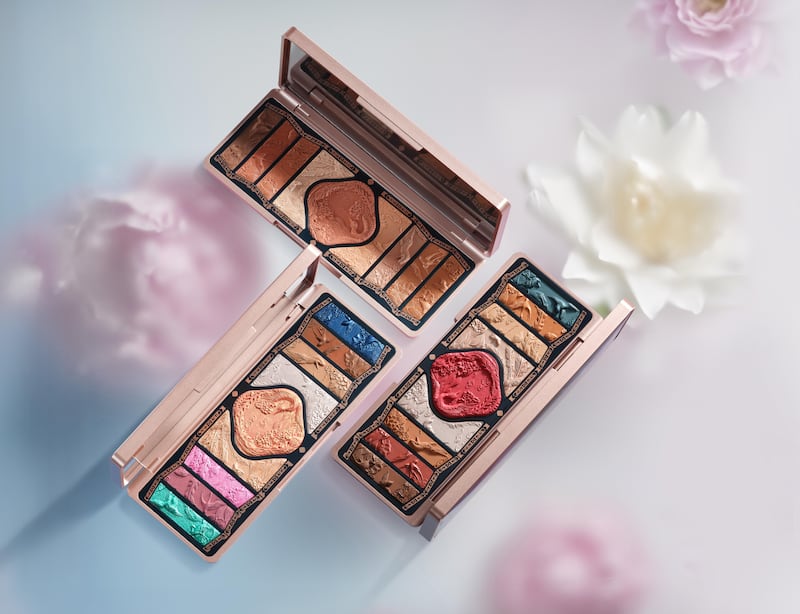
When Chinese makeup brand Florasis launched at Ulta Beauty in November 2025, it faced what ultimately became a problem: too many customers were buying its intricate eyeshadow palettes, with the pearl powders bearing dragons, phoenixes and peonies.
“Every time when we would restock, it would sell out within three weeks,” said Gabby Chen, president of global markets at Florasis.
The brand’s Flower Goddess makeup palette has been sold out for nearly a year, while its Phoenix and Eastern Beasts palettes are also out of stock at the beauty retailer.
Chen said that Florasis was just able to sort the inventory issues this month and prioritised “sufficient inventory for the whole Q4.”
ADVERTISEMENT
The makeup label’s rush to fill emergency orders shows that its bet on Ulta Beauty and the US market was more successful than it had predicted. According to Chen, Ulta Beauty has been especially “open-minded with foreign brands” as an early mover on C-beauty.
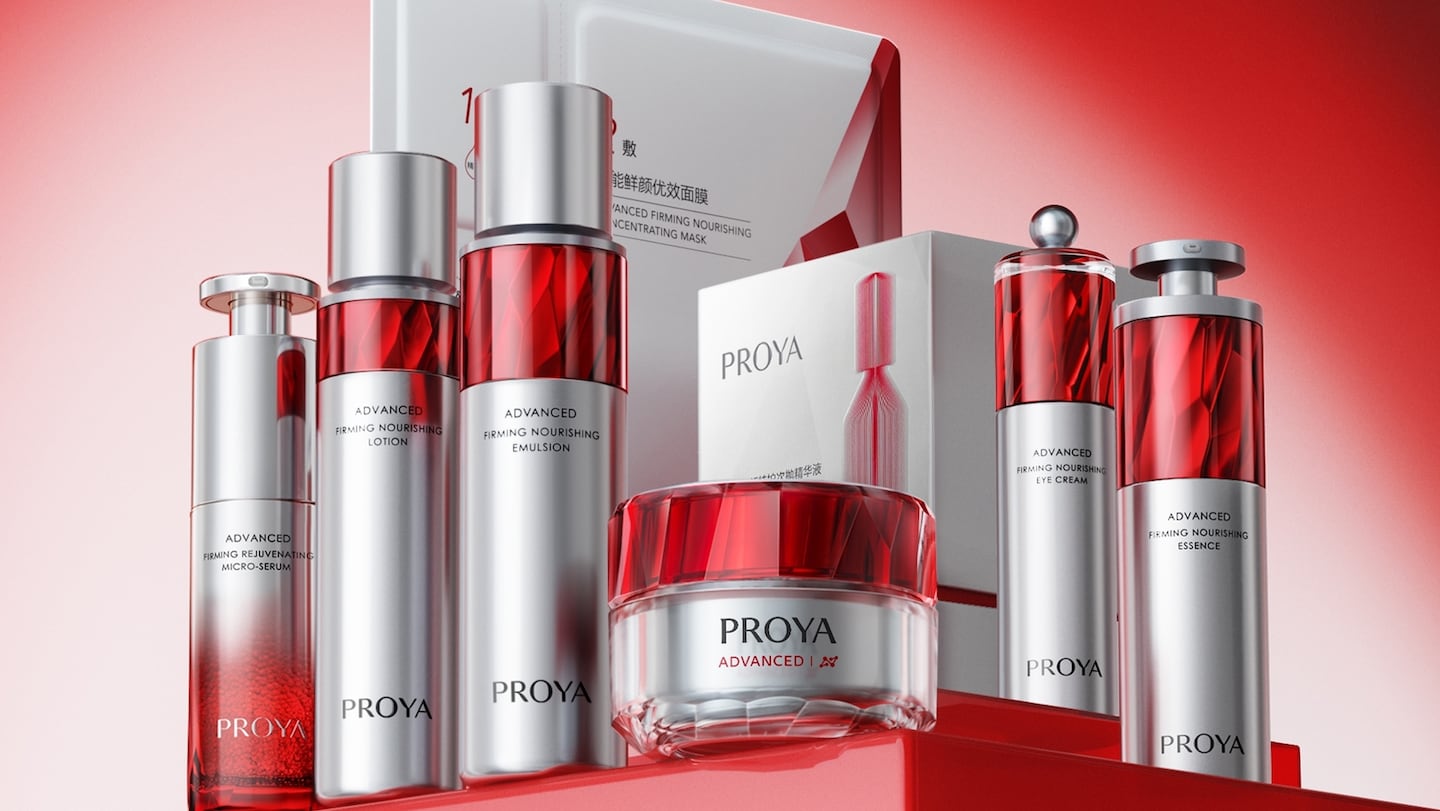
Florasis is one of many Chinese beauty brands that are making their way across the globe. Most recently, China’s largest homegrown skincare brand Proya added Ulta Beauty as a stockist last month. For C-beauty companies, international expansion is prioritised more than ever, and often part of broad ambitions to become top global players.
Proya Group, for one, announced its goal to become one of the 10 largest beauty companies in the world in the next decade in its “double 10 strategy” unveiled in 2025, which heavily emphasises international expansion. Its market cap is approximately $3.4 billion at the time of publication, compared to $8.9 billion for Japanese conglomerate Shiseido and $10.4 billion for Medicube owner APR, South Korea’s newest giant.
But before they can become global leaders, they must find new avenues of growth as China’s domestic beauty market remains shaky. China has been a challenge for international brands for years, with LVMH still in a decline that began in 2023, while Estée Lauder Companies experienced four years of China sales decreases between its 2022 and 2025 fiscal years, only recovering in its 2026 fiscal year.
That slump has caught up with domestic beauty companies. According to China’s National Bureau of Statistics, the country’s beauty market grew by 14 percent in 2021, while 2024 marked a 1.1 percent decline. Growth returned in 2025, but has been uneven. Proya Group, which also owns a 51 percent stake in the makeup label Flower Knows, saw its revenue drop in 2025 before edging up by 0.24 percent in the first half of 2026.
“Until 2024, no Chinese beauty conglomerate needed the rest of the world; now all of them do,” said Ariel Ohana, managing partner at investment bank Ohana & Co., which has overseen several Chinese beauty transactions like S’Young’s acquisitions of skincare brand Révive and Evidens de Beauté.
K-beauty’s global surge has shown the promise of Asian beauty worldwide, but also has cultural advantages over C-beauty such as the universal appeal of K-pop for international markets.
“The contrast with K-beauty is striking. K-beauty is now a $2 billion category in the US and has real soft power behind it,” said Ohana. “Nothing comparable exists for C-beauty yet.”
ADVERTISEMENT
The recent explosion of K-beauty skincare was heavily associated with specific products like sheet masks or tech-y ingredients like PDRN, contributing to a feeling of sameness between brands. Chinese beauty, meanwhile, offers a wider range of propositions and viewpoints, from moody black and burgundy colour palettes for the makeup label Girlcult to a feminine minimalism found in cosmetics giant Judydoll.
“One is girly. One is more gothic,” said Linda Dang, chief executive of Canada-based Asian beauty retailer Sukoshi, of the two labels. “There’s actually a lot more diversity when it comes to Chinese beauty right now.” One rising trend, however, is ornate patterns and packaging, like the traditional Chinese motifs seen on Florasis’ products. And Chinese beauty brands are starting to show their prowess in makeup.
But C-beauty has yet to build up international demand outside of Asia. For fantasy-inspired Flower Knows, China still comprises 90 percent of its sales, although that ratio is changing. C-beauty brands will need to find ways to both differentiate and adapt to local markets.
“You really need education, because people don’t know” about Chinese beauty labels abroad, said Piper Sandler analyst Anna Andreeva. Flower Knows may have been boosted in China by its cosplay influencer founders, Yang Zifeng and Zhou Tiancheng, but in the US, it’s turning to mega influencers and celebrities.
“We were focusing on a community of ‘coquette girls’ on Instagram first, and that helped us to branch out to the mainstream market later,” said Gongyiliu Fang, chief marketing officer of Flower Knows. The Hangzhou-based cosmetics label’s ornate, antique-style mirror was found in Sabrina Carpenter’s hands backstage during filming of her “Manchild” music video after Flower Knows gifted products to her makeup artist. The mirror was also featured on Lana Del Rey’s Instagram organically; a video of Mikayla Nogueira doing a full face of Flower Knows makeup, which received 10 million views, was also not gifted, according to Fang.

China’s beauty market started out as a manufacturing hub for foreign brands, remaining a major producer for many labels such as E.l.f. Beauty even through the US tariff spikes. While older companies include 28-year-old Herborist, 34-year-old Yue Sai and 95-year-old Pechoin, the beauty startup scene sped up in the early 2000s with Proya, Kans, Chando and Mao Geping.
China is “currently transitioning from exporting products to exporting brands,” said Proya head of overseas business Yuli Cai. The pace of launches has become even more furious since the 2010s, which saw the launches of Flower Knows, Florasis, Perfect Diary, Judydoll and Girlcult.
Its local manufacturing can also help speed up the pace for trend-driven startups; Flower Knows releases three new beauty products a year due to easier production.
ADVERTISEMENT
With modern silver packaging, ingredients like retinol and niacinamide and many top celebrity faces like Jackson Yee and Liu Yifei, 20-year-old Proya will need to find a way to differentiate in the US market. Its executives regard Ulta Beauty as a tool for both legitimacy and brand awareness.
“For a Chinese beauty brand new to the US market, this channel endorsement holds indispensable value in terms of brand credibility,” said Cai.
Chinese beauty executives from premium brands are especially focused on this credibility factor, working hard to separate themselves from cheaper lines like Shein’s dupe label SheGlam.
“I always tell my team that we are coming from China; we are the ones who have everything to prove, because people still have the misconception that everything from China needs to be cheap, and probably not good. But that’s not the case now,” said Chen.
International retailers have been happy to oblige Chinese brands’ move abroad.
Two years ago, Chinese beauty made up 5 percent of Sukoshi’s assortment, which stocks Asian labels from Korea and Japan. It comprises 15 percent today, with standout makeup performers including Red Chamber and Girlcult. Sukoshi is planning to grow its assortment in the future, and it isn’t the only one; Urban Outfitters stocks Shanghai-based makeup brand Kaleidos and is looking for more labels to add to its assortment, said Karen Booker, head of merchandising for non-apparel. Florasis will also launch in Nordstrom and Target at the end of this year. This year in March, Flower Knows launched at Boots in the UK.
Retailers are especially interested in reaching Gen-Z customers through Asian beauty brands. That aligns with many of the newer names – Flower Knows, for example, targets ages 15 to 25. Its strategy has been to attract younger shoppers with its elaborate in-store coquette-girl displays.
“We want people to be able to touch the products, appreciate the details in the very consistently presented merchandising, so they can actually understand the world building that we want to present to them,” said Fang.
Although overseas sales of Chinese beauty brands are roughly half those of South Korea, the gap is narrowing, thanks to C-beauty’s popularity in Southeast Asia, writes Juliana Liu.
With Sephora China posting four consecutive years of losses, it’s time to turn over the reins to a more engaged ally adept at converting consumer trends into product design, marketing and effective pricing, writes Juliana Liu.
Proya reported sales above 10 billion yuan last year, the first Chinese beauty company to do so. Its billionaire founder is now on the hunt for European brands.
Liz Flora is a Beauty Correspondent at Business of Fashion. She is based in Los Angeles and covers beauty and wellness.
Loading recommended reads…
In the first major initiative under new CEO Paige Thomas, the rental platform is rolling out a new collection of luxury bags, which will first be available exclusively to top-tier subscribers.
His path, from early-90s upstart to one of the most prolific photographers in fashion, is no simple story, writes Tim Blanks.
The Machine-A founder is driving the Onassis Foundation’s entry into fashion. Its flagship project is set to open in December amid fresh cultural momentum and an influx of wealth in the Greek capital.
Former Kiehl’s general manager John Reed will lead the label, which was acquired by Roundtable Healthcare Partners earlier this year.