Agenda-setting intelligence, analysis and advice for the global fashion community.
Agenda-setting intelligence, analysis and advice for the global fashion community.

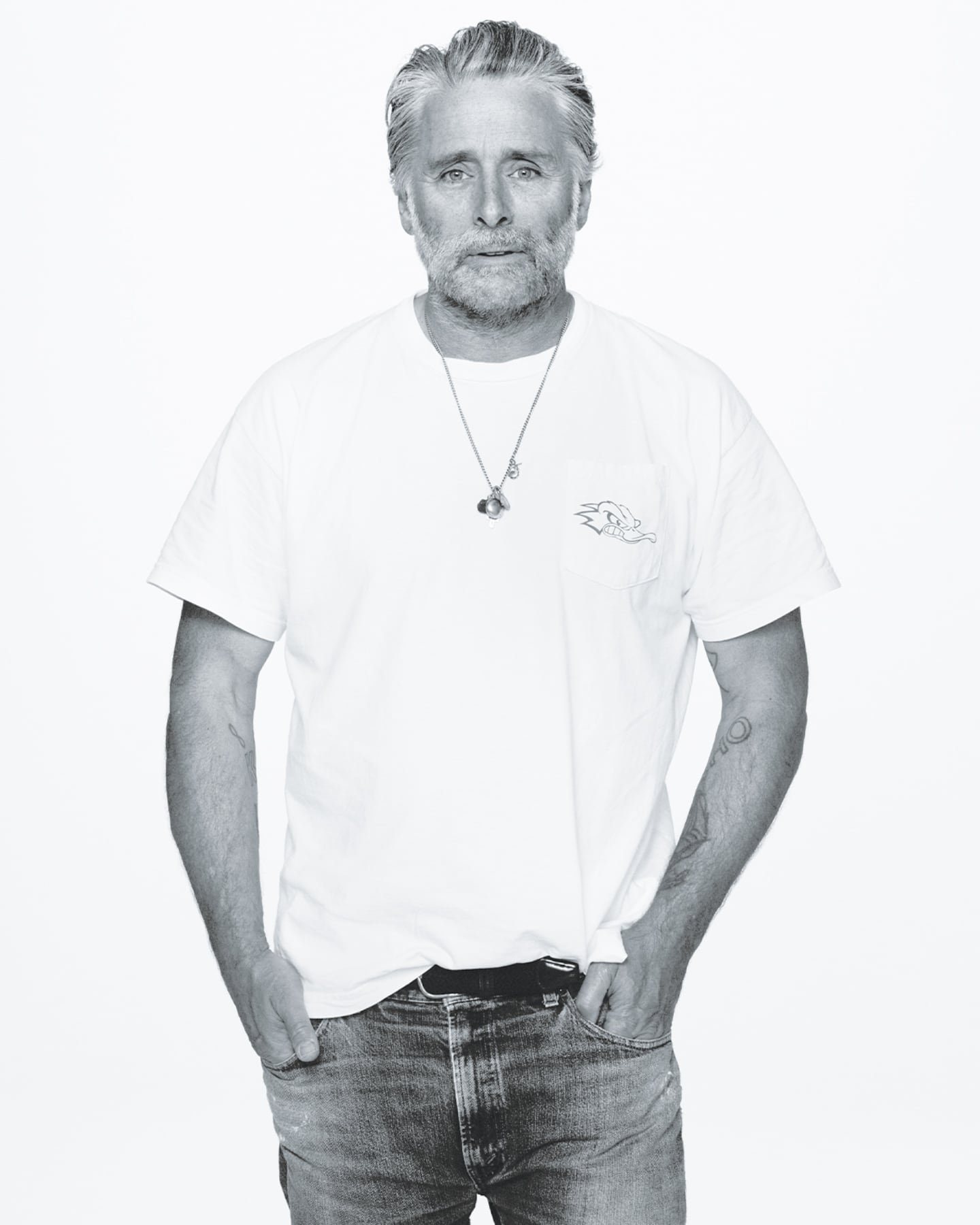
LONDON — The brief that David Sims gave Charlotte Cotton, the curator of his show at the MOP Foundation in A Coruña, Spain, was loose, to say the least: “Just don’t put any dresses in.” Sims is one of the most sought-after photographers in fashion. MOP’s shows for industry giants like Lindbergh, Penn, Meisel, Newton and Leibovitz have become the ne plus ultra of fashion photography exhibitions. So his curatorial counsel seemed contrarian to a fault. But after we’ve talked for a few hours, I see it was in character. “I’m not really interested in clothes,” he tells me.
Which is more or less what he said to Inditex chairwoman Marta Ortega Pérez when she invited him to show at her foundation: “I don’t really feel like I want to present pictures of dresses, you’ve done that already with the photographers and artists you’ve worked with.” The notion of a grand legacy-sealing retrospective also had no appeal for him. Sims turns 60 in December. He dismisses the value of legacy as “preposterous when we’ve got this wonderful opportunity in the here and now.”
He thought he’d made himself quite clear, but Marta wouldn’t be put off, and eventually Sims buckled. He knew it would be impossible to meet the challenge on his own, and not simply because there was so much stuff hidden away: editorials, advertising, the multipage personal projects that appear in magazines like W, System, Arena Homme+ and Pop. “Whenever I looked at my archive in the past, I found myself far too often being embarrassed by what I was looking at,” he claims. Sims had known Cotton since the 90s, when she was looking after the photography collection at the Victoria & Albert Museum. “A photo geek like me,” he calls her. “I felt very safe with her doing the heavy lifting for me.” So he handed everything over to her with that vaguest of briefs.
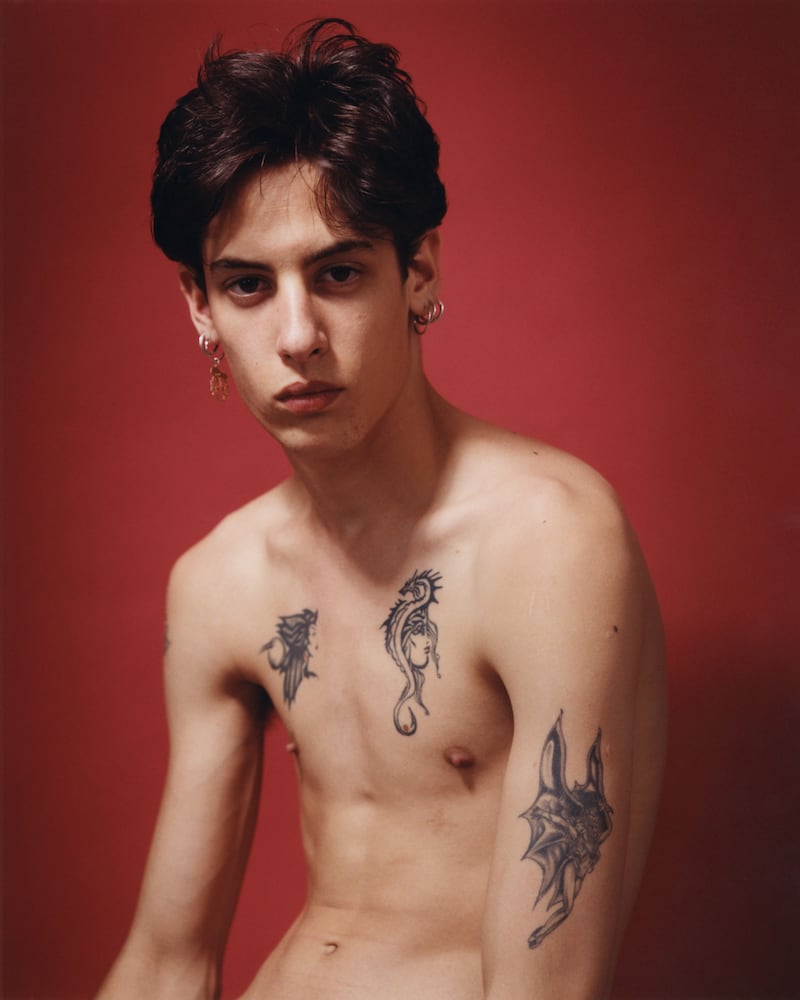
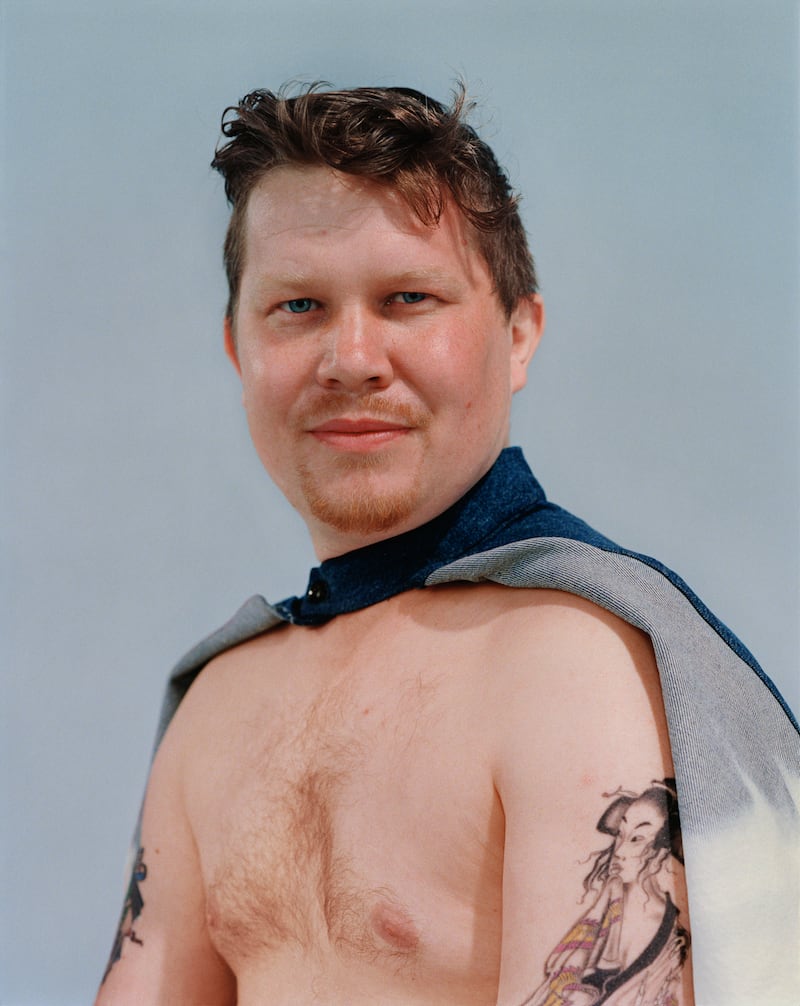
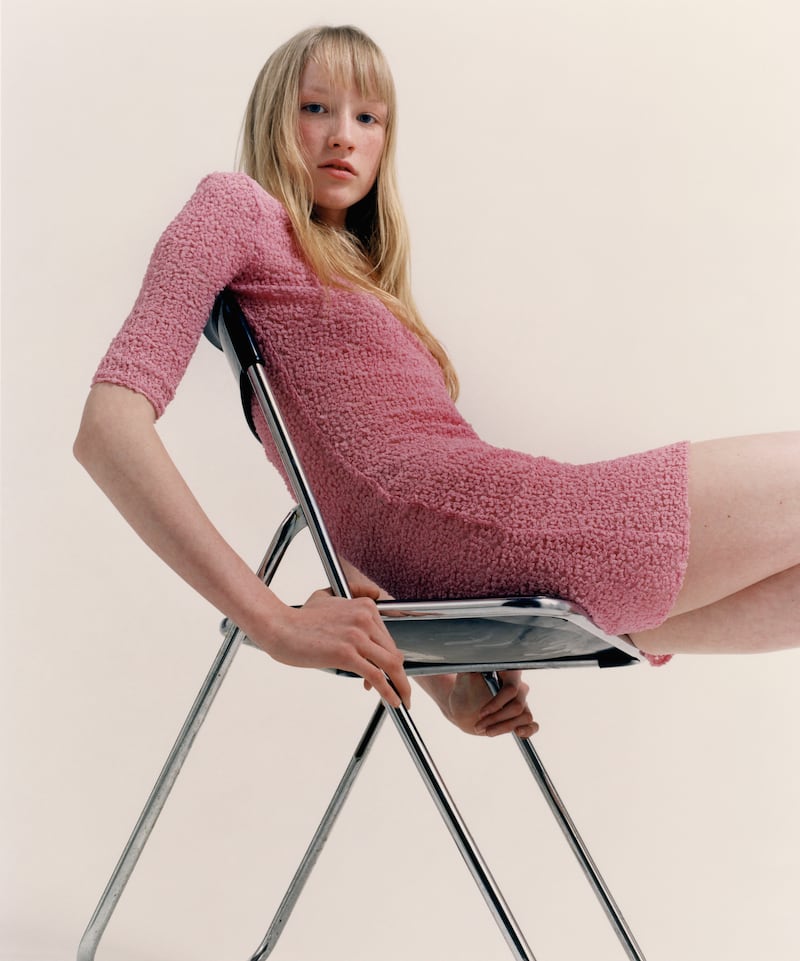
He claims he is “enchanted” by the result. “I think Charlotte’s seen it purely from a biographical point of view. She’s done it in sections, not chronologically. There’s no sequence to it, it’s separated more in terms of what she feels certain images carry in view of my own lifespan through the career. Let’s put it this way…it’s idiosyncratic. Intentionally not to everybody’s taste. I thought there’d be some pushback, if I’m being honest with you, but Marta has been nothing but supportive and open-minded. Let’s see what happens. It could be a complete disaster.” Quite the build-up! Sims will have a better idea about that when the show opens to the public on November 21.
ADVERTISEMENT
Enchantment aside, he admits his misgivings. “There’s a point at which I become slightly unnerved about a show that celebrates a name as if it was a brand, and I’d rather the work sort of fails in that regard. I’d rather people go, ‘Well, I see what he’s doing, it’s crap, but I get the point.’ That’s fine. I don’t know if I’m really good at thinking about the idea of having to take full credit for something, to be perfectly honest with you. Often, I can’t even remember how some of the pictures were made. So the fact that all those choices are Charlotte’s, and I’ve collaborated with her to some degree, made it easier for me.”
Sims’ greatest reservation is context. “I’ve never thought of the work needing to be on a wall, especially as a whole. Same thing with books, really. I just think magazines are the best place for the work to be viewed. I like it being in the mix, rather than singled out. So it can be next to something much better than anything I’ve done, or it can be next to something which is incomparable.” That enlightening randomness was always the thrill of i-D, The Face and Dazed & Confused, the British style bibles where Sims got his start in the late 80s and early 90s. One of his favourite pictures comes from a shoot he did with Kurt Cobain for The Face in 1993. Kurt’s wearing a Tigger suit. “I felt like that was the point of him for me at that moment. Winnie the Pooh. It was trying to take something which was, in a way, very simplistic, maybe childish, presenting him as something that was charming and lovable, rather than the opposite.”
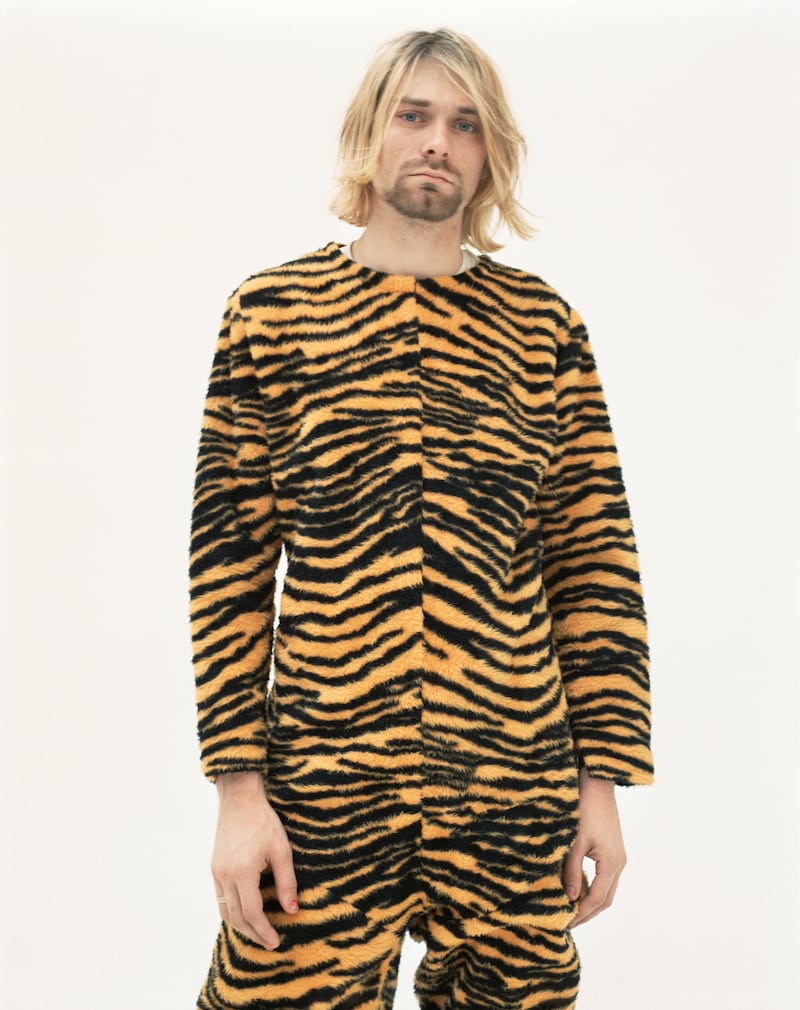
Cobain was dead within a year, and Sims’ pictures of him took on a totemic significance in the careers of both men. But you won’t find them in the MOP show because the focus is on Sims’ digital work. (It’s not a retrospective, remember, so I’m also unlikely to find one of my own distantly remembered Sims favourites, a portrait of his long-ago girlfriend Emma Balfour slouched like the Thin White Duke in the back of a limo.) He acknowledges the virtues of analogue, the limits of which compelled photographers to invent a signature within tightly defined technical elements: film stock, lighting, processing, printing, etcetera, but he is rhapsodic about the opportunities offered by digital photography. “It’s so broad it can encompass any fantasy you can throw at it. The idea of the camera has become ever more a sort of source material for the imagination.”
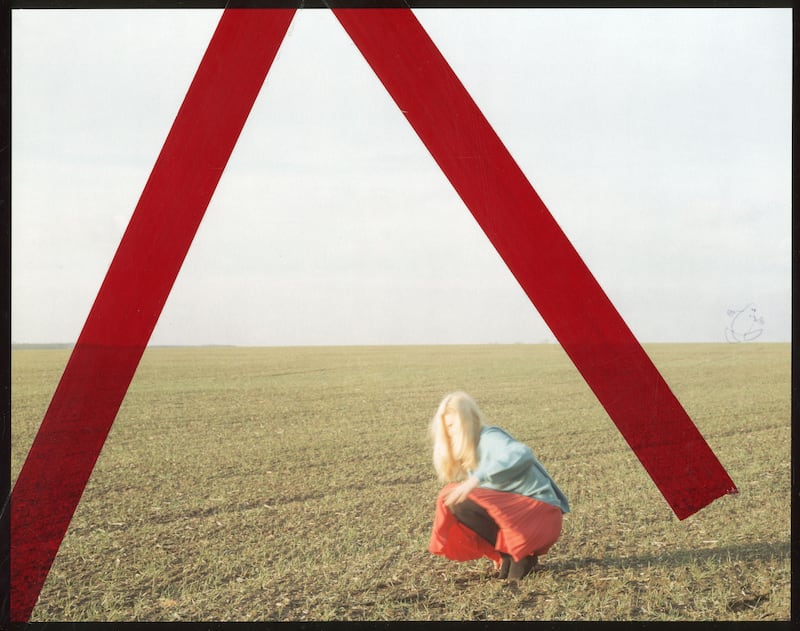
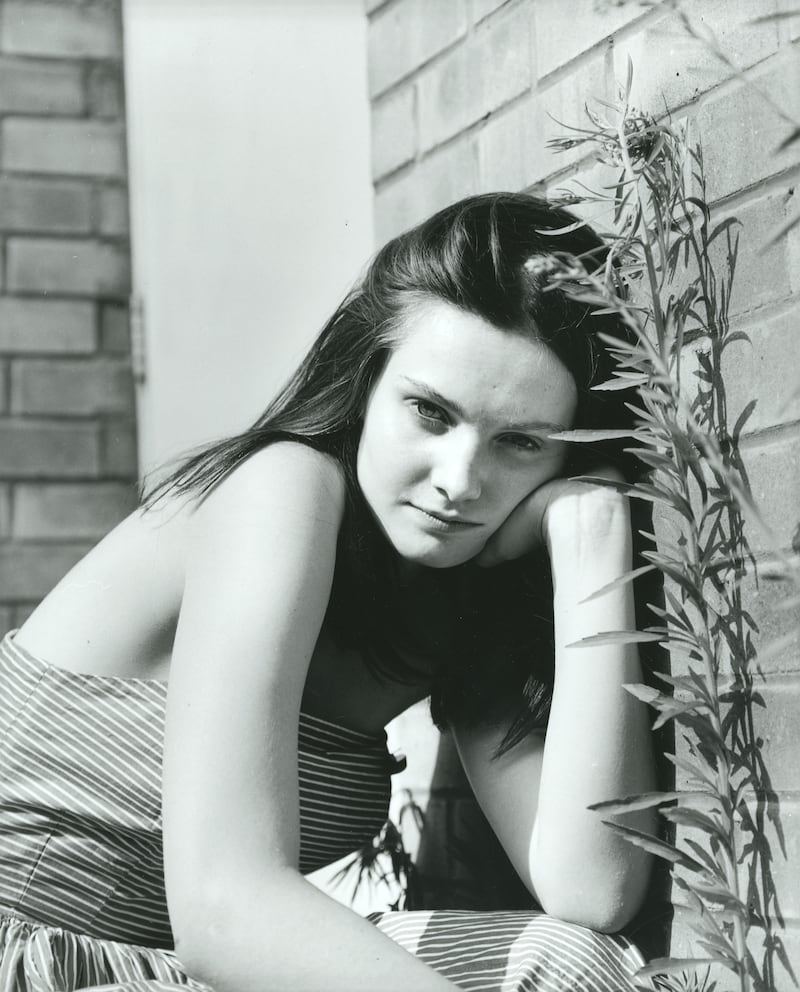
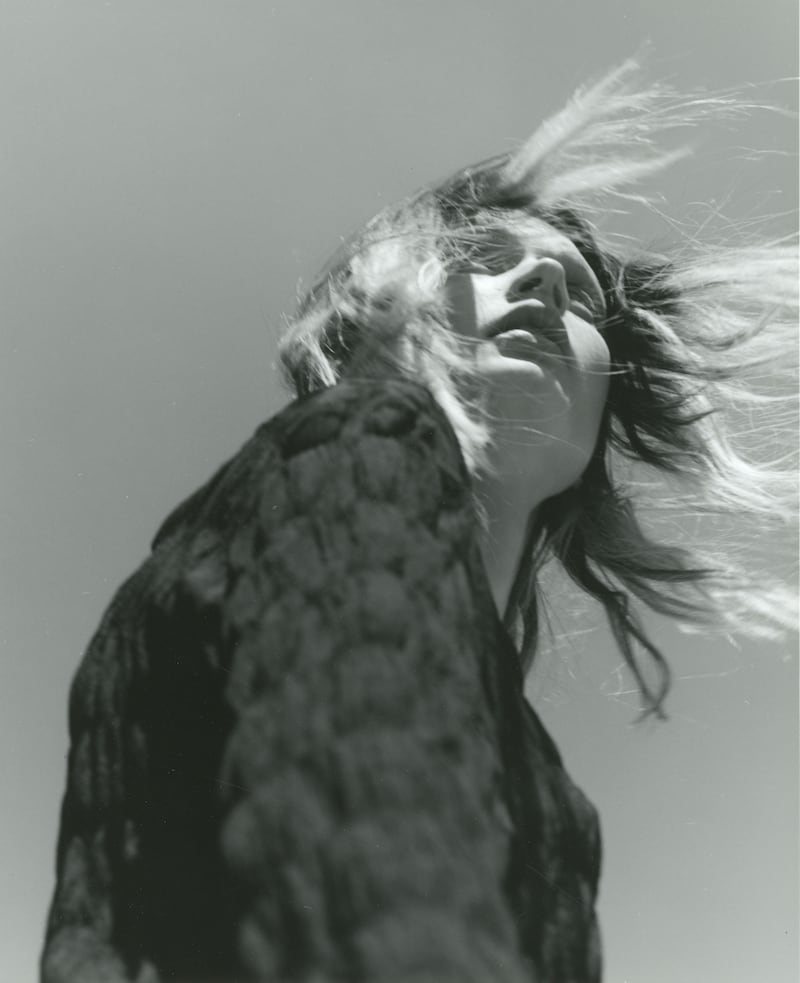
“I wanted to be a person who took feelings and converted them into a visual,” Sims continues. “Which is not wholly unlike a songwriter. There’s something very profound about wanting to communicate feeling through song. And I don’t mean to reinforce that parallel, but I found if I was struggling or stuck with complex feelings, digital pictures on many occasions made me realise that I’d been feeling things I hadn’t really understood, or connected to. So I started to think I could maybe share things through the page, my fascination with a certain kind of outlier for instance. You could thrust them forward and tell everybody to look again.”
It’s times like this in our conversation when I feel Sims is almost talking to himself, working something out as he goes along. What he is saying clearly has less bearing on his latest ad campaign for Dior, for example, than it does on his projects for Arena Homme+ which, he says, “is probably the only magazine that’s consistently been happy to publish that kind of work. Ashley Heath sometimes runs up to 60 pages for me. Digital made it possible to be non-linear, to work on a scale that wasn’t previously acceptable at the more institutional magazine venues. So I could do these iterations, and make up these really obscure images. I didn’t expect anyone to publish it, but Ashley was always very curious, and we share a fascination for things to be at least progressive.”
“I accept that a lot of what we try often just fails,” Sims concedes. Or as Paul McCarthy, one of his favourite artists, once said: “It’s all just an attempt.” Accusations of self-indulgence he can live with. The work becoming formulaic concerns him more. “But I do think it inches forward. It gives people the idea that the page is relevant in another way, possibly speaking a different language.” At the same time, digital photography has made it very easy to do the exact opposite, by copying the work of other photographers and artists. “We’re all guilty,” Sims acknowledges. When Letterboxd asked him to name his favourite film, he settled on Kenneth Anger’s “Scorpio Rising,” the original underground movie from 1963. “Then I realised how much I’ve emulated that film: the colouring, the fascination with close-ups, dissonant elements like the music and the editing being quite intentionally difficult. It’s not sequential, it keeps constantly reinventing itself. Is it a documentary? No, it’s not, it’s a fantasy. And I realised that’s how I’ve always wanted to approach the page, to leave people to decide what works between two different images.”
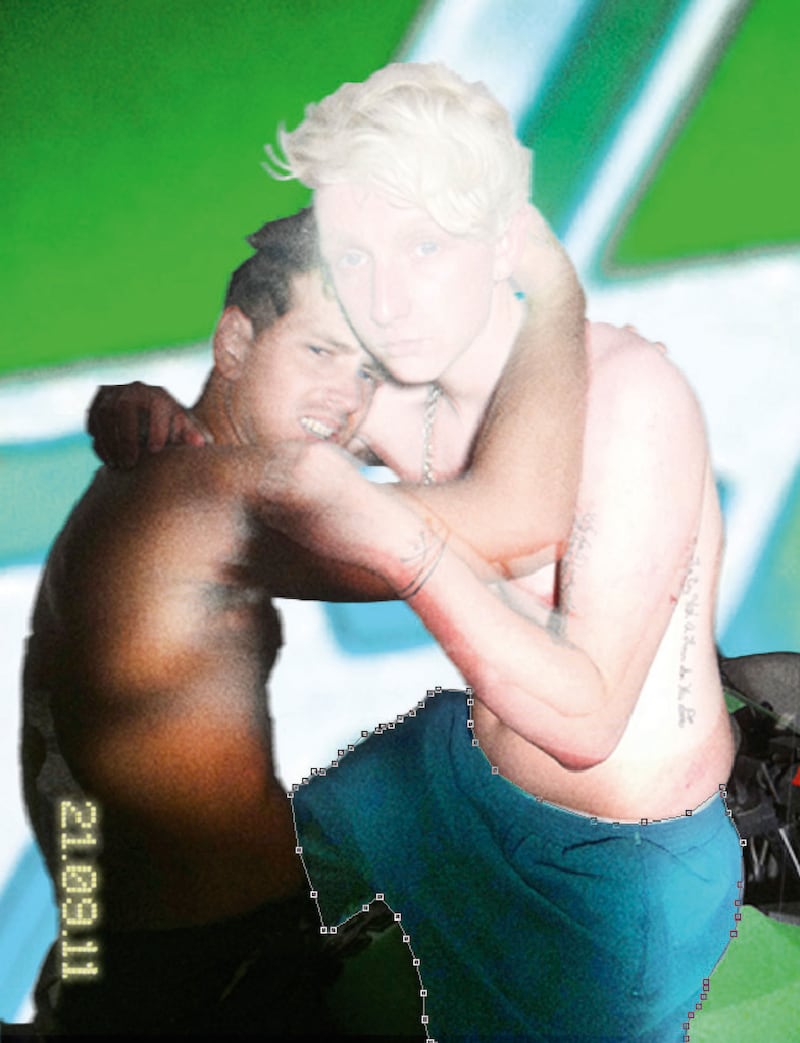
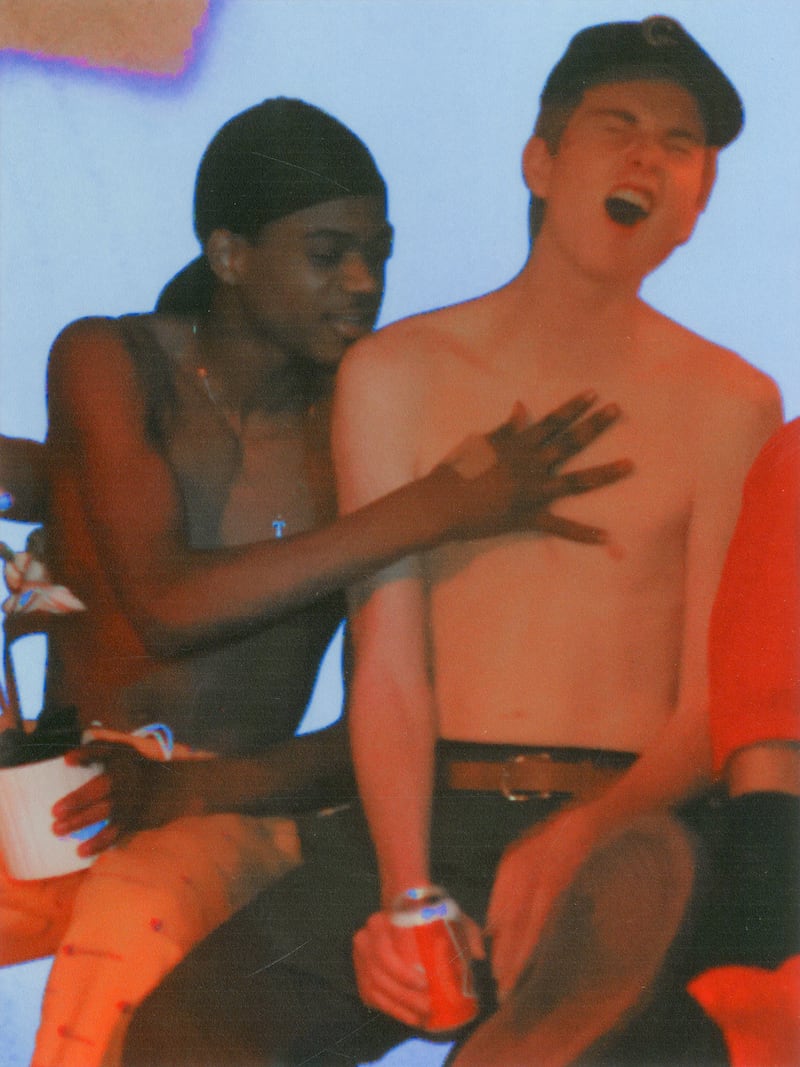
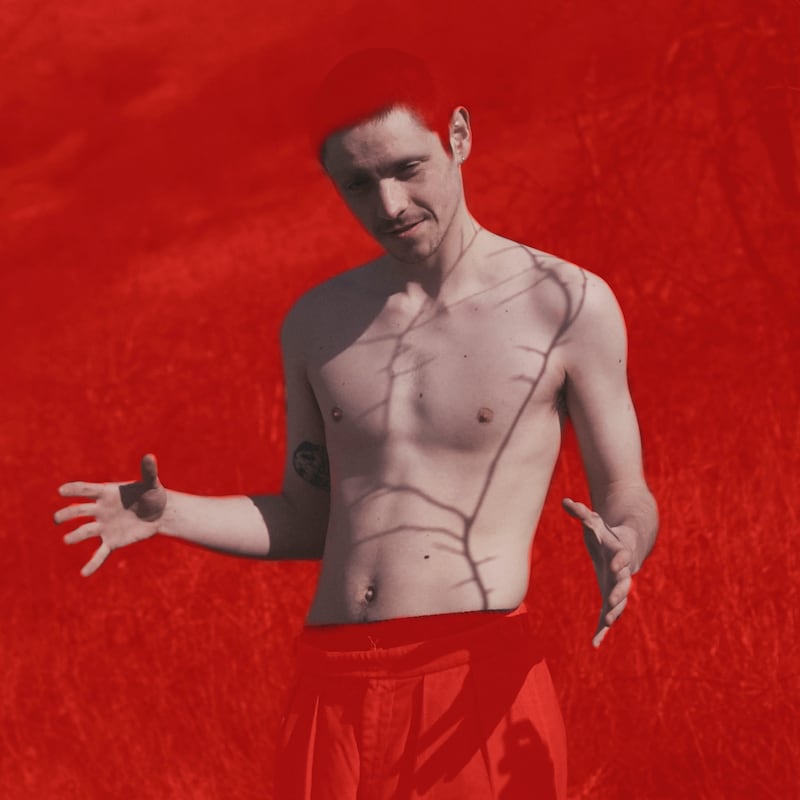
Richard Avedon has been another huge influence, especially in his fascination with the reality of his subjects. “When you look at Avedon’s prints, you can smell the moment,” says Sims. Of course, he shot on film, and Sims’ attempts to capture a similar intimacy are digital. “But the offset for me is that I’ve thought of and found ways to drag things out of a sort of dream state, and then make them into a photograph. I’m not going to put my hand up to say I’ve invented a new language, but I think what I’ve tried to do is to perform that language on the page in a venue that would allow me to do it.”
In so doing, Sims has become influential in his own right. Quite how that happened would require a little more retrospection than he is prepared to reveal in the exhibition. Cotton’s curatorial biography is quite abstract. “I think MOP would have preferred if I’d maybe made some of the anecdotal stuff available,” Sims admits. “I could be accused of being a bit churlish. But really, I’ve avoided it.” Which is a shame in a way for an audience coming to him fresh, because his is an inspirational arc, packed with interesting characters, from his first job as a tricky kid in a darkroom at 16, to assisting Vogue photographers for six years, to being published in i-D by then photo editor Nick Knight, to revolutionising fashion in the 90s as part of a new British wave of designers, models, photographers, stylists, makeup artists and hairdressers, to becoming as omnipresent now as his hero Avedon was then.
ADVERTISEMENT
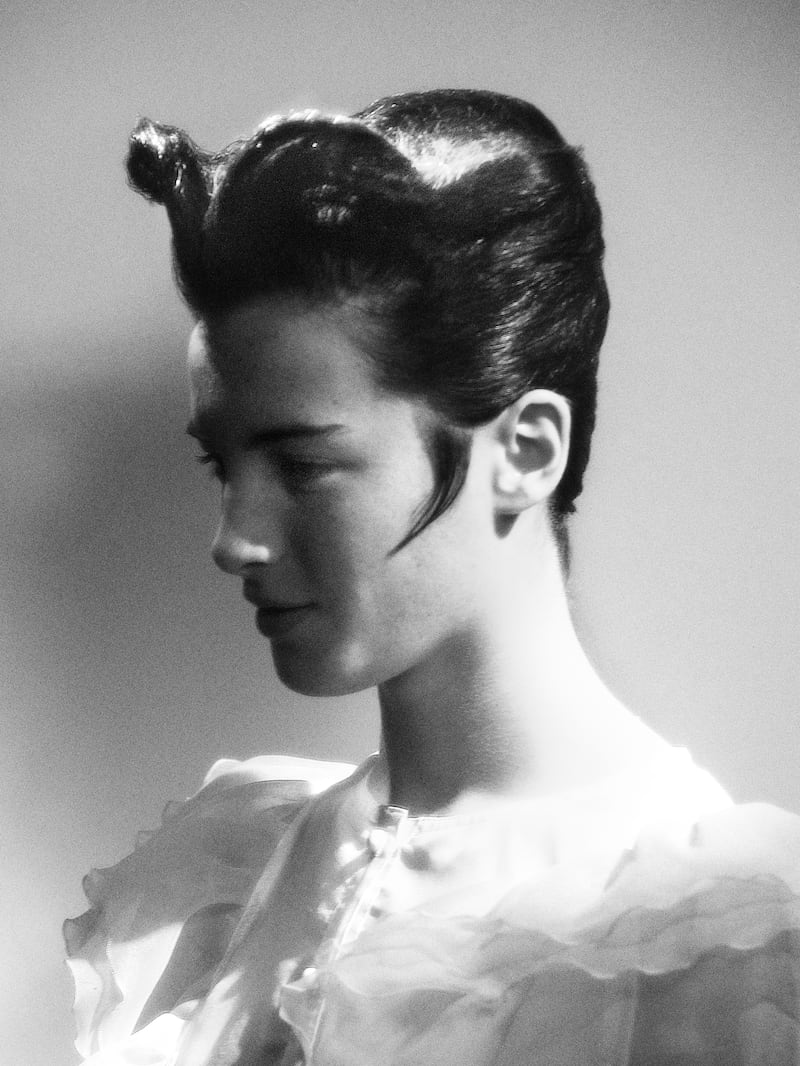
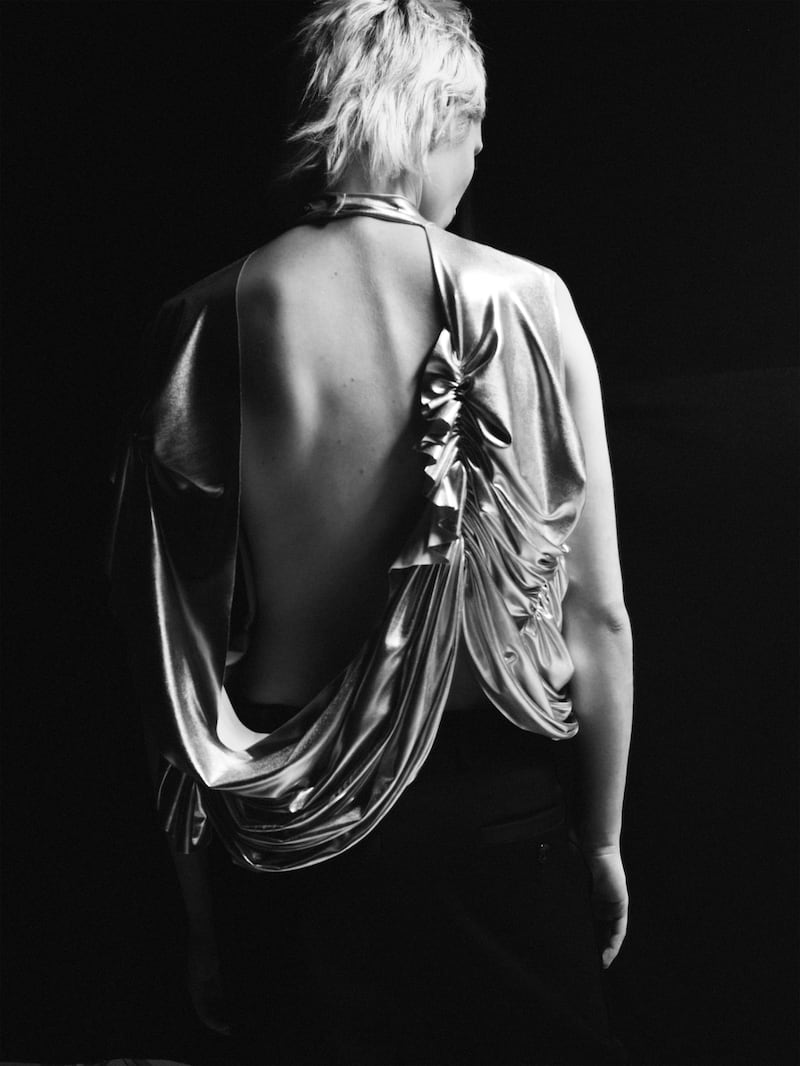
The arc is nothing as straightforward as young iconoclast to wise old(er) man. His editorial and commercial success has compelled his self-funded digital experiments. Their introspective intensity occasionally feels like a therapy session. (“Success is a trauma,” Sims mutters at one point.) But there are inevitably connective threads that run through every facet of his work. His rejection of the objectification of women as they were conventionally depicted in fashion photography, for one. Sims has provocatively referred to his pivotal, post-grunge work with the stylist Melanie Ward in the 90s as “a type of revenge,” because it was so much the antithesis of the supermodel boom years. “It’s because we were both really used to being called the underdog, I suppose. You’d probably say ‘outlier’ now. We had a profound want or need to describe that kind of character. And we weren’t the only ones. I mean, it’s a very British thing. So the revenge thing for me maybe came from my realisation when I arrived in London that British fashion was quite a middle-class environment. We were very aware of our roots, and we were never going to fit into a more embellished, comfy approach to the work.”
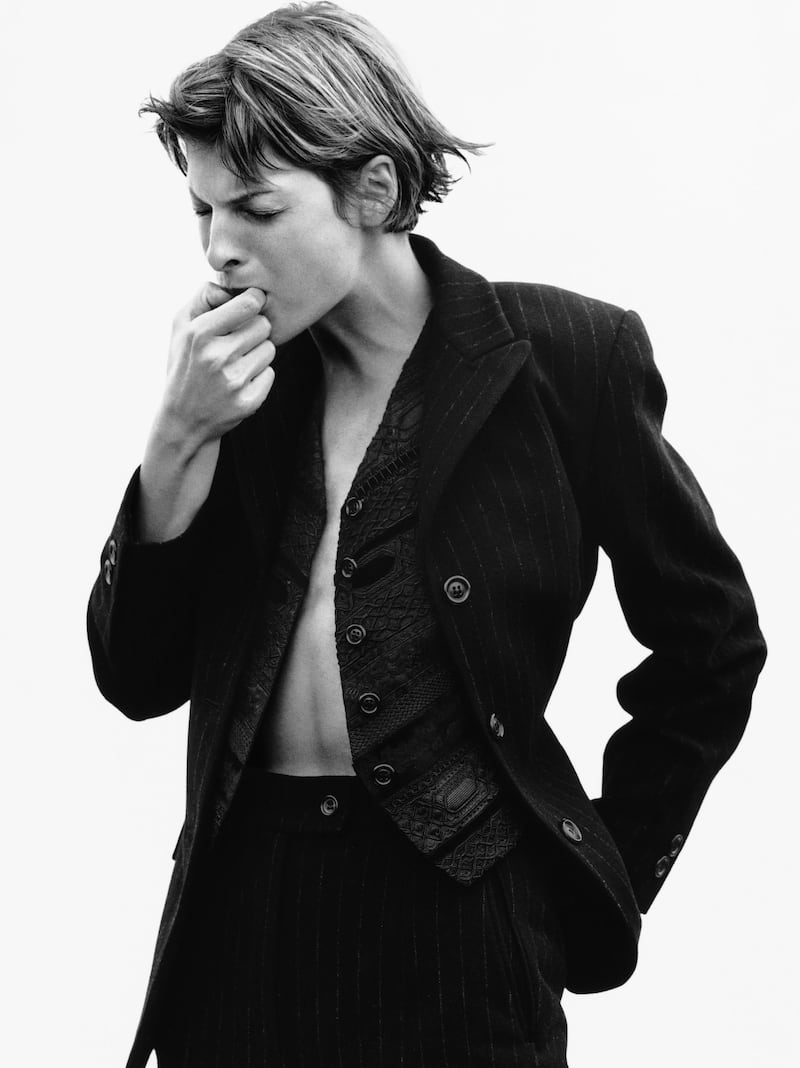
A breakthrough moment for Sims came with a suit story he shot for Harper’s Bazaar in 1993. It’s a perfect fashion dialectic. The thesis is the model, Linda Evangelista, the super-est of them all. The antithesis is the photographer, fresh outta grunge. The synthesis is the image, a transformative moment for both of them. Sims had been watching “Kes,” Ken Loach’s kitchen-sink drama about a Yorkshire boy and his pet falcon. “The obvious, simplest answer to not doing Linda as Linda was to turn her into a little boy. What sort of things would a boy get up to on his own with his dog, or whatever? I didn’t have to direct her at all. ‘Can you just whistle like you’re whistling for your dog?’ She did it with absolute emphasis. And we got the picture within two or three frames.” That photograph is in the MOP show, thank God.
Another significant thread is something I’d call the yearnings of young men. It’s a fascination Sims shares with Raf Simons. In fact, they made “Isolated Heroes” together, a book about Raf’s Spring/Summer 2000 collection, with the hair stylist Guido, one of Sims’ oldest friends. (He went on to photograph two more books of Guido’s artistry.) The single piece of work on Sims’ website is a short film called “Center of the Universe,” a slightly-delic, Anger-like paean to stoned youth. “I see myself in it,” he says. Is there an element of wish fulfillment? “I wouldn’t say I wish to be those people, but I wish those people were known, so yes. It’s a longing, a yearning, this perpetual idea that you ascribe to something ‘out there.’ Without wanting to pour out too much of my heart, I think within the struggle of your adolescence, you’re often left wondering not just about your relevance, but whether you’re actually even understood or seen. And I think this aspect of my work is an attempt to give form to that visually. If you’re looking at this person, you’re holding them in regard. Would you do it without judgment? Would you just accept people at face value? To verbalise that, first of all, feels kind of novel to me, but I can’t absolutely say with total certainty that that’s what I’m trying to do. I just have a sense that that is maybe what it’s about.”
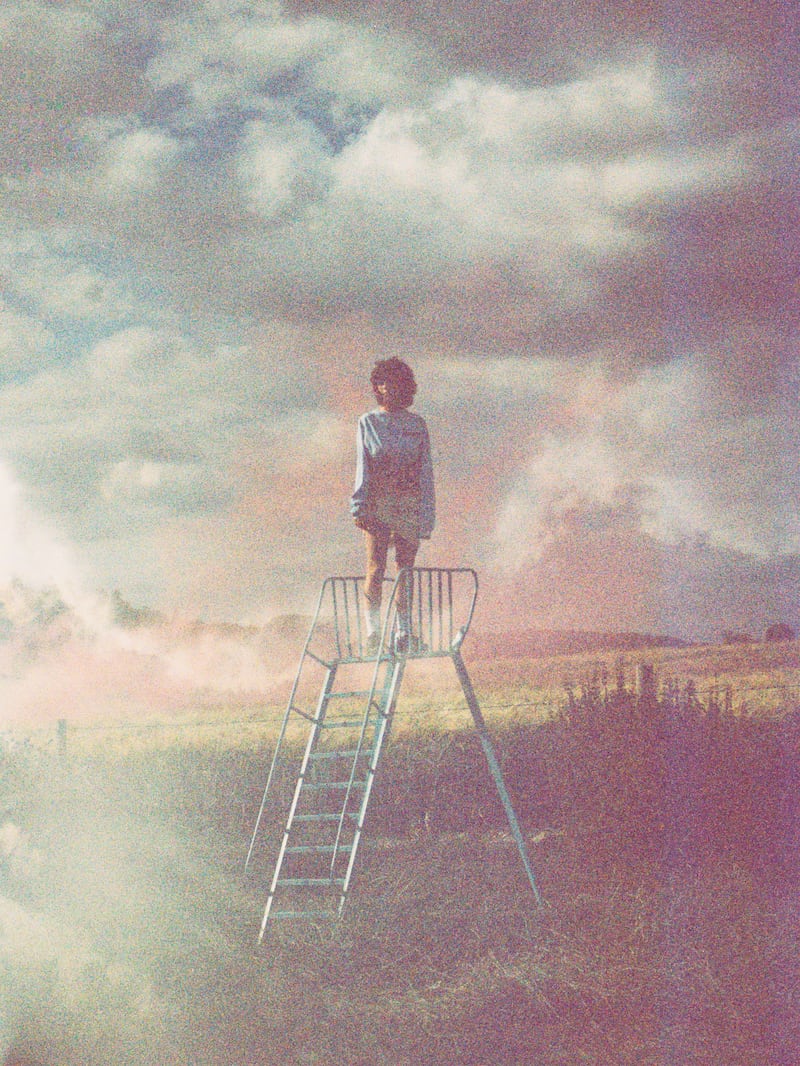
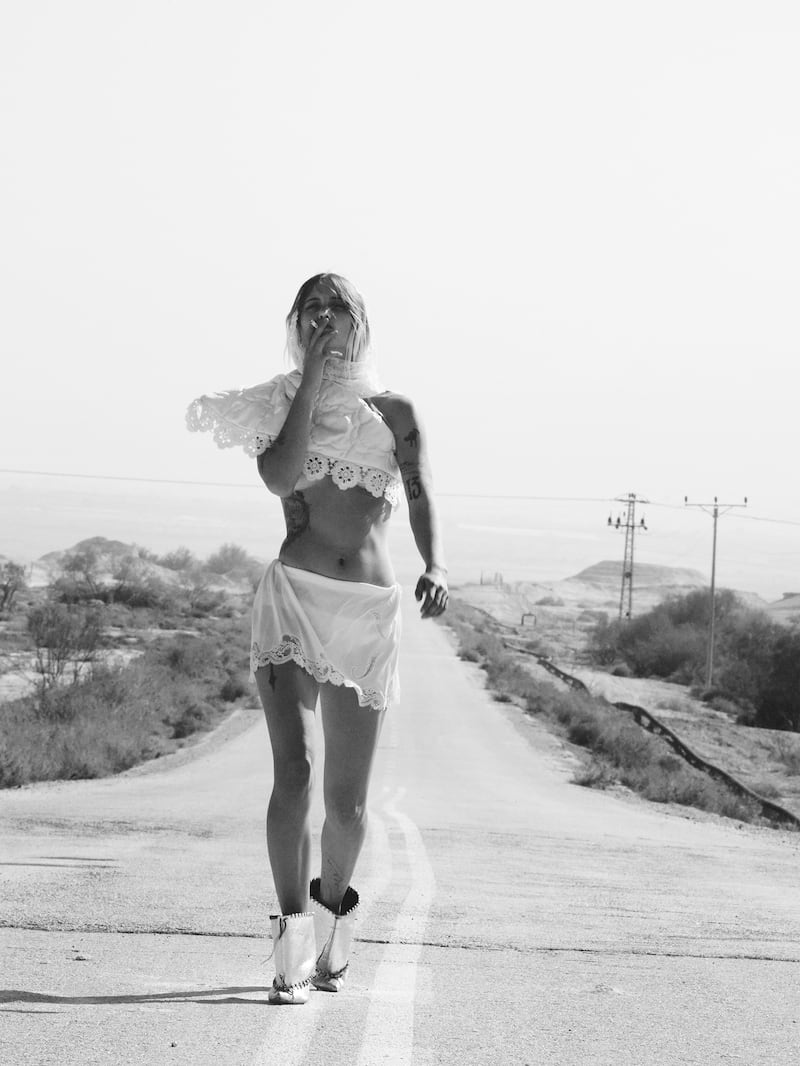
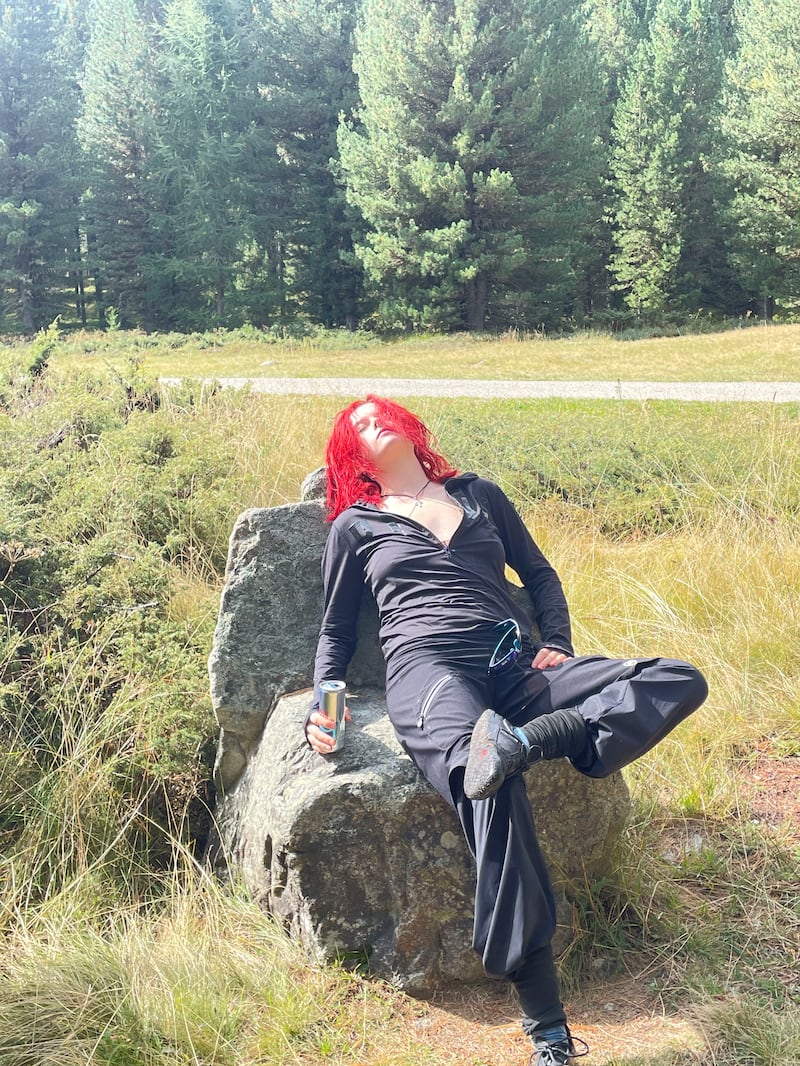
Give that quizzical self-analysis the thought it demands and you can see it’s practically the root of all things Sims. He goes on to quote some words that Iggy Pop contributed to “The Pure and the Damned,” from the soundtrack of the Safdie Brothers’ “Good Time:”
Some day, I swear, we’re gonna go to a place where we can do everything we want to
And we can pet the crocodiles.
“I’ve used that sentiment in the show because I think it alludes to the idea of what these pictures are ostensibly trying to do, which is to achieve the impossible. It is a chimera. No matter how difficult it has been to get there, you’re never going to get the boulder to the top of the hill. So you just keep trying. Iggy says it in the song: Ain’t gonna get there / But it’s a nice dream. I think what he’s trying to say is that love is available to us all. It depends what you create as the centrepiece to your aspiration.”
In 2021, Sims lost Kip, his eldest child with designer Luella Bartley, to a rare form of leukemia. Kip was 18. His second bone marrow transplant was at Stanford in Palo Alto, California, which meant it was very expensive. “The necessity really focused me. I became almost like a machine, like I switched off the emotion. I think that my experience of grief was to some degree abbreviated by this hyper-alert focus that I developed while Kip was in treatment. It took a lot of work to dial that down, and then to really get in touch with the feelings of loss and bereavement, which, to be perfectly honest with you, is so overwhelmingly hard that it’s very natural not to disassociate but to create a distraction from it.” Which might explain the huge amount of work Sims has undertaken over the past few years. The last room of his exhibition has a portrait of Kip, gilded, a golden boy forever. Although it comes at the end, it feels like a centrepiece to me.
ADVERTISEMENT
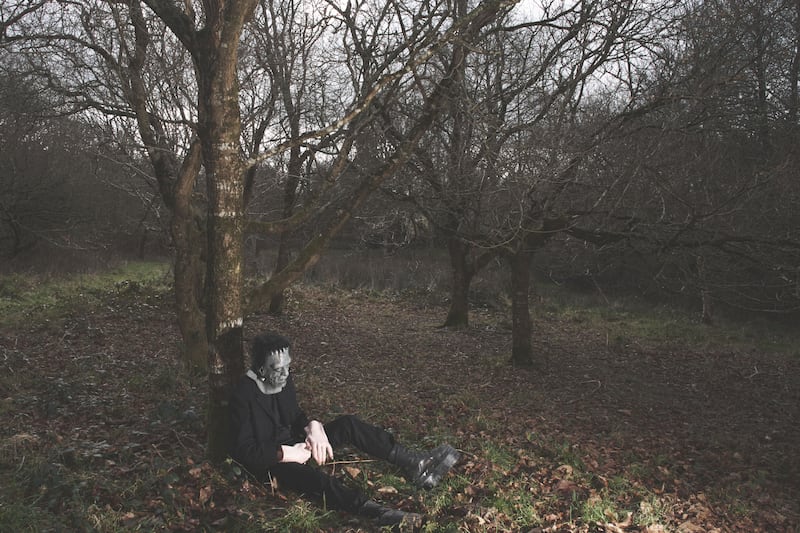
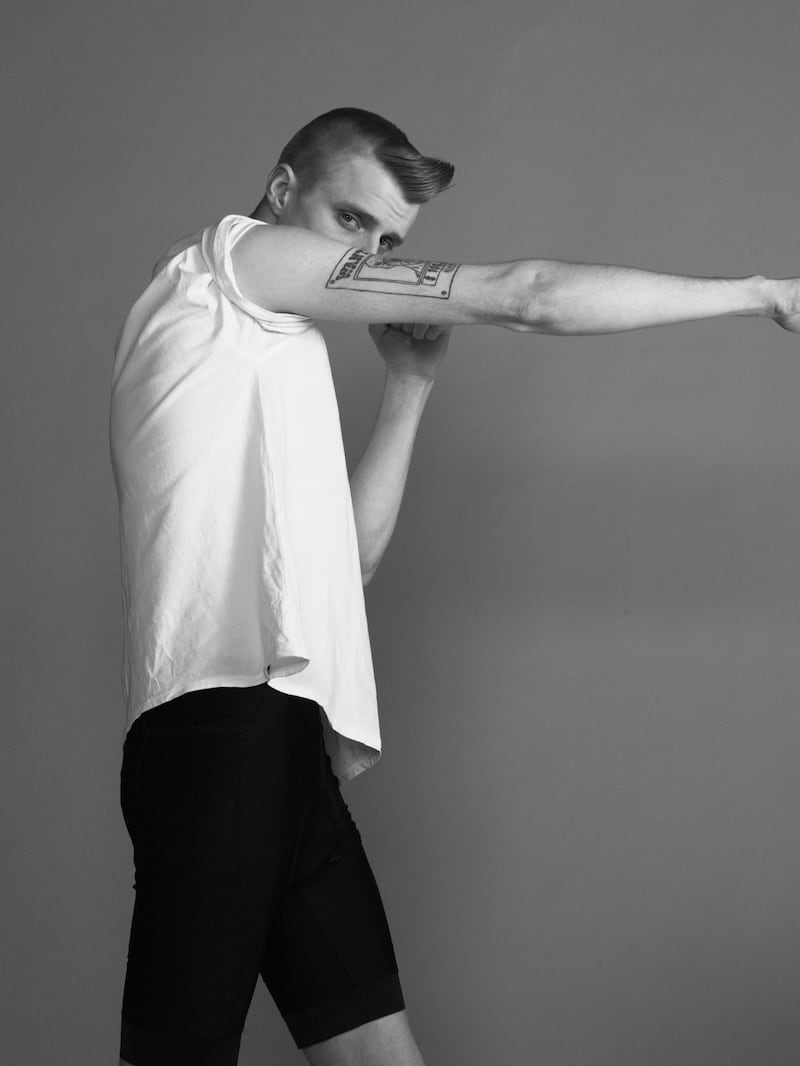
Nick Cave also lost a son and has transmuted his grief through songwriting, performances and his Red Hand letters. “Nick has taken his songwriting as a form of self-healing, which I think songwriting more or less is,” Sims says, “and he’s taken it so openly to that intention, that it’s become very, very effective. But he’s done it in ways which are, in some cases, quite obscure, quite symbolic. He’s not telling us how to deal with grief. He’s sharing these very cosmic experiences that he’s had through it. And there’s a lot of beauty in that for me. It’s been really helpful to look at someone whose spirit and whose art I admire so much to see how profound he has made it for everybody who’s going through the same journey. That’s a massive life lesson for me.”
And Sims had a lot to learn as a man who was seemingly a mystery to himself for much of his life. “For a long time, I was really confused, very conflicted,” he agrees. “I think at times that may have come across as me being rebellious or difficult, but it was struggling with what the actual fuck am I doing here. Do I belong? All those terrible insecurities that we carry into social environments, especially ones in which we’re expected to be performative or create. I wasn’t trained for those pressures. I think I was very bad at handling them initially. Now, turning 60, having done a bit of work on myself, I guess I see the privilege in the sheer number of opportunities that I’m being given, and I try to make as much of that as possible. The idea of joy has become very important to me.” Again, that feels like a centrepiece.
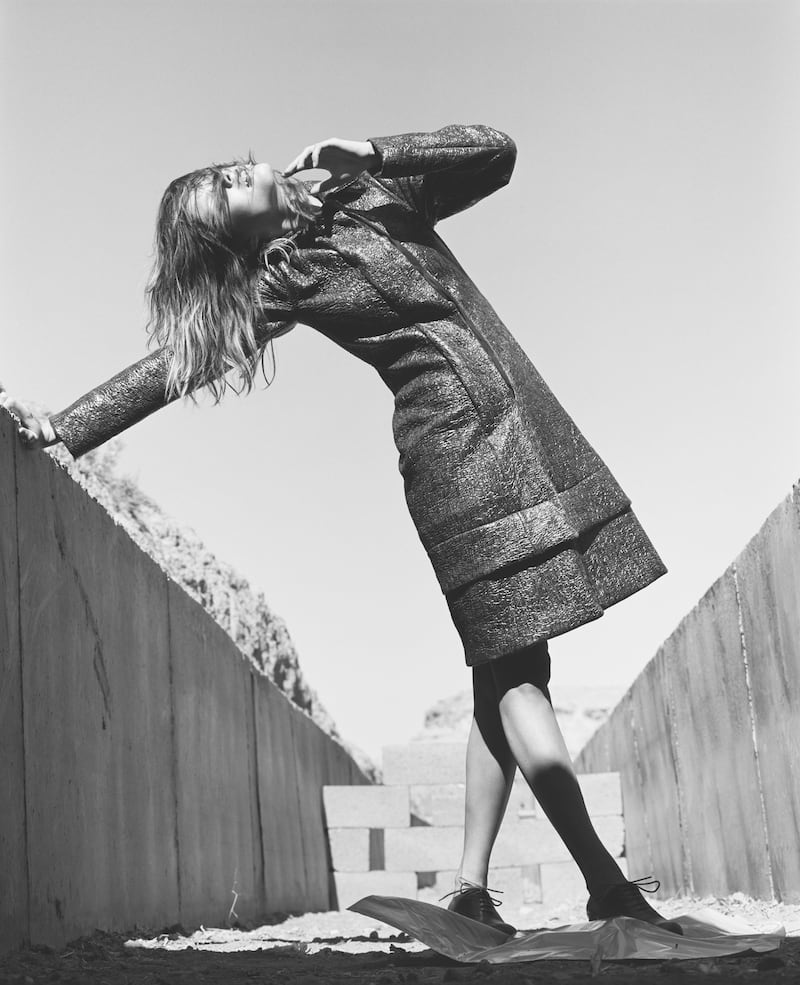
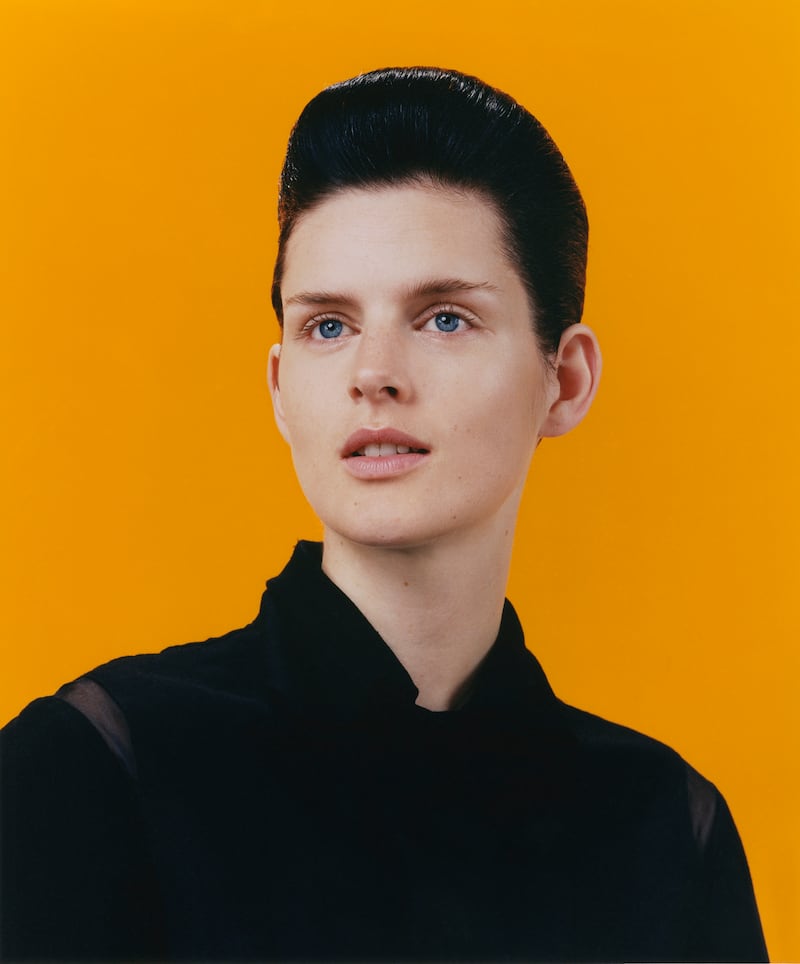
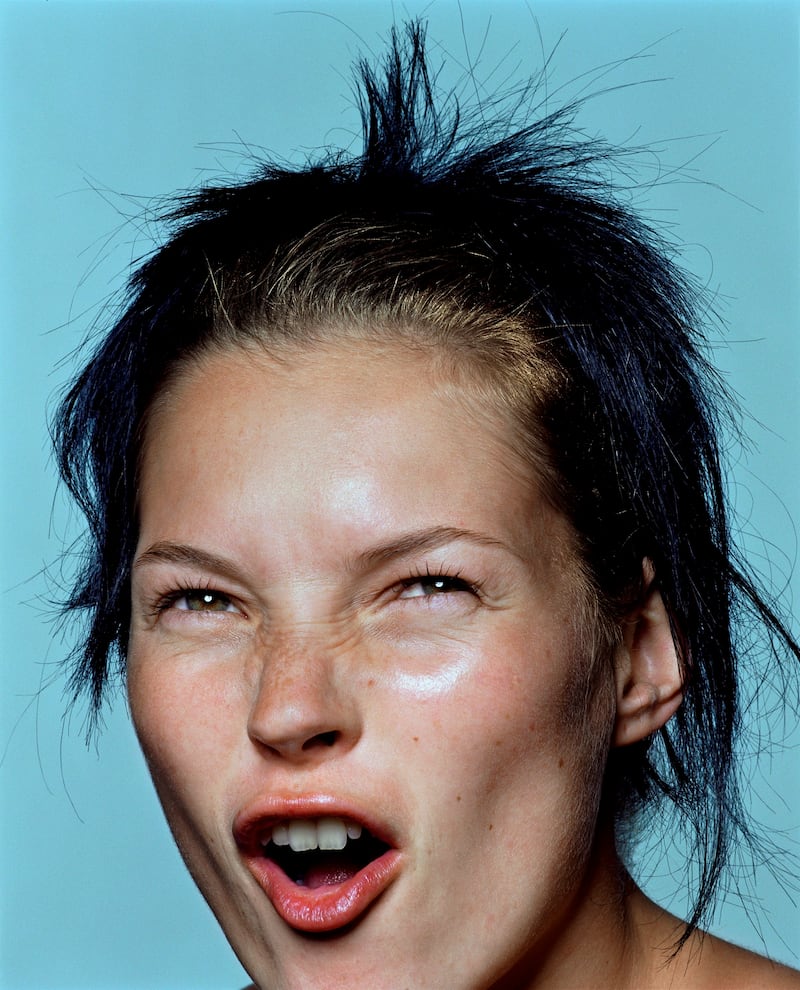
I’m thinking of the 30-page portfolio of Harry Styles that Sims shot for W magazine in Mexico City in August. It’s like a resumé of all his interests — portraiture, photo-journalism, constant motion, street life, angel youth, Anger, Avedon… you can really smell the moment in Harry’s sweaty, polymorphously sexual exuberance. “However many pictures we could get done in the space of a day, we were just going to absolutely smash this out. And Harry’s got the ability and the capacity to do that. He can do a quick change and he’s back out there again, and we just change a background or a context, and we’re in. And you look at his audience, they’re all on board with the joy. It’s crazy. I’ve never been in a space where I could walk around as a grey-haired old man, wherever I wanted to go, and all I encountered was that happiness. Harry does it every night to audiences of tens of thousands of people over a period of two and a half hours. I watched him on stage, and I watched him in front of the camera, and I was very honest. I said, ‘There’s no point my directing you at all, is there?’ He likes to wear clothes. He likes to be seen. And he’s got a very tight hand handle on how much energy he can ascribe to that particular moment. I’ve never come across anything like that professionalism.”
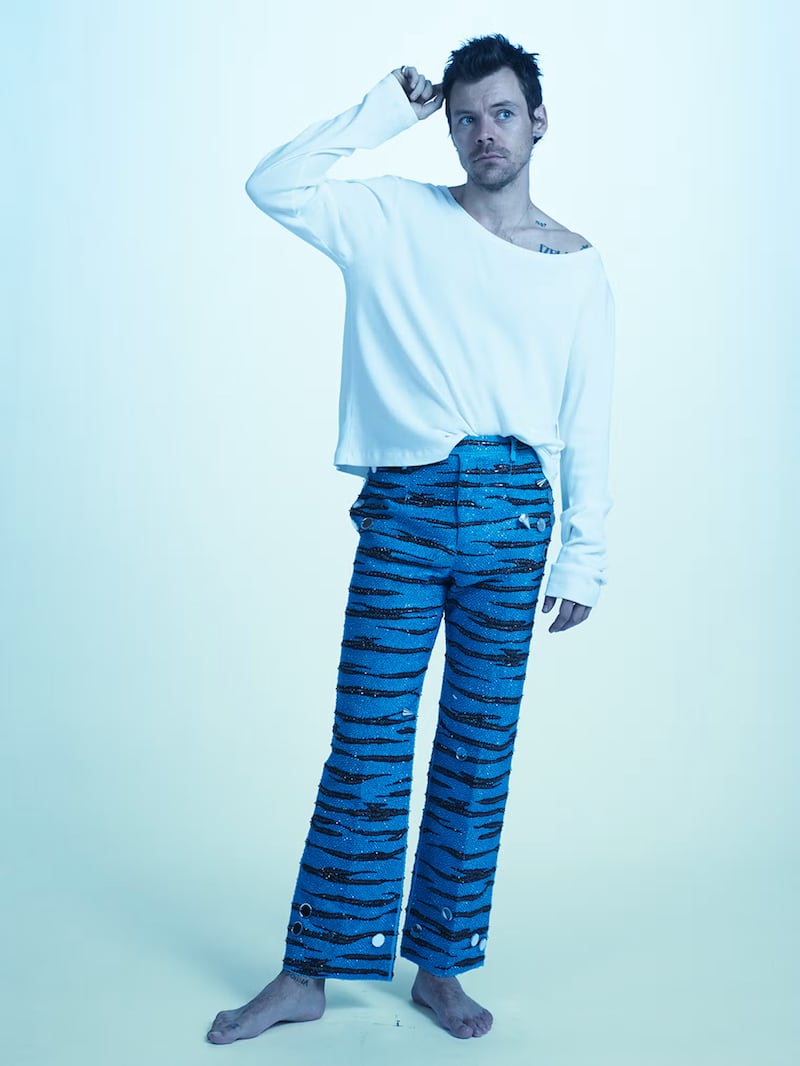
It was a revelation for Sims. “Part of my attraction to this was I’m really intrigued by pop centrism for the first time in my life. I’ve realised that there has been a shift towards art having to be mass in order for it to even exist. The margins feed the middle because the middle is where the money is, right? So I’m going to put this new thing in the middle and see if we can grow it, and if it doesn’t, we get rid of it because there’s plenty more behind it, right? So for people to occupy that sort of pop centre the way that Harry has, and to be as forward-thinking as he appears to be, is intriguing to me. I have to pay attention to what’s in front of me and maybe possibly ahead of us in terms of where art is. I’m not drawing parallels with myself and those people — that would be obscene — but I can be curious about it. And I was given permission to, travelling with it for a hot minute.”
There are more than three decades between Kurt Cobain in a Tigger suit and pop avatar Harry Styles in Celine’s tiger-striped strides. The idea of legacy intrudes again, at the very end of our conversation. “Even though Kurt’s life was clearly dysfunctional, his legacy is that he made beautiful work,” Sims muses. “People were inspired and moved by it and it possibly led them to great things. I would say that Harry’s messaging is very different. It’s probably more palatable in some regards. His audience is not going there to be threatened. Whereas you went to a Nirvana show to be disrupted.” That thought is a reminder that he too was shaped by disruption: grunge, rave, eternal dissatisfaction. We come back to Iggy Pop, legendary agent of chaos.
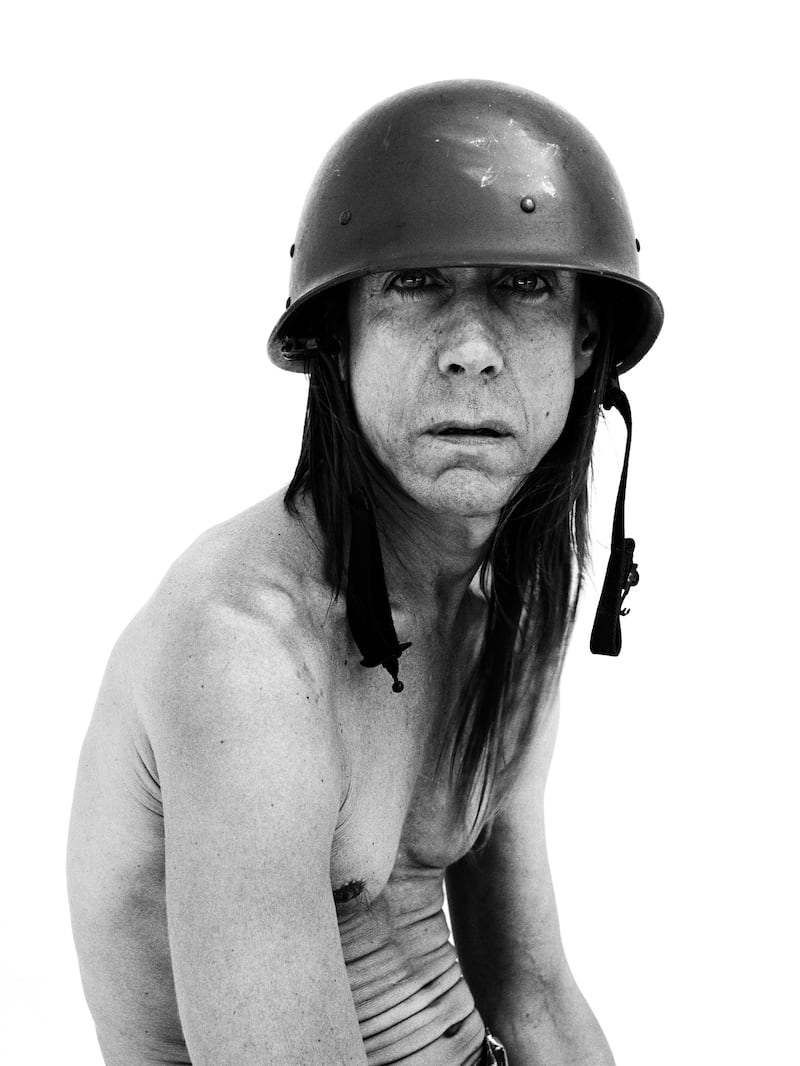
“The sole purpose of my wanting to be a photographer in the first place was to get as close as I could to him,” Sims claims. It happened in 1995, when he photographed the album cover for “Naughty Little Doggie.” Iggy is wearing a soldier’s helmet. He looks worn but indomitable, proud to the bitter end. Another claim from Sims: of all his photos, this one, and Kurt as Tigger, got closest to what he was trying to do. “Perhaps it’s a bit like low-hanging fruit to pick on two people who are significantly more important than those two images. But I quite like where we ended up, with those two men.”
But it’s not quite the end. Sims has called his MOP show The Hamster Becomes the Problem. Why? Comes the reply: “You can figure that out.”
The celebrated American photographer Annie Leibovitz opens up to Tim Blanks about taking pictures, life and death, Susan Sontag, that Timothée Chamalet Vogue cover and her upcoming exhibition in Spain, a kind of swansong for her life in fashion.
‘Your style is not a technique, your style is your soul,’ Roversi tells Tim Blanks.
The life and work of the taboo-busting photographer continue to enthral and scandalise in equal measure, writes Tim Blanks.
Tim Blanks is Editor-at-Large at The Business of Fashion. He is based in London and covers designers, fashion weeks and fashion’s creative class.
Loading recommended reads…
Demand for the US conglomerate’s luxury fragrance brands like Le Labo, Tom Ford and By Kilian offset weaker performance from its makeup and haircare divisions.
Violent protests over pay levels forced the closure of more than 500 factories over the weekend.
The British label and knitwear supplier to other high-end brands is surviving by mixing heritage with innovation, from launching new designs to investing in the latest high-tech equipment.
In the first major initiative under new CEO Paige Thomas, the rental platform is rolling out a new collection of luxury bags, which will first be available exclusively to top-tier subscribers.