Agenda-setting intelligence, analysis and advice for the global fashion community.
Agenda-setting intelligence, analysis and advice for the global fashion community.

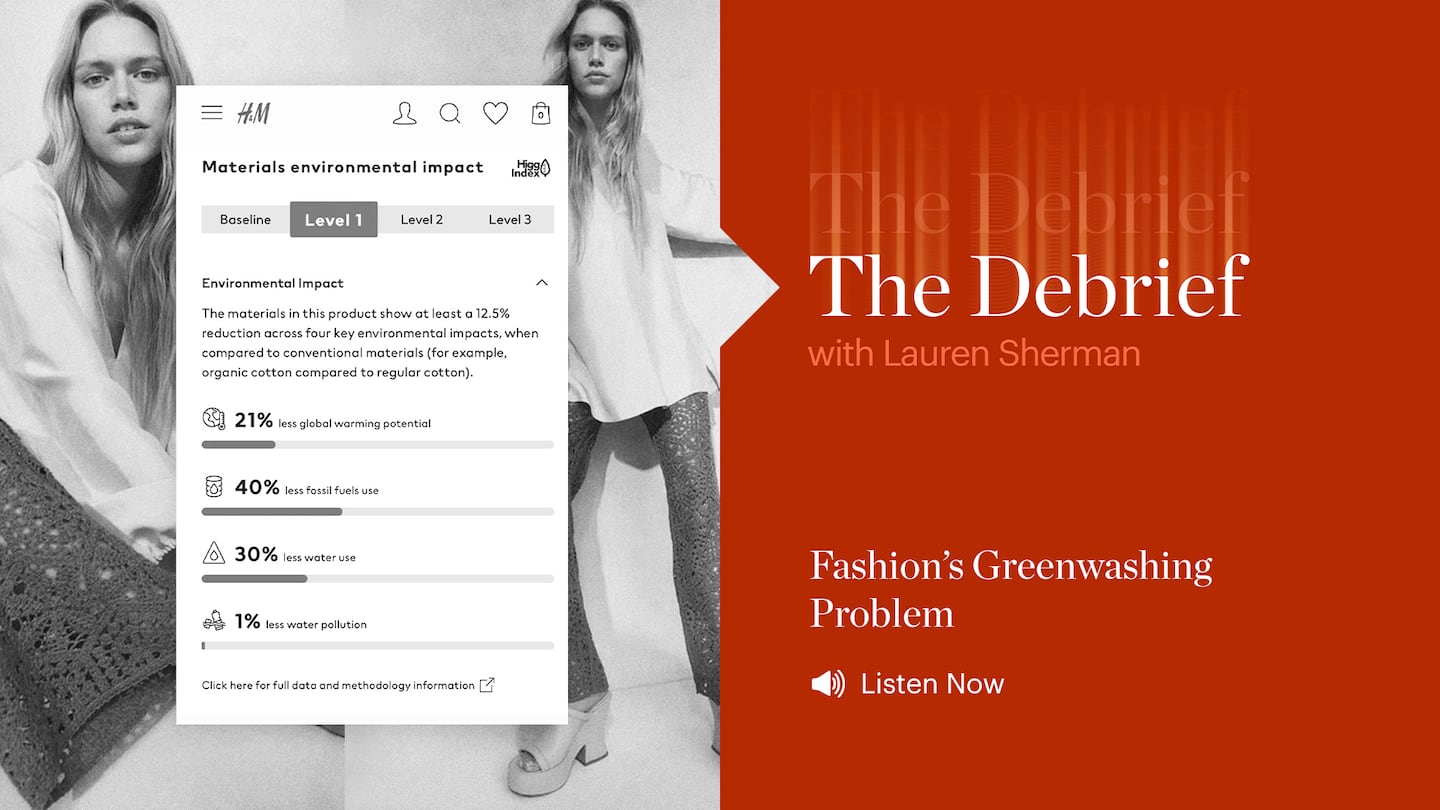
To subscribe to The Debrief, please follow this link.
Background:
Concern about the environmental impact of clothing has swelled in the past few years. So too has the practice of greenwashing. Right now, fashion marketing is flooded with eco-conscious messaging as brands dub their products “sustainable” without doing the groundwork to back up declarations. Consumers and regulatory parties are starting to demand more.
“What we’re seeing is companies wanting to talk more about this, consumers wanting to know more about this, and regulators really sitting up,” said chief sustainability correspondent Sarah Kent. “It’s this perfect storm where something that has been an issue that needed to be addressed for a long time is coming to a head.”
ADVERTISEMENT
Key Insights:
Additional Resources:
Join BoF Professional for the analysis and advice you need. Get 30 days for just $1 or explore group subscriptions for your business.
Loading recommended reads…
The retailer swung to a loss as sales slowed after the US removed the de minimis exemption on small packages and it incurred a hefty one-time accounting charge.
This week, Europe’s leading luxury groups LVMH, Kering, Hermès and Prada will show who’s pulling ahead in the stubbornly choppy environment.
Sales of gems, precious metals and artwork at Japan’s department stores climbed 19 percent in the first half of 2026 from a year earlier to $2 billion.
Though Adidas dressed both teams in the World Cup finals, the global football tournament still presented some bright spots for Nike, writes Bloomberg’s Andrea Felsted.