Agenda-setting intelligence, analysis and advice for the global fashion community.
Agenda-setting intelligence, analysis and advice for the global fashion community.

To subscribe to the BoF Podcast, please follow this link.
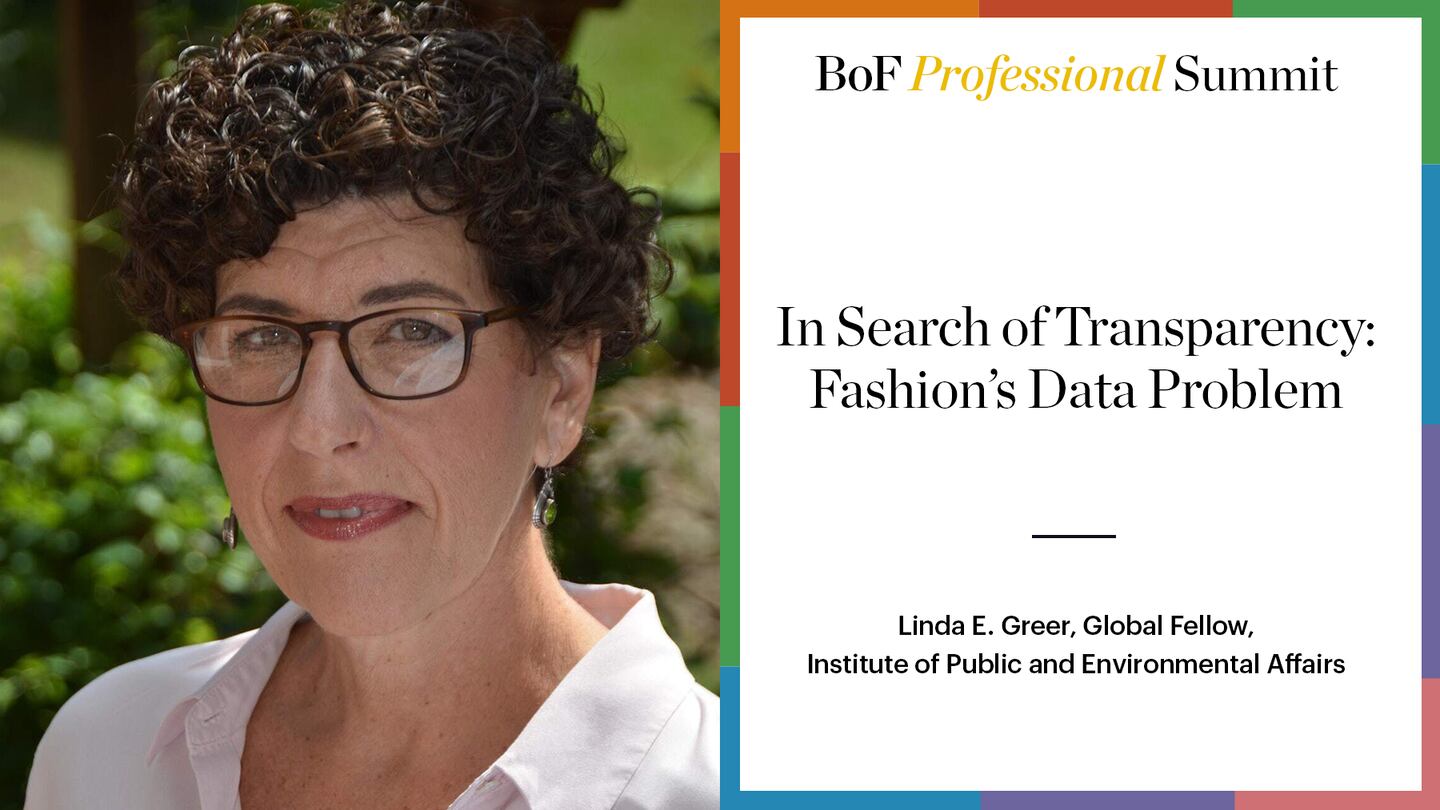
One of the biggest challenges facing the fashion industry in its efforts to become more responsible and sustainable is bad data. While companies are under increased pressure to provide more information about working conditions and greenhouse gas emissions, the data they share is limited and often of dubious quality. At the BoF Professional Summit: Closing Fashion’s Sustainability Gap, Linda E. Greer, a global fellow at the Institute of Public and Environmental Affairs and a member of BoF’s Sustainability Council, joined BoF London editor Sarah Kent for a discussion on how fashion’s bad data is affecting its sustainability efforts.
Related Articles:
Measuring Fashion’s Sustainability Gap
ADVERTISEMENT
Scaling Up or Selling Out: How Can Sustainable Labels Credibly Collaborate with Big Brands?
Devising a New Social Contract for Fashion’s Garment Workers
Join BoF Professional for the analysis and advice you need. Get 30 days for just $1 or explore group subscriptions for your business.
Loading recommended reads…
Business owners and politicians are lobbying regulators for easier access to new injectable drugs against the recommendations of some medical experts. But customer demand isn’t waning.
The Society Management group is teaming up with collegiate sports agency Canopy Talent to bring new brand deals to the brightest names in college sports across the US.
Phoebe Gates and Sophia Kianni pushed for features in the e-commerce startup’s software that took credit for sales it didn’t drive, according to internal communications and people with knowledge of the matter.
Africa’s streetwear scene is grabbing the spotlight in 2026 as Ghanaian brand Free the Youth prepares to release one of the most coveted Air Jordan collaborations we’ve seen this year.