Agenda-setting intelligence, analysis and advice for the global fashion community.
Agenda-setting intelligence, analysis and advice for the global fashion community.



A monthly briefing on the technology news and trends shaping fashion and the wider world.
Welcome back to Tech Mode, your monthly guide to how AI and other technologies are changing the fashion industry.
First, here’s a quick roundup of our recent tech coverage, in case you missed anything:
Let’s get to our main event.

Until now, the idea of AI agents routinely shopping on behalf of consumers remained largely theoretical. That may be changing thanks to the arrival of new AI agents from Meta and OpenAI.
ADVERTISEMENT
Meta’s agent, Muse, which it first unveiled earlier this month, may be the first product that makes the idea feel like it has real potential. OpenAI only announced its own agent, Dots, on Tuesday, meaning reviews aren’t yet available. It seems more business-focused, and is only available to paying subscribers of ChatGPT. Muse is free, and because of its uptake by users, seems likely to have the more immediate impact.
What it is: Muse acts like your own personal intern. You command it by texting it through the Muse app or in Meta-owned WhatsApp. Tell Muse what you want done and it handles the grunt work, carrying out tasks such as booking restaurants or travel, making appointments, managing your inbox or even finding products and buying them for you.
To test things out, The Verge had Muse buy workout tops on Amazon, with a prompt specifying the size, style and colours. “Before placing the order, Muse noticed I had other items in my cart and asked if I wanted to remove them. The consideration pleasantly surprised me. Once I signed off on the purchase, it proceeded to successfully buy only the tank tops,” The Verge reporter Emma Roth wrote.
Explosive start: Since its release, Muse has rocketed to the top of Apple’s app store in the US and Canada, overtaking ChatGPT as the most popular free app. (For now, it’s only available in those countries, with further international launch dates yet to be revealed.) As of last week, it had been downloaded more than 3.4 million times, according to data from digital analytics platform Sensor Tower reported by TechCrunch. And those figures didn’t take into account the bump Muse is expected to get from last week’s big Meta Connect conference, where founder and chief executive Mark Zuckerberg talked up the product and introduced a companion device, a charm about the size of a stopwatch with a small screen that displays your agent as a cutesy avatar.
To be sure, Muse is not the first agentic assistant to come to market. It follows tools like OpenClaw and Instinct, which raised $1 billion in new funding this week. But it has gained the most mainstream traction to date. By most accounts, while not perfect, it actually works. “I gave my life over to Meta’s A.I. agent and was blown away,” proclaimed a headline in The New York Times last week. The Verge wasn’t quite so enthusiastic, but affirmed the point: “Meta’s Muse AI works and creeps me out,” its headline stated.
What it means for fashion: It’s not a sure bet Muse will catch on; new innovations sometimes turn out to be solutions in search of a problem. But if it does, it could very well become the first widely adopted AI agent. Shopify said last week it would let Muse make purchases on its e-commerce platform, while Amazon, which wants shoppers coming to its site directly, has blocked it.
But there are reasons to question how much agents like Muse or OpenAI’s Dots will change the way people shop for fashion.
1. Privacy concerns: The creepy part of Muse referred to in The Verge’s headline is that you need to give it access to anything you want it to manage, which could mean everything from your email and calendar to bank account information, credit card numbers and passport details. (“Meta’s Muse is better at surveilling than helping me,” read the headline on Wired’s story, which did acknowledge that Muse’s ability to navigate the internet was “genuinely impressive.”)
ADVERTISEMENT
Especially at a moment when distrust of tech companies is high and critics are attacking Meta over the way its AI glasses are being used to violate people’s privacy, it’s far from guaranteed that hordes of people will hand Meta’s AI their most sensitive log-ins.
2. Emotion is part of shopping for fashion: AI agents can be great for tedious tasks you don’t want to deal with, but searching for the right pair of boots isn’t the same as buying the best dishwasher. It’s an emotional process, tied up with our sense of identity and how we want to be perceived in the world, the associations we attach to a brand and more.
There are also different modes of shopping. Sometimes we don’t know what we want and go to our favourite online retailers (or physical stores, where AI isn’t invited) simply to browse until we find that unexpected thing that sparks our desire. Agents can be useful in cases where you already know exactly what you want, like if you have a favourite T-shirt and just need a new one, or are looking for something specific and need a steer in the right direction — fashion’s favourite agentic-shopping hypothetical is finding the best running shoe. But a large amount of shopping doesn’t work that way.
Yes, but: Technology doesn’t need to replace what came before it to have an impact. Most fashion sales still occur in stores, but no one would argue that e-commerce and social media haven’t changed shopping. In all likelihood, AI-assisted and agentic shopping will become another touchpoint in the way we buy fashion. Mastercard this month forecast that, by 2030, one in 10 consumers will regularly use AI agents to purchase products. People could also use agents for jobs like getting initial recommendations and calling stores to check if an item is in stock so they can see it in person. (Muse can make phone calls, though Reuters reported Meta is testing the idea of a human concierge to handle some of them.)
In that scenario, it will put more pressure on brands and retailers to make sure they’re nailing the emotion-based, discovery-filled parts of shopping.
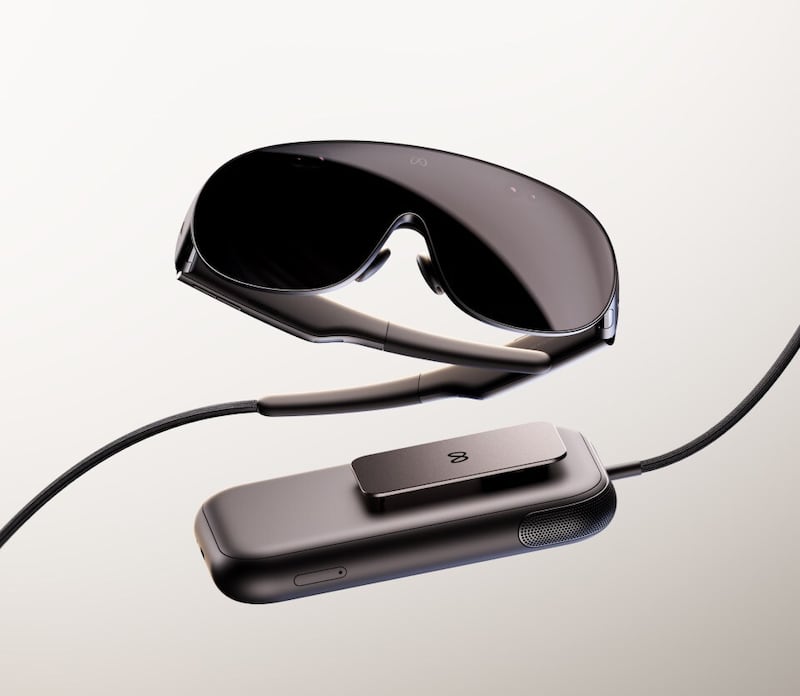
Meta Connect also offered a stage for the company to debut new eyewear — notably its first camera-free audio glasses and a pair of VR glasses. The former arrive amid mounting backlash against AI glasses due to privacy concerns, while the latter represents Meta’s best effort at VR technology since it rebranded from Facebook with a gargantuan bet on the metaverse. (Remember that?)
Together, they show off the scope of Meta’s vision for AI glasses, as the tech giant works to build an assortment with something for everyone. “By the end of the year, we’ll have introduced our widest lineup of AI glasses styles yet,” Meta said in a release. “With more than 100 different options, there will be a pair for every style and use case.”
Private eye(wear): The event showed that Meta hasn’t scaled back its vision for smart glasses, even as criticism has surged in recent months over reports they’re being used to film people — mostly women — without consent. That’s earned them the nickname “pervert glasses.” Meta didn’t position its new audio glasses, which dispense with the offending camera, as its response to this backlash. It just described them as being “for people who want true all-day wearability, with the power of earbuds and AI.” But the timing is hard to ignore.
ADVERTISEMENT
While it’s unclear how much the blowback may be hurting sales, which reached more than 7 million pairs in 2025, it threatens to inflict long-term damage on Meta’s eyewear ambitions. In an August note to clients, Bernstein analyst Luca Solca wrote that “the biggest advantage in smart glasses will not even be design or features, rather the best approach to the social trust issue.” Trust is something Meta could face challenges recapturing:
Virtual reality: The product that seems to have most impressed reviewers, however, is Meta’s new set of VR glasses. Instead of the bulky headsets we’ve become accustomed to seeing, they’re approaching the look of a pair of large, wraparound sunglasses. According to Meta, they weigh about 100 grams, making them five times lighter than its Meta Quest 3 headset. The trick is that they offload the processor and battery to a separate puck you carry, reducing the weight of the glasses themselves.
The glasses will go on sale next spring for $1,300, and some reviews have been glowing. Casey Newton, who writes the Platformer newsletter, called them “amazing,” while Bloomberg’s Power On newsletter from Mark Gurman described them as “what the Apple Vision Pro should have been.” Meta still faces an uphill battle getting the average person to shell out $1,300 for a face computer, but it’s getting closer to producing something people won’t reject on looks alone.
Meta may have pivoted more of its energy towards AI, but clearly Mark Zuckerberg hasn’t given up on the metaverse just yet.
Loading recommended reads…
The tech giant’s new AI agent brings the prospect that consumers could routinely use the technology to shop a step closer to reality.
Lynch is departing for Mattel after more than seven years in the role. A successor has yet to be announced.
Fashion and luxury houses like Dior and Balenciaga are reissuing discontinued scents in lieu of new juices. But nostalgia is no substitute for innovation.
The UK firm blamed a production error resulting in ‘water seepage’ for the disappearance of its newly launched camera-equipped toothbrush from stores.