Agenda-setting intelligence, analysis and advice for the global fashion community.
Agenda-setting intelligence, analysis and advice for the global fashion community.

Interviews and views on creativity and business in the world of luxury writ large — from fashion and watches to art, wellness, travel and more — from our chief luxury correspondent in Paris.
Subscribe to High Margin by Robert Williams: perspectives on creativity and business in the world of luxury.
Hello from Paris Art Week, where the ordre du jour was to keep calm and carry on until it wasn’t. Thursday, the organisers of Art Basel Paris announced they were closing this year’s fair two days early over concerns that France’s civil unrest would pick back up over the weekend.
It’s the right call for an event that caters to wealthy collectors, just a week after nationwide protests over affordability and degraded public services devolved into rioting and looting.
The cancelled weekend is a raw deal for gallerists and artists — particularly scrappier outfits that are more likely to make sales during the weekend, when collectors who can’t skip out on work attend the fair. (Big galleries are more likely to secure commitments in advance for blue-chip works, as well as sell heavily during VIP previews early in the week.)
ADVERTISEMENT
Before the cancellation, art week was off to a strong start despite kicking off just two days after the riots. Since the fair changed organisers and rebranded as Art Basel Paris, the week has taken on a new dimension. Art people had flown in from around the world in droves by the time of the opening party (now co-hosted by New York Magazine: more fun).
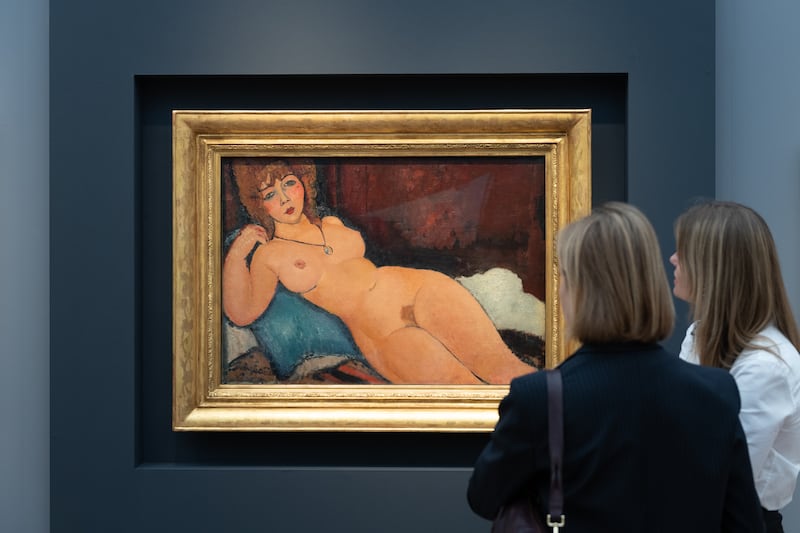
At this year’s edition, blue-chip galleries leaned heavily into blue-chip names, particularly from the 20th century. There was a $100 million Modigliani. There was a lot of Baselitz, some of which sold for around $10 million, and Fontana, of which Galerie Karsten Greve’s monumental ceramic torso was a highlight. There were also plenty of comments about feeling like we were dancing on the Titanic, or dining at Versailles in 1789.
Brands like Jacquemus, On, Audemars Piguet and Amex have also cancelled events scheduled for the coming days, while many luxury stores are beefing up security and boarding up their windows, anticipating that President Macron’s attempts to contain the unrest may do little to prevent an encore of last week’s looting.
At the time of writing, Offscreen — a satellite art week initiative that garnered rave reviews this year — and Paris Internationale had not yet cancelled but may be forced to. (Paris Internationale is held steps from the Place de la République, the longstanding epicentre of left-leaning protests in Paris.) As such, Ali Cherri’s party at the Palais de Tokyo Thursday night could be art week’s final bash.
Dancing on the Titanic is a familiar sensation for the fashion flock, as the industry spins on in the face of war, historic heatwaves and economic strain. After a narrative rooted in US resilience and incremental recovery took hold in the first half of the year, trading has deteriorated significantly in recent weeks while editors and stylists were busy weighing the relative merits of spring collections from New York to Shanghai.
After LVMH confirmed the renewed slowdown last week, this week it was Kering’s turn: The group’s sales came in just shy of analyst estimates, falling 1 percent compared to a consensus forecast for 1 percent organic growth.
Topline results looked like a modest speed bump on the road to recovery, with Kering faring little worse than LVMH. Kering’s fashion brands actually outperformed LVMH’s fashion division, declining 3 percent on a comparable basis compared to the larger group’s 5 percent drop.
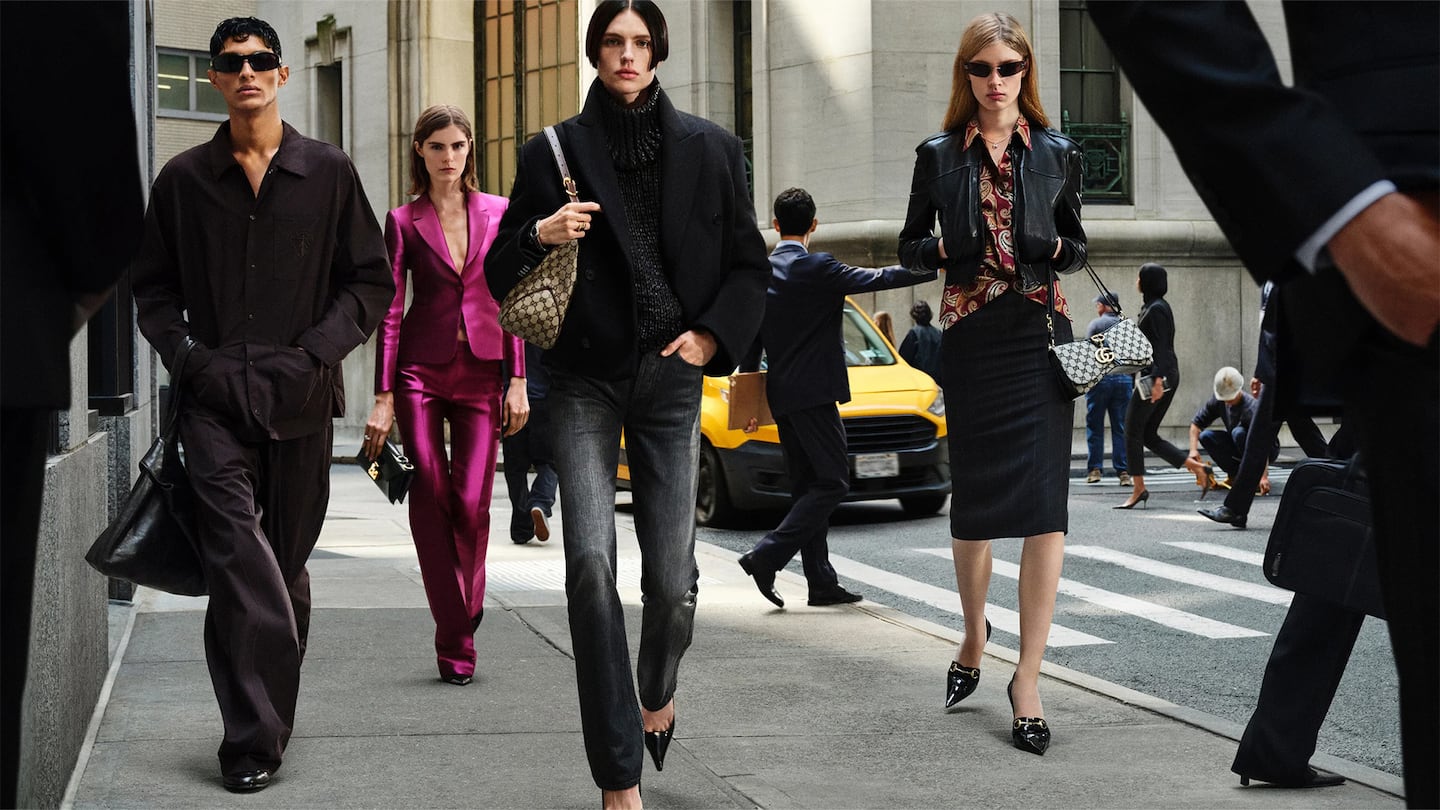
But under the hood, things are looking pretty grim for flagship brand Gucci — and as Gucci goes, so goes Kering, given that the Italian label accounts for more than half the company’s profit.
ADVERTISEMENT
Gucci’s retail sales fell 9 percent year-on-year. The brand’s Q3 revenue of €1.3 billion ($1.46 billion) has halved in just four years. It was the brand’s lowest Q3 since 2016 — worse than 2020, even. As if the Michele boom never happened.
Most players in luxury fashion have declined or at least slowed down over the past quarter, as weak demand in China got weaker following new measures aimed at taxing wealthy residents’ offshore income. Even Hermès missed estimates as growth came to a halt in China, its biggest market. But despite a very depressed basis of comparison, Gucci managed to report the worst performance of any major listed brand — a notable step backwards for its high-stakes turnaround push.
Shares fell 12 percent in after-hours trading as Kering also scrapped its guidance for a return to growth in 2026. Now the group is only pledging to improve its operating margin this year.
How does a company bounce back from such a precipitous decline? While Gucci could find room to lift its marketing budget as a percentage of sales, further cuts seem inevitable in absolute terms, making it harder to rebound.
Kering will also have a smaller footprint on which to stage a comeback: the group will curb fixed costs by shuttering stores, lifting its target for net closures from 100 to 125 this year (though many of those are undesirable, underperforming locations, the company says).
Demna’s last two Gucci shows in New York and Milan felt like big steps forward for the brand — the most recent one was a “breakthrough” even, according to BoF’s Tim Blanks. And yet sharpening Gucci’s image has yet to materially change the facts on the ground.
Kering’s transformation is “a multi-season undertaking,” CEO Luca de Meo said. But how much more time Francesca Bellettini and Demna will get to produce results at Gucci is unclear. Starting over with new leadership would be disruptive and exhausting for everyone. But the backsliding at Gucci may give De Meo a mandate to take more radical action, even as the group juggles creative transitions at several of its other brands.
Disclosure: LVMH is part of a group of investors who, together, hold a minority interest in The Business of Fashion. All investors have signed shareholders’ documentation guaranteeing BoF’s complete editorial independence.
Loading recommended reads…
Adidas’ preliminary earnings report shows that the brand is still growing at record rates. How long can it keep it up?
Bath & Body Works’ is the US’ most ubiquitous fragrance company. But to regain relevancy, a facelift — in more ways than one — is incoming.
The recovery long promised by luxury brands seems nowhere in sight, as the expansion of war in the Middle East, along with China’s tax crackdown on the wealthy, piled further pressure on the world’s biggest luxury conglomerates in the third quarter, and executives buckled in for a tough winter.
Sales fell in September as above-average temperatures hit demand for autumn clothing.