Agenda-setting intelligence, analysis and advice for the global fashion community.
Agenda-setting intelligence, analysis and advice for the global fashion community.

Lingua Franca built its brand, in no small part, on opposing Donald Trump. Its signature cashmere sweaters are sometimes embroidered with cheeky political slogans, with a part of proceeds going to the likes of Planned Parenthood and the ACLU. One of its best-sellers reads “I didn’t vote for him.”
But the brand had never celebrated the Fourth of July — until this year, which also happens to be America’s 250th anniversary. Considering the climate of polarisation in the US, Lingua Franca founder Rachelle Hruska MacPherson was admittedly cynical. “What’s there to celebrate?” she said.
But ignoring it didn’t feel right either. So, after days of mulling it over and conversations with friends in politics, Hruska MacPherson arrived at a different conclusion.
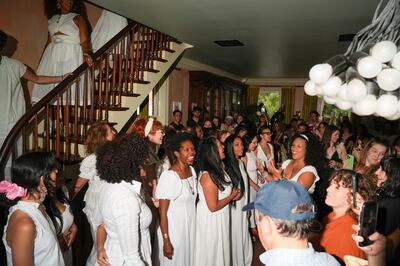
On the last Thursday of June, Lingua France invited hundreds of guests, including New York senator Chuck Schumer and Bravo star Carole Radziwill, to the three-story West Village townhouse home to the brand’s store and offices. As guests were serenaded by the all-female Resistance Revival choir, Hruska MacPherson moved about the crowd wearing a T-shirt covered in embroidered patches that say “No Kings” and “We the People,” a collaboration with public art project Tiny Pricks Project.
ADVERTISEMENT
“Celebrating Americans means celebrating the people that really define what makes America great,” she said.
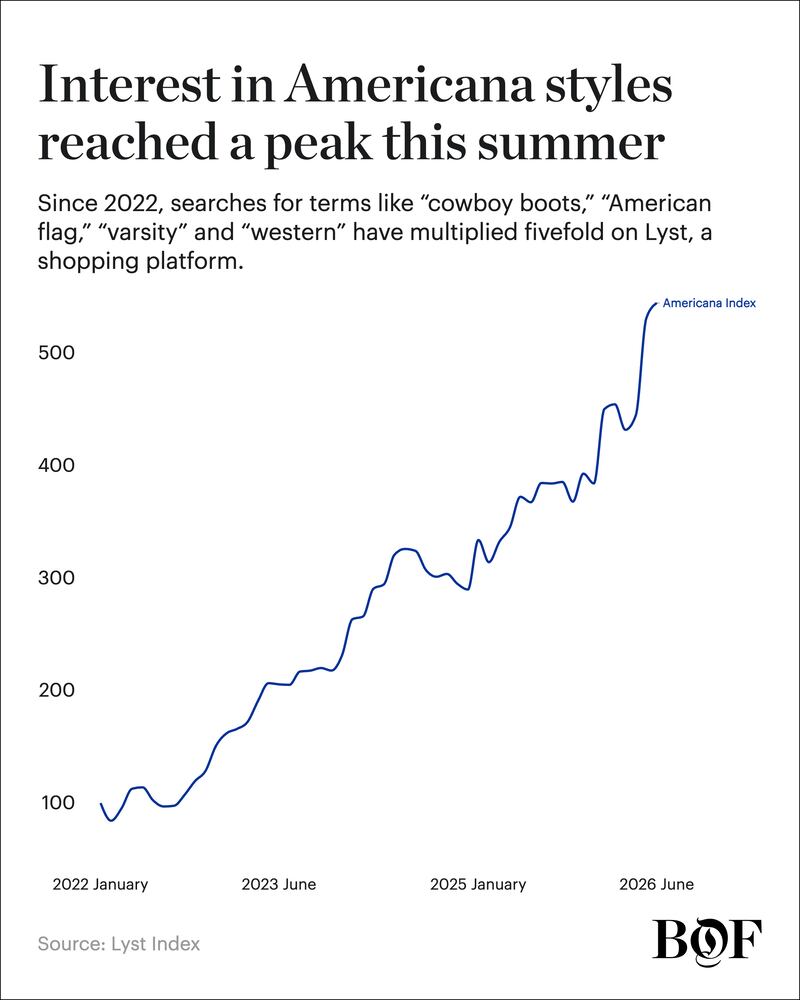
America is in a moment of whiplash. Despite internal political turmoil and a diminished reputation abroad, when it comes to fashion, Americana is seeing a renewed relevance, from cowboy boots and workwear to the return of traditional Ivy League prep. Interest in Americana as signified by search terms such as “western,” “varsity,” and “American flag” increased five-fold since 2022, reaching a peak this summer, according to data from Lyst. Queries for specific styles such as utility vests and buckle belts have surged double-digits year-over-year, according to Trendalytics. Ralph Lauren’s focus on its American identity, for instance, has helped it outperform much of the luxury sector, with sales up 15 percent in its most recent fiscal year, driven by double-digit growth in Asia and Europe.
But despite their commercial success, the biggest labels that have built their identity around Americana, are mostly staying quiet for America’s 250th: Lingua Franca may be the only brand so far to host a public celebration pegged to the anniversary.
Ralph Lauren, along with Tommy Hilfiger-owned PVH, J.Crew, Gap, L.L. Bean and other major retailers have continued to expand their signature Americana assortments while eschewing any major marketing fanfare around the national milestone. Last month, Ralph Lauren released a collection of commemorative stamps for the US Postal Service. Online, Tommy Hilfiger is the only one explicitly merchandising to Americana, promoting its “Classic American Cool” assortment on its homepage. All of the aforementioned companies declined to comment on the record for this story.
“It sometimes feels like the most difficult place to talk about the US is inside the US,” said Marco Tamponi, the Turin-based creative director of Sebago, an American heritage footwear brand that was acquired by Italian group BasicNet in 2017. In the last year, Sebago’s embrace of a New England-inspired nautical aesthetic helped it generate triple-digit sales growth among its European customers in the last year.
There’s good reason to tread carefully. Adopting overt displays of nationalism may be perceived as an endorsement of Trump’s unpopular geopolitics or particular brand of theatrical patriotism, such as turning the White House lawn into a wrestling arena in celebration of the 250th. In an era of culture wars, brands are hyper-aware of how easy it is to alienate shoppers. Bud Light’s sales, for example, still haven’t recovered from the politically-charged boycott that arrived after it worked with transgender content creator Dylan Mulvaney in 2023.
That may explain why, ahead of the national milestone, the Council of Fashion Designers of America tapped its network of American designers to reimagine state flags rather than the singular star-spangled banner.
“What I see people connecting to in terms of the celebration is the heritage and richness [of the country] rather than patriotic flag waving,” said Steven Kolb, the organisation’s chief executive.
ADVERTISEMENT
With or without commemorating the 250th, major American retailers are and have continued to welcome their American identities, said retail analyst Dana Telsey, pointing to Ralph Lauren’s frequent role in the Olympics and Levi’s participation in the Super Bowl (which took place at its branded stadium in February).
“They’ve shown they can attract different demographics, different ages and different income levels,” she said. “Their marketing has been effective as evidenced by their sales.”
But the public mood is shifting. For people like Hruska MacPherson, there is a growing appetite to strip away the partisan baggage from the American flag and other symbols.
“The idea that someone can be labeled as a Trump supporter based on what they’re wearing and is worth getting mad about just started to feel very tired,” said Biz Sherbert, the writer behind the Substack newsletter American Style. “People got very burned out on trying to assign profound meaning to every aesthetic choice.”

To be sure, Americana has always existed in the canon of modern style. It was American entrepreneurs who invented ready to wear, as well as the minimalist uniform of a white T-shirt and jeans, noted Avery Trufelman, host and producer of “Articles of Interest,” a podcast that explores the meaning behind clothes
“Every generation has a different version of Americana fashion that they grew up with, every decade for preppy, westernwear and military surplus,” she said. “They’ve never really gone out of style.”
But today’s progressive tastemakers have tapped into a new kind of cachet by embracing conventionally conservative cultural touchstones, such as country music à la Beyoncé’s Cowboy Carter or high fashion co-opting blue collar workwear. Trufelman points to the rising popularity of line dancing in New York.
“I wouldn’t have been caught dead wearing a cowboy hat 20 years ago because it was something associated with a political side,” said Philip Fimmano, trend analyst at Studio Edelkoort. “Today when I wear one, it’s much more layered.”
ADVERTISEMENT
Beyond Trump’s polemics, celebrating America means having to acknowledge the other complicated, dissonant and often violent realities of this nation’s past.
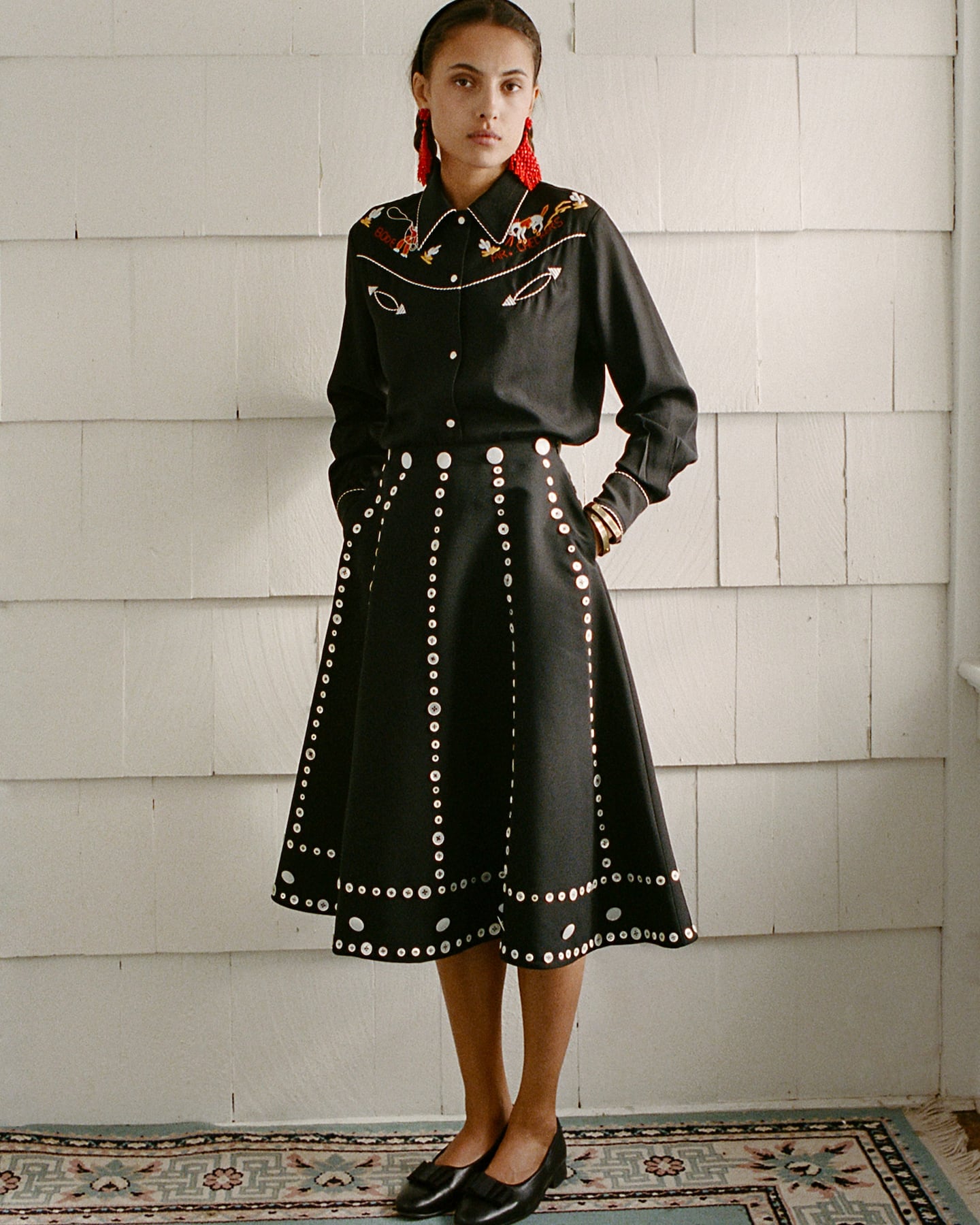
Fashion’s status quo may be to avoid the topic at all costs, but some of America’s most influential designers have long explored the country’s history and contradictions through their work, from Emily Bode’s reimagining of homespun Americana and heirloom craft traditions to Willy Chavarria’s interpretation of the American Dream through the lens of immigration and Chicano identity.
For each, their American identity plays a different role in the context of their designs. If today’s embrace of Americana strips the aesthetic from its historical and political context, Tremaine Emory insists the two are inseparable. His label Denim Tears reworks classic American sportswear through the history of the cotton trade and the Black American experience, reinterpreting, for example, Ralph Lauren’s American flag sweater with the colours of the pan-African flag: red, black and green.
“It’s dangerous when people represent symbols without acknowledging history, or choose to acknowledge one side of it, whether it’s cowboy boots or a Navajo sweater or the American flag sweater,” the designer said.
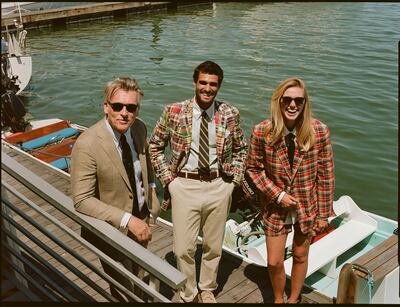
For J.Press, the Ivy League outfitter founded in 1902 and recently revived under creative director Jack Carlson, American manufacturing is a major tenet of its brand, though Carlson was reluctant to embrace it at first.
“‘Made in USA’ is such a big part of our message, but I had to think a lot about how do you tell this story without it coming across as politically charged,” he said. “But actually, there wasn’t much of that. I think it’s being decoupled from the politicisation even compared to a few years ago.”
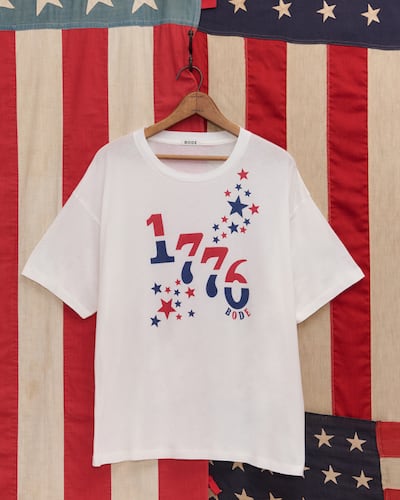
For Bode, a designer known for quilting techniques and heirloom textiles, the American identity of her label is rooted more in shared memory, elevating ordinary objects and family histories into a national narrative. Bode believes that coming across shared history reflected in a piece of clothing allows people to engage with one another regardless of their differing points of view.
“Maybe that seems counterintuitive to have so many people focused on utilising the American flag or hyper-American themes but I think the opposite,” she added. “I think it allows you to be unified with your American identity, and with everybody regardless of political divide.”
Perhaps the idea that a single garment can carry a coherent national identity is a stretch. Clothing can evoke history, place or memory, but the intention behind how it’s worn can differ in countless ways. Emory said he’s sceptical that most people are attaching any kind of meaning onto the Americana trend.
Still, fashion is and always will be a mirror held up to the world it inhabits. If brands and their customers are returning to the symbols of Americana, it is because those symbols, however contested, have once again become a way of making sense of the country itself.
At her party last week, Hruska MacPherson hadn’t planned to hang American flags. In the end, she changed her mind, decorating the Lingua Franca townhouse with vintage-inspired bunting draped across its windowsills.
“I hope it’s not off-putting to people,” Hruska said. “You should be able to have a flag and not have it mean what you are politically, but just that you’re a proud American.”
American brands have recaptured the zeitgeist — and market share — as Europe’s luxury slump persists. As the sector’s biggest names plot a comeback, there may be lessons to take from across the pond.
Trump’s “America First” trade agenda is designed to encourage domestic manufacturing. But ambitions to move more apparel production to the US have been stymied for years by limited capacity and high costs.

Cathaleen Chen is Retail Editor at The Business of Fashion. She is based in New York and drives BoF’s coverage of the retail and direct-to-consumer sectors.
Loading recommended reads…
This week, Europe’s leading luxury groups LVMH, Kering, Hermès and Prada will show who’s pulling ahead in the stubbornly choppy environment.
Sales of gems, precious metals and artwork at Japan’s department stores climbed 19 percent in the first half of 2026 from a year earlier to $2 billion.
Though Adidas dressed both teams in the World Cup finals, the global football tournament still presented some bright spots for Nike, writes Bloomberg’s Andrea Felsted.
From our archive, the creator and host of award-winning podcast “Articles of Interest” joins BoF founder, CEO and editor-in-chief Imran Amed to explore what clothing can reveal about identity, culture, labour and the world around us.