Agenda-setting intelligence, analysis and advice for the global fashion community.
Agenda-setting intelligence, analysis and advice for the global fashion community.

Read “Navigating the Unravelling of Multibrand Retail,” BoF’s special memo for executive members breaking down the changing dynamics of wholesale.
Fashion brands have for years treated wholesale expansion as a relatively low-risk way to scale. Product was shipped, payment collected and attention turned to the next season.
That assumption no longer holds.
As multibrand retailers face mounting financial strain, each shipment now raises questions not just about sell-through, but about credit exposure, inventory ownership and who bears the losses when things go wrong. What was once a dependable growth channel has increasingly become a potential liability.
ADVERTISEMENT
Wholesale terms are tightening in response, with retailers pushing for longer payment windows, more flexibility on markdowns and greater protection for themselves. Brands are simultaneously trying to claw back control.
The result is a more contested, less forgiving wholesale environment than in the past.
In today’s market, when it comes time to negotiate, risk allocation is as important as price. Brands must decide how much financial exposure they are willing to assume on behalf of their wholesale partners, and under what conditions.
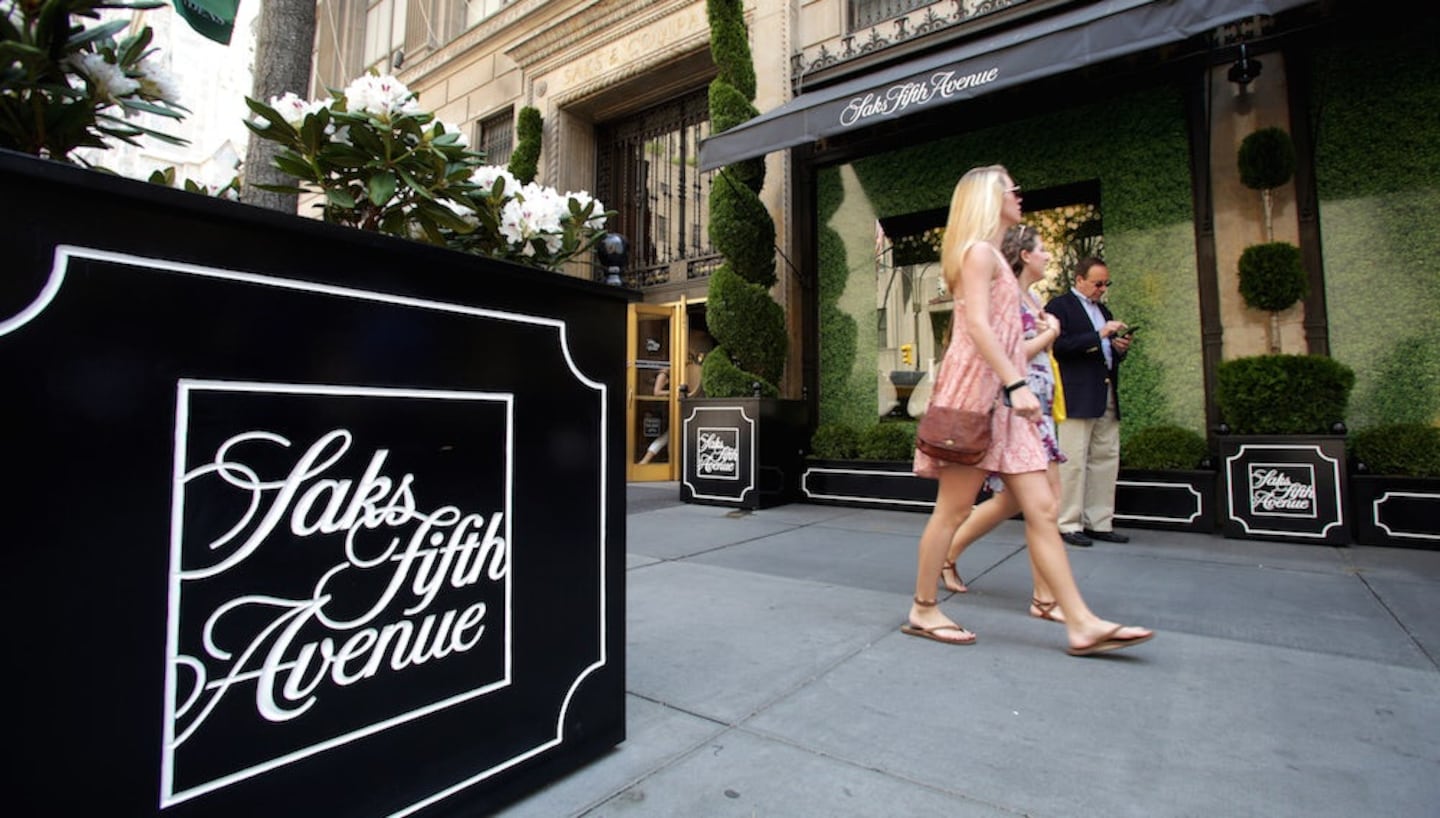
This reality was put into sharp relief with the January 2026 bankruptcy of Saks Global, which left many brands at risk as unsecured creditors. Saks managed to secure $1.75 billion in financing as part of its restructuring, prompting a number of brands to resume shipping to the retailer, but they remain without guarantees of Saks’ long-term stability.
To safeguard against such situations and future financial problems, brands have a number of conditions they can try to impose on multibrand retailers.
• Tighter payment timing: Brands can require payment within 30 days of the retailer receiving their merchandise, known as net 30, rather than the 60-day or even 90-day terms some retailers demand, including Saks in the past. That isn’t a blanket protection, but it can help with liquidity.
• Retention of title and reclamation rights: Contracts can stipulate that inventory remains brand-owned until paid for, with explicit rights to reclaim goods in the event of delayed payment or restructuring.
• Use of a concession model: Under this arrangement, brands retain ownership of inventory and operate their own shop-within-a-shop, rather than traditional wholesale. This protects against products being stuck in bankruptcy proceedings.
ADVERTISEMENT
• Markdown and pricing controls: Retailers may be barred from unilateral discounting, which can happen when a department store has financial troubles, with caps on markdowns and timing or mandatory returns of a brand’s underperforming inventory instead of promotions.
• Disciplined assortment and volume limits: Brands can reduce SKU counts, limit depth per style and avoid shipping core or iconic products, minimising exposure.
• Enhanced data transparency and early-warning triggers: Weekly sell-through reporting, visibility into inventory movements and contractual disclosure of financial stress help brands react before problems escalate.
Larger fashion players, such as those with more than $100 million in annual revenue and mature retail channels of their own, have more leverage in negotiations. They may be less dependent on wholesale, with proven demand and strong brand pull that is attractive to a retailer. For these players, wholesale negotiations have become an extension of balance-sheet management, not just a commercial discussion. Because of their advantages, they have greater ability to request concessions.
Smaller brands often have less negotiating power, but that doesn’t mean they should accept structurally dangerous terms. In an environment where retailer failure is a real possibility, brands should generally treat extended payment terms and vague markdown rights as material credit risks.
• Extended payment terms without collateral, guarantees or insurance
• Lack of visibility into markdown timing, depth and channel
• Requests for exclusivity without meaningful volume or marketing commitments
ADVERTISEMENT
At the same time, brands must avoid pushing wholesale partners into unsustainable positions. Overly aggressive terms may protect short-term cash flow but accelerate retailer distress, ultimately shrinking the ecosystem further. The goal is not to extract maximum leverage, but to structure relationships that are durable, transparent and aligned with long-term brand interests.
If a retailer is deemed to be fundamentally sound and can use longer payment terms to fund the acquisition of a brand’s new collection, that can be a worthwhile tradeoff. Id.Eight has done just that. The brand, which makes its sneakers in Portugal, has offered its retail partners faster deliveries at no extra cost as a counterbalance to competitors who manufacture in China and other parts of Asia, where shipping to Europe can take weeks.
Want to dive deeper? Check out “Navigating the Unravelling of Multibrand Retail,” BoF’s special memo for executive members breaking down the changing dynamics of wholesale.
Wholesale remains essential for the luxury industry, but the rules of engagement have changed. Brands need to know how to minimise the risks and maximise the rewards in their relationships with multibrand players.
Matches is plotting yet another reboot, Ssense has a restructuring lifeline and an interest payment looms for Saks. Together, they signal an industry in crisis, but hope springs eternal.
As major luxury retailers from Saks to Ssense struggle, independent boutiques are making a comeback.

Eric Sylvers is Milan Correspondent at The Business of Fashion. He is based in Milan and leads BoF’s coverage of all things Italian.
Loading recommended reads…
The retailer swung to a loss as sales slowed after the US removed the de minimis exemption on small packages and it incurred a hefty one-time accounting charge.
This week, Europe’s leading luxury groups LVMH, Kering, Hermès and Prada will show who’s pulling ahead in the stubbornly choppy environment.
Sales of gems, precious metals and artwork at Japan’s department stores climbed 19 percent in the first half of 2026 from a year earlier to $2 billion.
Though Adidas dressed both teams in the World Cup finals, the global football tournament still presented some bright spots for Nike, writes Bloomberg’s Andrea Felsted.