Agenda-setting intelligence, analysis and advice for the global fashion community.
Agenda-setting intelligence, analysis and advice for the global fashion community.
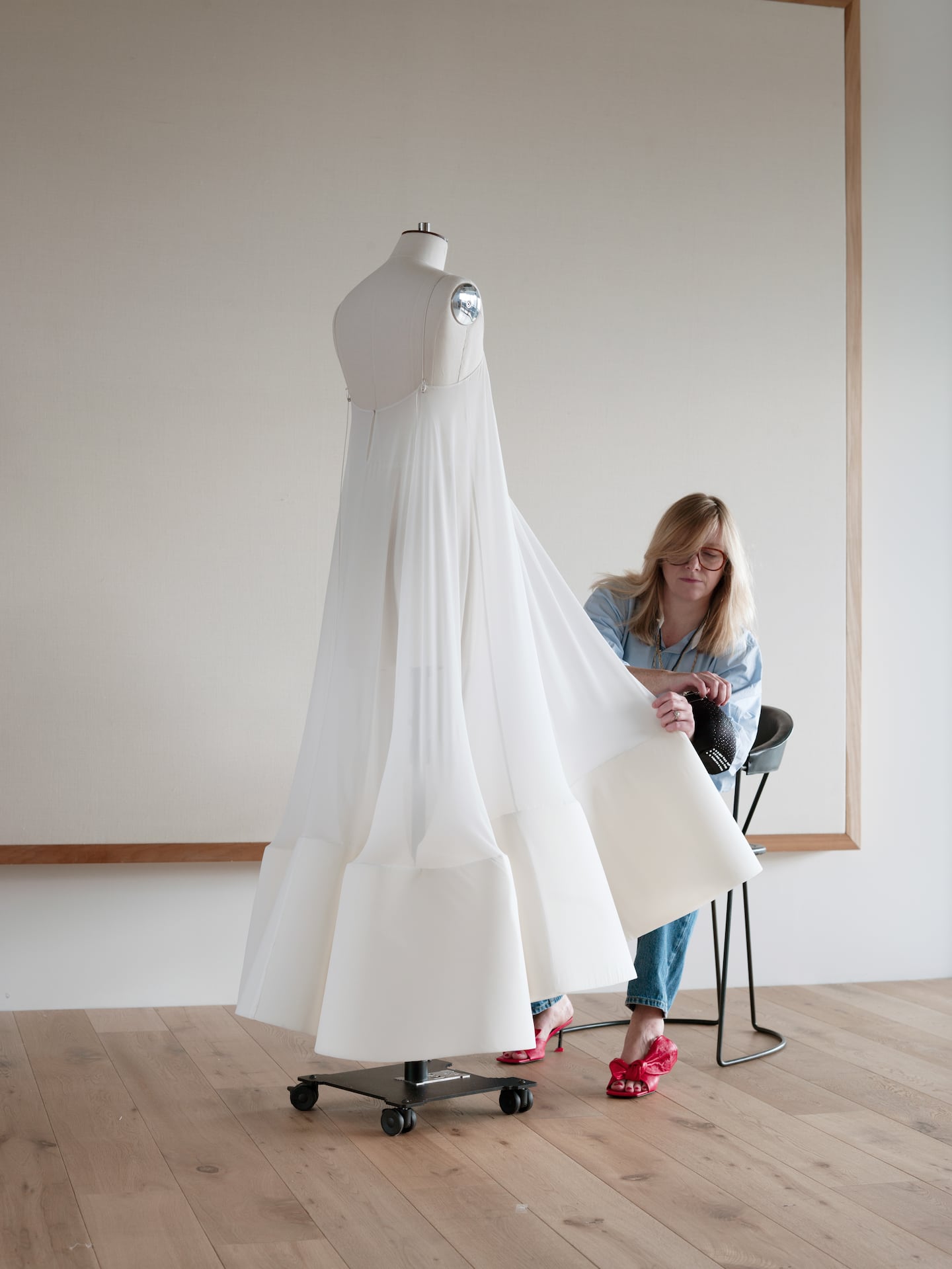
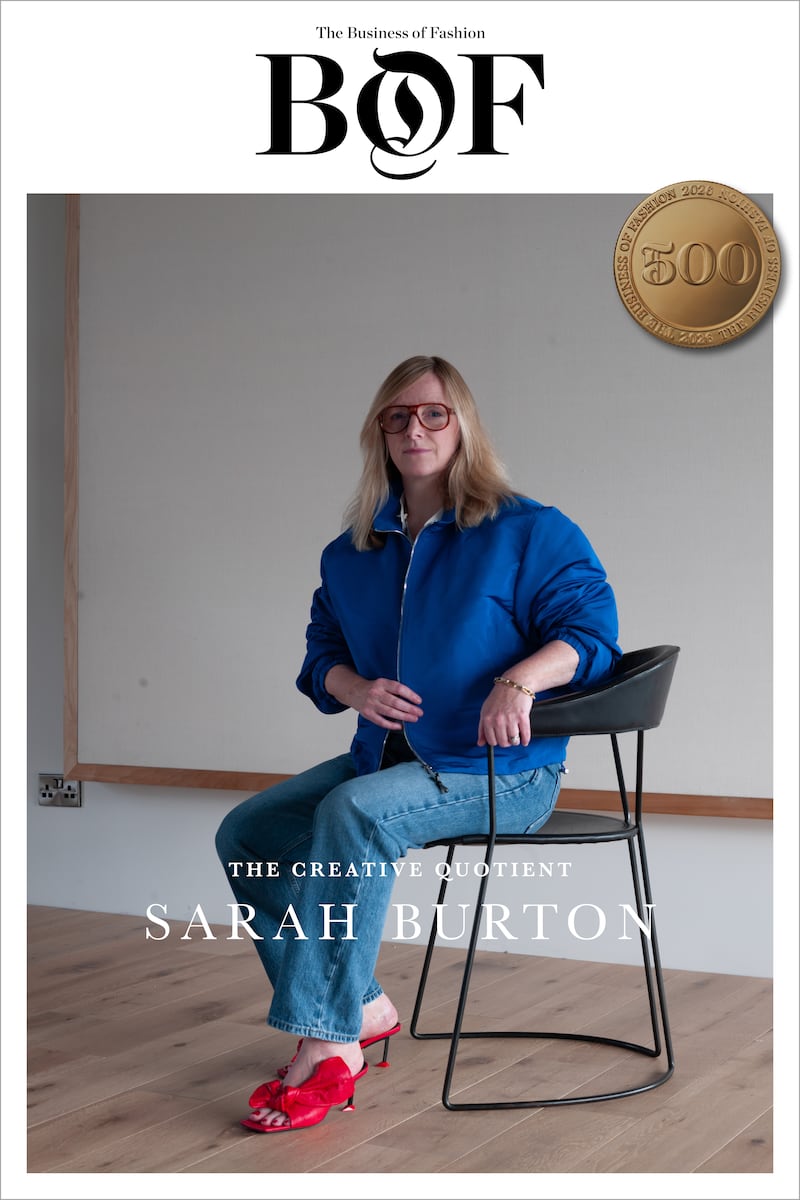
PARIS — “The appealing thing to me about Givenchy,” Sarah Burton says, “was that I could really have a voice here.”
It’s been two years since Burton moved into her office at the French couture house, a sparsely furnished, sunwashed Haussmannian room that is oddly devoid of clutter. It’s not where the designer spends her time. She’s an avid drawer, despite being known for a sculptural vision of fashion that requires countless adjustments on the body. But Burton does most of her sketching in London, where she maintains a small studio to experiment on show pieces and special projects.
In Paris, her days are mostly spent in the fitting room — thinking by doing, deciding by cutting — and in the open-plan studio, where she’s knocked down the walls to erase the traditional division between tailoring and flou.
“We have a fit model in the building every day. And during fittings, three. It’s all about manipulating, cutting, understanding the human body. So you understand exactly where a woman wants to show her flesh, exactly how much bust she wants to show, exactly how much leg,” Burton says. “We do everything in the same space, from flou to tailoring to knitwear to denim to t-shirts — everything — because it’s all got to have the same language.”
ADVERTISEMENT
It’s strange to think of Sarah Burton as in need of discovering her voice. During 13 years as creative director of Alexander McQueen, the designer not only shepherded the house through the grim days following founder Lee’s death, but ultimately made it her own. She softened the brand’s message, making space for a gentler, more romantic approach, with collections that were anchored in the reality of women’s lives. Tailoring was enhanced as the house’s core expertise, but was employed less for making ultra-charged, searing fashion images than in the service of the exultation of women and their individual bodies. Burton’s approach assured the house’s survival — far from guaranteed — and attracted celebrity commissions ranging from Catherine, Princess of Wales’ wedding dress to a crystal-covered catsuit worn by Beyoncé during her 2023 Renaissance tour. By the end of her tenure, Burton had established herself as a modern master in her own right, with pieces from her collections housed in institutions including the Met, LACMA and the V&A.
Upon leaving McQueen in 2023, Burton found herself without a job for the first time since she first joined the brand as an intern in 1996, a fashion savant sent off by her tutors at Central Saint Martins to apprentice at what was then fashion’s scrappiest, most exciting young outfit. She joined full-time after graduating in 1997.
“I’d worked with Lee for so long that it was a house that I’d been brought up in. I knew the codes, what the language was. All we did was storytelling, but it was always about finding my stories within that language. After leaving I finally had a moment to think, ‘Well, what do I want to say?’” Burton remembers.
When the call came in from Givenchy owner LVMH, it hardly seemed the obvious place to establish her own fashion language beyond her mentor’s blueprint. The collections designed by Lee McQueen when he was Givenchy’s creative director from 1996 to 2001 revolutionised the brand, propelling the once fusty, aristocratic label into the zeitgeist, and remain among fashion’s most iconic references to this day.
But rather than seeing the opportunity as a chance — an imposition, perhaps — to stand once again in Lee’s shadow, Burton saw the house as a blank slate.
Since founder Hubert de Givenchy’s departure in 1995, the house had been buffeted by vision after vision, from John Galliano and McQueen’s theatricality to Julien Macdonald’s unabashed glamour, Riccardo Tisci’s fusion of lacy, gothic sensuality and pop culture, Clare Waight Keller’s polished elegance and (most recently) Matthew Williams’s industrial edge; each had offered a different attempt at cracking the Givenchy code — a puzzle that only got trickier as frequent turnover scrambled its identity.
While that’s been to the detriment of Givenchy’s business, it created space for Burton — its seventh creative director in 29 years — to decide what she wanted the house to be, with little obligation to follow in any of her predecessors’ footsteps, including Lee’s.
If, at McQueen, Burton was handed lightning in a bottle, at Givenchy she would need to create it. “I felt like Givenchy has resources enough that you can say something, and yet somehow it’s not so established. It doesn’t have an obvious coding the way some houses do,” she says. “It needed a beginning as much as it needed a future, somehow.”
ADVERTISEMENT
“I like things that need a bit of nurturing,” she adds.
In the space of just four womenswear runway collections, Burton has managed not only to cleanse the house’s palette, but to establish a new Givenchy silhouette. Her work has revived the brand’s relatively few aesthetic codes — the white shirt, the little black dress, the smoking jacket — while making a fresh statement about the philosophical underpinnings of Givenchy: a relationship to women, a veneration of the body through the cut of the garment.
Starting with her debut show in March 2025, Burton has developed a tense hourglass shape blending sensuality and structure. Hip-hugging skirts, cinch-waisted jackets and balloon-sleeve blouses have been deconstructed and reconstructed, often passing between the ateliers for tailoring and flou, menswear and womenswear as Burton and her team pursue a constant tension between structure and intimacy, a body that is both exposed and contained.
“It’s a house about silhouette. I wanted to strip everything away to start off with, to get to the core of what the clothes want to look like. Let’s strip it back to the woman and the body and the shape. And it’s actually hard, much harder, to cut something that’s clean than to put lots of stuff on top of it,” Burton says.
As Burton establishes her Givenchy language, her designs invite a sort of fashion etymology: The opening jacket of her Autumn/Winter 2026 collection features an inverted lapel, its notches framing the navel in an example of the kind of subtle eroticism that is a signature of the designer. It’s a jacket that was cut open during fittings, Burton says, its collar tipped forward and then flattened against the body. “I was thinking, how do you take the notion of a lapel and make it into something abstracted in a way? That’s when it can’t come from a drawing or Photoshop — we do fittings upon fittings upon fittings.”
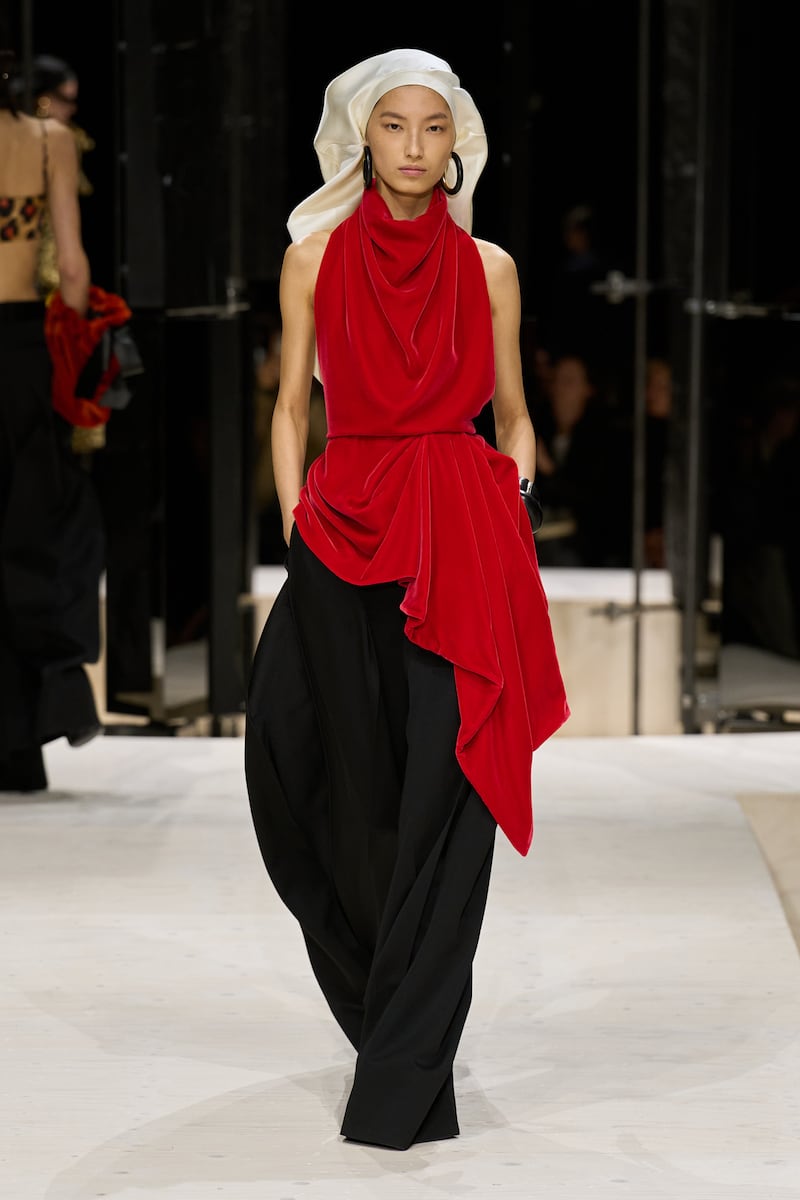
Go back to Spring/Summer 2026 and you’ll find the same jacket at an earlier stage of its evolution — this time appearing as a little black dress, fashioned from a sort of boyfriend coat with its back slashed open, the lapels sticking up to accentuate the shoulders. In Autumn/Winter 2025 it had been a smoking jacket again — more structured, armoured even: a nipped-waist number with rounded sleeves. Watching the garment change from a jacket to a dress to a jacket again as it’s folded against the body would feel like fashion origami — were it not for the intrusion of Burton’s ever-ready scissors.
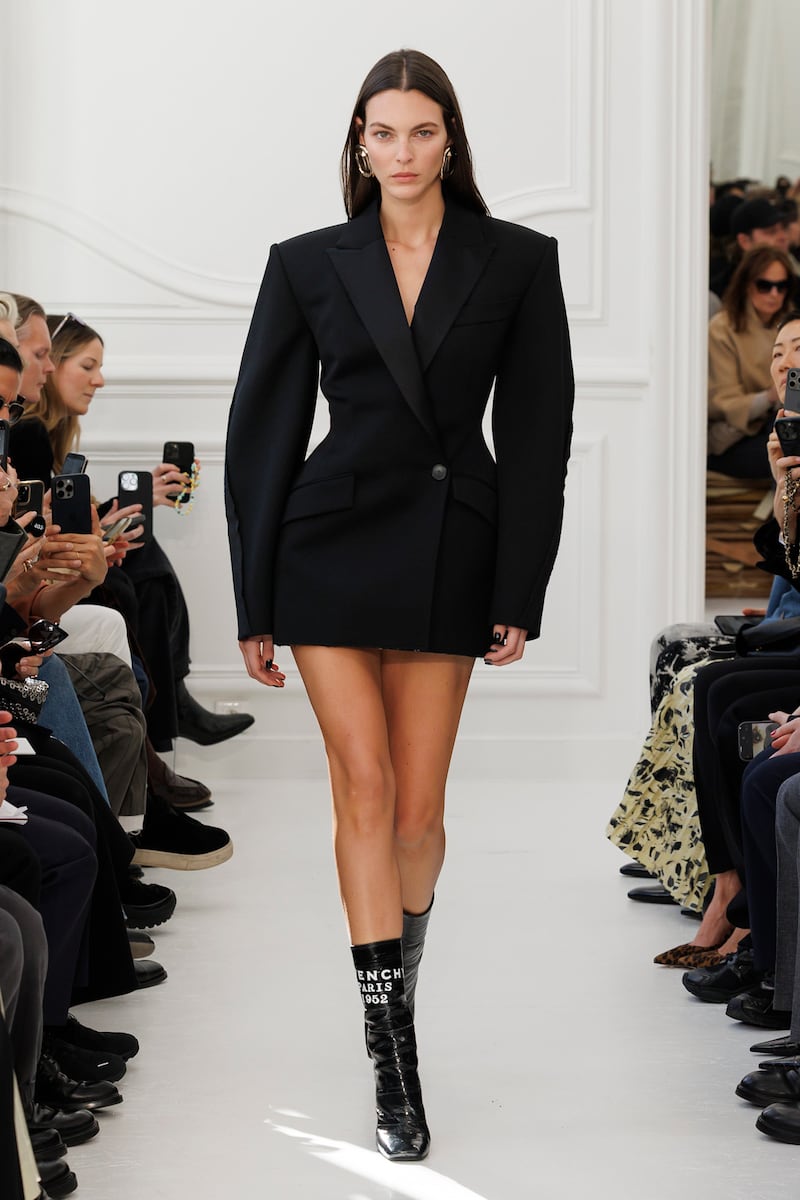
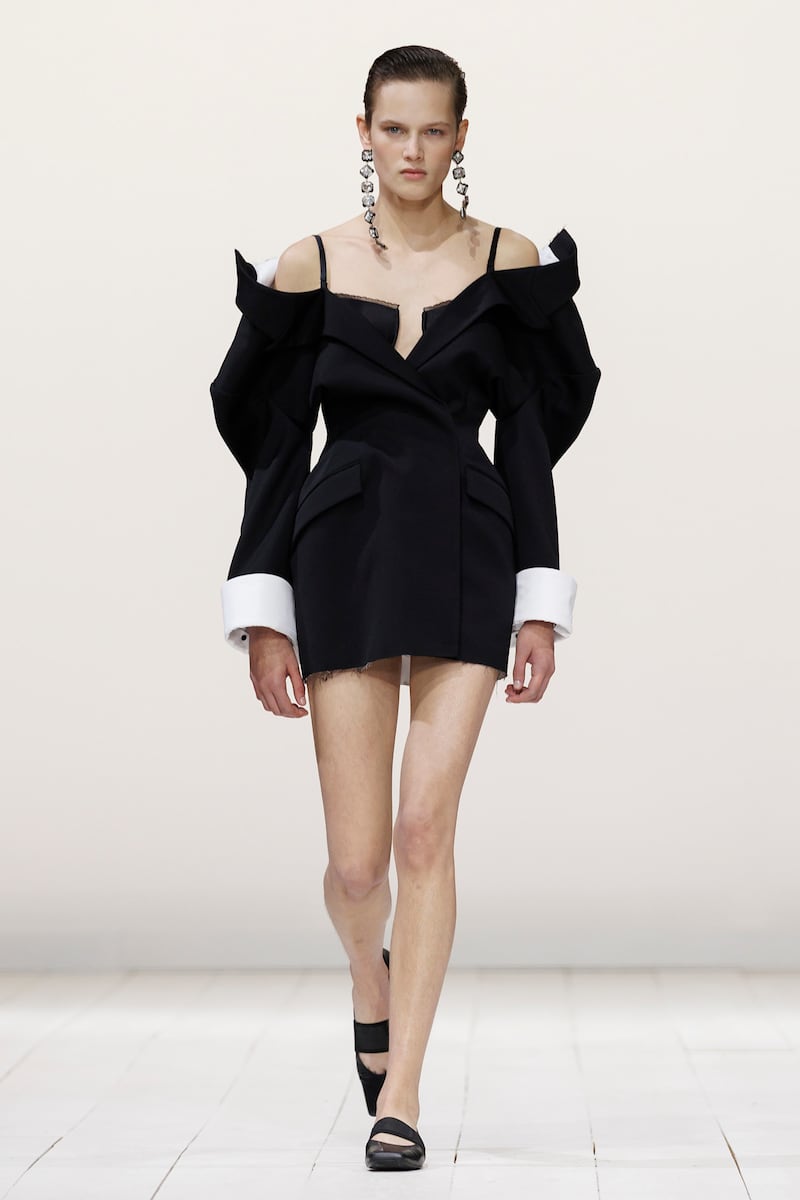
In the fitting room in September 2026, exactly one month out from her Spring/Summer 2027 show, a key jacket for the collection is still giving Burton and her team some trouble. Working in tandem with her design director Matteo Russo, they smooth the shoulder — squinting to see why it keeps pulling up — and adjust the length of a central tail. Longtime stylist and advisor Camilla Nickerson paces nearby, keeping one eye on the look being assembled while contemplating the boards where the current lineup is on display. Blink and you miss it: the tail of that jacket is no longer being shortened, but rather hacked off almost entirely.
Burton describes her work as “not quite graphic, but having a graphic system to it, and a certain approach to sexuality and sensuality that comes from that — from being able to move a line and then that’s enough. It’s not a voyeuristic, ‘look at this’ type of sexuality,” she says. Except, of course, when it is: when that jacket goes down the runway on Friday, Oct. 2, 2026, I realise the cut-off coattail now draws a line straight across the buttocks.
ADVERTISEMENT
Eroticism through steering the eye, balancing concealment and revelation is a point of common ground between Burton and Givenchy’s founder, Hubert. Particularly in his storied partnership with Audrey Hepburn, clean architectural lines framed and even edited the body — imbuing the shoulder, the back, the neck with a sensuous charge that still jumps off the silver screen 60 years later. Hubert’s first collections had a whiff of Hitchcock to them, too, in Burton’s view — the vamping models in his couture salons giving off an air of self-aware, controlled sensuality.
Burton’s unmistakably female gaze has echoes in cinema, too. “Transparent” director Joey Soloway’s principle of “the feeling camera” comes to mind — the idea that the best way to avoid exploiting a body is to capture the experience of being in one: flushed skin, shortness of breath, a racing heart.
Burton brings a similar perspective to fashion. Her Spring/Summer 2026 show, for example, achieved a palpable eroticism by exploring intimacy: a man’s jacket worn over the shoulders becoming a dress, or when knotted around the waist becoming a wrapped skirt. For her Autumn/Winter 2026 campaign, photographer Juergen Teller and art directors M/M Paris posed models Kaia Gerber, Eva Herzigova, Nyaduola Gabriel and Liu Wen against a raw mineral landscape in Croatia. In some shots their bodies are pressed against the rock. “It’s about paganism, nature and roughness, feeling connected to the earth,” the designer says. “A contrast between fantasy and reality.”
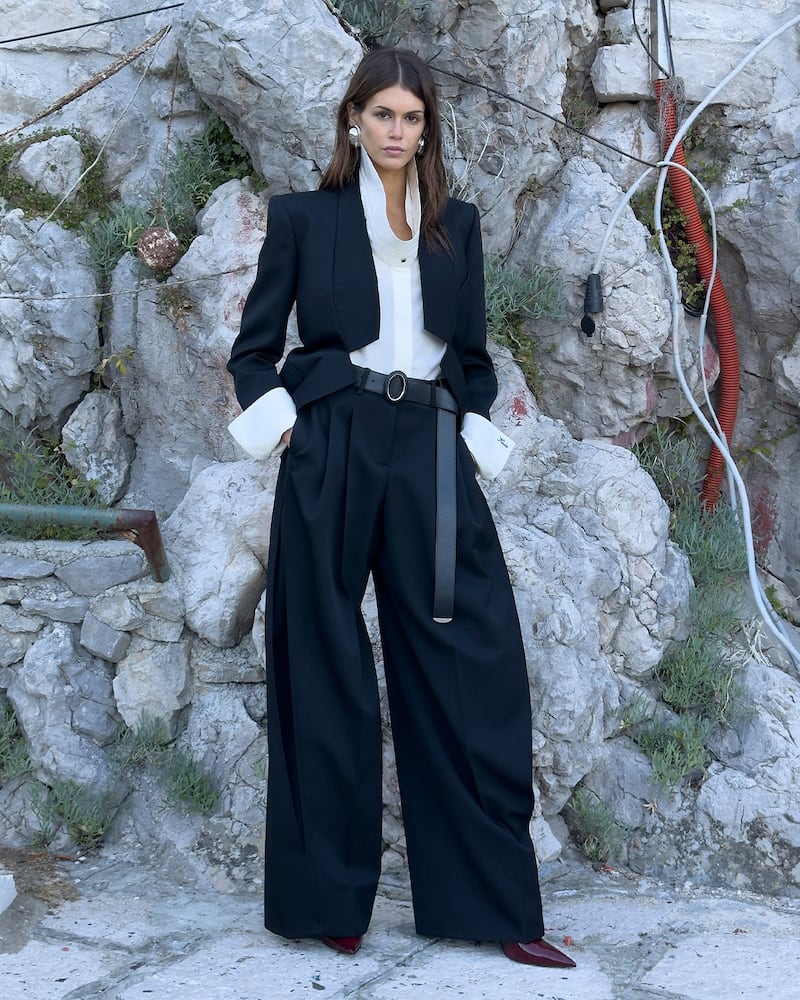
Upon arriving at Givenchy, Burton says she pulled pieces from the archive from Hubert, Galliano and Lee McQueen. But more than the aesthetic heritage of the house, it’s been the founding impulse that she connects with. While his contemporary and close friend Cristóbal Balenciaga was putting forth bold experiments in the geometry of clothes, and Christian Dior was embellishing his carefully delineated fantasy of post-war neoromanticism, Hubert de Givenchy championed refinement as much as radicalism. He is remembered for his intimate understanding of clients — how they wanted to look and feel in clothes — as much as for his formal experiments.
“For me Givenchy is about silhouette and it’s about how you address the reality of life. I’m fascinated by the reality of a woman’s body, of a woman’s day, of how a woman walks through this world,” Burton says. Fittings aren’t just a moment of innovation and experimentation, but of exchange. “I like the contrast within women. How one minute you can want to feel powerful, the next you want to feel sexy, beautiful, vulnerable.”
“All women have a thing that they like about themselves or that they don’t like about themselves, no matter what size. I think it’s really that intuition of finding how somebody feels amazing,” Burton says.
“There is an image of a body, but then there’s reality. Hopefully the fashion I’m making is for living, breathing people. Maybe it’s not the thing of the day, but it’s something I really believe in,” she adds.
Burton believes, and much of the industry is inclined to believe with her. Few designers have amassed such tremendous goodwill as Sarah Burton over the course of her career — thanks to her masterful touch, particularly when it comes to tailoring and tailored flou, her graceful shouldering of Alexander McQueen’s creative leadership following Lee’s 2010 death, and her success conquering new territory for the brand while respecting its founding vision.
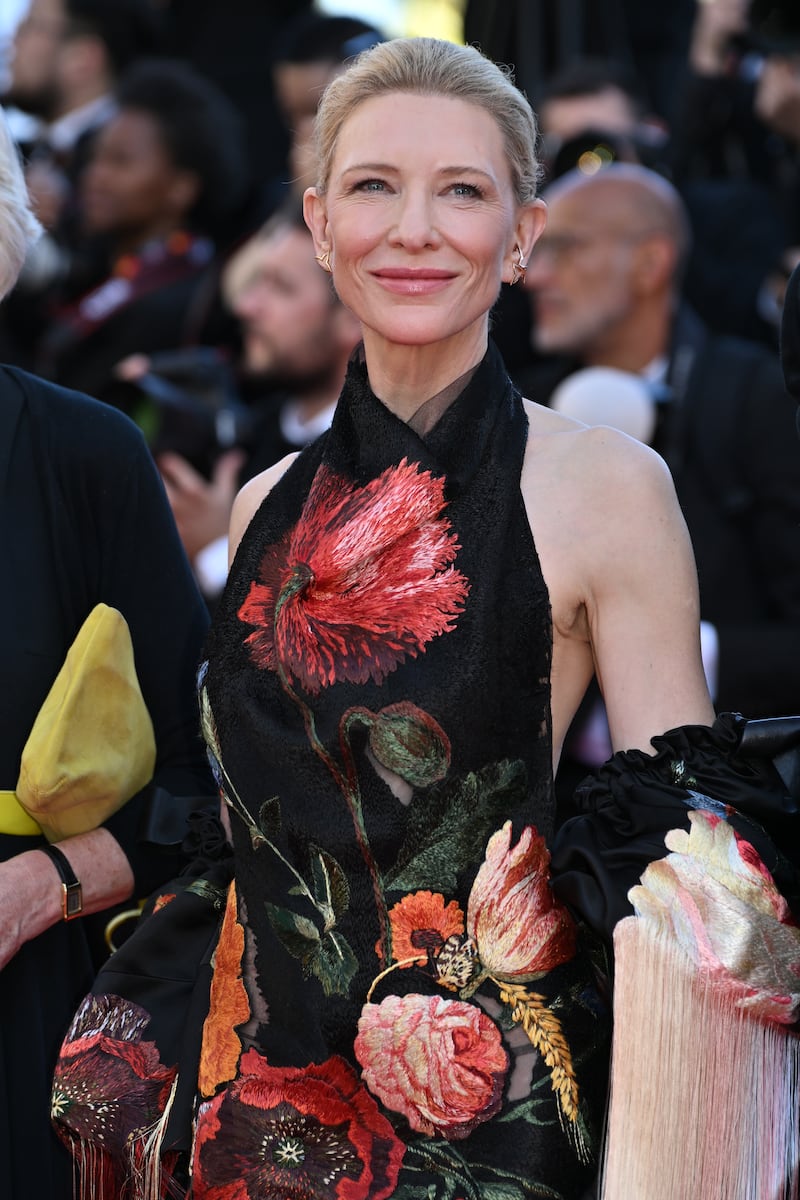
Burton’s Givenchy has quickly made its way back onto magazine covers, the red carpet and the department-store floor. In September 2025, Anne Hathaway wore all custom Givenchy by Sarah Burton for a cover shoot for American Vogue. Elle Fanning and Timothée Chalamet wore it on the Oscars red carpet; Cate Blanchett wore it in Cannes. With limited budget for celebrity partnerships, the brand has nonetheless attracted stars including Jenna Ortega, Charlize Theron and Cynthia Erivo to sit front-row at its shows. This autumn, Givenchy supplied more looks for Celine Dion to wear in her Paris residency than any other house.
LVMH has said little about its ambitions for Givenchy, which remains one of the smaller brands in its stable, dwarfed by multi-billion dollar giants like Louis Vuitton, Dior and Loro Piana. Burton was named creative director in September 2024, as the luxury industry’s post-pandemic boom was running out of steam. In an uncertain market, investment has been more incremental than during its shock-therapy-style revamps of houses like Loewe and Celine, which spent heavily on their transformation into billion-euro-plus brands. At Givenchy, a return to the haute couture runway, teased at the time of Burton’s nomination, has yet to materialise.
And yet the choice of a highly respected design talent like Burton has sent a message to the market that LVMH is serious about restoring the brand’s credibility. “No more crash tests,” as veteran publicist Ben Cercio, who advised Givenchy’s relaunch, explained it at the time.
In a moment when the market is being driven by repeat sales to wealthy shoppers who can afford to buy deeply into a brand — buoying the fortunes of top-end houses like Hermès and Loro Piana while mass-luxury phenomena sputter — Burton’s collections have represented a chance for Givenchy to rebalance its business away from logo tees and towards more elevated ensembles for high-earning women whose lives require them to “stand and deliver” in some way. It’s a message that was spelled out in an Autumn/Winter 2025 campaign lensed by Collier Schorr, in which a standing Vittoria Ceretti talks and gestures energetically wearing a jacket and dress from Burton’s first show.
LVMH senior advisor Sidney Toledano — who was chief executive of the conglomerate’s Fashion Group division, which housed Givenchy at the time of Burton’s appointment — remains bullish on her approach. The brand has gained traction among top-spending VICs, who were invited to showrooms following Paris runway shows, as well as pop-ups in New York and Saint Tropez.
“Do we have the right designer? Yes. Is it the right silhouette? Yes. Is there a space in the market for that silhouette? Yes,” says Toledano.
High-end stockists like Bergdorf Goodman say buying into Burton’s collections has been an obvious choice. “Whatever Sarah does, it’s like a honey pot for our customer. We loved her McQueen, and now the combination of a talent like Sarah with the savoir-faire of a house like Givenchy is simply amazing,” Bergdorf’s senior vice president of fashion Linda Fargo says.
But Givenchy is not set up to be only a niche, top-end ready-to-wear business. Its fleet of 90 points of sale has historically sold streetwear, handbags, card holders and shoes in addition to runway fashion.
The challenge, now, is to extend regained credibility in ready-to-wear to other product categories like shoes and bags — ones where Burton’s track record at McQueen was less assured than her famous tailoring. That next phase will be the one that determines whether Burton’s Givenchy can achieve longevity where her last two predecessors did not — and may prove an even bigger challenge for the seasoned couturier than inventing a new silhouette.
Seeing green shoots at the top end of the brand’s ready-to-wear offer, LVMH is building out a team to support Burton as the company seeks to build on that momentum.
Amandine Ohayon joined the house as chief executive in January. She describes Burton as a “true partner,” committed to developing Givenchy’s business as well as its brand. “Sarah is really committed to making the business work. She’s very interested in how sales are going, in what the clients need,” Ohayon says.
Ready-to-wear sales are growing by a high double-digit percentage year-on-year, she says. “When women try on the new collections, the response is incredible. They can feel they’re buying into something really special.”
Alistair McCallum, a trusted communications executive from Burton’s days at McQueen, joined the brand as chief marketing officer in September 2026. Marco De Vincenzo, a veteran handbag whiz in LVMH’s stable, who worked under Silvia Venturini Fendi during her Peekaboo boom years before heading to Etro following its acquisition by L Catterton, joined in May as head of leather goods design.
“What I wanted to do was really establish the womenswear first. It’s like building a house. Your foundations take longer than to actually build the house. Now, how do you complete those women’s moments in their lives as well? Where’s the bag that you wear with that? What are the shoes?” Burton says. “Figuring that out takes time. Otherwise it becomes: ‘Here’s what everyone else is doing; you need a version of it.’ I really find that complicated, because it’s like, if someone else is doing it well, people aren’t going to come to me for it. It needs to be authentic.”
At Givenchy’s Spring/Summer 2027 runway show, Burton’s silhouettes reaffirmed the designer’s commitment to addressing the multiplicity of women and their lives. The show opened with a zipped-and-unzipped leather ensemble, declaring a sort of sharp, urban femininity before the shapes got broader and more androgynous — even butch, in the case of some boxy velvet tuxedos. Those were followed by a finale of ultra-light, floating gowns and dripping, tasselled embroidery: moments of angelic fantasy. “There’s always this tension between repeating, insisting a bit as we continue to reestablish the codes, and then making sure there’s something new,” Burton said. “Once you’ve got a silhouette you can paint on top of that.”
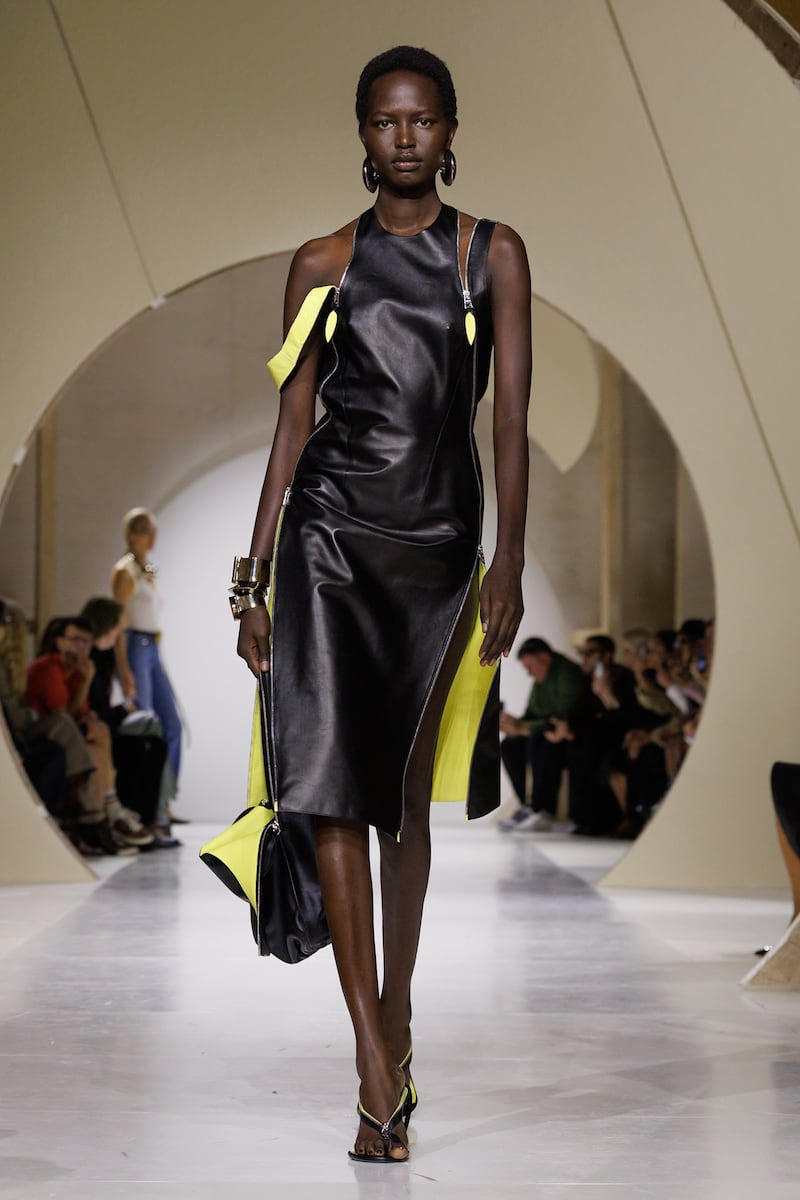
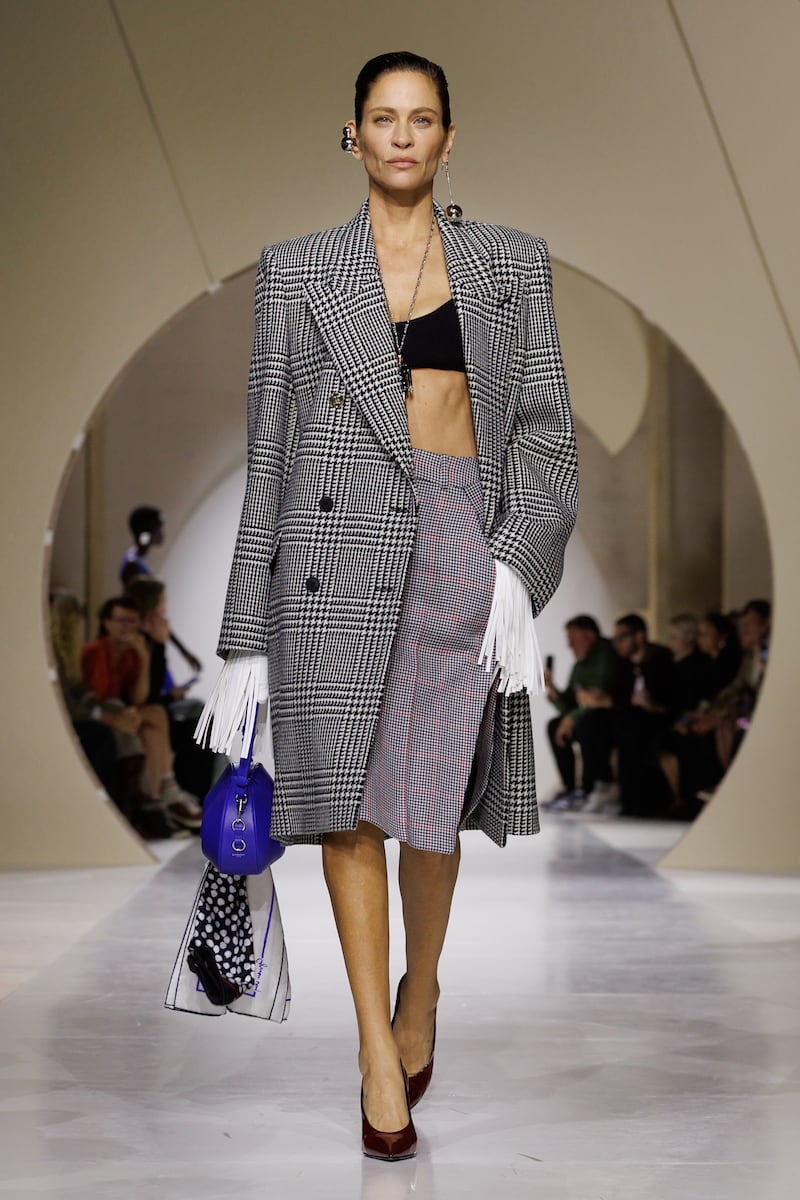
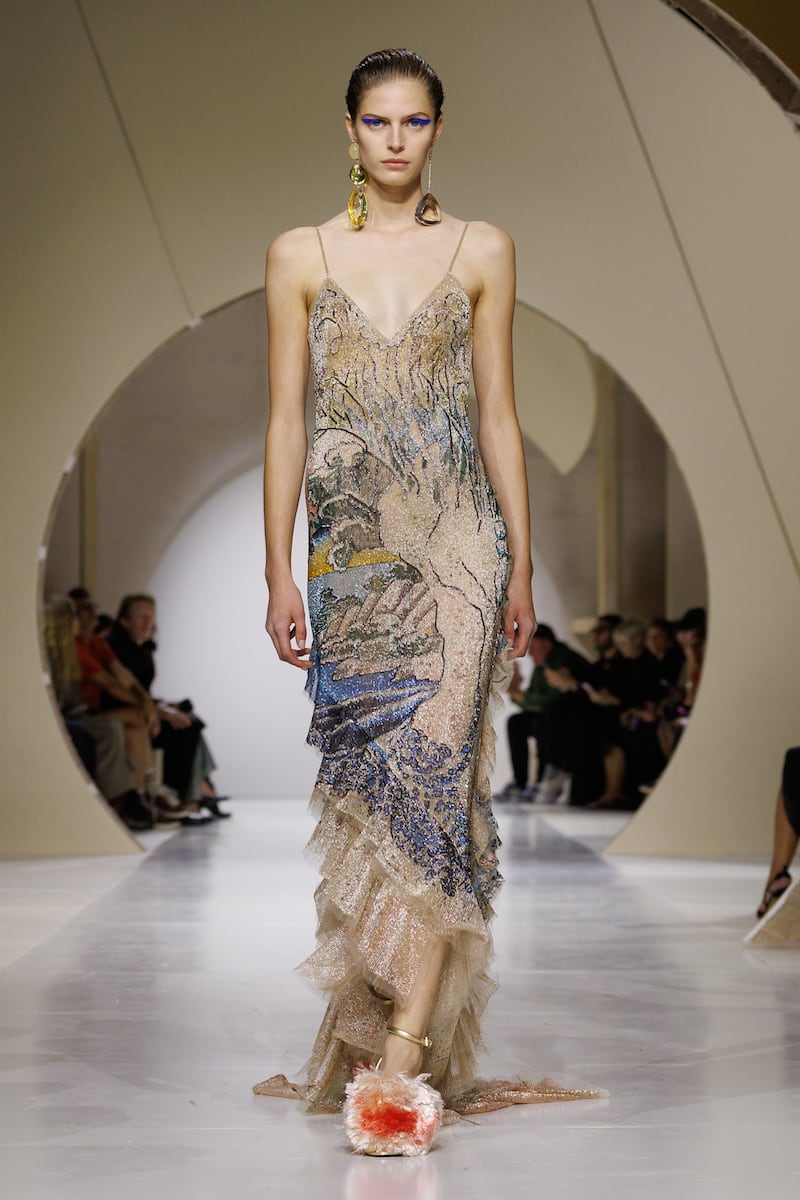
Burton’s collection was styled with oversized pom-pom shoes in stark shades of yellow and red — key hues for the season inspired by the work of sculptor Alexander Calder. Unstructured, ultra-soft leather bags were styled unzipped, exposing brightly coloured contrast linings.
Redefining and amplifying Givenchy’s brand message is another key challenge for Burton’s tenure, one that remains a work in progress. Givenchy’s recent designer transitions have diluted awareness regarding what the brand stands for, to whom it should speak. The house has ceded valuable brand territory as direct competitor Saint Laurent has expanded its association with bold Parisian runway style in the public imagination. Meanwhile, Chloé has reclaimed its bohemian girlishness and Balenciaga has planted a flag on cool, urban luxury.
For M/M’s Mathias Augustyniak: “Sarah has a great deal of imagination, of fantasy. The next step is to find some more points of connection between her vision and what is culture today, what is Paris today.”
“Sarah’s work poses the challenge, ultimately quite interesting, of how to communicate visually on a fantasy that comes from within — dealing with the exultation of the body, the woman — rather than an image fantasy,” he continues. “She’s like a sculptor. It’s hard to make an image of a beautiful sculpture that isn’t a bit disappointing in comparison.”
During a family trip to Scotland in summer 2026, Burton visited, for the first time, Lee McQueen’s grave at the northern tip of the Isle of Skye. “Love looks not with the eyes, but with the mind,” the inscription says, quoting Helena in Shakespeare’s “A Midsummer Night’s Dream.” “It was very moving,” Burton says. “It felt important.”
Having managed to establish her own take on Givenchy — one that bears little resemblance to her mentor’s savage, theatrical approach — I wonder if she might ever grapple with that chapter of the house’s history more overtly. During fittings a few weeks before, I’d spotted a McQueen-era bolero on the rack: its scalloped hem emphasising the embroidered feathers of a phoenix.
“I know that archive quite well. Lee’s archive, Hubert’s and John’s were the ones I got out when I arrived. I love the tailoring, the graphicism, the authenticity of what he did,” Burton says. “I love that he’s here with me somehow.”
Burton didn’t visit Givenchy often during Lee’s tenure, as she was busy at his namesake brand’s studio in London. But she did occasionally come over as a pinch-hitter, jumping in to help sort out a particularly demanding show piece.
Her favourite memories from that time are of Lee’s exchanges with the atelier. “They loved him in the ateliers — and they taught him a lot, about craft, about the couture hand,” Burton says. Respect for the depth and variety of expertise in fashion — all the different people and skills that go into making a garment — is something she first absorbed from Lee, and is the part of his legacy she’d like to spotlight more clearly in Givenchy’s messaging.
At McQueen, she dedicated a floor of the brand’s flagship store to education, initiating an extensive programme of talks, workshops and exhibitions dedicated to sharing the skills of the house. Givenchy could eventually put something similar in place, she muses — perhaps in the brand’s original couture salons at 3 Avenue George V, where Burton staged her Spring/Summer 2027 menswear debut in June 2026.
She’s thinking about other ways to amplify her vision “without it being shouted.” A sort of “Givenchy Journal,” perhaps, that could eventually “take all these women and show really what their lives are like. How do they deal with different parts of their day and different parts of their wardrobe?”
“I know there’s all the machine that needs to go around. But there’s so much noise in this industry, so much noise. I feel like you have to talk when you’ve got something to talk about because otherwise you’re just adding to that,” Burton says.
“Being a small house, the amount you’re able to shout is obviously not as big. So somehow it has to be about connecting to the person. If you can connect on a human level, I think that’s the important thing.”
Disclosure: LVMH is part of a group of investors who, together, hold a minority interest in The Business of Fashion. All investors have signed shareholders’ documentation guaranteeing BoF’s complete editorial independence.
Satoshi Kondo and Sarah Burton show us why they’re BoF 500 cover stars.
Intimacy and illusion add different levels of tantalisation as fashion tries its best to engage the senses.
Robert Williams is Luxury Editor at The Business of Fashion. He is based in Paris and drives BoF’s coverage of the dynamic luxury fashion sector.
Loading recommended reads…
A year into fashion's biggest wave of creative director changes, BoF's Chief Luxury Correspondent Robert Williams joins Sheena Butler-Young on The Debrief to break down which luxury houses have turned new talent into momentum — and which are still finding their footing.
The Westons agreed on Wednesday to buy the UK's Boots from Sycamore Partners and the Pessina family, pledging to invest in the retailer's stores and online and expand healthcare services.
The magazine’s inaugural ball will take place in November, the latest in a growing portfolio of live events hosted by publisher Condé Nast.
While conglomerates like L’Oréal and Estée Lauder dominate chatbot recommendations, independent labels like Divi and Omnilux are boosting AI traffic by targeting niche queries and overhauling backend data.