Agenda-setting intelligence, analysis and advice for the global fashion community.
Agenda-setting intelligence, analysis and advice for the global fashion community.

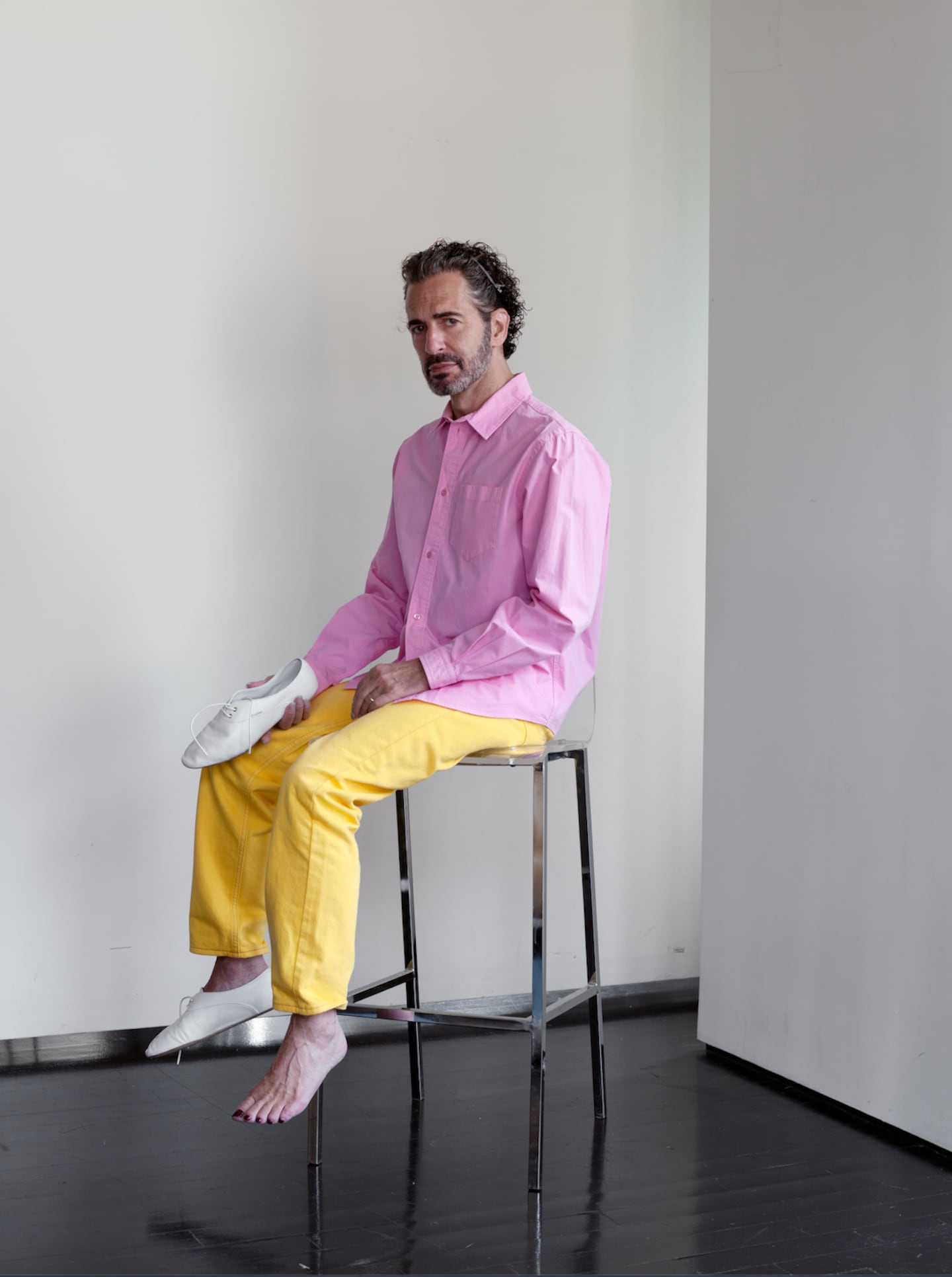
NEW YORK — Marc Jacobs knows what you’re thinking.
After four decades in the industry, he knows what so often happens when a designer’s namesake label is sold to another company, as his was this year. He’s seen it all before — Helmut Lang, Jil Sander, Martin Margiela, John Galliano, Tom Ford — designers who for various reasons exited their brands not long after a sale. He’s expecting the question.
What happens to Marc Jacobs now?
“I can’t answer that,” he said. “The most real thing to say is, we’ll see.”
ADVERTISEMENT
Jacobs, dressed in an army green waffle-knit shirt that matched the colour of his nails, had driven into the city on an otherwise quiet mid-August day to talk about the possibilities that lie ahead of him since the French luxury colossus LVMH announced the sale of the label he co-founded with Robert Duffy in 1993 to a duo of New York fashion groups with less rarefied profiles, the brand licensing firm WHP Global and G-III Apparel Group.
That morning, Vanity Fair had released its September cover featuring a portrait of the designer by Anna Weyant, one of his favourite painters, and an accompanying interview in which Jacobs came across as sanguine, mostly, in describing the change of ownership as a case of “the devil you know versus the devil you don’t know.” He remained optimistic, mostly, as he cycled through his thoughts on his 29 years under LVMH and his first impressions of the new owners, Yehuda Shmidman, chairman and CEO of WHP, whose portfolio includes Vera Wang, Rag & Bone, Isaac Mizrahi, Anne Klein, Joseph Abboud and several retail brands like Lands’ End, Toys ‘R’ Us and Express; and Morris Goldfarb, chairman and CEO of G-III, owner of 10 brands including Donna Karan, Karl Lagerfeld and Vilebrequin, and the operator of more than a dozen others under license. Marc Jacobs was its eleventh acquisition.
“As much as I love change, I also really hate it,” Jacobs said. “I flip between this is exciting and I’m into it and I can’t wait to see where it goes, and I don’t know, we’ll see. I’m going to be cautious. I don’t want to get my hopes up. I kind of vacillate between the two things.”
It is fair to say that Jacobs, as has been the case for several years, has become resigned to living with uncertainty, and in a curious way that uncertainty has manifested itself in the scaled-back, intimate nature of his runway presentations since the pandemic, and even in his ever-evolving persona, which despite his ongoing nail art fetish and Chanel shopping habit is arguably more subdued than the toned and tattooed Marc Jacobs of 20 or even 10 years ago. This is a designer — once the bellwether of downtown New York cool, the man who helped transform Louis Vuitton from a dusty luggage maker into a luxury ready-to-wear and handbag behemoth, and the most important American designer of his generation — who, at the age of 63, is facing one of the most pivotal moments in his career and thinks nothing of the impression it might give by saying he’d rather be at home with his husband, Char Defrancesco, in Rye, a leafy New York suburb, where they decamped from the city in 2019, “feeding the chipmunks and reading a book.”
The sale was on track to close in a couple of weeks.
“I guess what I’m experiencing today is a little back-to-school anxiety,” he said. “My comparison is like I would be anxious if I were starting school on September 1st, but starting a new school on September 1st would have me in such a panic. I have fears and concerns and anxiety and stress and doubts. And hopes. So let’s see how it goes. Let’s work with them.”
His fans and industry followers, however, are far less comfortable with the uncertainty of what comes next, and whether he can work with WHP and G-III without losing his soul. The very essence of Marc Jacobs and what makes him such a singular designer is his ability to absorb disparate elements of culture and define a moment as fashion before anyone else, as he did most famously in 1992 with his grunge collection for Perry Ellis, and continued to do throughout a groundbreaking career. That takes time and patience, and financial support. He captures the zeitgeist in the most unexpected ways, picking up threads of art, cinema, music and human nature to build an aesthetic world with a god-like point of view of what style can be, whether pilled cashmere sweaters, an oversized peacoat, a simple dress worn with evening gloves, or odes to his fellow visionaries (Yves Saint Laurent, Miuccia Prada, Rei Kawakubo), as well as imperfect women who still somehow look chic and his own experience as a tabloid sensation. But that desire to create something new — and desirable — in a medium as circumscribed as fashion takes an appetite for risk that rarely aligns with corporate interests. The grunge show was savaged by critics and led to his exit from Perry Ellis after the company decided not to produce the collection for retail.
Is that all there is for Marc Jacobs?
ADVERTISEMENT
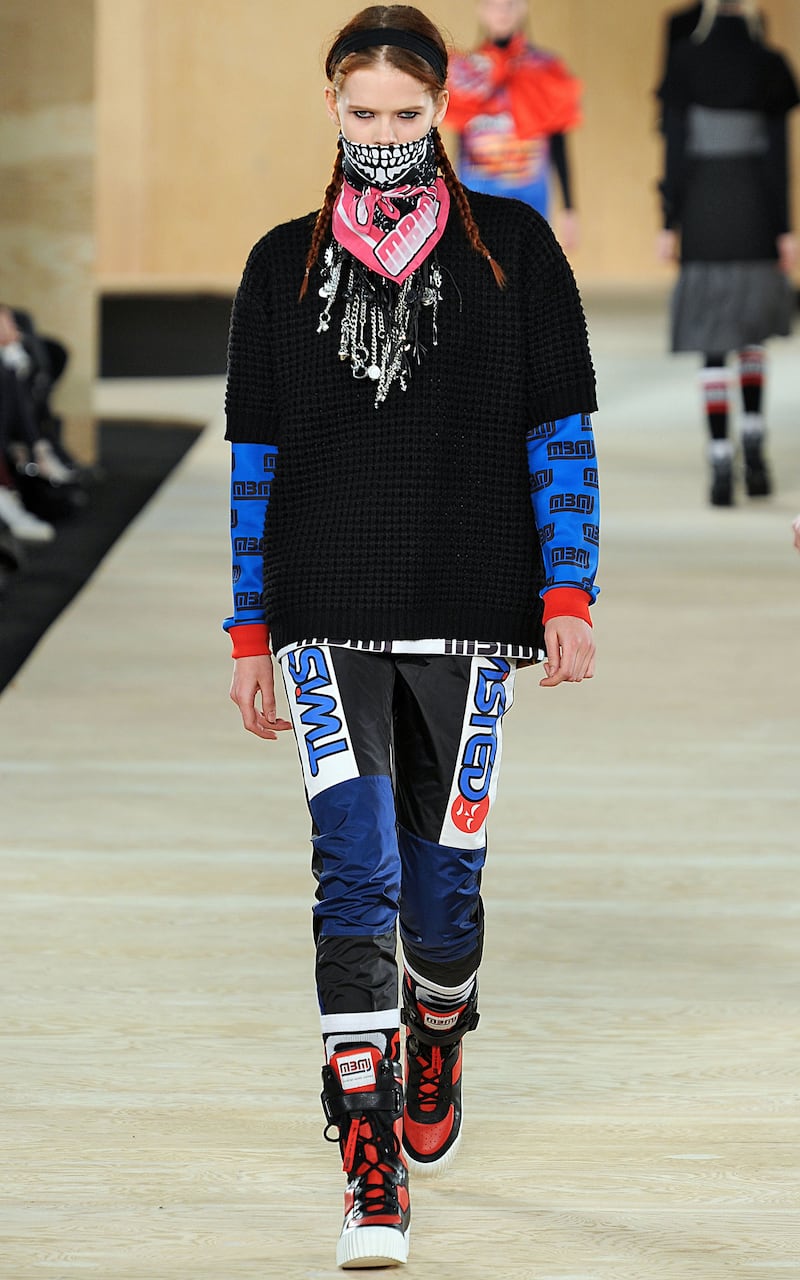
The thing is, Jacobs wants to stay. He’s maybe even a little bit excited to see if G-III, the American manufacturer known in the past mostly for its licensed department store brands, can do what a French luxury conglomerate could not: capitalise on his talent with what Jacobs called a more meaningful “democratic and commercial offering” in ready-to-wear, something akin to the once robust Marc by Marc Jacobs business that was dismantled a decade ago as many players moved to simplify their brand architecture and eliminate diffusion lines.
He’s not a snob about where his name appears, whether at Bergdorf Goodman, one of only two stores in the world that carry his runway collections, or at Nordstrom, Macy’s or Dillard’s — wherever G-III ultimately distributes a more commercial line. And he’s not a designer who’s about to insist on signing off on every prom dress or pair of sunglasses that bears his name.
“I don’t want to see every single thing,” he said. “I’d like to be a good partner with them, and I’d like them to want me.”
For the past few years, Jacobs hasn’t been entirely satisfied with the commercial offering his label was producing under LVMH. The merchandise in his stores, so many versions of The Tote Bag, colourful wallets and the 72 Spring Sneaker, is exactly that: merch. It doesn’t excite him like the days when teams of designers and stylists for Marc by Marc Jacobs and the main collection may have worked on different floors of his headquarters at 72 Spring Street, but they were all friends, “and this place wasn’t divided in terms of commercial or runway,” Jacobs said. “We were all just operating from this place of like, let’s just make fashion, whatever the price is. The goal was the same. It wasn’t run by business minds. It was design-driven first, and I loved it.” And it was successful — during its early 2010s heyday, the Marc by Marc business generated some $400 million in sales at department stores.
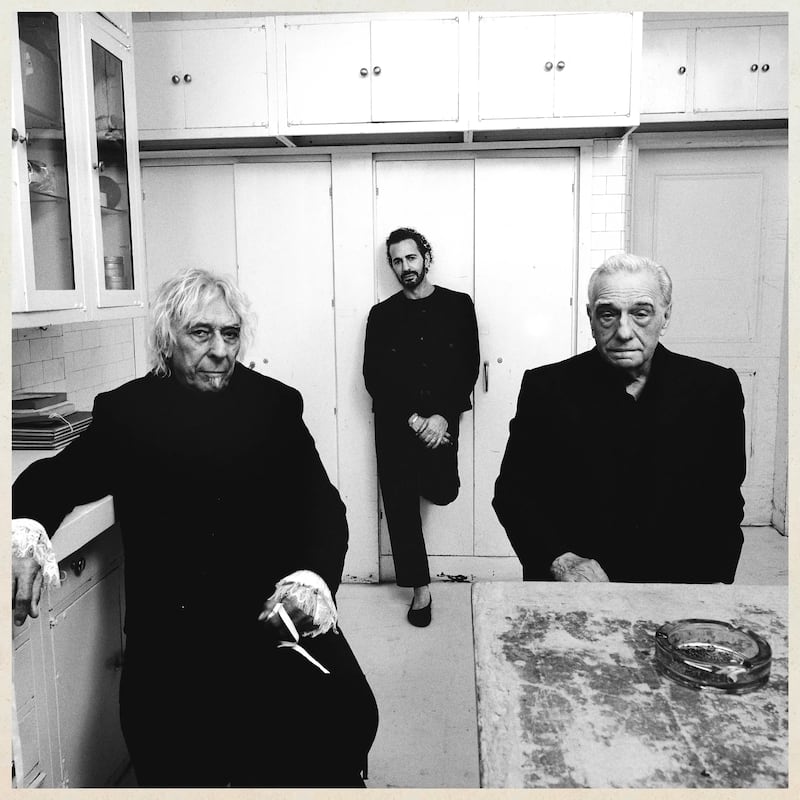
Perhaps lightning can strike twice. The market conditions are certainly right. While Europe and Asia remain soft for luxury brands and mainstream apparel alike, American consumers have been resilient. It also may help that Marc Jacobs is a distinctly American brand, one that hasn’t been widely available for some time, and not at an accessible price point beyond accessories, fragrance and beauty. And Marc Jacobs the man is still everywhere — on the cover of Vanity Fair, on the latest Charli XCX album (photographed with John Cale and Martin Scorsese, no less), on the red carpet in Venice for the premiere of the Sofia Coppola documentary Marc by Sofia, on the big screen making a cameo in The Devil Wears Prada 2, on the stage of “Cats: The Jellicle Ball” with his Broadway playmate Anna Wintour, on Instagram living his life as an open book for 2.2 million followers. Perhaps his enduring pop culture relevance will mean the business will thrive at a price where more people can afford to buy into it. Both WHP and G-III cited Jacobs’ cross-generational appeal as a key selling point as they seek out younger customers.
Jacobs, who sources said has about two years left on his current employment contract, is pragmatic about the fate of his company and the risks that come with seeking growth, but he also knows what he wants, and it may come as a surprise to the new owners that his top priorities appear to be in line with theirs.
“I just want to establish from the beginning a relationship that’s respectful both ways,” he said. “Like, I respect your business sense, and you respect my creative design sense, and together, let’s figure out how we can do this with some authenticity and some integrity, and then we can make a lot of money, and everybody can be happy.”
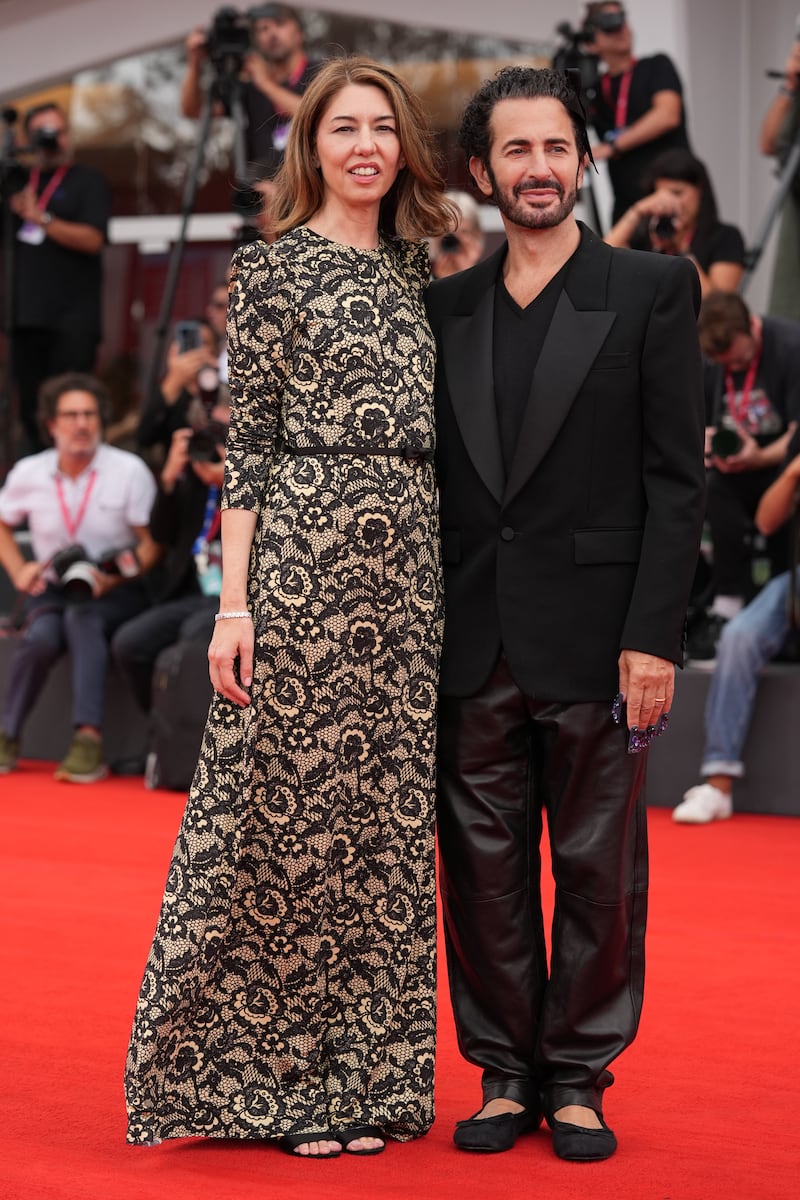
When LVMH, facing a prolonged luxury slowdown, began pruning its portfolio of more than 75 brands a few years back, the conglomerate had already been considering what to do with Marc Jacobs, the last American brand in its critical fashion and leather goods division, even floating the idea of a public offering. Sources close to both companies said Marc Jacobs, inclusive of its licenses, had sales around $800 million in 2025 and had become profitable under the leadership of Eric Marechalle, the CEO LVMH appointed in 2017, thanks in part to its focus on commercial accessories like the Covid-era hit Tote Bag, today’s versions of which cost $150 to $600, depending on size and fabrication. (LVMH does not break out sales for specific brands.)
ADVERTISEMENT

But the core Marc Jacobs company has been on a downward trend, according to insiders, and its positioning did not align with LVMH’s fabled European luxury brands with their four-figure, even five-figure, handbags. Compounding matters, without the sales volume of Marc by Marc Jacobs, the brand was seen as sub-scale, making it less of a priority for management and revealing a fundamental mismatch between where the French group wanted to be, at the high end of luxury, and where Marc Jacobs could really succeed, at the contemporary price point.
Excluding licenses, roughly 90 percent of Marc Jacobs sales came solely from commercial handbags and accessories in 2025, an astounding proportion for a designer whose influential runway collections are writ so large on the global fashion consciousness. About two-thirds of the business comes from the company’s own 100-plus full-price and outlet stores and online, most of it in North America, according to internal data presented to investors by G-III. (Including shop-in-shops, the total number of retail stores around the world is 146.) The operating business is expected to generate approximately $360 million in sales this fiscal year.
“Eric Marechalle has done really great things for the company and is extremely respectful and appreciative of what we do,” Jacobs said, pointing in the direction of his design team. “He could see that the real success and where the most money could be made was the bags. What we haven’t been able to do is stick with anything long enough to make it work in that more reasonably priced ready-to-wear range. But it wasn’t because he didn’t believe in it. We just couldn’t get the financial backing from LVMH, basically.”
Perhaps ironically, it was that lopsided ratio of Jacobs’ prestige to actual product that made his business such an ideal target for acquisition by a brand management company. Often backed by private equity firms seeking a defined return on investment, companies like WHP, Bluestar Alliance and Authentic Brands Group were once considered bottom-feeders, better known for squeezing value out of distressed assets than scooping up brands like Marc Jacobs. Now they’re pushing further upmarket with acquisitions like Off-White, which went to Bluestar, and Vera Wang, bought by WHP. According to sources, ABG took a look at Marc Jacobs last year when LVMH was asking for a reported $1 billion for the brand, but a deal stalled over differing views on the brand’s retail footprint and runway strategy.
Then in May, WHP formed an unusual joint venture with G-III to snap up the Marc Jacobs brand, each paying $425 million for an equal share of the intellectual property. G-III, separately bought the designer’s operating business, pushing its total investment to approximately $500 million. G-III will run the company’s product development, sourcing, distribution and marketing strategy, as well as oversee the wholesale, retail and online operations as a long-term licensee for North America, Western Europe and some other markets. WHP, which owns a controlling stake in the joint venture that includes the partnership with Jacobs himself, will lead its global licensing expansion beyond Jacobs’ three existing partners, Safilo for eyewear, Groupe CWF for children’s fashion, and Coty, which relaunched Marc Jacobs Beauty this year to great fanfare and has produced his lucrative fragrances for 25 years. G-III is also responsible for supporting new licensees to ensure a consistent voice across all future product categories, including collection inspiration, brand guidelines, marketing and retail placement.
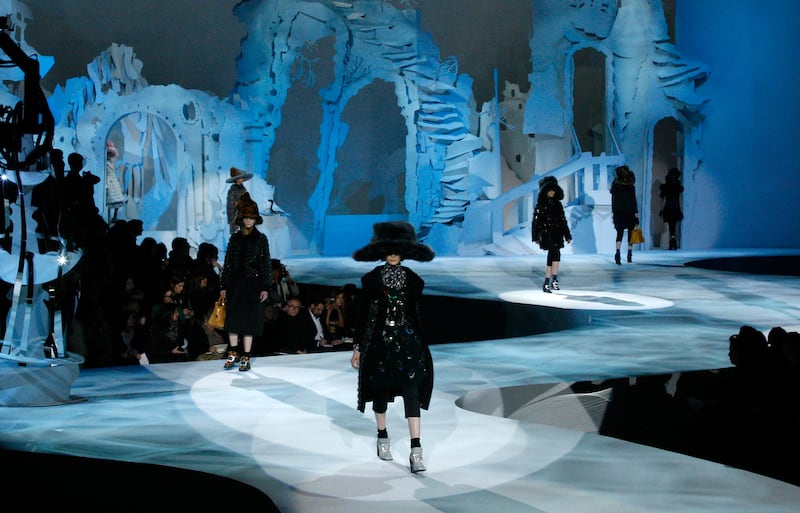
Over the long, hot, wet New York summer, Jacobs and his colleagues were left in a state of limbo, wondering whether the deal would bring about the opportunities they craved, or, as historically happened with brand management companies, the new owners would slash overhead, gut the design team and license everything out. In a worst-case scenario, some of Jacobs’ allies (and quite a few online commentators) fretted that WHP and G-III, as might any new owner, would pull the plug on the runway shows, which for many years had been the flagpole event that closed New York Fashion Week and set a high bar for the dominant luxury houses that would follow in Milan and Paris. “It’s really a handbag business,” said one executive close to the dealings. “A fashion show is a marketing expense at the end of the day. They may continue for now, but in five years, I don’t know.”
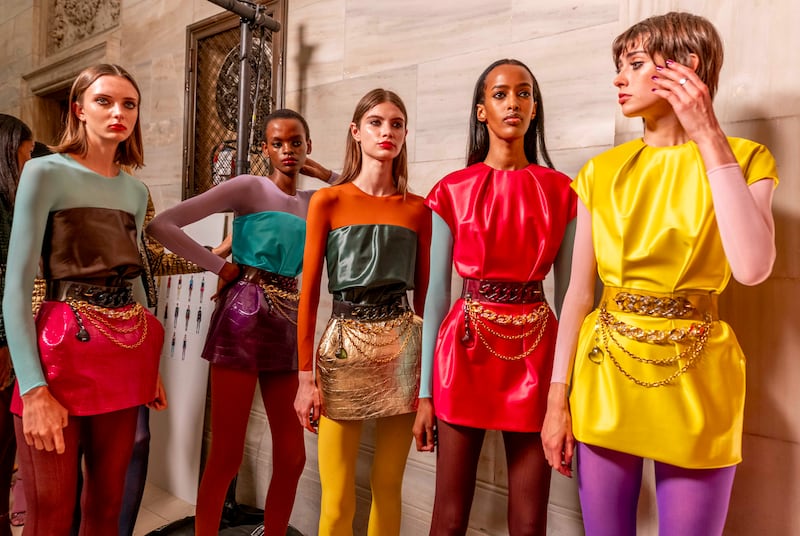
The sense of an impending vibe shift, at the very least, was palpable at Jacobs’ Spring 2027 runway show, held at the New York Public Library on June 30, where guests were seen rubbernecking around Shmidman, Goldfarb and their respective teams of suited-up executives from WHP and G-III. The collection was more realistically sellable than the cartoonish or bulbous shapes of seasons past, but also reflective of what the Marc Jacobs brands stands for — optimistic fashion exuberance with a side of quirk — this time with brightly coloured bodysuits and tights layered under dresses and skirts made of sepia-toned cellophane organza. Jacobs called the show “Gratitude,” and wrote in his show notes, “With every opportunity I hope to offer a little light, shine, colour, beauty and joyful exuberance in return for the people, experiences and moments that have shaped me and provided the invisible threads of structure to my life.” His message could have been mistaken for that of a swan song.
Jacobs didn’t intend it that way. “I’m excited about continuing to work with my very small team on a couple of shows each year and doing the part that I’ve always loved, which is storytelling through fashion that has no bounds and doesn’t have to sell or satisfy anything other than a creative urge and aesthetic goal,” he said in August. As painful as the creative process may be for Jacobs, there are always moments of joy — choosing a colour or discovering an amazing fabric — that overshadow everything. “As long as there are those moments, I can suffer anything,” he said.
His design team for the runway collections counts only seven or eight members, who are assisted by the commercial accessories designers in the days leading up to a show. It’s hard to imagine how Jacobs could have done or could continue to do more with any less.
“He’s such a curious person and such a deep thinker that even in this moment I think he’s very positive and excited and inspired for what the future holds,” said Alastair McKimm, the stylist, editor and creative director who has collaborated with Jacobs on his shows for the last five years. “What I’m really excited to see is him continuing to push the envelope for creativity, which I think has been all but lost in American fashion. It’s really important that he’s protected and supported and championed, as much as humanly possible, as a person and as a creative. Obviously, I want to see the shows continue, because I think his brand without a fashion show is a very different conversation.”
Yehuda Shmidman and Morris Goldfarb also know what you are thinking.
“Once upon a time there was a reality, and perhaps a perception to match the reality, around brand management firms that they might cut a company or change a company or what have you,” said Shmidman, who has acquired more than 16 brands with sales now totalling more than $9.5 billion since WHP started in 2019. “But the industry has evolved, and that is a function of the industry, the sophistication of the investor group, and most importantly, the brand quality. When we’re talking about a brand like Marc Jacobs, we’re not talking about a turnaround. We’re talking about the fun part of the business cycle and that is growth.”
Even at the runway show in June, both executives took pains to express their support for Jacobs and his continued involvement as creative director. “Marc is a genius,” Shmidman said during an interview on the eve of the deal closing. “Like period. Full stop.” He keeps a copy of Jacobs’ show notes on his desk. When they first met, he told Jacobs how much he admired Coppola’s recent documentary about him and that he had bought his wife a bottle of Daisy, the designer’s bestselling fragrance that continues to be a hit for Coty. “I didn’t tell Marc this, but she even has some of his vintage bags in the closet,” Shmidman said.
Recalling the encounter, Jacobs, who claimed he had never heard of Shmidman or Goldfarb before the sale happened, said Shmidman was “very gentle, very complimentary.” Goldfarb, who took him on a tour of G-III’s nearly 30 stories of showrooms on Seventh Avenue, struck a “different tone,” Jacobs said vaguely, echoing his tentative comments to Vanity Fair, which described Goldfarb dismissively as “an old-school garmento,” and G-III as a place where once-great brands have “been stripped of their souls.”
This was hardly the first time Jacobs unleashed his tongue in front of a reporter over his frustrations with management (see Zoë Heller’s 1997 The New Yorker profile that captured the culture clash of his arrival at Louis Vuitton, or Teri Agins’ 2004 scoop in The Wall Street Journal when Jacobs sounded off on his dissatisfaction with LVMH’s support of his signature line during their contract negotiations, which prompted reparations on his behalf). An open question is whether Shmidman and Goldfarb, who now own 100 percent of Marc Jacobs, are able (or willing) to tolerate the temperament of a sensitive artist. Goldfarb, for one, expressed some displeasure over his characterisation in the feature, but he did not seem all that surprised.
“The process of making an acquisition from LVMH is not your typical process,” Goldfarb said. “Your diligence is generally limited and negotiating is kind of off the table. It’s what Mr Arnault wants basically. He gets it or he doesn’t do it,” Goldfarb added, referring to the French group’s chairman and CEO. LVMH only allowed G-III and WHP to meet with Jacobs and other company executives once, Goldfarb said, “and that’s not what a moderate-sized company making one of the largest acquisitions they’ve ever made would generally accept.” Nevertheless, he believed that Jacobs was a prize that was worth the risk.
“The interview in the magazine cited me in a light that I thought… he missed it,” Goldfarb said. “So he needs to get to know me. He needs to understand that we are commercial, but we build brands and we build them appropriately. They’re not all homogenous. They’re not all targeted to go to Walmart, nor are they all targeted to go to Bergdorf’s.”
While these are early days, Goldfarb, speaking the day after the deal closed, offered some specifics of G-III’s plans for the label that bode well for Jacobs: G-III has committed to maintaining the fashion shows, and he said he does not foresee a dramatic change in management. “Everybody we’ve met, or been permitted to have met and interviewed, seems awesome,” Goldfarb said. “They are perfect fits, maybe even more so for G-III than they were for LVMH.” The company will also maintain Jacobs’ headquarters at 72 Spring Street, where the designer has worked since around 1997, a stone’s throw from his now defunct Mercer Street flagship. “We’re going to give that a shot,” Goldfarb said. “I think the disruption may be more than we need to do in the early stage, and maybe G-III will be comfortable having a location on Spring Street. It’s a cooler area. I love going there.”
On the other hand, with G-III’s expertise in wholesale, some of the brand’s full-price retail stores are in jeopardy. (About 35 Marc Jacobs stores in North America are full-price, while the majority of its retail footprint are outlet stores.) “We’ll dig deeper and decide whether some of the full-price stores should be wound down or shut,” Goldfarb said. “The off-price stores do just fine and for the most part are profitable. We’ll certainly have a fleet of stores and we’ve started looking at locations that fit the profile of what we’re looking for, mostly on the outlet concept. We’re not going to price adjust to any major degree. An assortment adjust is more likely to happen.” A diffusion ready-to-wear collection, he said, will be positioned “down a notch” from where Marc by Marc Jacobs was in the past.
Goldfarb wants Marc Jacobs to become a $1 billion business, not including licensed sales, as G-III needs a successful venture to replace its longstanding and biggest volume drivers, the $1.2 billion licensed sportswear collections for Calvin Klein and Tommy Hilfiger, which used to represent slightly more than half of G-III’s total business, until PVH CEO Stefan Larsson began taking each category in-house as the licenses expired since 2022 (a slow-moving end to a 20-year partnership that has resulted in ongoing legal disputes between the two companies).
G-III was started in 1956 by Morris’s father, Aron Goldfarb, a Holocaust survivor who specialised in leather outerwear, and after Morris joined the company in 1974, quickly expanded into a multi-billion dollar apparel group with licensing deals for outerwear and sportswear with a broad array of designers and retail brands, including at various points Kenneth Cole, Nine West, Cole Haan, Vince Camuto, Ivanka Trump and Sean Combs, as well as the major US sporting leagues.
Growing its portfolio of owned brands like Donna Karan and DKNY, which G-III bought from LVMH in 2016 and have been a retail success, will also be key to raising its overall profit margins, perhaps significantly in the case of Marc Jacobs. As both a co-owner of the Marc Jacobs intellectual property and a licensee, G-III will effectively be paying a portion of royalties to itself, as well as sharing in the brand’s existing licensing revenue. Donna Karan and DKNY, which still generate a combined $2.7 billion in sales at retail long after Karan’s departure, provide something of a clue for how G-III might position Marc Jacobs and a diffusion line, with marketing focused on high-quality advertising campaigns for Donna Karan produced by Trey Laird, the latest featuring Kendall Jenner photographed by Mert Alas, and buzzy youth-targeted celebrity partnerships for DKNY that have included Hailey Bieber, Iris Law and Amelia Gray. For Karl Lagerfeld, the company hired Paris Hilton to appear in campaigns as its muse. Building those brands by adding product categories over time for department stores is a template that has worked well for G-III, Goldfarb said, and likely will apply to Jacobs. Little more than three weeks after the deal closed, the company named Hearst Magazines vice president John Wattiker chief marketing officer of Marc Jacobs, reporting to Marechalle, another indication of its intention to build the business globally. On Monday, G-III appointed Emily George, formerly president of Americas and global wholesale at Balmain, as president of direct-to-consumer for North America, with a focus on Marc Jacobs. George, who reports to Goldfarb and Marechalle, spent 19 years in various sales roles at Marc Jacobs before joining Balmain in 2022.
“Pretty much every acquisition and every turn we’ve taken was not a roadmap created by Bain or McKinsey,” Goldfarb said. “It was a cure for a problem that arose, and it reads like the perfect strategy. We’re good at problem solving.”
I, too, know what you’re thinking.
You want to see an altruistic embrace of creativity, free of commercial restraint. You want to see a great designer, whose talent has not waned with age, be given the moment he is due, along with the platform and the freedom and all the financial support in the world. You want to go back to the days when a designer like Marc Jacobs could hold up the start of a fashion show for two hours because his collection was not quite ready and you would sit there and wait because you couldn’t bear to miss it, and he could stick his tongue out at Suzy Menkes, and he could dye his hair blue and get a Sponge Bob tattoo, and could pose naked in magazines and have an orgy, and could write his show notes using AI, and could push your buttons until you screamed and said, Please sir, can I have some more?
I do too.
But all that Marc Jacobs really wants is a reaction, “to be loved or to be hated,” the designer said, “but not ‘Who cares?’” And he found that after the pandemic, once he scaled back his runway collections to a smaller format and showed them off schedule, usually for an audience of about 100 industry friends, that he could take control of the narrative. His shows start precisely on time and last 10 minutes or less. Jacobs himself is out the door just as the last model takes her exit, giving no interviews and leaving interpretation to the audience. That may frustrate fashion editors, but it works for Jacobs.
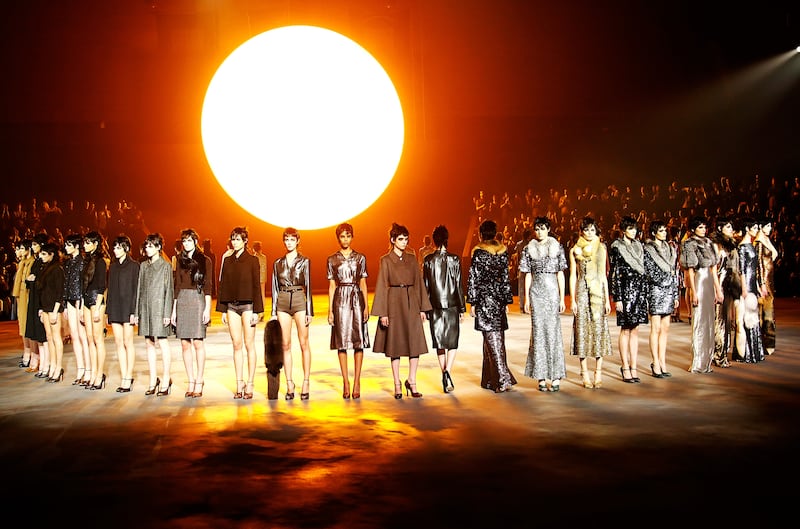
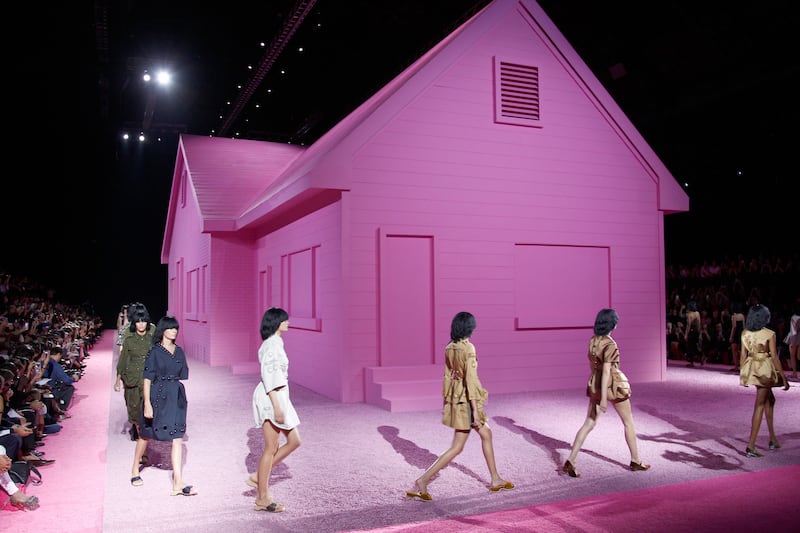
“It’s proven with time that it was the right thing to do,” Jacobs said. Duffy, who plucked him from the Parsons School of Design in 1984 and built the signature business together in the 1990s, once said each of those large format shows, with a marching band or an apocalyptic wasteland or an artificial sun or floating clouds or a giant pink house, cost “definitely at least $1 million.” The more recent shows cost a fraction of that, company executives said, but they are still serious endeavours that require substantial funds for producing the samples, venue rentals and logistics, plus the significant expense of producing content for social media.
“If things get bigger, there’s more expectation for the commerce,” Jacobs said. “Already it’s hard for people who are business-minded to justify doing something twice a year that costs all this money. Even with a reduced budget, it’s still a huge expense.”
For several years, the collection has been sold solely at Bergdorf Goodman in New York (and more recently at Isetan in Japan), but scarcity hasn’t diminished the designer’s standing. “He has earned a firm place in the pantheon of fashion’s global greats,” said Linda Fargo, senior vice president of the fashion office and store presentation at Bergdorf, which has had a relationship with Jacobs for more than 30 years. “Marc thrives in the uncharted ether of cultural zeitgeist and pure invention. He understands how to take the most expressive concepts and merchandise them at every level. It will certainly be one to watch as this new partnership unfolds.”
Things are moving quickly. Goldfarb said that a new ready-to-wear offering could be available as soon as next year, but he stressed that G-III will remain “pure to the brand,” noting that the company manages each of its properties individually, whether licensed or owned, “with unique chief executives, designs and every element that’s necessary to celebrate the brand codes that convince the consumer you’re authentic.” For his part, Jacobs said he wants the collection to be “far-reaching in every way.” As for his involvement, he cited his working relationship with Coty as an ideal model. He gives his opinion, proposes ideas and engages with the storytelling around the products they create. But will it really work if Jacobs isn’t super involved and hands-on with the products? It’s not clear that he wants to be.
“Historically I’m best left to working on things that are design challenges in a way,” he said. “I’ve never been a businessperson. I just don’t speak that language. The more I become involved in certain things, the more I bring my need to deliberate. My indecision requires everyone else to be more patient, and that’s not typically what is needed in matters of commercial product.”
Asked what his definition of success might look like in his company’s new era, Jacobs cited the same standard he has in the past.
“Success is getting to continue doing something,” he said. “You continue to succeed. My hope is that it continues in a way that I’m proud of. That pride can come from a lot of different things, but I mean aesthetically proud is one thing, and then the financial success.”
Perhaps a better marker will be his relevance, something he admitted to caring about more than he should. “I often struggle with that because it shouldn’t be the goal to be relevant,” he said. “But part of me thinks, if it’s not relevant, then what are we doing?” At 63, he will soon enough start facing the inevitable questions of retirement and succession, though he remains trim and fit and happiest when he is at the centre of the public eye.
“Aging is cool,” he said. “Like, I always think of the Cher thing when she was on David Letterman, and he said, ‘How do you feel about getting older?’ And she said, ‘Well, it’s better than the alternative.’ That’s how I feel.”
On the Friday after the deal closed, he posted a selfie wearing red jeans from the sole Versace collection designed by Dario Vitale and a long-sleeve white polo from Lacoste, with accessories from Hedi Slimane and Cartier, what he wore to “lunch in Greenwich with Mr G,” he wrote, referring to Morris Goldfarb.
He knows what you’re thinking.
“People are triggered to respond with scepticism because history tells them what usually happens,” Jacobs said. “So will history repeat itself? Maybe. But it’s up to the people writing it.”
Jacobs’ latest runway show offered clues as to how the brand’s new owners WHP Global and G-III will work with one of America’s most influential designers.
Jacobs will remain in his role as creative director.
‘The basic plan is to layer on growth,’ said WHP chairman Yehuda Shmidman.
Loading recommended reads…
The British retail group has brought its stakes in Burberry, Hugo Boss and Mulberry together with its luxury retail operations.
When Nike is at its peak, there’s usually a central product that gives it a cultural resonance that no other brand can touch. Typically, that’s come from Jordan Brand’s retro business. With that no longer working, let’s talk about where the brand can turn.
The retailer is investigating after users of its mobile app received a notification claiming hackers had ‘fully compromised’ company data.
L-Beauty, a new e-commerce site created by the non-profit organisation Latinas in Beauty wants to introduce shoppers, retailers and investors to emergent Latin-owned brands.