Agenda-setting intelligence, analysis and advice for the global fashion community.
Agenda-setting intelligence, analysis and advice for the global fashion community.

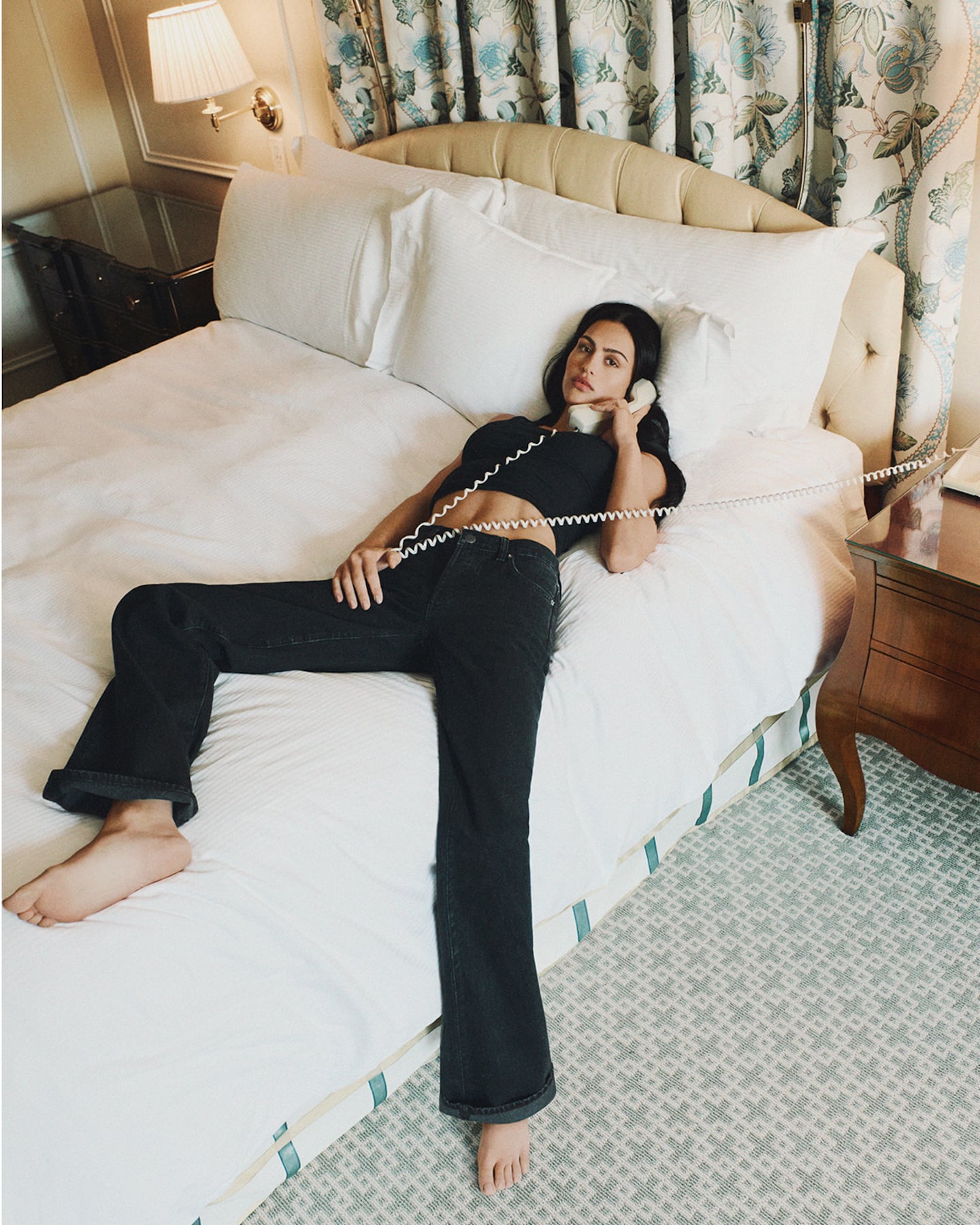
It was only 10 months ago that the Los Angeles apparel brand Frame appeared at risk of becoming collateral damage in the open warfare between Erik Torstensson, one of its founders, and the venture capitalist Natalie Massenet, whose high-profile romance had ended in dueling lawsuits and weeks of lurid accusations that garnered unflattering headlines around the world. “Love, Drugs and a Fashion Breakup Worth $95 Million,” wrote The New York Times.
And yet the company now says it expects to reach new heights this year: According to Torstensson’s co-founder Jens Grede, Frame is on track to generate $300 million in sales this year as it prepares to open a three-story, 6,000-square-foot Paris flagship at 33 rue François 1er in the autumn and as many as 15 new stores in 2027.
Grede’s rosy outlook can be attributed at least in part to rising demand for attractively priced premium denim, a rare bright spot in a sector hammered by economic uncertainty. But Frame’s resilience may owe as much to decisions that have helped insulate the company from the Torstensson scandal, most obviously his immediate exit from his role as chief creative officer, and the label’s wider choice to adopt an identity powered but not dominated by its founders.
“One of the beauties of the company is that it hasn’t been about any one person,” said Grede in a recent video interview from his home in Malibu, California. “What I would say is that when personal life spills into the public, our responsibility is to protect our people and our company first. The company is now in a different era.”
ADVERTISEMENT
For 25 years, since Grede and Torstensson broke onto the fashion scene with their London-based creative agency Saturday, the charismatic and photogenic Swedes have come as a duo, launching their own marketing agencies, magazines and fashion brands, then investing in dozens of other ventures. Frame was their first denim label when it started in 2012 with an aesthetic they described as that of “a Frenchman coming to Los Angeles in the Seventies.”
Grede and Torstensson leaned into collaborations with top models and icons of luxury like the Ritz Paris and Sotheby’s that cast a halo of insider cool around product that might have otherwise looked like that of any other California denim brand. And they tapped the expertise of early investors Andrew Rosen and John Howard, “the single best decision we ever made,” Grede said. “Andrew took me under his wing and single-handedly taught me this business.”
To industry observers, Frame’s success seemed to rely so much on its founders’ charm, connections and complementary skill sets, that it was hard to imagine how the label could exist without them.
“Jens and Erik are both marketing geniuses,” said a former employee. “Erik was out and about with Natalie, making connections, and Jens was behind the scenes sealing the deal. But they are equally strategic. Erik was always saying that denim is a straightforward product, so everything around it has to be about storytelling and branding.”
Massenet’s bombshell lawsuit filed last August was an unexpected plot twist. The Net-a-Porter founder and former British Fashion Council chair claimed Torstensson was unfaithful and had conned her out of $95 million and used her to get close to fashion insiders. Torstensson counter-attacked in a suit that alleged she used drugs and was an unfit mother, prompting a media frenzy that raised questions about possible reputational damage to the many brands in which Massenet and Torstensson had each invested, and whether either could maintain their status as industry powerbrokers.
Although the scandal turned out to be short-lived — Massenet and Torstensson withdrew their respective lawsuits a month later — Torstensson has not returned to an operational role at the company, but remains a shareholder and non-executive board member. Grede’s attention has also shifted to other ventures, most notably leading Skims, the $5 billion shapewear company he founded in 2019 with Kim Kardashian and his wife Emma, and in which Massenet and Torstensson are minority investors. Grede, now 48, is chairman of Frame as well as co-founder, chairman and CEO of Skims, and has a family holding company called Popular Culture that has invested in numerous brands including Westman Atelier, The Elder Statesman, Oura and Substack.
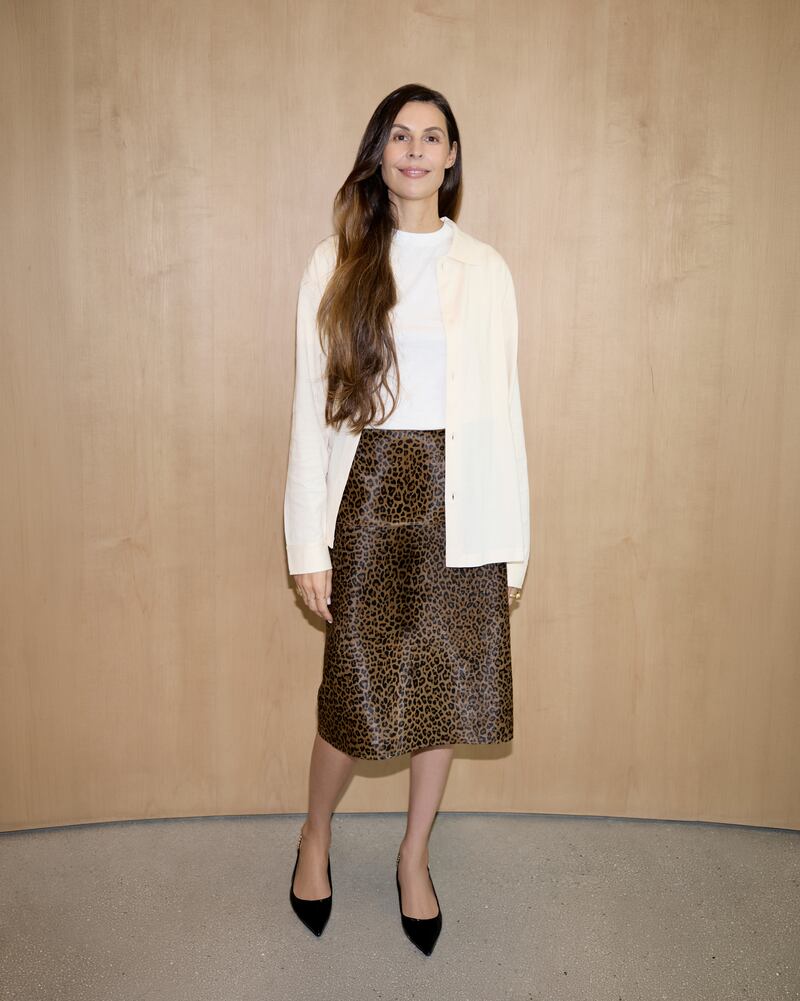
The challenge ahead for Frame is how to chart its next chapter without the daily involvement of its founders, a responsibility that falls to its new CEO, Silvia Merati, the retail veteran recruited last October from Golden Goose, where she was CEO of Americas. Merati, 41, is a polished Milan native with prior roles at Yoox Net-a-Porter and Intermix, whose ambition for Frame, she said in an interview in New York, “is bigger than any number.”
While Grede described the events of last fall as painful on a personal level, Torstensson’s departure ultimately had no material effect on the business, he said. “We wanted to make sure that what was happening in the press did not affect the vision or the execution that the whole team has worked so hard on,” he said. It was critical to act quickly, as Frame was preparing to introduce Merati, replacing Nicolas Dreyfus, who had held the CEO role since 2020 and is now an executive chairman.
ADVERTISEMENT
Torstensson, in a statement to The Business of Fashion, said he was supportive of Merati’s work, “building on the vision that Jens and I had when we started Frame. She understands our history while taking the brand into its next exciting chapter as a global modern luxury brand.” As for what’s next for Torstensson, he said, “I feel blessed to continue my work investing in great ideas and people, offering my advice and exploring new creative ideas.”
Merati said international retail expansion and clarifying Frame’s brand identity are her top priorities, with the upcoming Paris flagship exhibit A. It is being designed by Flora Byk, who also created the mid-century-modern look of Frame’s Madison Avenue store and recent shop-in-shops for department stores that feature Italian made carpets and sleek wood fixtures, expanded for Paris with a collection of art works and furniture that will be available for sale, a full menswear floor and a food-and-beverage concept with a French brand. Frame’s new showroom in Beverly Hills, also designed by Byk, is decorated with pieces from Isamu Noguchi, Jean Prouvé, George Nakashima and Pierre Chapo, and its Paris offices are situated in the former couture salon of Pierre Cardin.
“Los Angeles represents creativity, optimism and modern culture, while Paris embodies heritage, craftsmanship and timeless sophistication,” Merati said. “Together they reflect who we are as a brand today and where we are headed in the future.”
Frame’s growth since the pandemic — annual sales are up $130 million over the last three years — has largely come from expanding its retail network, now with some 20 stores, most of them in the US. Retail accounts for more than 40 percent of the business and will likely continue to grow with store openings in Amsterdam, Tampa, Charleston and Las Vegas planned this year. Merati said the company aims to operate around 60 stores within the next three-to-four years, typically in places where Frame already has a strong customer base through e-commerce, while also renovating some existing locations to reflect a more consistent aesthetic. She wants to eventually generate a majority of sales via direct-to-consumer channels, while also maintaining a wholesale presence “in order to make sure we have better and better representation.”
That will be essential going forward, since customers currently encounter store environments and product assortments that can lack cohesion. The label has earned a cult following for its denim cuts, beginning with skinny jeans in 2012 and models that now encompass slim, straight, high-waisted and barrel-legged fits, many priced from $228 to $268. But they are merchandised alongside ready-to-wear that includes both luxurious basics, like $598 cashmere sweaters and four-figure leather pants, and illogical oddities such as micromini jeans shorts trimmed with crochet flaps that, for $398, would make Brandi Melville clutch her pearls. Still, Frame’s positioning as a “modern luxury” label has made it more attractive to consumers who are price conscious at every end of the market, and its stores are busy.
At its Madison Avenue flagship during a recent visit, an Upper East Side mother and her daughter, whose SUV idled outside, asked a saleswoman to pull every item of white denim for them to try for their summer Hamptons wardrobes. At Saks, a woman was on her phone asking someone whether she should buy the Le Slim High-Rise or the Le Slim Palazzo. Bloomingdale’s has put Frame in prime positions in its 59th Street flagship’s denim departments, including a large women’s display that reflects the look of Frame’s newer stores with the same Italian carpet and modern wood fixtures.
“They deliver highly designed product at an accessible price point and are differentiated within our assortment by their cool, minimalist aesthetic,” said Denise Magid, chief merchant of Bloomingdale’s, who noted Frame has “meaningful crossover” with its luxury customers. The original Le Slim Palazzo, and the recent introduction of a low-rise version, have been its star products, as have been leather and suede looks. “Even in the height of summer, we saw the customer immediately embrace Frame’s leather as a must-have elevated essential,” Magid said.
Denim has also remained strong in the United Kingdom, where Bosse Myhr, director of womenswear, menswear and childrenswear buying at Selfridges, said many of the strongest denim brands are evolving with complete lifestyle propositions. He agreed that Frame’s growth has been driven both by its core denim offering and the expansion of ready-to-wear. “We see Frame as an advanced brand that consistently delivers elevated product, exceptional fit and relevant design,” Myhr said. “The brand’s commitment to refining its denim fits and investing in high-quality fabrics resonates strongly with our customer.”
ADVERTISEMENT
Kristen Classi-Zummo, executive director and industry advisor for apparel at the market research company Circana, said that the post-Covid era has been a great time to be in the premium denim category since consumers are building their wardrobes around jeans. “We are forecasting denim to grow for the next one to two years, but a few things make me believe this will last a bit longer,” she said. “We’re seeing these premium brands are doing well and that tells me the customer is investing in this category and less likely to throw it away for something new next season.”
Shoppers are also searching for labels that offer better value for money than traditional luxury brands, where punchy price hikes have alienated aspirational clients, which Merati believes puts Frame in a stronger position.
“In this world of polarisation, where luxury brands became very high in terms of price and very exclusive, I see Frame playing a more inclusive game,” Merati said. “Between the $4,000-and-above price point and Zara, there is a wide-open space.”
In fact, for all the buzz of its collaborations with atypical entities like Sotheby’s and the Ritz, Amelia Gray and Alexandra Leclerc, there’s still a bit of a knock against Frame that its product looks like “Zara for rich people.” Its lack of a clear identity has been both an asset and a hindrance, the latter when attempting to expand beyond jeans. “We’re still fighting this perception because of our denim heritage,” said Grede.
In 2023, the company had hired Chemena Kamali, who was then a key design director for Saint Laurent under Anthony Vaccarello, as a creative consultant, moving her and a team to Los Angeles to build a ready-to-wear collection, and hyped a runway show that never happened. Kamali was said to have been attracted to the California lifestyle and the chance to make Frame her own, but she had been working there for less than a year when she was offered the creative director position at Chloé. “Chemena is a genius,” Grede said. “We adore her and we’re cheering her on every step of the way.” He said he wouldn’t rule out naming another designer someday, but “right now we’re in a moment where we’re really establishing a footprint, and to get the benefit of a move like that, we first have to put down more of a global infrastructure.”
Merati said the opening of the Paris store will give a clearer view of what that will look like, describing Frame’s identity as “Paris and Los Angeles in dialogue.” Establishing a stronger foothold in France, with new stores opened in Cannes and Monaco this year, has been a priority for Frame as Merati seeks to better articulate that duality.
“This is the intersection of European discipline with California ease,” she said. “Being European myself, but having worked in the United States for almost a decade now, I feel that it’s a way of being that resonates as part of a global narrative, because we all look to California as a place where the sun always shines, no? That’s the message we want to share, that what we are building goes above and beyond the product here.”
Ten years after inception, the fast-growing premium jeans maker is betting on the power of the runway.
Jens Grede and Erik Torstensson have grown their former side project into a $100 million business. Can the duo behind so many other blockbuster brands turn their own label into a global player?
The architects of multiple retail triumphs, including Skims and Good American, share a personal and professional chemistry that fuels their success.
Loading recommended reads…
Sales of gems, precious metals and artwork at Japan’s department stores climbed 19 percent in the first half of 2026 from a year earlier to $2 billion.
Though Adidas dressed both teams in the World Cup finals, the global football tournament still presented some bright spots for Nike, writes Bloomberg’s Andrea Felsted.
From our archive, the creator and host of award-winning podcast “Articles of Interest” joins BoF founder, CEO and editor-in-chief Imran Amed to explore what clothing can reveal about identity, culture, labour and the world around us.
Saunders, the brand’s first creative director in five years and a skilled colourist, promises to give Kate Spade the clarity it has long lacked. Now, Tapestry must apply the same long-term brand-building discipline that fueled Coach’s success.