Agenda-setting intelligence, analysis and advice for the global fashion community.
Agenda-setting intelligence, analysis and advice for the global fashion community.

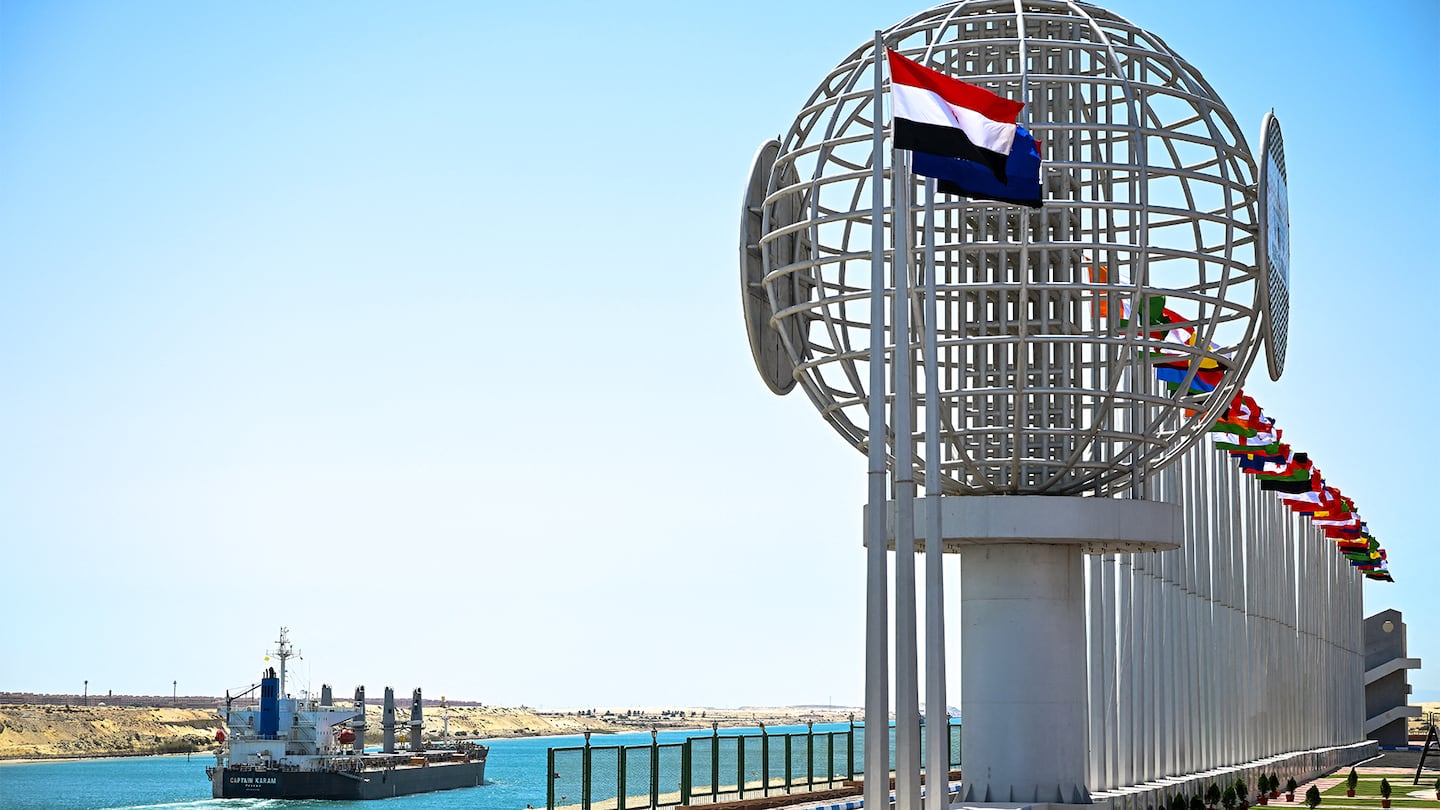
🇾🇪 Red Sea shipping threat grows as Houthi attacks resume off Yemen. Last week’s strike by Houthi fighters against a cargo ship in the Bab el-Mandeb Strait has reignited concerns about the safety and cost of shipping along the Red Sea route through Egypt’s Suez Canal, which carries at least a quarter of global container traffic. The latest deadly strike, targeting an Egyptian-owned ship, follows a Houthi attack on a Saudi vessel in the Red Sea last month, raising the risk of disruption along a key chokepoint for Europe-to-Asia trade. Arsenio Dominguez, head of the United Nations International Maritime Organization, described the strike as “particularly troublesome,” adding that it would “only serve to escalate tensions and threaten global supply chains on which everyone depends.” A senior executive at a leading Indian apparel exporter told local media earlier this year that “if the Red Sea closes, logistics costs will rise and turnaround time could increase by 15-20 days.”
After the Houthis carried out dozens of attacks on commercial vessels in the region in 2024, shipping giants increasingly relied on the longer and costlier route around South Africa’s Cape of Good Hope, which many continue to use today. Last week’s Bab el-Mandeb Strait strike comes amid a near-freeze in shipping through the Strait of Hormuz, a key waterway between Iran and Oman that connects several Gulf states, including the UAE, Qatar, Bahrain and Kuwait, to international markets. It also marks a further escalation in a conflict that has spread across the Middle East since Iran-backed Hamas’ 2023 attack on Israel ignited the latest phase of the long-running Israeli-Palestinian conflict. The involvement of other Iran-backed groups, including Hezbollah in Lebanon and the Houthis in Yemen, opened additional fronts soon afterwards. Houthi attacks on Red Sea shipping subsided late last year but have now resumed, amid a regional conflict that has widened considerably since the outbreak of the US-Israeli war against Iran in February. [UN News, Economic Times, Financial Times, BBC]
🇮🇳 A power struggle at India’s Tata Group puts Noel Tata in the spotlight. N Chandrasekaran, the current chairman of Tata Sons, the holding company and promoter of Tata Group companies, announced last week that he will step down in February 2027 after deciding not to seek reappointment following opposition from one board member. Founding family scion Noel Tata, the head of Tata Trusts, a collective of charities that owns about a 66 percent stake in Tata Sons, was not named in the announcement, but media reports have pointed to a rift between the two executives on multiple issues, including the potential listing of Tata Sons. Due to its regulatory classification, Tata Sons is subject to enhanced regulatory supervision and a requirement to list publicly, but the company is trying to avoid an IPO as challenges mount across some of its key businesses. As a steward of Tata Trusts, Noel will play a key role in the decision on who will lead Tata Sons. Tata Steel chief executive T. V. Narendran has emerged as a potential successor, while Noel reportedly wants his son Neville Tata to play a more prominent role in the group. Noel himself cannot hold the top job while he is also leading Tata Trusts under the group’s governance rules.
Before his appointment as chairman of Tata Trusts in 2024, Noel maintained a low profile while shaping the group’s trading and retail businesses, including its fashion interests. The sprawling conglomerate, which owns Air India and Jaguar Land Rover among others, is a major player in India’s fashion sector, with holdings that include luxury and beauty e-commerce platform Tata Cliq and global trading and distribution company Tata International, which exports multiple products including leather and footwear. Tata also controls watch and jewellery firm Titan Company (whose portfolio includes its namesake brand alongside Tanishq, Zoya, Mia and CaratLane), and subsidiary Trent Limited (whose interests include a joint venture partnership with Zara, the Westside department store chain, fashion brands Zudio, Samoh and Utsa and beauty brand Misbu). Tata Group companies posted combined revenue of $185 billion in the last financial year, and the group’s 26 publicly listed companies had a total market capitalisation of $277 billion, as of March 31, 2026. [Arnika Thakur for BoF]
ADVERTISEMENT
🌍 AGOA extension advances through US Senate, awaits House approval. The passage of a two-year extension of the Haiti Economic Lift Program Extension Act and the AGOA Extension Act by the Senate was welcomed by the American Apparel & Footwear Association (AAFA). Beth Hughes, AAFA’s vice president of trade and customs policy, said “this two-year extension will help stabilise these partnerships, providing time to build toward a predictable, long-term continuation of these programs. We now encourage swift passage of this extension in the House and for the President to sign it expeditiously into law.” The trade preference programmes lapsed on Sept. 30, 2025, before being retroactively restored in February through the end of this year. The latest extension would keep them in place through Dec. 31, 2028. The African Growth and Opportunity Act is a preferential trade programme providing 32 eligible African countries with duty-free access to the US market for qualifying products including textiles and apparel. The Haitian Hemispheric Opportunity through Partnership Encouragement Act and the Haiti Economic Lift Program Act (HOPE/HELP) support around 50,000 jobs for Haitian workers, including those manufacturing products for American apparel companies. [BoF Inbox]
🇳🇬 Nigeria-based pan-African e-tailer Jumia raises $50 million. The online retailer, which sells everything from fashion and beauty products to electronics and food, has secured the funding from investors led by International Finance Corporation, the private investment arm of the World Bank, and existing shareholder Axian Telecom, a unit of Madagascar-based energy-to-fintech firm Axian Group. Hassanein Hiridjee, founder and chairman of Axian Telecom, was appointed to Jumia’s board last year. The new capital could help Jumia deliver on the commitment of its CEO, Francis Dufay, to breakeven on a loss-before-income tax basis in Q4 2026 and achieve full-year profitability in 2027. Jumia now operates in Egypt, Ghana, Côte d’Ivoire, Kenya, Morocco, Nigeria, Senegal and Uganda, after ceasing operations in several other countries in recent years. “We were constrained by our cash position until recently. So the new funding gives us room to act. But of course, we’re going to be very careful and cautious with the ways we use our cash,” said Dufay, noting that factors including higher fuel prices in Africa linked to the Middle East conflict have made the regional e-commerce market more “volatile and risky” compared to a year ago. [Business Insider Africa, Semafor]
🇨🇴 Earthquake disrupts Colombian suppliers but largely spares fashion hubs. Colombia’s newly elected president, Abelardo de la Espriella, said he has asked US president Donald Trump to temporarily suspend tariffs following an earthquake that struck western Colombia last week, killing more than 100 people across the country. Bogotá and Medellín, Colombia’s two largest cities and main fashion and textile hubs, largely escaped the serious physical damage seen further west, although both cities felt the tremors. Significant damage was reported elsewhere, including Colombia’s third-largest city Cali, an important apparel manufacturing centre. Damage has also disrupted transport links to the nearby Pacific port of Buenaventura, potentially complicating shipments from suppliers in the region. [Sourcing Journal, CNN, Reuters]
🇸🇦 Dubai’s Apparel Group brings two dozen brands to Madinah in Saudi Arabia. The Emirati retailer has entered a partnership with Knowledge Economic City (KEC) to introduce 24 international brands at the Multaqa AlMadinah Mall in Madinah, a pilgrimage destination and the second holiest city in Islam after Makkah. Around 18 of the brands are fashion and lifestyle labels. “What makes the agreement particularly important is that ten of these brands will enter Madinah for the first time, enriching the city’s retail and dining offering for residents, visitors and pilgrims. Together with the Hilton hotel, Hilton-branded residences and the wider mixed-use development, they will help us create a vibrant destination that reflects our long-term vision for the city,” said Dr. Moath Al-Yahya, CEO of KEC. Apparel Group is a regional partner for global brands such as Tommy Hilfiger, Calvin Klein and Levi’s, operating around 2,600 stores in the Middle East, India and Southeast Asia. [Zawya]
🇲🇺 Ten Mauritanian brands present a group fashion show in Nouakchott. The event at the Spanish embassy in the Mauritanian capital concluded a year-long training programme focused on creativity, entrepreneurship, upskilling and business development within the textile sector, as part of the Canary Islands regional government’s Cluster programme. The initiative, which aims to professionalise the sector by supporting 40 female artisan-designers, has also been developed to help create “opportunities that generate economic activity [in Mauritania] and allow them to stay and contribute to its development, without needing to emigrate via the dangerous Atlantic route [to Europe],” said Octavio Caraballo, deputy minister of the cabinet of the president of the Canary Islands, an autonomous Spanish archipelago located off the coast of Morocco, north of Mauritania. [Fashion Network]
🇪🇬 Chinese manufacturer Jasan to invest $117 million in Egypt facilities. Hangzhou-based Jasan Group (also known as Zhejiang Jiansheng Group) has entered an agreement with the Suez Canal Economic Zone (SCZONE) to establish an integrated apparel manufacturing complex in the Qantara West Industrial Zone. The export-focused complex is expected to include spinning, weaving and dyeing as well as ready-made garment, accessories and sportswear production facilities. The deal is the latest in a wave of investment in Egypt’s sourcing sector by Chinese, Turkish and other companies. SCZONE chairperson Waleid Gamal El-Din said the zone has contracted 117 industrial projects during the 2025-26 fiscal year, with investments worth $7.26 billion. [Fibre2Fashion]
🇨🇳 Shein scales back operations in Vietnam after its expansion disappoints. The China-founded, Singapore-based ultra-fast fashion e-tailer is reportedly reversing course in the Southeast Asian country, where it had encouraged suppliers to expand last year. Shein has reduced the warehouse space it leases near Ho Chi Minh City, while most suppliers that had moved production to Vietnam have returned to China. Higher-than-expected US tariffs eroded Vietnam’s cost advantage, while suppliers struggled to replicate the speed, flexibility and low costs of Shein’s established Chinese supply chain. [Reuters]
🇮🇱 Sephora denies opening stores in Israel, says it will sell label at local retailer. The LVMH-owned beauty retailer has reportedly denied media reports that it is entering Israel with its multi-brand retail concept, following ambiguous remarks by the country’s foreign ministry and subsequent calls online for a boycott of Sephora over Israel’s involvement in the war in Gaza. Instead, the company is entering the market through Sephora Collection, its own beauty label, which has reportedly signed a temporary resale agreement with Glam42, an Israeli multi-brand chain with five stores across the country. [Fashion Network, Reuters via Times of Israel]
ADVERTISEMENT
🇮🇳 Indian jeweller Senco Gold posts 67% revenue rise in Q1. The Kolkata-based company, which operates 209 stores across 19 Indian states and union territories, has recorded consolidated revenue from operations of 3,056 crore rupees ($319.6 million) in the first quarter of the 2027 financial year. EBITDA rose 16 percent year on year to 213 crore rupees during the period. The jeweller, which traces its roots back to 1938 and was incorporated in its modern form in the West Bengal capital in 1994, is currently led by CEO Suvankar Sen, the fourth generation of the founding family. [Economic Times]
🇦🇺 Australian fashion brand Proud Poppy calls in the administrators. The Victoria-based brand founded in 2019 by Tara McKeon has already closed three of its six stores this year amid a restructure. “They weren’t viable anymore,” McKeon said. “Those stores were never about cheaper rent or anything like that. It was about trying to bring community and inclusion to country towns that are lacking that; where they still have people out there that are searching for community.” [Ragtrader]
🇮🇳 India’s Reliance Retail appoints Vineet Jain as fashion and lifestyle COO. The country’s largest retailer by revenue has hired Jain, a retail veteran with nearly 30 years of experience, including leadership roles at V-Mart, Future Group and Vishal Retail. Reliance, which sells everything from low-cost groceries to luxury goods, has a fashion portfolio spanning mass-market in-house brands, investments in Indian designer labels and partnerships with international brands including Balenciaga, Bottega Veneta and Shein. [Economic Times]
🇻🇳 Vietnam gold companies face scrutiny after diamond smuggling scandal. Investigators have accused several jewellers and other firms of violations involving tax reporting, anti-money-laundering rules and gold-bar sales in the country. The revelation follows the discovery of Vietnam’s biggest-ever diamond smuggling network earlier this month, which saw gems stripped of their original Gemological Institute of America (GIA) laser inscriptions before being re-engraved and issued with reports that overstated their quality. The latest investigation into the gold sector found various violations at companies including Bao Tin Manh Hai Jewelry JSC, State gold trader Saigon Jewelry Co. (SJC), Phu Nhuan Jewelry JSC and DOJI. [Bloomberg]
🇨🇳 Chinese sportswear giant Li Ning denies signing deal with Kylian Mbappé. “The rumours about our company signing a deal with a well-known soccer player are untrue,” the Beijing-based firm told local media. “Li Ning has not been involved and has no plans to pursue any such cooperation.” The statement comes after media outlet 36Kr reported that Li Ning will sign the French athlete, create an independent personal brand centred around Real Madrid player, and even secure investment from Mbappé for the Li Ning brand. Speculation has been mounting in recent weeks that Mbappé could terminate his long-running partnership with Nike. [Yicai]
🇮🇳 India’s Himalaya Wellness appoints Vikas Gupta as CEO. The executive, who currently serves as CEO of India-based beauty and wellness services firm VLCC and previously held management roles at Unilever, Flipkart and Nykaa, will join Himalaya in September. The Bengaluru-based health and personal care company sells pharmaceuticals, nutritional supplements and a range of body, face and hair care products under its Himalaya brand name. [Economic Times]
🇦🇷 Major Argentine sportswear manufacturer Will Der to shutter. The Buenos Aires-based company, which has produced for multiple global sportswear brands over the years, has announced its closure, affecting approximately 120 jobs. While there has been renewed interest in Argentina’s consumer market by global fashion brands, several local apparel and textile factories closed earlier this year amid one of the sector’s worst downturns in decades, as ultra-cheap imports from China and elsewhere flooded the market. [Fashion Network]
🇳🇵 Nepal moves to revive state-owned Hetauda textile mill after decades-long closure. The government of the South Asian country has begun preparations to bring the Hetauda Textile Industry’s looms back into trial production. Hetauda was established in 1975 with support from the Chinese government but ceased production around the turn of the millennium. [Fibre2Fashion]
ADVERTISEMENT
🇨🇱 Chile-based retail giant Falabella Group’s profit rises 14% in Q2. The company has reported revenue of $3.781 billion for the quarter, up 10 percent year over year. Falabella Group operates over a hundred department stores across Colombia, Peru and Chile and has interests in banking, shopping malls, home improvement and supermarkets. [Modaes]
🇻🇳 Vietnam’s textile and garment exports reach $22.8 billion in Jan-July period. Exports in the category, excluding yarn and fibre, rose 1.1 percent year on year in the first seven months of the year. Yarn exports grew 11.1 percent to $2,723.846 million during the period. [Fibre2Fashion]
Loading recommended reads…
Earnings reports this week will offer clues about whether shoppers are turning to more accessible American brands as spending on European luxury cools.
Offhand remarks by French football superstar Kylian Mbappé sparked a backlash from Chinese ‘netizens’ this week, leaving labels from On to Dior exposed in one of fashion’s most important markets.
Photographer, stylist and entrepreneur Daniel Obasi joins Imran Amed on The BoF Podcast to discuss instinct-led world-building, his approach to image-making, and what makes Lagos’ creative scene singularly resilient, yet structurally unsupported.
The launch of Nike’s new Vegum Run shoes exclusively in India lays a groundwork for a new production cycle that could give the brand a leg up in its different geographies moving forward.