Agenda-setting intelligence, analysis and advice for the global fashion community.
Agenda-setting intelligence, analysis and advice for the global fashion community.

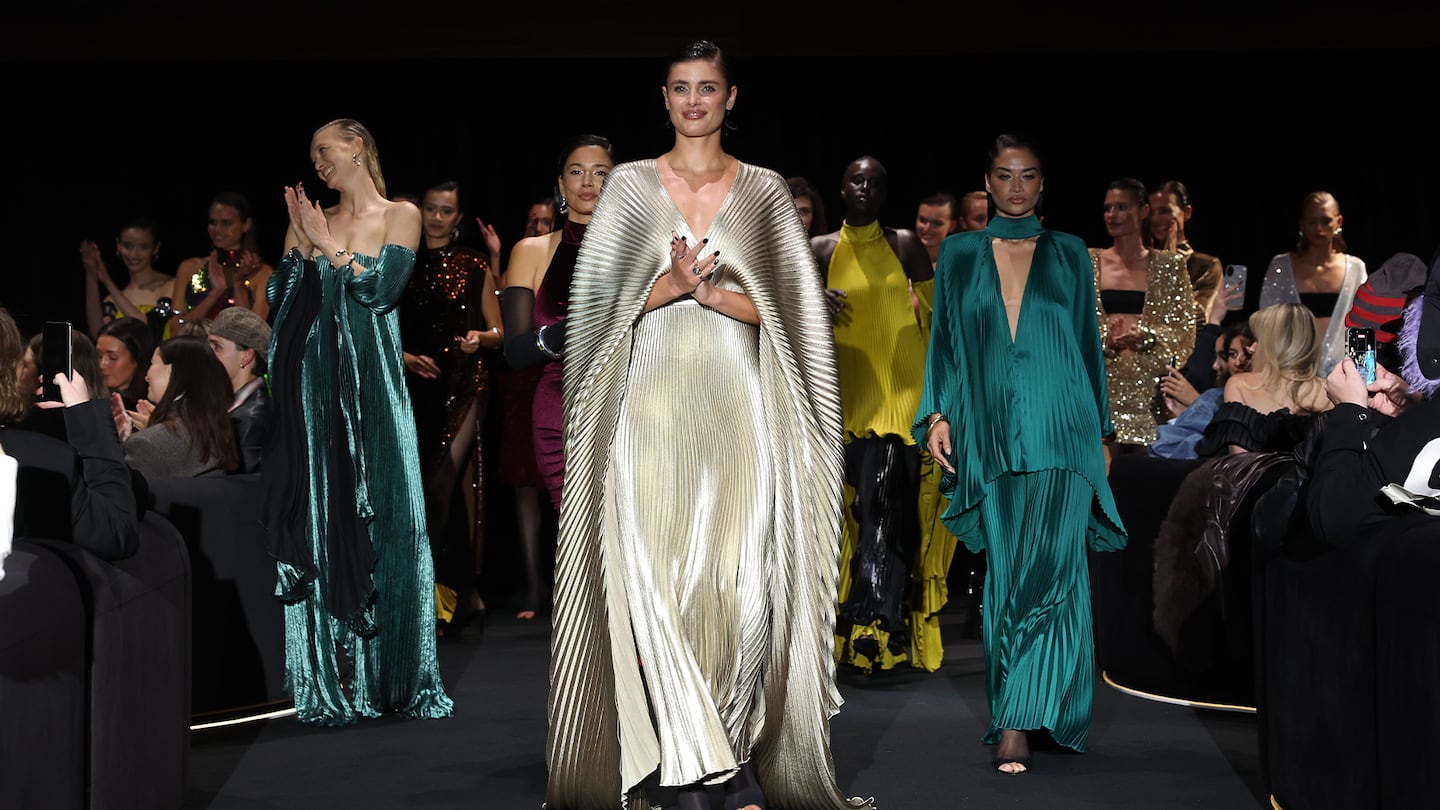
🇦🇺 Australian Fashion Week moves to a new venue for its 30th anniversary. The scenic location at the Museum of Contemporary Art brought the annual event into the heart of Sydney, with several shows held nearby, including Beare Park at the Opera House and Carla Zampatti alongside the Park Hyatt. The move ends a 13-year run at the city’s Carriageworks venue. The harbourside event was the second edition under the leadership of the Australian Fashion Council, which took over after US-based IMG dropped the event in November 2024. Under the not-for-profit AFC, the focus has returned to the industry, with this year featuring a smaller schedule of 37 designers — including Lee Mathews, Aje and Esse — across 27 shows. Highlights of the event included a Studio 54–inspired show by L’Idée Woman, a beachside show from Commas and the return of Melbourne-based designer Toni Maticevski after a 10-year absence on the schedule. In a refreshing contrast to recent international seasons, body diversity was ever-present, including two pregnant models, along with models of all ages. For the first time, fashion week was opened and closed by Indigenous brands — Monday morning featured newcomers Buluuy Mirrii and Van Ermel Scherer, while Ngali closed the schedule on Friday afternoon. A handful of additional catwalks were ticketed for the public. [Glynis Traill-Nash for BoF]
🇨🇴 Bogotá Fashion Week boosts its wholesale programme. The event brought together 145 brands, with the aim of connecting them with more than 80 buyers through a growing wholesale programme. Organised by the Bogotá Chamber of Commerce, the ninth edition took place from May 12 to 14 in the Colombian capital. Among the 28 runway shows this season were designers such as Kika Vargas, Andrés Pajón, Francesca Miranda and Laura Aparicio; craft-focused labels Lyenzo, Old Maquina and La Petite Mort; contemporary brands including CuldebaL and Atelier Crump, alongside urban-focused names like Sixxta, True, Eloísa, Camilo Álvarez and Alejandro Crocker (who collaborated with basics label Gef). The yearly showcase is one of the country’s two main fashion platforms alongside Colombiamoda, which is held in July in Medellín. [Graciela Martin for BoF]
🇨🇳 ByteDance’s AI app Doubao is becoming a popular styling tool in China. New consumer behaviour patterns have emerged after the Beijing-based firm behind TikTok and its Chinese counterpart Douyin introduced a video feature on its artificial intelligence assistant. Young users are asking Doubao to help choose and critique their outfits, with some sharing the results on social media platforms such as Xiaohongshu using the hashtag “DoubaoStyling”. Specialised features are helping the app and its rivals DeepSeek, Alibaba’s Qwen, Kimi and Baidu’s Ernie Bot compete for users in China’s crowded AI market. Western AI chatbots such as OpenAI’s ChatGPT, Google’s Gemini and Anthropic’s Claude are either officially unavailable, heavily restricted or difficult to access in mainland China without VPNs and workarounds. [Jing Daily, BoF Inbox]
🇮🇳 Indian apparel giant Pearl Global posts its highest-ever annual revenue. The Gurugram-based apparel manufacturer has recorded 5,025 crore rupees ($523.9 million) in revenue for the 2026 fiscal year, up 11.5 percent year-on-year. Profit after tax increased 17 percent to 270 crore rupees ($28.1 million) during the period. Pallab Banerjee, Pearl Global Industries founder and managing director said “the group delivered another year of resilient performance against a complex geopolitical backdrop [marking]… the company’s second consecutive year of double- digit growth and improved profitability.” An end-to-end supplier with eight locations in India, the company also operates factories in Vietnam, Bangladesh, Indonesia and Guatemala as well as design centres in London, New York and Hong Kong [Fibre2Fashion]
ADVERTISEMENT
🇨🇳 Alibaba Group Holdings reports soaring profits in Q1. The Hangzhou-based, Hong Kong-listed company’s revenue rose 3 percent year over year, to 243.4 billion yuan ($35.3 billion) in the quarter ended March, with net profit surging 106 percent surge to 25.5 billion ($3.7 billion). “Over the past quarter, Alibaba’s high-intensity investment in our two strategic priorities of AI plus cloud and consumption is rapidly translating into tangible business results,” said chief executive Eddie Wu. The internet giant owns cross-border marketplace AliExpress as well as Chinese e-tailers Taobao and Tmall, multi-category platforms selling luxury, fashion and beauty brands. Outside China, the group also operates e-commerce platforms Lazada in Southeast Asia, Daraz in South Asia and Trendyol in the West Asia and Europe. [Yical Global, BoF]
🌏 The demographic composition of Asia’s travel retail market is shifting. Chinese travellers will remain important, but their share of regional travel-retail growth is projected to fall from around 65 percent in during the 2015-2019 period to around 40 percent during the decade spanning 2025-2035, according to a report by consulting firm Oliver Wyman and the Tax Free World Association (TFWA). This is because luxury spending has been redirected into domestic channels and airport retail propositions have grown stagnant. Indian and South Korean travellers are expected to capture larger shares of future growth (roughly 20 and 10 percent respectively), while Southeast Asian travellers are also becoming increasingly important. [BoF Inbox]
🇨🇳 Chinese e-tailer JD.com beats analysts’ quarterly estimates. The Beijing-based retailer, which sells everything from luxury fashion to electronics, reported revenue of 315.7 billion yuan ($46.5 billion) in the quarter ended March, while analysts on average expected 311.4 billion yuan. Net income fell 53 percent to 5.1 billion yuan ($750 million), less severe than the 65 percent drop forecast by analysts. The company has been in a fierce battle in the food delivery sector with rivals Alibaba Group and Meituan, although tensions are beginning to ease following a recent move by China’s antitrust watchdog probing competition practices in the sector. [Bloomberg]
🇮🇳 India more than doubles its import tariffs on gold to protect the rupee. The government’s decision to increase the duty for both gold and silver from 6 percent to 15 percent is expected to strengthen India’s currency which has fallen amid higher energy prices following the onset of the Middle East war. “The duty increase brings immediate relief to the government,” said Surendra Mehta, national secretary of the India Bullion and Jewellers Association. “If they have to stop the falling rupee overnight, this is the only measure.” Prime Minister Narendra Modi has recently appealed to Indians to buy less gold, consume less fuel, avoid unnecessary foreign travel and work from home when possible in a bid to mitigate further economic disruptions. [Financial Times, BBC]
🇯🇵 Japanese second-hand fashion giant 2nd Street steps up its global push. The resale giant said it plans to open 50 stores by 2035 in Thailand alone. The retailer, which sells everything from designer fashion to furniture, already operates more than 900 stores across Japan and 100 stores overseas including locations in the US, Malaysia, Taiwan, Thailand, Singapore and Hong Kong. Parent company Geo Holdings Corp. was founded in Nagoya in the 1980s as a DVD, CD and book seller operating under the Geo banner before it expanded into the resale market. In 2019, the Tokyo-listed group acquired Okura, a retailer of second-hand luxury goods with 20 branches nationwide, and launched an off-price multi-brand fashion chain Luck Rack. [Nikkei Asia]
🇨🇳 Galeries Lafayette is closing its Beijing store a year after exiting Chongqing. The French department store group said its six-storey store in Beijing’s Xidan district will permanently close on May 27 after more than 12 years in business. The move follows the closure of the group’s store in Chongqing in Southwest China a year ago, leaving it with just two locations in the mainland. Whilst the company said its remaining Shenzhen and Shanghai stores are demonstrating “robust performance,” the Shanghai location was recently downsized from four floors to two. Outside its home market and mainland China, the group operates department stores in Dubai, Doha, Jakarta, Luxembourg, Macau and Mumbai with New Delhi expected to open next. [Jiemian Global, BoF Inbox]
🇮🇱 Israeli intimates manufacturer Delta Galil’s sales hit $573 million in Q1. The Caesarea-based, Tel Aviv-listed manufacturer of underwear, activewear, loungewear and denim including products for licensing partners such as Calvin Klein, Tommy Hilfiger, Adidas, Wolford and Polo Ralph Lauren has recorded sales of $573.0 million, a 10 percent year-on-year increase in constant currency. Gross profit was up 18 percent to $238.8 million. Chief executive Isaac Dabah said, “I am encouraged by the positive momentum underway across the business, particularly as our investments in innovation, manufacturing flexibility, and customer partnerships continue to translate into measurable results.” [BusinessWire]
🇮🇳 India’s gems and jewellery exports decline 9% in April amid Middle East war. Total exports reached $2,226.45 million in the month, down from $2,448.53 million a year earlier. “Decline in exports is mainly due to the ongoing conflict in West Asia, which has caused worldwide disruptions affecting exports. Besides geopolitical tensions exports to the US, a major export market for the gems and jewellery industry, were also affected because there is still no clarity on the tariffs,” said Kirit Bhansali, chairman of the country’s Gem & Jewellery Export Promotion Council (GJEPC). [Economic Times]
ADVERTISEMENT
🇰🇭 Cambodia and China launch garment training institute in Phnom Penh. China’s Guangdong Polytechnic (GDPT) and the the Cambodian Garment Training Institute have established a Chinese training programme in the Cambodian capital to further strengthen the technical capacity of the local garment, footwear, and travel goods sectors through specialised training programmes. [Fibre2Fashion]
🇰🇼 Alshaya Group to open 20 stores in Kuwait’s Aventura Mall. The Kuwait-based franchise operator has partnered with real estate developer Mabanee to open units for brands including H&M, Primark, Ulta Beauty at the mall due to open in the third quarter of this year in Jaber Al-Ahmad City on the fringes of the Kuwaiti capital. [Zawya]
Loading recommended reads…
Chanel’s surging sales underscore that the luxury industry’s challenges may be less about demand than desirability.
Chris Green joins Imran Amed to explain how his self-funded Brooklyn menswear store earned a place among the world's best fashion stores — by staying off the internet and betting everything on how it feels to walk in the door.
Global editorial director Steff Yotka will succeed Bettridge, who is leaving to focus on his creative studio Content World.
Kith's new collaboration with Salomon on the XT-Evo is the latest example of the way footwear companies are leveraging influential outside partners to help them debut their newest shoes or even co-design entirely new styles.